
UK Misses Mid-Decade Net Zero Checkpoint
Government faces pressure as emissions targets slip
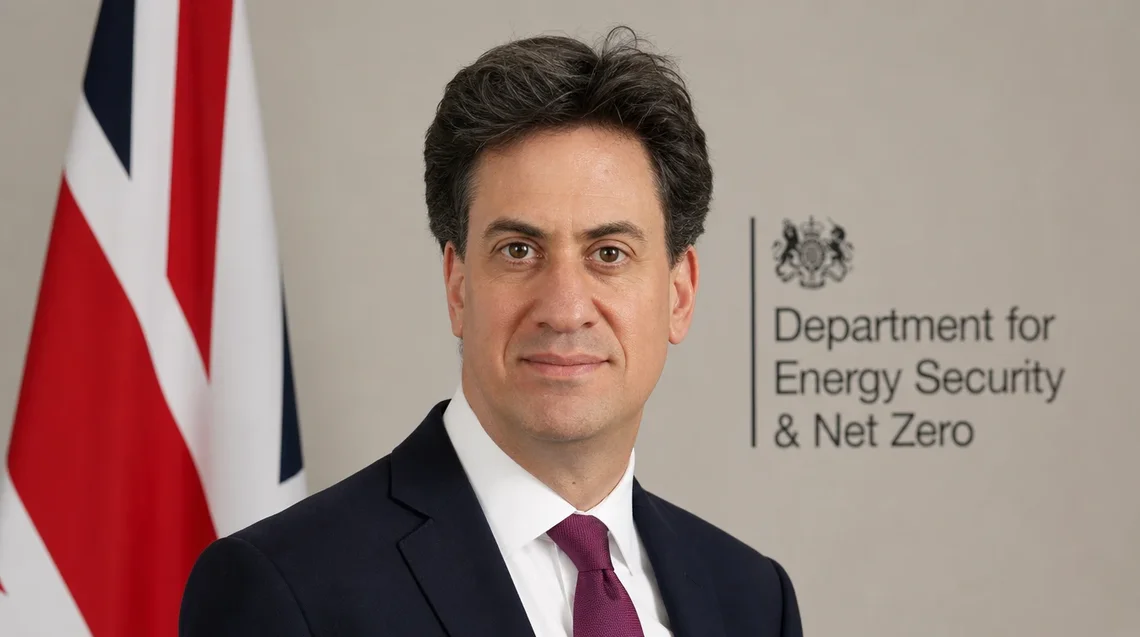
Britain has failed to meet a key mid-decade checkpoint on its path to net zero by 2050, with official data confirming that greenhouse gas emissions have not fallen at the pace required by legally binding carbon budgets. The shortfall places the government under renewed political and legal pressure to accelerate decarbonisation across the power, transport, and heating sectors before the next assessment window closes.
Climate figure: The UK's fourth and fifth carbon budgets require economy-wide emissions to fall to roughly 51% below 1990 levels by the mid-2030s. Current trajectories, assessed by the Climate Change Committee, show the country tracking approximately 5–10 percentage points behind the required pace, with the energy and buildings sectors accounting for the largest share of the gap. Global average temperatures have already risen by approximately 1.2°C above pre-industrial baselines, according to IPCC Sixth Assessment Report findings, underscoring the urgency of national policy delivery. (Source: Climate Change Committee, IPCC)
The Scale of the Shortfall
The United Kingdom entered the current decade with a legislative architecture widely regarded as among the most ambitious in the world. The Climate Change Act commits Britain to net zero greenhouse gas emissions by 2050, with a series of interim carbon budgets acting as legally enforceable waypoints. The latest independent assessment confirms that the country is not on track to meet the cumulative emissions reduction required under the fifth carbon budget period, which covers the middle of this decade.
What the Data Show
Analysis published by the Climate Change Committee — the statutory body that advises government on climate policy — indicates that while electricity generation has undergone a substantial transformation through the rapid scaling of offshore wind, overall progress across the broader economy has stalled. Emissions from surface transport remain stubbornly elevated. The retrofit of residential buildings, which represents one of the largest and most complex decarbonisation challenges, is progressing at a fraction of the rate required. Industry and agriculture have also delivered reductions well below the modelled pathways set out in the government's own Net Zero Strategy. (Source: Climate Change Committee)
Related Articles
For further context on the trajectory of the shortfall, the analysis published in UK misses net zero interim target by wide margin sets out the cumulative gap in detail, highlighting how successive policy delays have compounded the challenge.
Carbon Budget Mechanics
Carbon budgets in the United Kingdom operate on a five-year rolling basis. Unlike annual targets used in some international frameworks, the cumulative approach means that over-emissions in early years must be compensated for in later years within the same budget period, or the government risks being in technical breach of its statutory obligations. Legal experts have previously noted that judicial review proceedings remain available to claimants if the Secretary of State cannot demonstrate credible plans for compliance. (Source: ClientEarth legal briefings cited in Guardian Environment)
Sector-by-Sector Breakdown
No single sector tells the full story of Britain's emissions performance. The divergence between the power sector — where progress has been real and measurable — and transport or heat reveals a pattern familiar to climate economists: the "easy wins" have been taken, while the structurally harder transitions remain incomplete.
Energy and Electricity
The electricity generation sector stands as the clearest success in the UK's decarbonisation record. Coal's share of the generation mix has effectively reached zero, a milestone that took less than a decade from being politically unimaginable. Offshore wind capacity has expanded substantially, with the UK now operating one of the largest installed offshore fleets in the world. The International Energy Agency has pointed to the British electricity transition as a model for other advanced economies, though it has simultaneously warned that the pace of clean energy buildout globally remains insufficient to meet the Paris Agreement temperature goals. (Source: IEA World Energy Outlook)
However, Carbon Brief analysis has noted that grid decarbonisation, while impressive, delivers diminishing marginal returns on overall UK emissions unless it is paired with electrification of end uses — chiefly heat and transport. Without that electrification, the full benefit of clean power cannot be realised across the economy. (Source: Carbon Brief)
Transport: The Persistent Gap
Surface transport is the single largest source of greenhouse gas emissions in the United Kingdom, and it is the sector where the gap between stated ambition and actual delivery is most visible. The transition to battery electric vehicles is accelerating in terms of market share, but the overall stock of internal combustion engine vehicles on British roads remains enormous. Fleet turnover takes years, and the charging infrastructure required to support widespread electric vehicle adoption outside urban centres is still regarded by independent assessors as inadequate. (Source: Climate Change Committee Progress Report)
Heat and Buildings: The Hardest Problem
Residential and commercial heating, overwhelmingly reliant on natural gas in Britain, represents perhaps the most politically and technically challenging element of the net zero transition. The government's heat pump rollout programme has fallen substantially short of its own deployment targets. Insulation schemes launched and then curtailed under previous administrations left a legacy of public confusion and contractor uncertainty that officials are still working to resolve. Nature journal research on building decarbonisation pathways has highlighted that cost, disruption, and split-incentive problems between landlords and tenants are structural barriers that policy design must directly address. (Source: Nature)
International Comparison
Britain's challenges are not unique. Most major economies are currently not on trajectories consistent with their nationally determined contributions under the Paris Agreement. The table below illustrates how selected comparator nations are tracking against their stated mid-decade emissions reduction milestones.
| Country | 2030 Emissions Target (vs baseline) | Current Trajectory Assessment | Primary Gap Sector |
|---|---|---|---|
| United Kingdom | 68% below 1990 levels | Off track (CCC assessment) | Heat & Buildings, Transport |
| European Union | 55% below 1990 levels | Partially on track (EEA assessment) | Industry, Agriculture |
| United States | 50–52% below 2005 levels | Off track (Rhodium Group assessment) | Power, Transport |
| Germany | 65% below 1990 levels | Partially on track | Transport, Buildings |
| Japan | 46% below 2013 levels | Off track | Industry, Power sector coal |
(Source: IEA, Climate Action Tracker, national government assessments)
Government Response and Policy Gaps
Ministers have defended the overall legislative framework, pointing to the continuation of the offshore wind auction programme, updated vehicle mandate regulations, and ongoing consultations on grid infrastructure planning reform as evidence of sustained commitment. Officials said the government remained legally and politically committed to net zero by 2050 and acknowledged that delivery across all sectors needed to accelerate.
Critics from within the scientific and policy communities argue that acknowledgement of the gap is not the same as closing it. The Climate Change Committee has repeatedly flagged that the government's published policies, taken at face value and assuming full delivery, are still insufficient to meet the carbon budgets on the books. The gap between "policies on paper" and "credible delivery" is a distinction the committee draws explicitly in its annual progress reports. (Source: Climate Change Committee)
Legal Exposure
The United Kingdom's net zero framework carries genuine legal force. Courts have previously ruled that climate plans must be substantive rather than aspirational, and campaigning organisations have demonstrated a willingness to use judicial review to enforce compliance. The government's legal position depends substantially on its ability to demonstrate not merely that targets exist, but that implementation mechanisms are in place and functioning. (Source: Guardian Environment, ClientEarth)
The question of whether the current trajectory constitutes a meaningful breach — or a recoverable deviation — is addressed in reporting on UK misses interim net zero target, raises 2035 questions, which examines the downstream implications for the next carbon budget period and the credibility of the 2035 power sector decarbonisation goal.
What Needs to Change
Independent analysts and the Climate Change Committee have consistently identified a set of high-priority policy interventions that would materially close the gap. These include a sustained and properly funded national home retrofit programme; a strengthened vehicle mandate with adequate charging infrastructure investment; accelerated planning reform to enable onshore wind and grid expansion; and a carbon pricing framework that sends consistent long-run signals to investors and industry.
Investment and Finance
The IEA has estimated that the gap between current global clean energy investment levels and those required for a 1.5°C-consistent pathway runs into trillions of dollars annually. In the UK context, the Climate Change Committee has estimated that additional annual investment in the order of tens of billions of pounds will be required through the 2030s to stay on track. The question of how that investment is mobilised — through public balance sheets, regulated utility spending, or private capital attracted by policy certainty — remains a central fault line in domestic climate policy debates. (Source: IEA, Climate Change Committee)
Carbon Brief tracking of UK climate finance flows suggests that while private investment in clean energy has grown, public capital has not scaled commensurately, and the overall investment envelope remains below what modelled pathways require. (Source: Carbon Brief)
Political Economy
Beyond the technical and financial dimensions, the political economy of net zero delivery has grown more complex. Cost-of-living pressures have created public sensitivity around energy bills and the upfront costs of low-carbon heating systems. Some polling data suggests that while public support for the long-term net zero goal remains robust, tolerance for near-term costs is more conditional. This creates a real-world constraint on the speed and design of policy that purely technical analyses do not fully capture.
Early reporting on the trend of missed checkpoints, including the analysis in UK misses interim net zero targets, report warns, highlighted how political hesitation over near-term costs has a compounding effect on long-run delivery — a dynamic now playing out across multiple policy domains simultaneously.
The Road to 2030 and Beyond
The next formal assessment of UK carbon budget compliance will provide a clearer picture of whether the current policy acceleration — assuming it materialises — is sufficient to prevent a formal breach of the fifth carbon budget. The Climate Change Committee has indicated it will update its trajectory assessments as new policy detail emerges, and expects the government to publish revised delivery plans within the current parliamentary term.
What is not in serious dispute, according to the scientific and policy consensus, is that the window for course correction is narrowing. IPCC assessment reports have consistently shown that delayed action does not merely push costs into the future — it compounds them, both economically and in terms of physical climate impacts that become locked in with each passing year of excess emissions. (Source: IPCC Sixth Assessment Report)
For a granular assessment of how close or far the most recent data place the UK from technical compliance, the analysis in UK misses net zero interim target by narrow margin offers a contrasting scenario to the wider-gap projections, illustrating the range of uncertainty that surrounds trajectory assessments depending on methodology and baseline assumptions.
The fundamental question facing policymakers is no longer whether Britain has the right legislative architecture — the Climate Change Act is broadly regarded internationally as a sound framework. The question is whether the institutional capacity, political will, and financial mobilisation exist to translate legally binding targets into operational reality across every sector of the economy, on the timescale that the science requires.