
UK Struggles to Meet 2030 Emissions Cuts Target
Climate advisors warn net zero goals at risk without urgent policy shift
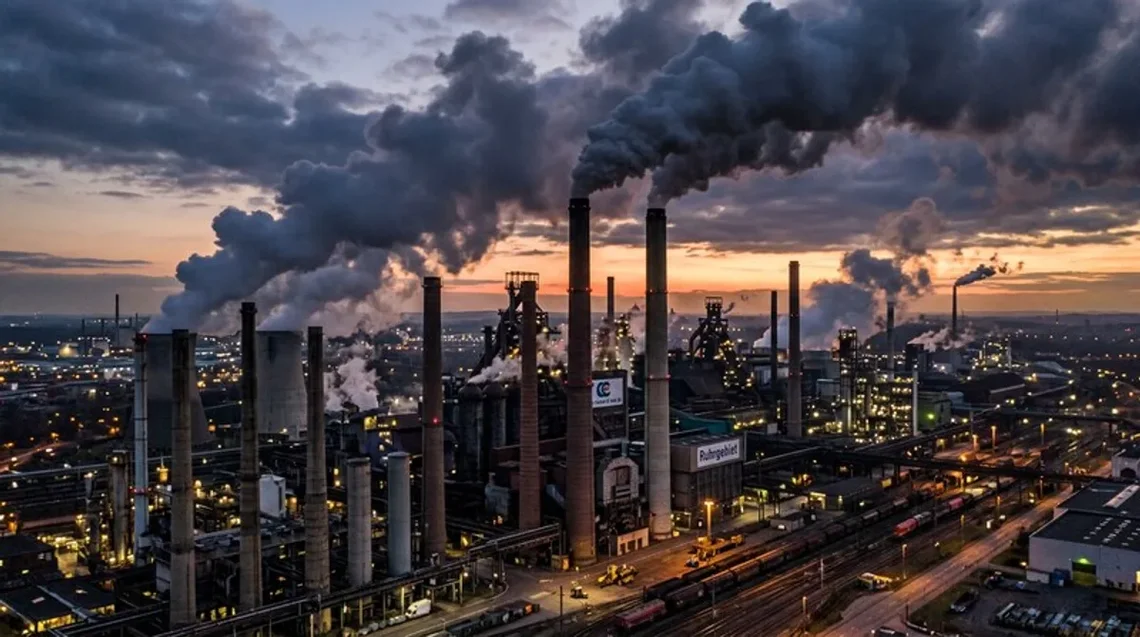
The United Kingdom is falling critically short of its legally binding commitment to reduce greenhouse gas emissions by 68 percent from 1990 levels by the end of this decade, with the government's own independent climate advisors warning that without an immediate and substantial shift in policy direction, the country risks missing one of its most important near-term climate milestones. The Climate Change Committee (CCC) has described the current trajectory as "deeply concerning," pointing to stalled progress across key sectors including transport, heating, and agriculture as the primary drivers of the shortfall.
Climate figure: The UK has reduced its greenhouse gas emissions by approximately 50 percent since 1990, according to government statistics — a significant achievement, but one that masks a dramatic slowdown in recent years. The remaining reductions required by the 2030 target are widely considered far more technically and politically difficult to achieve than those already delivered. The IPCC has stated that global emissions must fall by around 43 percent from current levels by 2030 to keep warming below 1.5°C above pre-industrial levels.
Where the UK Currently Stands
Official government data show that while the UK made substantial emissions reductions during the 1990s and 2000s — largely through the closure of coal power stations and efficiency improvements in industry — progress has slowed markedly in recent years. The sectors responsible for the remaining emissions are proving far more resistant to decarbonisation than the power sector, which has been the country's primary success story.
The Sectors Still Lagging
Transport remains the single largest source of domestic greenhouse gas emissions, accounting for roughly a quarter of the UK's total output, according to figures compiled by the Department for Energy Security and Net Zero. Despite strong growth in electric vehicle sales, the overall pace of fleet turnover is insufficient to meet the trajectory required for the 2030 carbon budget. Heating in homes and buildings presents a similarly stubborn challenge: the government's ambition to roll out heat pumps at scale has faced persistent headwinds, including high upfront costs, a shortage of trained installers, and limited consumer incentives.
Related Articles
Agriculture, land use, and waste collectively account for a significant proportion of remaining emissions, yet both the previous and current administrations have been accused by climate advisors of failing to implement credible policies to address them. The CCC's most recent progress report noted that of the 50 policies it identified as essential to meeting the Sixth Carbon Budget, a substantial minority had either not been introduced or were progressing too slowly to make a meaningful difference within the required timeframe. (Source: Climate Change Committee)
For broader context on the structural gaps in national decarbonisation plans, see our coverage of net zero targets facing pressure as emissions stall.
What the Climate Advisors Are Saying
The CCC, which was established under the Climate Change Act to provide independent advice to Parliament, has become increasingly candid about the gap between government rhetoric and on-the-ground delivery. In its most recent annual assessment, the committee concluded that the UK is not on track to meet its fourth or fifth carbon budgets — legally binding five-year limits on the total volume of greenhouse gases the country can emit — let alone the more ambitious 2030 target.
A Pattern of Missed Milestones
This warning does not arrive in isolation. As detailed in earlier ZenNewsUK reporting on how the UK has missed interim net zero emissions targets, the country has a documented record of setting ambitious climate milestones and then failing to put adequate policy frameworks in place to achieve them. The CCC has consistently flagged the absence of a credible, costed delivery plan as a central weakness in the UK's approach to climate governance.
Analysis published by Carbon Brief found that the gap between the UK's stated policy ambitions and actual implemented measures has widened rather than narrowed in recent years — a trend that several climate economists describe as a "delivery deficit." The concern is not simply about the 2030 target in isolation, but about the signal it sends to investors, trading partners, and international bodies about the credibility of Britain's longer-term net zero commitments. (Source: Carbon Brief)
The Investment and Policy Gap
The financial dimension of the challenge is substantial. The International Energy Agency has estimated that reaching net zero by mid-century will require a fundamental reorientation of global capital flows, with annual clean energy investment needing to more than triple from current levels. In the UK context, the Treasury's approach to green investment has been criticised by industry bodies, environmental groups, and some backbench MPs as insufficiently bold.
Private Sector Uncertainty
Business leaders in sectors critical to decarbonisation — including offshore wind, heat pump manufacturing, and electric vehicle infrastructure — have repeatedly cited policy instability as a barrier to long-term investment decisions. When governments alter or delay incentive schemes, as has occurred with a number of UK clean energy programmes in recent years, the effect ripples through supply chains and project pipelines that can take years to rebuild.
Our earlier reporting on how the UK struggles to meet its net zero target amid an investment gap set out the structural financial constraints in detail, including analysis of how public and private funding flows compare against the levels identified as necessary by independent economic assessors.
The IEA has also noted that countries which provide consistent, long-term policy frameworks tend to attract significantly greater volumes of private clean energy capital than those with more volatile or uncertain regulatory environments. By that measure, the UK's recent track record has been mixed at best. (Source: International Energy Agency)
International Context: How the UK Compares
The UK is not alone in struggling to translate climate commitments into measurable emissions reductions across all sectors of the economy. However, its position as a historical leader on climate policy — it was the first major economy to legislate for net zero — means that its stumbles attract particular scrutiny.
| Country / Region | 2030 Emissions Target | Current Trajectory Assessment | Key Challenge Sector |
|---|---|---|---|
| United Kingdom | -68% vs 1990 levels | Off track (CCC assessment) | Transport & Heating |
| European Union | -55% vs 1990 levels | Partially on track | Buildings & Agriculture |
| United States | -50–52% vs 2005 levels | Progress accelerating but uncertain | Industry & Methane |
| Germany | -65% vs 1990 levels | Mixed — power ahead, heating behind | Residential Heating |
| Japan | -46% vs 2013 levels | Behind schedule | Coal Phase-out |
Research published in the journal Nature has found that a majority of G20 nations are currently not on a trajectory consistent with their nationally determined contributions under the Paris Agreement, a finding that underscores how widespread the implementation gap is — even as scientific evidence for the urgency of action continues to strengthen. (Source: Nature)
The Grid and Electricity System: A Relative Bright Spot
Not all of the picture is bleak. The electricity generation sector represents one of the UK's genuine decarbonisation achievements, with coal now effectively eliminated from the power mix and renewable energy — particularly offshore wind — supplying an increasing share of electricity. The government has set an ambitious target for a fully clean power system by the end of the decade, and investment in grid infrastructure is accelerating.
Grid Investment and Its Limits
However, as our coverage of how the UK accelerates its net zero grid overhaul amid climate targets makes clear, the electricity system transformation is necessary but not sufficient on its own. Even a fully decarbonised grid cannot deliver overall net zero if transport, heating, and industry continue to rely on fossil fuels. The electrification of these end-use sectors is therefore the critical next step — and it is precisely here that progress has been most disappointing.
Grid operators and energy analysts have also flagged that the transmission infrastructure required to connect new offshore wind capacity to centres of population and industrial demand is itself lagging behind the pace of renewable energy development. Planning delays, supply chain bottlenecks, and the sheer scale of the required build-out mean that grid readiness could become a binding constraint on the clean energy transition. (Source: Guardian Environment)
What Would It Take to Get Back on Track?
Climate economists and policy analysts have identified a cluster of interventions that would be necessary — though not individually sufficient — to close the gap between current trajectories and the 2030 target. These include a substantially expanded support scheme for heat pump installation, with both direct consumer subsidies and a reformed regulatory framework for the building retrofit market; accelerated planning reform to speed up renewable energy deployment and grid infrastructure; a credible agricultural emissions reduction policy developed in close consultation with the farming sector; and a sustained, well-resourced public information campaign to drive behavioural change in areas such as travel and diet.
The Political Dimension
The political economy of climate policy is, however, deeply complex. Many of the measures most likely to deliver rapid emissions reductions — carbon pricing, restrictions on fossil fuel heating, changes to agricultural subsidies — are also among the most politically sensitive. Governments of both parties have historically been reluctant to implement policies that impose visible short-term costs on households or businesses, even when the long-term economic case for doing so is well established.
Questions about whether the 2030 target can realistically be met are increasingly bleeding into discussions about the UK's ability to maintain its credibility on longer-term milestones, including the legally binding net zero by mid-century commitment. As our reporting on how the UK missing its interim net zero target raises questions about 2035 sets out, each missed near-term milestone compounds the scale of the challenge ahead and reduces the time available to course-correct.
The Stakes for the Wider Climate Agenda
The United Kingdom's performance matters beyond its own borders. As a signatory to the Paris Agreement and a country that has historically punched above its weight in international climate diplomacy — hosting the COP26 summit and co-championing the Global Coal to Clean Power Transition Statement — the UK's domestic credibility is intimately linked to its influence in multilateral climate negotiations.
If the country is seen to be consistently missing its own legally binding targets, its ability to press other major emitters to raise their ambitions is correspondingly weakened. The IPCC has been unequivocal in its assessment that the window for action to limit the most severe consequences of climate change is narrowing, and that near-term emissions reductions — in the current decade — are disproportionately important relative to action taken later. (Source: IPCC)
The coming months will test whether the government is prepared to match its stated commitment to climate leadership with the policy instruments, public investment, and political capital that credible delivery would require. Independent advisors, industry bodies, and international observers will be watching closely — and the emissions data, when it arrives, will provide an unambiguous verdict.