
Ukraine launches major counteroffensive in eastern Donbas
Fresh NATO weapons support Kyiv's push to reclaim territory
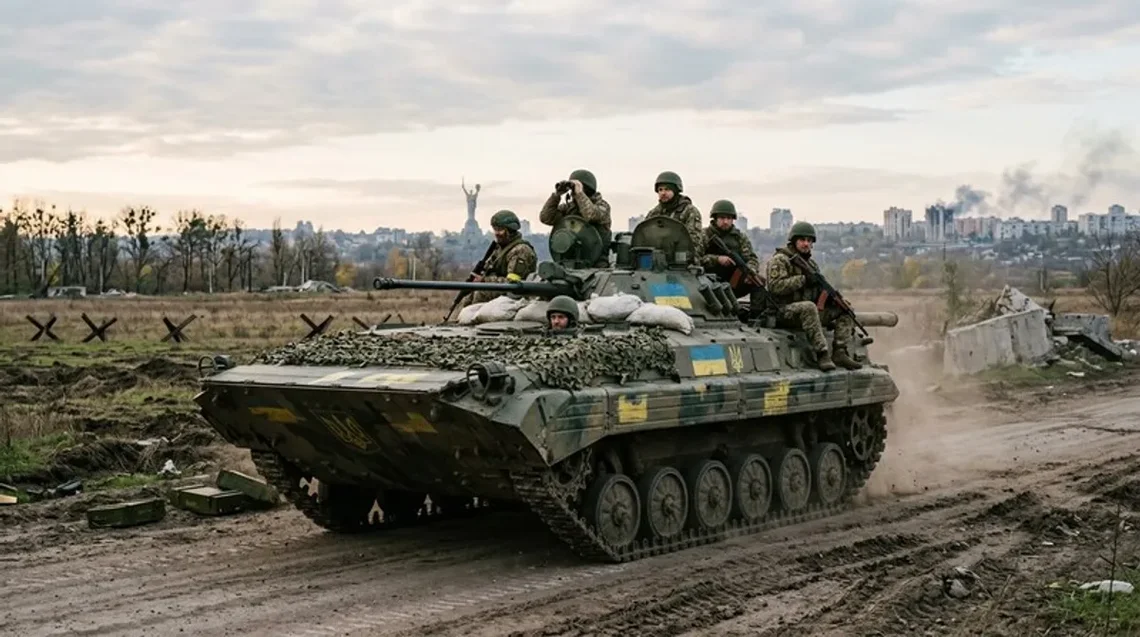
Ukrainian forces have launched a significant counteroffensive operation across the eastern Donbas region, pushing back against entrenched Russian positions along a front line that has remained broadly static for months. Kyiv's military command confirmed the operation is being supported by a fresh influx of NATO-supplied artillery, armoured vehicles, and long-range precision munitions — marking one of the most coordinated Western-backed battlefield efforts since the war's outset, according to officials cited by Reuters and the Associated Press.
Key Context: The Donbas region — comprising the oblasts of Donetsk and Luhansk — has been the focal point of Russian military ambitions since the full-scale invasion began. Russia currently occupies significant portions of both oblasts and has declared their illegal annexation under international law, a move rejected by the United Nations General Assembly in a resolution backed by 143 countries. Ukraine's stated objective remains the full restoration of its internationally recognised territorial borders, including Crimea. (Source: United Nations)
The Scope and Direction of the Offensive
Ukrainian commanders have confirmed that multiple brigades are engaged along several axes in the Donetsk oblast, with the heaviest reported fighting concentrated near the towns of Avdiivka, Toretsk, and Pokrovsk, according to battlefield assessments cited by the Associated Press. The operation represents a departure from the largely defensive posture Kyiv's forces have maintained in recent months after earlier counteroffensive campaigns yielded slower-than-anticipated territorial gains.
Key Axes of Advance
Military analysts tracking the conflict note that Ukrainian forces appear to be probing for weaknesses in Russian defensive lines rather than committing to a single concentrated thrust — a strategy designed to stretch Moscow's logistics and command capacity simultaneously across multiple sectors. The approach reflects lessons learned from prior operations, officials said, when concentrated assaults on well-fortified Russian positions resulted in significant attritional losses. (Source: Foreign Policy)
Related Articles
Satellite imagery reviewed by open-source intelligence communities suggests repositioning of Ukrainian armoured units in the days preceding the announced operation, consistent with preparation for a coordinated push. Russian state media acknowledged fighting in the region but characterised Ukrainian advances as limited, claims that independent analysts have been unable to verify in full.
Drone and Electronic Warfare Dimensions
The counteroffensive has incorporated an expanded use of domestically produced and Western-supplied drone systems, including long-range strike drones capable of targeting Russian logistics hubs well behind the front line. Ukrainian officials said this layered approach — combining ground pressure with deep-strike capabilities — is intended to degrade Russian resupply chains and slow the repositioning of reserves. Electronic warfare interference has also intensified on both sides, complicating communications and drone guidance systems across contested sectors, according to Reuters.
NATO's Role: Weapons, Intelligence, and Coordination
The counteroffensive's timing corresponds with the accelerated delivery of several significant NATO military aid packages. Germany, the United States, France, and the United Kingdom have all confirmed recent deliveries of advanced weapons systems, including additional HIMARS rocket artillery ammunition, Leopard 2 tank variants, and armoured personnel carriers. Collectively, Western governments have committed tens of billions of dollars in military assistance to Ukraine since the full-scale invasion, officials said. (Source: AP)
Intelligence Sharing and Operational Support
Beyond hardware, NATO member states have significantly deepened intelligence-sharing arrangements with Ukrainian command structures. While alliance officials are careful to emphasise that no NATO personnel are directing operations on the ground, assessments from Foreign Policy and independent security research institutions indicate that satellite reconnaissance, signals intelligence, and targeting data provided by Western partners have materially enhanced Ukraine's battlefield planning capacity.
This operational support exists in a deliberate grey zone — substantive enough to shift battlefield dynamics, yet calibrated to avoid formal alliance co-belligerence under international law, analysts said. Russia has repeatedly described Western military assistance as direct participation in the conflict, a legal and political characterisation firmly rejected by NATO members.
For broader context on how the alliance has reconfigured its eastern posture, see the reporting on how NATO bolsters eastern defenses amid Ukraine stalemate and the latest updates on how NATO launches new Eastern Europe defense initiative as part of a broader strategic realignment.
The Ground Reality: Gains, Losses, and the Human Cost
Progress on the ground, while reported by Ukrainian commanders, remains difficult to independently verify in real time. The fog of war in Donbas is particularly dense — the terrain is heavily industrialised, dotted with mine fields, fortified settlements, and dense treelines that obscure movement from aerial observation. Ukrainian military spokesperson communications have pointed to incremental advances in specific grid sectors, but no major town has changed hands at the time of publication, according to the Associated Press.
Civilian Displacement and Humanitarian Impact
Renewed large-scale fighting has accelerated the displacement of remaining civilian populations in front-line communities. The United Nations Office for the Coordination of Humanitarian Affairs has documented a significant increase in internal displacement from the Donetsk region in recent weeks, with tens of thousands of civilians relocated to western Ukrainian cities and abroad since the intensification of hostilities. (Source: United Nations)
Humanitarian access to conflict-affected populations remains severely restricted. Aid organisations operating in eastern Ukraine have reported difficulties reaching communities caught between advancing and retreating forces, raising serious concerns about access to food, medicine, and shelter in areas where civilian infrastructure has been progressively destroyed. Russian strikes on Ukrainian energy and civilian infrastructure have continued in parallel with ground operations, according to Reuters reports from Kyiv.
| Indicator | Ukraine | Russia |
|---|---|---|
| Estimated active front-line troops (Donbas sector) | approx. 60,000–80,000 (Western estimates) | approx. 100,000–120,000 (Western estimates) |
| Primary weapons suppliers | USA, Germany, UK, France, EU member states | Domestic production, North Korea (ammunition), Iran (drones) |
| UN-recognised territorial status | Internationally recognised sovereign territory | Declared annexation — rejected by 143 UN member states |
| Civilian displacement (estimated, conflict duration) | Over 6 million internally displaced | N/A — aggressor state |
| NATO membership status | Candidate / accession process ongoing | Non-member; views NATO expansion as existential threat |
| International sanctions exposure | None — beneficiary of Western economic support | Subject to sweeping G7/EU/UK sanctions packages |
Russia's Military Response and Strategic Calculus
Moscow's military command has responded to the Ukrainian push with intensified artillery barrages and the redeployment of reserve units from adjacent sectors, according to analysts tracking Russian order-of-battle movements. Russian forces retain significant numerical advantages in artillery ammunition — a disparity that has been a defining feature of the conflict — though Western deliveries have incrementally narrowed the gap in certain categories of precision munitions. (Source: Foreign Policy)
Russia's strategic calculus, as assessed by Western defence officials, appears oriented toward absorbing Ukrainian pressure while inflicting attritional losses that erode Kyiv's offensive capacity over time. Moscow's political leadership has shown no indication of willingness to negotiate a settlement that involves relinquishing occupied Ukrainian territory, officials said, making a near-term diplomatic resolution unlikely absent a significant shift in battlefield conditions.
For a fuller picture of recent Russian operational momentum before this counteroffensive, the earlier detailed reporting on how Ukraine reports Russian advances in eastern offensive provides essential background on how both sides arrived at the current moment.
What This Means for the UK and Europe
For Britain and its European partners, the renewed Ukrainian counteroffensive carries strategic implications that extend well beyond the immediate battlefield. The conflict in Donbas is, from a European security perspective, a test of Western resolve — and the outcome will shape the credibility of NATO's deterrence posture for a generation, senior defence analysts have argued. (Source: Foreign Policy)
The United Kingdom has been among Ukraine's most consistent and vocal military supporters, committing billions in military aid, training thousands of Ukrainian soldiers on British soil through Operation Interflex, and providing Storm Shadow cruise missiles — some of the most capable weapons in Kyiv's arsenal. A successful Ukrainian counteroffensive would validate the UK's strategic investment and strengthen arguments for continued and deepened support from more hesitant European partners.
Conversely, a stalled or reversed offensive risks reigniting political debates within European capitals — and in Washington — over the sustainability and ultimate strategic objectives of Western support. Governments in Hungary and Slovakia have already voiced scepticism about open-ended military aid, and any perception of battlefield failure could embolden those voices within broader European Union and NATO councils.
Energy security and economic stability in Europe also remain directly tied to the conflict's trajectory. Russian gas flows to Europe have been dramatically curtailed, and while the continent has made substantial progress in diversifying energy supplies, the economic costs of the war — including refugee integration, defence spending increases, and sanctions regimes — continue to weigh on European economies. (Source: Reuters)
The broader alliance architecture supporting Ukraine is examined in detail in analysis of how NATO eyes expanded eastern presence amid Ukraine stalemate — a strategic posture that the current Ukrainian offensive is both testing and, potentially, helping to justify.
Diplomatic Landscape and the Road Ahead
International diplomatic efforts to broker a ceasefire or peace framework have produced no meaningful progress. Multiple mediation initiatives — from China's twelve-point proposal to African Union diplomatic outreach — have been received sceptically by Kyiv and its Western partners, who argue that any settlement that consolidates Russian territorial gains would reward aggression and set a dangerous precedent for international law. (Source: United Nations)
Ukraine has put forward its own peace framework — President Volodymyr Zelensky's ten-point formula — which demands the complete withdrawal of Russian forces from all occupied territories, security guarantees, war crimes accountability, and restoration of Ukraine's nuclear safety. Russia has rejected this framework entirely. The diplomatic impasse means that the battlefield is currently the primary arena in which the conflict's ultimate shape will be determined.
This counteroffensive, in that context, is not merely a military operation. It is a statement of political intent — that Ukraine, with Western backing, retains the capacity and the will to fight for the full restoration of its sovereignty. For the previous phase of this evolving battlefield story, the comprehensive coverage of the Ukraine launches major counteroffensive in eastern regions provides the foundational operational context from which the current push has developed.
Whether this push achieves the breakthrough Kyiv seeks, stalls into another period of grinding attritional warfare, or produces a new dynamic that forces both sides toward the negotiating table remains to be seen. What is already clear, however, is that the stakes — for Ukraine, for Russia, for Europe, and for the rules-based international order — could scarcely be higher. The coming weeks in Donbas will be watched, with profound attention, from Kyiv to London to Washington and beyond.