
Ukraine launches major counteroffensive in eastern regions
Military pushes to reclaim territory as fighting intensifies
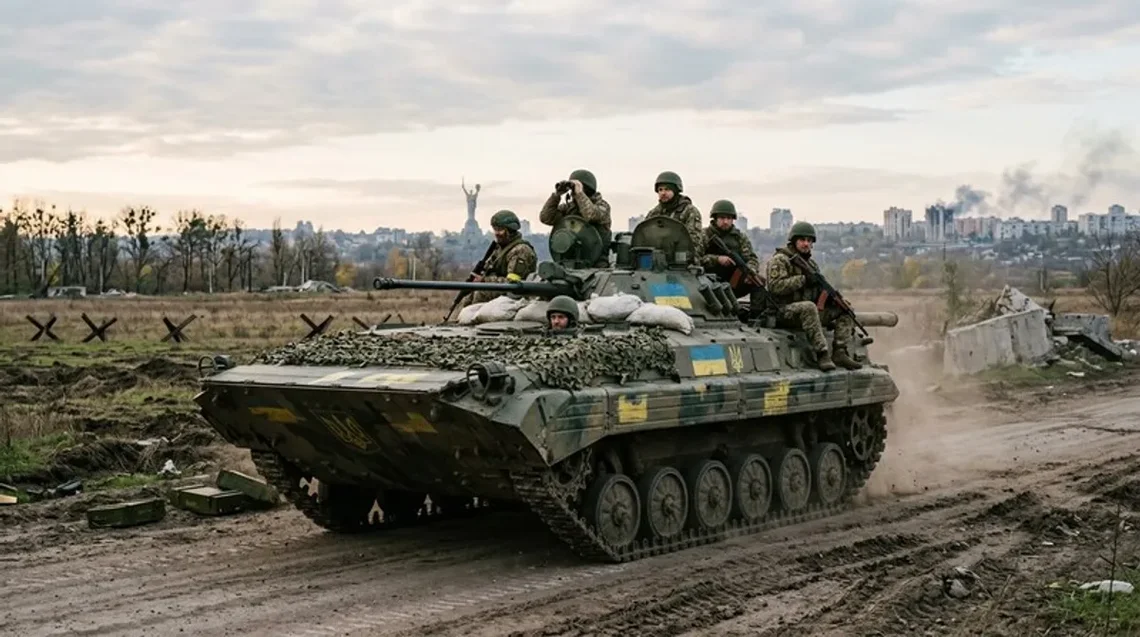
Ukrainian forces have launched a significant counteroffensive across multiple fronts in the country's eastern regions, military officials confirmed, with Kyiv's armed forces pushing into contested territory in an operation described by senior commanders as one of the most coordinated ground assaults since the full-scale war began. The offensive, corroborated by battlefield reports and satellite imagery analysis, signals a renewed determination by Ukraine to retake land seized by Russian forces and shift the strategic momentum ahead of what military analysts warn could be a defining period for the conflict.
Key Context: Ukraine's eastern front spans the Donetsk and Zaporizhzhia oblasts, where Russian forces have maintained entrenched defensive positions bolstered by extensive mine networks, fortified trenches, and electronic warfare systems. Ukrainian commanders have repeatedly cited ammunition shortages and delayed Western deliveries as critical constraints on offensive operations. The latest push follows months of attritional warfare in which neither side achieved substantial territorial gains, according to assessments by the Institute for the Study of War (ISW) and independent battlefield monitors.
The Scope and Direction of the Offensive
Ukrainian ground forces have advanced along several axes in the Donetsk oblast, according to officials cited by Reuters and the Associated Press, targeting Russian defensive lines that have held firm through months of grinding attrition. The military's general staff confirmed engagements in multiple settlement zones without disclosing specific coordinates for operational security reasons.
Multiple Axes of Advance
Military analysts tracking open-source intelligence, including geolocated video footage and intercepted communications, indicate Ukrainian units have made measured gains along the southern Donetsk front while simultaneously applying pressure further north. The operational design, according to defence analysts cited in Foreign Policy, reflects a doctrine of forcing Russian commanders to spread reserves across multiple sectors rather than concentrating them at a single breakthrough point.
Related Articles
Ukraine's use of drone-guided artillery, long-range strike capabilities, and combined-arms manoeuvre appears to mark a tactical evolution from earlier phases of the counteroffensive, officials said. Western-supplied armoured vehicles and air defence assets have reportedly been integrated into the assault formations, though exact unit compositions have not been publicly confirmed by Kyiv's Ministry of Defence.
Russian Defensive Response
Russian military bloggers — a significant source of frontline information given restrictions on independent journalism inside Russia — acknowledged Ukrainian advances in specific grid sectors, according to monitoring by Reuters correspondents. Moscow's Ministry of Defence characterised the assaults as repelled or contained, a claim that independent monitors said could not be fully verified in real time. Russian forces have reportedly deployed additional reserve units and intensified drone and glide bomb strikes against Ukrainian logistics corridors in response to the renewed pressure, according to AP dispatches from the region.
Strategic Significance and War Trajectory
The timing of the counteroffensive carries considerable strategic weight. Coming after a protracted period of positional warfare that led some Western commentators to question whether Ukraine could sustain meaningful territorial gains, the operation is intended in part to demonstrate continued offensive capability to allies and domestic audiences alike, analysts said.
The Importance of Donetsk
Control of the Donetsk oblast has been central to Russia's stated war objectives since the outbreak of full-scale hostilities. Russian forces have sought to consolidate control over the entirety of the administrative region, and Ukrainian military planners have correspondingly prioritised disrupting that ambition. Retaking even limited but strategically significant territory along key road and rail corridors could complicate Russian supply lines and create conditions for future operations, according to assessments published by Foreign Policy and the Royal United Services Institute (RUSI).
The broader calculus involves not only battlefield terrain but the political signal sent to Moscow, Washington, Brussels, and Kyiv's own population ahead of what could be another difficult winter of energy infrastructure strikes and civilian hardship, officials said.
| Period | Key Development | Territorial Outcome | International Response |
|---|---|---|---|
| Early conflict phase | Russian forces advance on multiple fronts including Kyiv | Russia captures large swaths of southern and eastern Ukraine | NATO activates rapid response units; Western sanctions begin |
| Kharkiv counteroffensive | Ukraine launches surprise offensive in northeast | Ukraine recaptures over 6,000 sq km rapidly | Western allies accelerate arms deliveries; EU expands sanctions |
| Kherson operation | Ukrainian forces push across Dnipro river axis | Kherson city liberated; river remains contested boundary | G7 pledges continued military and economic support |
| Eastern attritional phase | Frontlines largely static; intense fighting around Avdiivka, Bakhmut | Russia makes incremental gains at high human cost | UN Security Council remains deadlocked; aid packages debated |
| Current offensive | Ukraine launches coordinated multi-axis ground assault in east | Early-stage; gains reported but not independently verified in full | NATO allies monitoring closely; diplomatic pressure on Russia continues |
Western Military and Diplomatic Support
The counteroffensive is unfolding against a backdrop of sustained but politically contested Western military assistance. The United States, United Kingdom, Germany, and France remain the principal suppliers of weaponry, intelligence-sharing, and financial aid to Kyiv, though debates over the scope and pace of that support have intensified in several allied capitals, according to AP and Reuters reporting.
The Role of NATO Partners
NATO allies have significantly expanded their eastern posture in parallel with Ukraine's operational tempo. The alliance has reinforced positions in Poland, the Baltic states, Romania, and Slovakia with additional troop rotations and pre-positioned equipment, a process documented in detail by NATO bolstering eastern defences amid the Ukraine stalemate and subsequent policy announcements from Brussels. Defence ministers from allied nations have repeatedly stressed that any weakening of resolve risks emboldening Russian strategic ambitions beyond Ukraine's borders.
Further elaborating on the alliance's posture, NATO's new Eastern Europe defence initiative has drawn increased attention as the counteroffensive develops, with planners seeking to ensure that any escalatory Russian response does not spill across internationally recognised borders into NATO territory. Separately, analysis of longer-term alliance positioning has centred on NATO's expanded eastern presence amid the stalemate, a shift that reflects structural changes to collective defence rather than temporary crisis measures.
Sanctions Pressure and Economic Warfare
On the economic front, the European Union has maintained and periodically deepened its sanctions regime against Moscow. As the counteroffensive was confirmed, analysts noted that measures documented in reporting on how the EU tightened Russia sanctions over the Ukraine offensive continue to constrain Moscow's access to dual-use technologies, financial instruments, and energy revenue — though enforcement gaps through third-country circumvention remain a persistent challenge, according to assessments cited by Foreign Policy and the European Council on Foreign Relations (ECFR).
The Humanitarian Dimension
Renewed offensive operations inevitably intensify the humanitarian crisis affecting millions of civilians in and around active combat zones. The United Nations Office for the Coordination of Humanitarian Affairs (OCHA) has documented the severe displacement burden across eastern Ukraine, with hundreds of thousands of people living in proximity to active frontlines under deteriorating conditions.
Civilian Displacement and Infrastructure
UN reports indicate that water, electricity, and heating infrastructure in frontline communities remains critically vulnerable to military damage, placing elderly residents and those unable to evacuate in acute danger as military operations intensify. Humanitarian organisations operating under access constraints have called for protected corridors, a demand that has gone largely unmet given the operational priorities of both sides, officials said. (Source: United Nations Office for the Coordination of Humanitarian Affairs)
The situation at the UN Security Council deadlock on a Ukraine arms embargo has further complicated multilateral humanitarian coordination, with Russia's veto power repeatedly blocking binding resolutions that could impose ceasefire obligations or strengthen civilian protection mandates. Western diplomats have characterised the council's paralysis as a structural failure with long-term implications for international law and conflict resolution mechanisms, according to Reuters.
What This Means for the UK and Europe
For Britain and its European partners, the Ukrainian counteroffensive carries direct strategic and fiscal implications. The United Kingdom has committed billions in military assistance to Kyiv, including Storm Shadow cruise missiles, armoured vehicles, and training programmes for Ukrainian personnel on British soil. A successful Ukrainian push in the east would validate that investment and strengthen arguments in Whitehall and Westminster for sustained, long-term commitment — whereas a stalled or reversed offensive would intensify domestic political pressure on the government to reassess the scope of support, officials said.
Across Europe, governments are navigating the dual pressures of continued solidarity with Ukraine and the economic strain that prolonged conflict imposes on defence budgets, energy markets, and inflation-weary populations. German, French, and Polish officials have all publicly reaffirmed support for Kyiv while privately acknowledging the political complexity of sustaining public consensus through what may be another protracted phase of conflict, according to AP and Reuters diplomatic correspondents based in Berlin and Warsaw.
The risk of escalation remains the most acute concern for European security planners. Any significant Ukrainian breakthrough that threatens Russian-held territory Russia has nominally annexed — and which Moscow has indicated it considers subject to nuclear doctrine — raises the stakes in ways that NATO planners are monitoring with extreme attention, defence officials said. (Source: Reuters; Foreign Policy)
Outlook: A Conflict at a Critical Juncture
Military analysts caution against premature conclusions about the counteroffensive's ultimate outcome. Initial gains in offensive operations frequently encounter consolidation challenges as defenders reposition reserves, lay additional minefields, and call in precision strike assets. Ukraine's experience in previous counteroffensive cycles has demonstrated both the capacity for rapid territorial recapture and the difficulty of exploiting breakthroughs at operational depth before Russian defences adapt.
What is clear, according to multiple independent assessments from RUSI, ISW, and Foreign Policy contributors, is that Ukraine has not abandoned the goal of reclaiming occupied territory through military means and continues to develop the operational and institutional capability to prosecute complex combined-arms offensives despite significant resource constraints. Whether the current push achieves its objectives — territorial, psychological, and diplomatic — will depend on factors including Western ammunition resupply rates, Russian reserve availability, and the endurance of Ukrainian frontline formations under conditions of intense pressure.
For European capitals, Washington, and London, the coming weeks will offer a sharper test of whether long-term support commitments translate into battlefield outcomes capable of shifting the war's fundamental trajectory — or whether the conflict settles once again into an attritional grind with no clear end in sight. (Source: Reuters; Associated Press; UN reports; Foreign Policy)