
Ukraine pushes deeper into Russian territory amid NATO support surge
Western military aid accelerates as frontline shifts eastward
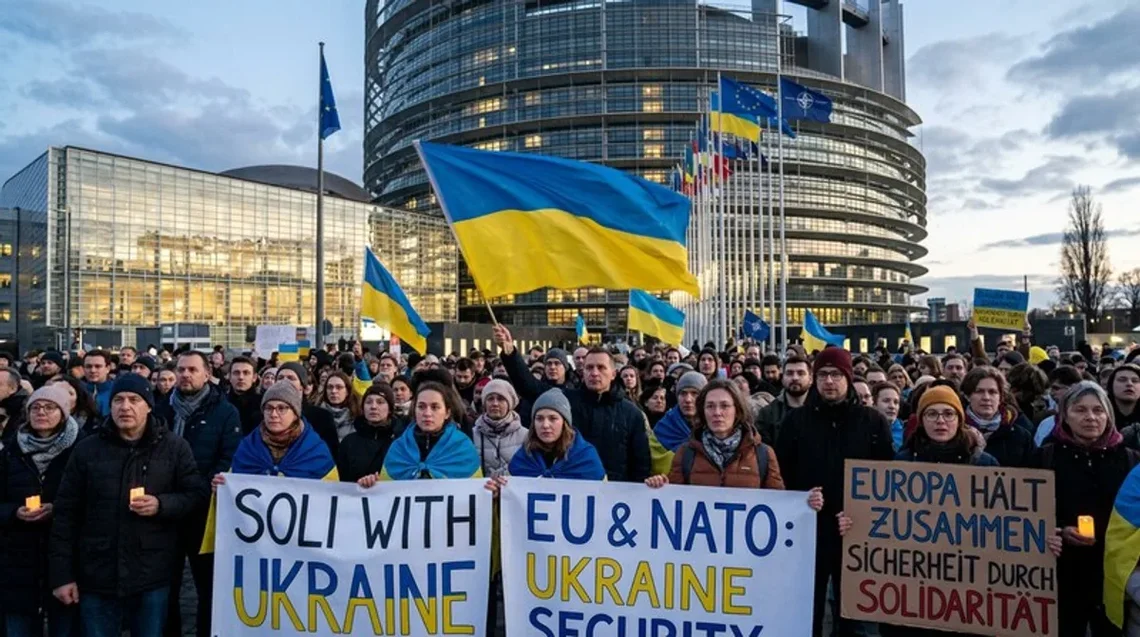
Ukrainian forces have pushed further into Russian territory along multiple axes, with Kyiv's military command confirming advances in the Kursk and Belgorod border regions as an accelerated stream of NATO-supplied weaponry reaches frontline units. The shift marks one of the most significant periods of Ukrainian cross-border operational activity since the war's opening phase, with Western alliance members publicly committing to sustained and expanded military assistance packages that analysts say could reshape the trajectory of the conflict.
Key Context: Ukraine launched a surprise ground incursion into Russia's Kursk Oblast, marking the first time a foreign military force had seized Russian territory since World War Two. The operation, described by Ukrainian officials as a strategic diversion designed to stretch Russian defensive lines, has drawn international attention and renewed debate within NATO about the permissible scope of Western military support. The United Kingdom, the United States, Germany, and France are among the primary suppliers of weapons systems now in active use along the expanded front. (Source: Reuters, AP)
The Frontline Picture: Advances, Counteroffensives, and Tactical Complexity
Ukrainian ground forces have consolidated positions inside Russian-administered territory while continuing to defend against Russian pressure in the Donetsk region, where Moscow's forces have maintained a steady push toward key logistics and population centres. Military analysts monitoring the situation describe the operational landscape as one of deliberate Ukrainian overextension of Russian command resources — trading territorial pressure in the east for disruption deeper inside Russia's own administrative borders.
Cross-Border Operations and Their Strategic Logic
According to assessments cited by Foreign Policy and corroborated by independent battlefield monitoring groups, Ukrainian commanders have used the Kursk incursion to force Russian military planners to redeploy units that had previously been earmarked for offensive operations in Donetsk and Zaporizhzhia. The effect, officials said, has been a measurable slowdown in Russian advance tempo in at least two eastern sectors. Ukrainian President Volodymyr Zelensky has publicly framed the cross-border operations as leverage — a card to be played in any future diplomatic settlement rather than a permanent territorial claim.
Related Articles
For more on evolving battlefield dynamics, see coverage of how Ukraine pushes deeper into Russian territory and the tactical calculations driving those decisions.
Russian Defensive Response
Russian military authorities have acknowledged the incursions while downplaying their strategic significance in state media. However, according to AP reporting, Moscow has redeployed an estimated 10,000 to 12,000 troops from existing eastern assault groups to shore up the Kursk border zone. Russian airstrikes against Ukrainian rear areas and civilian infrastructure have intensified in parallel, a pattern analysts characterise as punitive escalation designed to raise the domestic cost of continued Ukrainian offensives. (Source: AP)
NATO's Support Surge: What Is Being Sent and Why Now
The pace of Western military assistance has accelerated markedly in recent months, with alliance members approving delivery of long-range artillery systems, armoured vehicles, air defence batteries, and — in several cases — longer-range missile capabilities that carry with them implicit authorisations for use against targets inside Russia. The political signal from Brussels and allied capitals has been deliberately clear: NATO members are not stepping back from Ukraine.
Key Weapon Systems and Donor Commitments
The United States has approved additional tranches of military assistance valued at several billion dollars, including further deliveries of HIMARS multiple-launch rocket systems, Patriot air defence interceptors, and armoured bridging equipment. The United Kingdom has committed additional supplies of Storm Shadow cruise missiles — one of the few long-range strike systems that Ukrainian forces have used against targets inside Russian-held territory and, in confirmed instances, inside Russia itself. Germany has accelerated delivery of Leopard 2 main battle tanks and IRIS-T air defence systems, officials said. (Source: Reuters)
The broader alliance commitment is detailed in recent coverage of how Ukraine Pushes Forward as NATO Vows Sustained Support, which outlines the political consensus underpinning current Western strategy.
The Air Defence Priority
Among the most pressing requests from Kyiv has been expanded air defence coverage. Russian missile and drone strikes against Ukrainian cities, energy infrastructure, and grain-handling facilities have continued at a punishing rate. According to UN reports, civilian infrastructure damage from aerial bombardment has left millions of Ukrainians facing disruption to heating, water, and electricity networks. Ukraine's defence ministry has publicly appealed for additional Patriot batteries and European-manufactured systems to plug coverage gaps that Russian strike planners have learned to exploit. (Source: United Nations)
Analysis of Kyiv's evolving air defence requirements is examined in depth in coverage of how Ukraine seeks new NATO air defense as Russia intensifies strikes — a demand that has become one of the defining diplomatic pressure points between Kyiv and its Western partners.
Alliance Cohesion: Tensions, Red Lines, and the Escalation Debate
Beneath the public show of unity, NATO allies continue to navigate significant internal disagreements about the permissible limits of support. Several European governments, particularly those with historical ties to or economic dependencies on Russia, have urged caution about authorising Ukrainian strikes on Russian territory with Western-supplied weapons. Others, led by the Baltic states, Poland, and the United Kingdom, have taken the opposite position — arguing that restricting Ukraine's operational reach only benefits Moscow.
The Authorisation Question
The question of whether Ukraine may use Western weapons to strike targets inside Russia — beyond occupied Ukrainian territories — remains politically sensitive within the alliance. The United States has progressively relaxed its restrictions, officials said, moving from prohibiting strikes inside Russia to allowing limited cross-border use under specific operational conditions. The United Kingdom has taken a similarly graduated approach with Storm Shadow. France and Germany, while broadly supportive, have been more circumspect in their public statements on the matter. (Source: Foreign Policy)
The underlying alliance dynamics are tracked in coverage of how NATO allies boost Ukraine aid amid renewed Russian offensive — including the internal negotiations that shape what actually reaches Ukrainian forces.
Country Commitments: Military Aid Comparison
| Country | Key Systems Committed | Estimated Aid Value | Position on Strikes Inside Russia |
|---|---|---|---|
| United States | HIMARS, Patriot, Abrams tanks, F-16 support | $60bn+ (cumulative) | Conditional authorisation granted |
| United Kingdom | Storm Shadow missiles, Challenger 2 tanks, air defence | £7bn+ (cumulative) | Authorised for use inside Russia |
| Germany | Leopard 2, IRIS-T, Patriot batteries | €28bn+ (cumulative) | Cautious; no public authorisation for Russia strikes |
| France | SCALP missiles, Caesar howitzers, armoured vehicles | €3bn+ (cumulative) | Debated; Macron has left ambiguity deliberate |
| Poland | MiG-29 aircraft, artillery, ammunition | $4bn+ (cumulative) | Strongly supportive of expanded use |
| Baltic States (combined) | Artillery, anti-tank systems, ammunition | Proportionally highest per GDP | Advocates for fewest restrictions on Ukraine |
(Source: Reuters, AP, Kiel Institute for the World Economy)
Humanitarian Dimensions: Displacement, Infrastructure, and International Law
The intensification of fighting on multiple fronts has deepened an already severe humanitarian crisis. UN reports document the continuing displacement of civilians both inside Ukraine and across the Russian border regions now affected by Ukrainian military operations — a development that has introduced new complexity into international humanitarian law debates. Russian civilians in Kursk Oblast have been evacuated from dozens of settlements, Russian regional authorities confirmed, according to AP reporting.
Ukrainian Civilian Casualties and Infrastructure Collapse
Inside Ukraine, the UN Office for the Coordination of Humanitarian Affairs has recorded ongoing damage to power generation, water treatment, and heating infrastructure from Russian aerial attacks. Millions of Ukrainians are currently living under conditions of periodic energy blackout, with winter seasons placing particular pressure on vulnerable populations. International humanitarian organisations have warned that reconstruction requirements already run into the hundreds of billions of dollars, a figure that grows with each successive wave of strikes. (Source: United Nations)
What This Means for the UK and Europe
For the United Kingdom and its European neighbours, the evolving situation in Ukraine carries consequences that extend well beyond the immediate theatre of conflict. British defence officials have been among the most vocal in arguing that a Russian victory — or a ceasefire that locks in Russian territorial gains — would fundamentally destabilise the European security order and embolden further adventurism. The UK's commitment of Storm Shadow missiles and its role in training Ukrainian personnel reflects a strategic calculation that the cost of Ukrainian failure would outweigh the risks of sustained involvement.
European energy markets remain sensitive to any escalation that could affect transit routes or infrastructure. European governments are simultaneously managing domestic political pressures from populations experiencing cost-of-living strains partly attributable to the energy disruption triggered by the war. For EU member states, the question of Ukrainian accession — now an active candidate process — adds a long-term institutional dimension to short-term military and financial decisions.
Intelligence-sharing arrangements between the UK, the US, and European allies have deepened considerably since the war's outbreak, officials said, with real-time battlefield intelligence flowing to Ukrainian command structures in ways that represent a qualitative shift in Western involvement even without the formal deployment of allied combat troops. That involvement carries its own escalatory logic — one that European capitals are managing with growing awareness that the conflict's end state will define continental security for a generation.
Further context on the evolving alliance posture can be found in reporting on how NATO allies bolster Ukraine aid amid Russian offensive, which documents the specific commitments made at recent allied coordination meetings.
As Ukrainian forces continue to hold and, in some sectors, expand their operational footprint inside Russian territory, the central question for Western policymakers is no longer whether to support Kyiv but how far that support can go before it triggers the kind of direct confrontation all sides have publicly said they wish to avoid. The answer, officials across multiple capitals suggest, is still being written — on the ground, in diplomatic corridors, and in the quiet briefing rooms where alliance strategy is shaped between the headlines.