
Ukraine Reports Gains as NATO Pledges New Aid Package
Alliance commits additional military support amid ongoing frontline operations
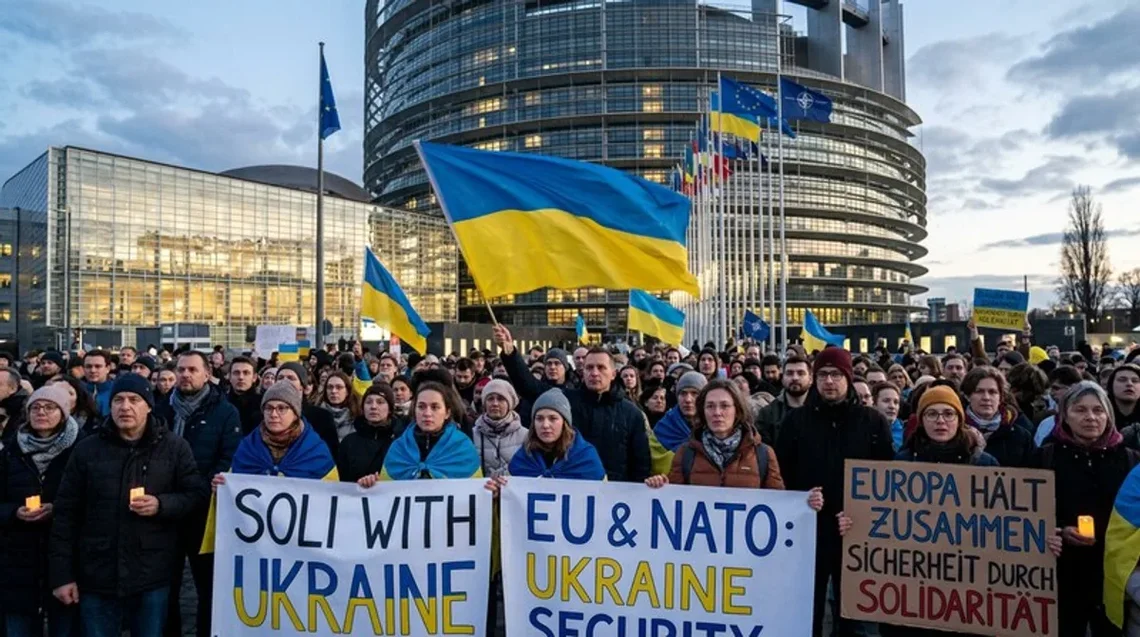
Ukrainian forces have reported territorial advances along multiple sections of the eastern front, as NATO defence ministers convened to formalise a new military aid package estimated at several billion euros in combined contributions from member states. The announcements signal a sustained allied commitment to Kyiv at a moment when battlefield conditions remain fluid and diplomatically charged.
Key Context: NATO's collective military assistance to Ukraine has surpassed $100 billion in total pledges since the full-scale Russian invasion began, spanning artillery ammunition, air defence systems, armoured vehicles, and financial support. The United Kingdom remains one of the largest bilateral contributors outside the United States, having committed advanced long-range missiles, air defence interceptors, and training programmes for tens of thousands of Ukrainian troops on British soil. (Source: NATO Secretariat, UK Ministry of Defence)
Frontline Developments: What Ukrainian Forces Are Claiming
Ukraine's General Staff confirmed incremental advances in the Donetsk and Zaporizhzhia regions, with officials citing pressure on Russian supply lines and the recapture of several fortified positions. While independent verification of battlefield claims remains difficult, imagery analysis by open-source intelligence communities corroborates some of the reported Ukrainian movements, according to assessments reviewed by Reuters.
Donetsk Axis: Pressure Mounts on Russian Positions
Ukrainian commanders have concentrated efforts along the Donetsk axis, where grinding urban and industrial warfare has dominated operations for much of the conflict. Officials said Ukrainian units have pushed forward near key logistical nodes, though Russian forces retain considerable defensive depth. Casualty figures provided by either side could not be independently verified. According to AP, Russian forces have continued to deploy layered mine fields and electronic warfare capabilities to slow Ukrainian momentum.
Related Articles
The intensity of fighting has prompted renewed calls from Kyiv for faster delivery of promised ammunition stockpiles, particularly 155mm artillery shells, which remain a critical bottleneck in Ukraine's ability to sustain offensive pressure. (Source: Reuters, Ukrainian Ministry of Defence)
Zaporizhzhia: A Secondary But Significant Front
In the south, Ukrainian forces have reportedly maintained pressure along the Zaporizhzhia front, where any breakthrough toward the Sea of Azov would represent a strategically significant development by threatening the land corridor linking Russia to occupied Crimea. Officials said progress in this sector has been slower than anticipated, reflecting the density of Russian defensive fortifications constructed over many months. Foreign Policy has reported that Russia has invested heavily in layered trench systems and anti-vehicle obstacles across the southern axis, drawing comparisons to First World War-era defensive architecture.
NATO's New Aid Package: What Has Been Pledged
Alliance defence ministers concluded a meeting at NATO headquarters in Brussels with commitments covering air defence interceptors, additional armoured vehicles, and expanded artillery ammunition production agreements. Officials said the package is designed not only to address immediate battlefield requirements but to signal long-term allied resolve ahead of a forthcoming NATO summit. (Source: NATO, AP)
Air Defence Remains the Priority
Among the most urgent components of the new package is the provision of additional air defence interceptors, including Patriot missiles and IRIS-T compatible munitions. Ukraine has consistently warned that its air defence stockpiles face critical depletion as Russia continues to deploy a combination of ballistic missiles, Shahed-series drones, and hypersonic weapons against civilian infrastructure and military targets. Those concerns are explored in depth in our earlier coverage of how Ukraine seeks new NATO air defence as Russia intensifies strikes.
The UN Office for the Coordination of Humanitarian Affairs has documented significant damage to energy infrastructure, warning that continued strikes risk cascading humanitarian consequences heading into winter months. (Source: UN OCHA)
Ammunition Production: A Structural Response
Beyond direct transfers, NATO members have agreed to accelerate joint ammunition production, addressing what Secretary-General Jens Stoltenberg has described as a fundamental industrial capacity problem. European defence ministries have signed multi-year contracts with domestic manufacturers to expand output, with Germany, France, and Poland among the leading contributors to the industrial ramp-up. According to Reuters, EU-level mechanisms under the European Peace Facility have also been activated to co-finance ammunition procurement on behalf of Ukraine.
This structural investment reflects a shift in allied thinking — from crisis-response donation to sustained institutional support — a trajectory examined in detail in our report on how NATO allies boost Ukraine aid amid renewed Russian offensive.
The Diplomatic Landscape: Alliance Cohesion and Its Strains
While the public messaging from NATO capitals has emphasised unity, analysts and diplomats acknowledge persistent internal tensions over the pace, scale, and conditions of assistance. Hungary continues to block certain EU-level measures, and debate within the alliance over the authorisation of Western-supplied weapons for strikes deep inside Russian territory remains unresolved, according to Foreign Policy.
Washington's Role: Constrained but Central
The United States remains the single largest contributor to Ukraine's military capacity, though Congressional dynamics have at times slowed the release of approved funding. Officials said the Biden administration has worked to frontload deliveries in anticipation of potential future political constraints. The latest package approved by Washington includes cluster munitions, additional HIMARS rocket artillery ammunition, and drone interception systems, according to AP.
The question of what a potential change in US political leadership could mean for Ukraine's war effort has sharpened focus among European capitals on building independent capacity — a discussion that directly informs the broader NATO strategic posture reviewed in our analysis of NATO bolsters eastern defences amid Ukraine stalemate.
Russia's Position and Strategic Calculations
Moscow has characterised the latest NATO commitments as escalatory and has renewed threats regarding the use of advanced Western weaponry near Russian territory. Russian officials said any further expansion of weapons authorisations would be met with proportional responses, without specifying the nature of such measures. The Kremlin has also continued to frame the conflict as a proxy confrontation with the Western alliance rather than a bilateral war with Ukraine.
Russia's economy has shown greater resilience to Western sanctions than many analysts predicted, sustained by elevated energy revenues from redirected exports to China, India, and other markets, according to UN trade data. However, Foreign Policy analysts note that longer-term structural costs — including demographic pressure from military casualties and emigration of skilled workers — may impose significant constraints on Russia's war-making capacity over time. (Source: UN Conference on Trade and Development, Foreign Policy)
What This Means for the UK and Europe
For Britain and its European partners, the latest developments carry immediate and long-term strategic weight. The UK has positioned itself as one of Ukraine's most consistent and vocal supporters, committing Storm Shadow cruise missiles, Challenger 2 tanks, and a sustained training programme. Officials from the UK Ministry of Defence said British military trainers have now worked with more than 30,000 Ukrainian personnel, contributing significantly to the tactical competence of Ukrainian frontline units.
British Strategic Interests
Beyond the moral and political dimensions, UK policymakers frame continued support in direct national security terms. A Russian strategic victory in Ukraine, officials said, would fundamentally alter the European security architecture and embolden revisionist challenges to the international rules-based order. The UK's posture is also shaped by its obligations under the 1994 Budapest Memorandum framework and its broader role within the NATO alliance, where it seeks to maintain credibility and influence post-Brexit.
Economically, the conflict has contributed to inflationary pressures in the UK through energy market disruptions, though these have moderated as European states diversified supply chains away from Russian gas. The long-term defence spending implications are more significant: the British government faces growing pressure from allies and domestic defence analysts to raise its defence budget toward three percent of GDP from its current two percent baseline. (Source: UK Ministry of Defence, NATO burden-sharing assessments)
For continental Europe, the war has accelerated a fundamental recalibration of defence spending, industrial policy, and alliance strategy. Germany's Zeitenwende — its declared generational shift in defence posture — has produced meaningful increases in military expenditure, though critics argue implementation has lagged behind political rhetoric. Poland has emerged as both one of the most committed supporters of Ukraine and one of the fastest-growing defence spenders within the alliance, reflecting its position on NATO's eastern flank.
Earlier reporting on this evolving alliance posture is available in our coverage of Ukraine Pushes Forward as NATO Vows Sustained Support.
Outlook: Sustained Conflict, Sustained Commitment
The trajectory of the conflict suggests a prolonged war of attrition in which material support, industrial capacity, and alliance cohesion will be as determinative as battlefield tactics. Ukrainian officials have been explicit that without continued and expanded Western assistance, the military balance risks tilting in Russia's favour due to sheer weight of numbers and materiel.
| Country / Bloc | Estimated Total Aid Committed | Key Contributions | Current Status |
|---|---|---|---|
| United States | $75+ billion | HIMARS, Patriot, artillery, financial support | Active deliveries ongoing |
| European Union (collective) | €27+ billion | Ammunition, armoured vehicles, financial aid | New production contracts signed |
| United Kingdom | £7+ billion | Storm Shadow, Challenger 2, air defence, training | Active; further pledges under review |
| Germany | €17+ billion | Leopard 2 tanks, IRIS-T, ammunition | Deliveries ongoing; budget debates continue |
| Poland | $4+ billion | Tanks, artillery, logistics support | Ongoing; NATO eastern flank role expanding |
| Canada | CAD $2+ billion | Artillery, armoured vehicles, financial aid | Active |
(Source: Kiel Institute for the World Economy, NATO Secretariat, national defence ministries)
NATO's posture ahead of its next major summit reflects the alliance's recognition that Ukraine's fight is not merely a bilateral dispute but a test of the post-Cold War security order. The latest aid package, however substantial, represents one episode in what Western officials increasingly describe as a generational commitment. For Kyiv, the immediate imperative is translating pledged support into battlefield capability before conditions on the ground deteriorate further. For London, Brussels, and Washington, the challenge is sustaining political will — and industrial capacity — across what may be years, not months, of continued conflict.
Further background on the alliance's evolving military strategy is available in our report on how Ukraine launches major counteroffensive as NATO pledges additional aid.