
Ukraine Reports Gains in Eastern Offensive
Forces push deeper into contested Donbas region
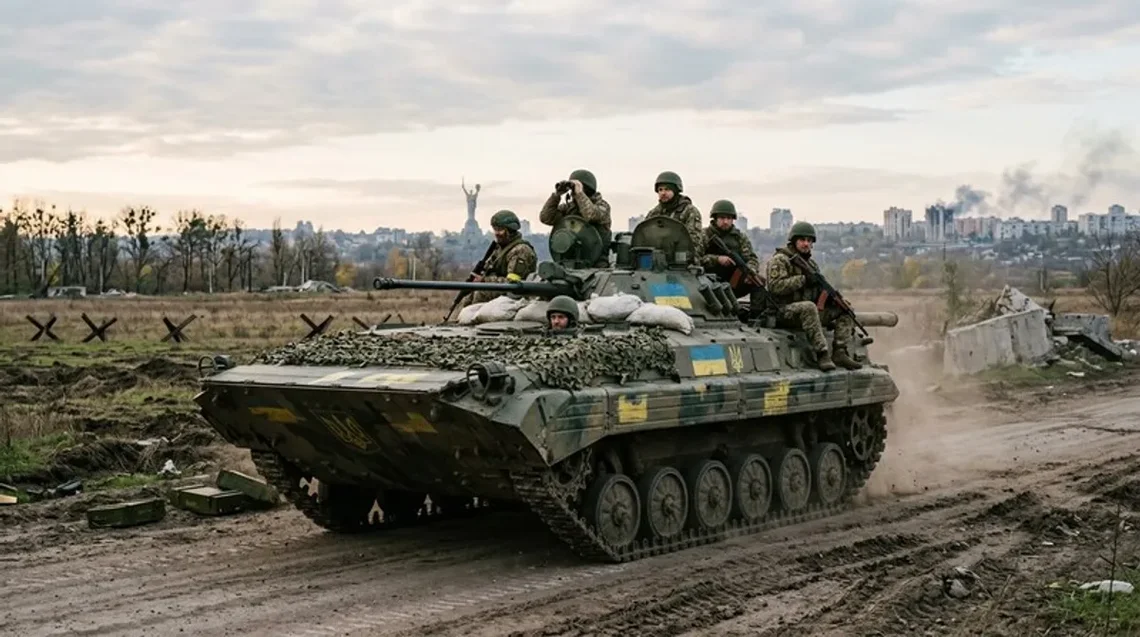
Ukrainian forces have pushed deeper into contested territory in the eastern Donbas region, with military officials in Kyiv reporting tactical advances along several front-line positions in what commanders are describing as a significant shift in momentum. The developments mark one of the more consequential periods of ground activity in recent months, with Kyiv claiming the recapture of fortified positions that Russian forces had held for an extended period, according to officials cited by Reuters and the Associated Press.
Key Context: The Donbas region — comprising the oblasts of Donetsk and Luhansk — has been the epicentre of fighting since Russia launched its full-scale invasion. Russia currently claims to have annexed both oblasts, a position rejected by Ukraine, the United Nations, and the overwhelming majority of the international community. Control of the region holds enormous strategic, economic, and symbolic value for both sides. UN reports have consistently documented extensive civilian casualties and infrastructure destruction across Donbas throughout the conflict.
The Latest Advances: What Ukrainian Forces Are Claiming
Ukrainian military officials have reported advances along the Toretsk and Pokrovsk axes, two of the most fiercely contested corridors in the broader Donetsk theatre. Brigade commanders, speaking through official military channels, stated that infantry units supported by armoured vehicles have consolidated positions previously lost to Russian pressure, pushing back defensive lines in key sectors. According to the Associated Press, Ukrainian drone units played a critical role in suppressing Russian artillery before ground forces moved forward.
Drone Warfare Reshapes Tactical Gains
First-person-view (FPV) drones have increasingly defined the character of front-line engagements in the Donbas, according to military analysts and battlefield reporting compiled by Reuters. Ukrainian forces have reportedly deployed domestically produced drone systems in higher volumes in recent weeks, neutralising Russian armoured vehicles and disrupting logistical supply lines ahead of infantry advances. Western defence officials, speaking to Reuters on condition of anonymity, said that Ukraine's drone production capacity has grown considerably, providing a battlefield equaliser against Russian numerical advantages in personnel and artillery systems.
Related Articles
Positions Recaptured Along Toretsk Front
The Toretsk sector, a formerly industrial town that has seen near-constant combat, has been identified by Ukrainian commanders as a priority area. Officials said Ukrainian units have retaken positions on the town's western outskirts, though the overall battle for full control remains ongoing. Independent open-source analysts tracking geolocated footage corroborate Ukrainian claims of movement in the sector, though the overall picture remains fluid. (Source: Reuters)
Russian Response and Counter-Pressure
Moscow has not acknowledged the Ukrainian advances as described. The Russian Ministry of Defence, in its daily battlefield communiqués, has continued to claim that Russian forces repelled Ukrainian attacks and inflicted significant personnel losses. Independent assessment of Russian official statements has consistently shown discrepancies with on-the-ground reporting, according to Foreign Policy's ongoing conflict analysis. Russian forces have responded with intensified missile and glide-bomb strikes across rear Ukrainian positions in Donetsk oblast, targeting logistics nodes and troop staging areas, officials said.
Glide Bomb Campaigns Continue to Exact Heavy Toll
Russia's use of modified KAB-series glide bombs continues to pose one of the most severe threats to Ukrainian positions, according to defence reporting cited by the Associated Press. The weapons, released from aircraft beyond the range of most Ukrainian air-defence systems, have caused widespread destruction across front-line towns and intermediate supply routes. Ukrainian military officials have repeatedly called on Western partners to supply longer-range air-defence interceptors capable of engaging the launch aircraft before bombs are released. (Source: AP)
Human Cost and Humanitarian Conditions
The renewed intensity of fighting has compounded what UN reports have described as one of the worst ongoing humanitarian situations in Europe. Civilian populations remaining in contested areas of Donetsk oblast face severe shortages of water, heating fuel, and medical supplies. The United Nations Office for the Coordination of Humanitarian Affairs has documented repeated strikes on civilian infrastructure across the region, including hospitals and water treatment facilities, attributing the damage primarily to Russian aerial and artillery bombardment. UN humanitarian coordinators have continued to press for unobstructed access to conflict-affected populations, though access has remained severely limited in active combat zones. (Source: UN reports)
Displacement Numbers Remain Staggering
According to UN data, millions of Ukrainians remain displaced internally or as refugees abroad, with eastern Ukraine accounting for a disproportionate share of those forced from their homes. Humanitarian organisations operating in rear areas of Donetsk report that many displaced individuals are unable to return even to areas nominally under Ukrainian control due to ongoing shelling. International aid agencies have warned that donor fatigue in Europe and North America is beginning to affect the volume of humanitarian supplies reaching affected communities. (Source: UN reports)
Western Military and Political Support
The tactical developments in Donbas come against a backdrop of continued, if at times fractious, Western military support for Ukraine. NATO member states have collectively committed substantial packages of artillery ammunition, armoured vehicles, and air-defence components, though Ukrainian officials have consistently argued that delivery timelines fall short of battlefield needs. The United States Congress approved a significant supplemental aid package earlier this period, restoring a supply pipeline that had been interrupted by prolonged political deadlock in Washington, according to Reuters.
European Union member states have simultaneously been pursuing their own bilateral and multilateral support mechanisms. The EU's European Peace Facility, a financial instrument used to reimburse member states for military donations to Ukraine, has been replenished on multiple occasions. For further context on how economic pressure has been applied alongside military support, see the analysis of how EU Tightens Russia Sanctions Over Ukraine Offensive, which details the latest restrictive measures targeting Russian energy revenues and defence-linked financial institutions.
Ammunition Shortfalls Remain a Structural Problem
Despite pledges, European defence industry analysts have acknowledged that production capacity for 155mm artillery shells — the NATO-standard munition most critical to Ukrainian operations — has not yet scaled sufficiently to meet stated requirements. Foreign Policy has reported extensively on the structural gap between political commitments made at NATO summits and the industrial output actually flowing to Ukrainian forces. Several European governments have redirected existing stockpiles, creating debates within alliance circles about the depletion of national reserves. (Source: Foreign Policy)
| Sector | Controlling Force (Recent Reports) | Strategic Significance | Recent Development |
|---|---|---|---|
| Toretsk | Contested (Ukrainian advances reported) | Industrial town; road junction control | Ukrainian forces claim western outskirt gains |
| Pokrovsk Axis | Contested (Russian pressure ongoing) | Critical logistics hub for Ukrainian rear | Intense combat; Ukrainian defensive reinforcement |
| Chasiv Yar | Contested (heavy urban combat) | Elevated terrain; gateway to Kramatorsk | Ongoing street-by-street fighting reported |
| Avdiivka surroundings | Russian-controlled (since earlier this year) | Former industrial fortress; symbolic value | Russian forces consolidating; Ukrainian probing attacks |
| Lyman corridor | Contested (Ukrainian defensive lines) | Northern Donetsk access route | Stabilised front with localised skirmishes |
What This Means for the UK and Europe
For the United Kingdom and its European partners, the trajectory of fighting in Donbas carries consequences that extend well beyond the immediate battlefield. British defence officials have maintained that Ukraine's ability to hold — and where possible recover — territory in the east directly affects European security architecture in the medium and long term. A Ukrainian collapse in Donbas would, in the assessment of senior NATO officials cited by Reuters, fundamentally alter the strategic balance on the European continent and potentially embolden revisionist pressures elsewhere.
The UK government has been among the most consistent backers of Kyiv, committing artillery systems, training programmes, and long-range Storm Shadow cruise missiles that Ukrainian forces have deployed against Russian rear-area logistics and command infrastructure. British military advisers continue to contribute to training programmes for Ukrainian personnel conducted in the United Kingdom and at facilities across Europe, officials said.
Economically, European nations continue to absorb the inflationary pressures associated with energy market disruption caused by the conflict, even as Russian pipeline gas flows to continental Europe have been largely curtailed. UK energy markets, while structurally more insulated from Russian gas dependency than some continental counterparts, continue to be affected by the broader volatility of European energy pricing. The sustained conflict also continues to generate refugee flows that European governments, including the UK under its Ukrainian visa schemes, are managing with varying degrees of political sensitivity. (Source: Reuters)
For historical context on how this offensive relates to the broader arc of the war, readers can review earlier reporting on how Ukraine launches major counteroffensive in eastern regions shaped initial expectations of territorial recovery, as well as the more recent assessments found in coverage of how Ukraine reports Russian advances in eastern offensive captured the ebb and flow of momentum on these front lines. The ongoing tactical picture also builds directly on dynamics described in the analysis of Ukraine launches major counteroffensive in eastern Donbas, which provided detailed mapping of the initial operational ambitions underpinning the current phase of fighting.
Outlook: Can Ukraine Consolidate Its Gains?
Military analysts caution that reported advances, while tactically meaningful, do not yet constitute a strategic reversal. The Russian military, despite significant losses in personnel and equipment documented by Western intelligence assessments, retains a substantial numerical advantage in manpower and continues to sustain a higher operational tempo of reinforcement than Ukraine along most active sectors. Foreign Policy analysts have noted that Ukraine's gains are most durable when paired with effective interdiction of Russian supply lines — a task that drone warfare has increasingly enabled but not yet decisively achieved.
Ukrainian commanders have emphasised the importance of international partners maintaining and accelerating commitments rather than calibrating support in anticipation of a negotiated settlement. President Volodymyr Zelensky, in recent public addresses reported by the Associated Press, has reiterated that any ceasefire arrangement that cedes Ukrainian territory to Russia without genuine security guarantees would represent an unstable outcome that merely postpones rather than resolves the conflict. Western governments have largely aligned publicly with that position, though behind closed doors, according to Foreign Policy sources, discussions about long-term war termination scenarios are growing more frequent among allied capitals. (Source: AP, Foreign Policy)
The situation in Donbas remains deeply volatile. The coming weeks will test whether Ukrainian forces can translate localised tactical successes into durable positional advantage, or whether Russian counter-pressure — sustained by a wartime economy increasingly oriented around military production — reasserts dominance along the most contested corridors. For a continent watching with acute strategic interest, and for a United Kingdom that has staked significant political and military capital on Ukraine's resistance, the answer carries weight far beyond the front lines of eastern Ukraine.