
Ukraine reports major Russian advances in eastern offensive
Frontline shifts as Moscow intensifies Donbas campaign
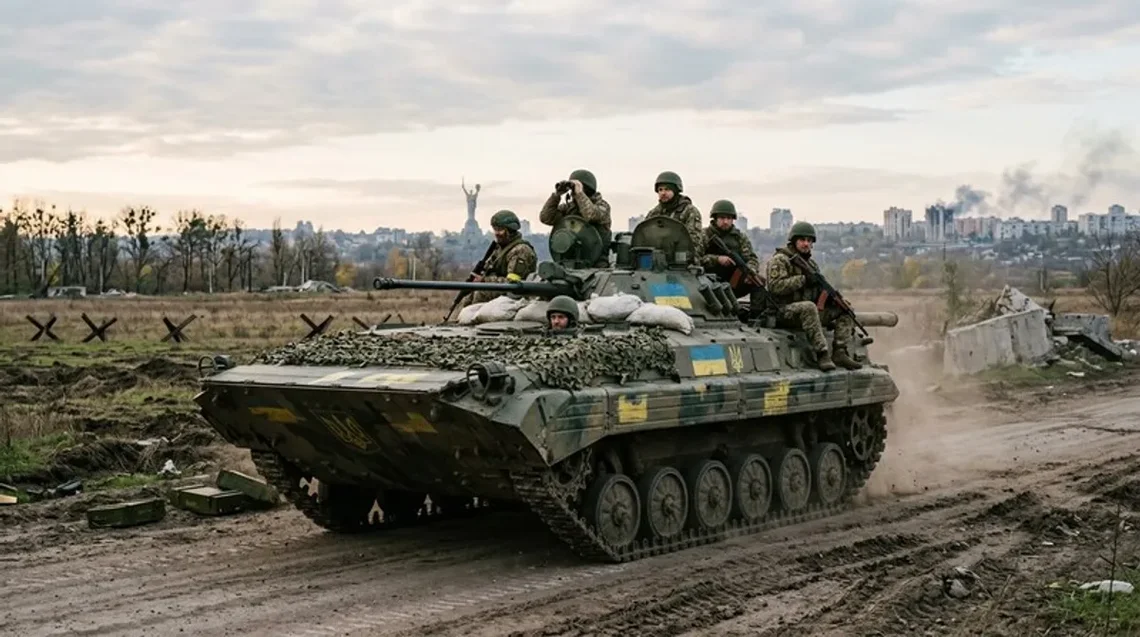
Russian forces have made significant territorial gains across multiple sectors of eastern Ukraine, with Kyiv's military command acknowledging a deteriorating frontline situation as Moscow dramatically intensifies its Donbas campaign. Ukrainian officials confirmed overnight that Russian infantry and armoured units have pressed forward along at least three axes of advance, placing renewed pressure on already-strained Ukrainian defensive lines and prompting urgent calls for accelerated Western military support.
Key Context: The Donbas region — comprising the oblasts of Donetsk and Luhansk — has been the central theatre of Russia's war effort since the full-scale invasion began. Moscow formally annexed both oblasts, along with Zaporizhzhia and Kherson, a move widely condemned as illegal under international law. Control of the Donbas carries enormous symbolic and strategic weight for the Kremlin, which has framed its military objectives around so-called "liberation" of the region's Russian-speaking population. Ukraine and its Western allies reject this framing entirely. (Source: UN General Assembly resolutions, Foreign Policy analysis)
Frontline Shifts: What the Latest Reporting Shows
According to Ukraine's General Staff, Russian assault groups have intensified activity near several key settlements in Donetsk Oblast, with fighting particularly concentrated around logistics corridors that Ukrainian forces have long relied upon to sustain their defensive posture. The tempo of Russian attacks has reportedly increased substantially in recent days, with Ukrainian commanders reporting dozens of combat engagements within a 24-hour period along a frontline stretching hundreds of kilometres. (Source: Reuters)
Advances Near Donetsk City Environs
Ukrainian military officials said Russian forces have made incremental but strategically meaningful advances in areas to the north and northwest of Donetsk city. Analysts monitoring the conflict note that even small shifts in this sector can expose secondary defensive positions and force Ukrainian units into costly redeployments. Ground-level reporting by accredited correspondents embedded with Ukrainian units describes intense artillery exchanges, drone strikes, and infantry probing attacks occurring almost continuously. (Source: AP)
Related Articles
Pressure on Supply Lines
One of the more alarming operational developments, according to Ukrainian logistics officers quoted by international wire services, is the increasing Russian focus on interdicting Ukrainian supply routes. Russian drone and missile strikes have targeted road junctions, bridge approaches, and fuel storage facilities in the broader operational zone. This pattern of attacks suggests a deliberate Russian effort to degrade Ukrainian sustainment capacity ahead of larger ground assaults, military analysts said. (Source: Reuters)
Russia's Operational Strategy in the East
Military analysts at several European think tanks describe the current Russian offensive posture as a deliberate, attritional campaign designed to grind down Ukrainian manpower and materiel reserves rather than achieve dramatic single-stroke breakthroughs. Moscow appears to be deploying large numbers of infantry — including soldiers recruited through its expanded mobilisation programme — in wave-style attacks intended to absorb Ukrainian firepower before armoured exploitation forces attempt to widen any breaches in defensive lines.
Drone Warfare and Electronic Dominance
Russia's use of first-person-view (FPV) drones has reportedly reached a new operational intensity along the eastern front. Ukrainian soldiers and commanders have described a persistent drone presence over forward positions, making troop movements, vehicle resupply, and casualty evacuation significantly more dangerous. Western defence officials, speaking to international media on condition of anonymity, said Russia's drone production and deployment capacity currently exceeds what Ukraine can neutralise through available electronic countermeasures. (Source: Foreign Policy)
Ukrainian Response and Defensive Posture
Kyiv has publicly maintained that its forces are conducting "active defence" operations, a formulation intended to signal tactical flexibility without conceding strategic retreat. President Volodymyr Zelensky and senior military officials have repeatedly appealed for faster delivery of Western air defence systems, artillery ammunition, and long-range strike capabilities. Ukrainian sources say their forces are capable of stabilising the front provided that resupply commitments from NATO partners are fulfilled without further delay.
For background on previous Ukrainian military operations in the region, see Ukraine launches major counteroffensive in eastern Donbas, which details the tactical gains Kyiv achieved in earlier phases of the conflict and the doctrinal lessons drawn from those operations.
Fortification and Civilian Evacuation
Ukraine's civilian authorities in Donetsk Oblast have stepped up mandatory evacuation orders for settlements closest to active fighting. Local administration officials said thousands of residents remain in frontline communities, complicating both military operations and humanitarian logistics. The UN Office for the Coordination of Humanitarian Affairs has flagged deteriorating access to clean water, medical supplies, and shelter in affected areas, warning that civilian infrastructure damage is accelerating. (Source: UN OCHA)
NATO and Allied Response
The latest frontline developments have intensified diplomatic activity among Ukraine's Western backers. Alliance defence ministers have held emergency consultations, according to officials familiar with the discussions, focused on accelerating pledged deliveries of air defence interceptors and artillery shells. Several NATO members have indicated they are reviewing stockpile thresholds to determine what additional quantities can be released to Ukraine without compromising their own national defence readiness.
For a comprehensive overview of allied commitments and their strategic rationale, readers can refer to the reporting on NATO allies boost Ukraine aid amid renewed Russian offensive, which tracks the evolution of Western military assistance packages in response to escalating Russian pressure.
The Role of Long-Range Weapons
A persistent and politically sensitive question within NATO capitals concerns Ukraine's authorisation to use Western-supplied long-range weapons against targets inside Russian territory. Several alliance members have placed restrictions on the operational use of certain systems, citing concerns about escalation. Ukraine's government has argued that such restrictions hamper its ability to strike Russian logistics and command nodes that feed directly into the eastern offensive. The debate remains unresolved and is understood to be a source of friction within alliance consultations, according to diplomatic reporting by AP and Reuters.
| Phase / Period | Key Development | Territorial Impact | International Response |
|---|---|---|---|
| Initial full-scale invasion | Multi-axis Russian assault across Ukraine | Large early Russian gains; Kyiv assault repelled | Western sanctions; initial arms packages |
| Russian consolidation in east | Moscow refocuses on Donbas after northern withdrawal | Gradual Russian advances in Luhansk and Donetsk | NATO increases heavy weapons deliveries |
| Ukrainian counteroffensives | Kharkiv and Kherson breakthroughs by Ukrainian forces | Significant Ukrainian territorial recovery | Western optimism; expanded aid commitments |
| Prolonged attritional phase | Frontlines stabilise; intense fighting around Avdiivka, Bakhmut | Incremental Russian gains at high cost | Debate over long-range weapon authorisation |
| Current offensive intensification | Russian multi-sector push in Donetsk Oblast | Ukrainian frontline under sustained pressure | Emergency NATO consultations; accelerated deliveries sought |
What This Means for the UK and Europe
For Britain and its European partners, the deteriorating situation in eastern Ukraine carries direct and immediate strategic implications that extend well beyond the battlefield. A sustained Russian advance — even one measured in kilometres rather than major cities — would represent a significant shift in the conflict's trajectory and could embolden Moscow to sustain or escalate its military campaign with the expectation that Western resolve is finite.
The UK government has been among Ukraine's most consistent supporters, providing air defence systems, artillery, and training to Ukrainian forces. British officials have consistently framed the war as a matter of European security architecture, arguing that Russian territorial gains in Ukraine would set a precedent that threatens the wider post-Cold War order. Downing Street has not publicly altered its commitment posture in response to the latest frontline reports, but defence analysts in London say the coming weeks will test whether allied rhetoric translates into the accelerated materiel support Ukrainian commanders are urgently requesting.
Across Europe, energy security, migration flows, and defence spending remain connected to the conflict's duration and outcome. European governments that reduced their dependence on Russian energy after the invasion continue to manage residual economic pressures. A prolonged or intensifying war also sustains pressure on European defence industries to scale production of artillery ammunition and air defence interceptors — a capacity challenge that NATO members have acknowledged publicly. (Source: Reuters, Foreign Policy)
Analysts tracking the conflict's diplomatic dimensions note that Russian advances, if sustained, could complicate any future negotiated settlement by shifting Moscow's perception of its leverage. Western governments have broadly maintained that Ukraine must be in the strongest possible military position before any diplomatic process could yield a durable and just outcome — a position that makes the current frontline situation all the more consequential for European capitals. (Source: AP)
Earlier reporting on the fluid nature of frontline dynamics is available in the analysis of Ukraine launches major counteroffensive in eastern regions, which provides essential context on how the operational balance has shifted at various points in the conflict and what factors have historically driven those shifts.
Outlook: A Conflict at a Critical Juncture
The current escalation in Russian offensive activity comes at a moment when Ukraine's own capacity for sustained resistance is under serious scrutiny. Manpower constraints, ammunition shortfalls, and the cumulative effect of prolonged high-intensity warfare have placed Ukrainian forces under pressures that their commanders have described with unusual candour in recent briefings. Without a significant and rapid increase in Western support — both in volume and speed of delivery — military analysts warn that the frontline trajectory could shift in ways that would be difficult to reverse.
Russia, for its part, appears willing to sustain current casualty rates in pursuit of incremental advances, calculating that its mobilisation depth and defence-industrial output give it a medium-term advantage in an attritional contest. Whether that calculation proves correct will depend in large part on the decisions made in Washington, London, Brussels, and Berlin in the weeks ahead. The stakes, as this conflict's trajectory has repeatedly demonstrated, extend far beyond the borders of Ukraine itself.