
Ukraine reports Russian advances in eastern offensive
Frontline clashes intensify as Moscow pushes territorial gains
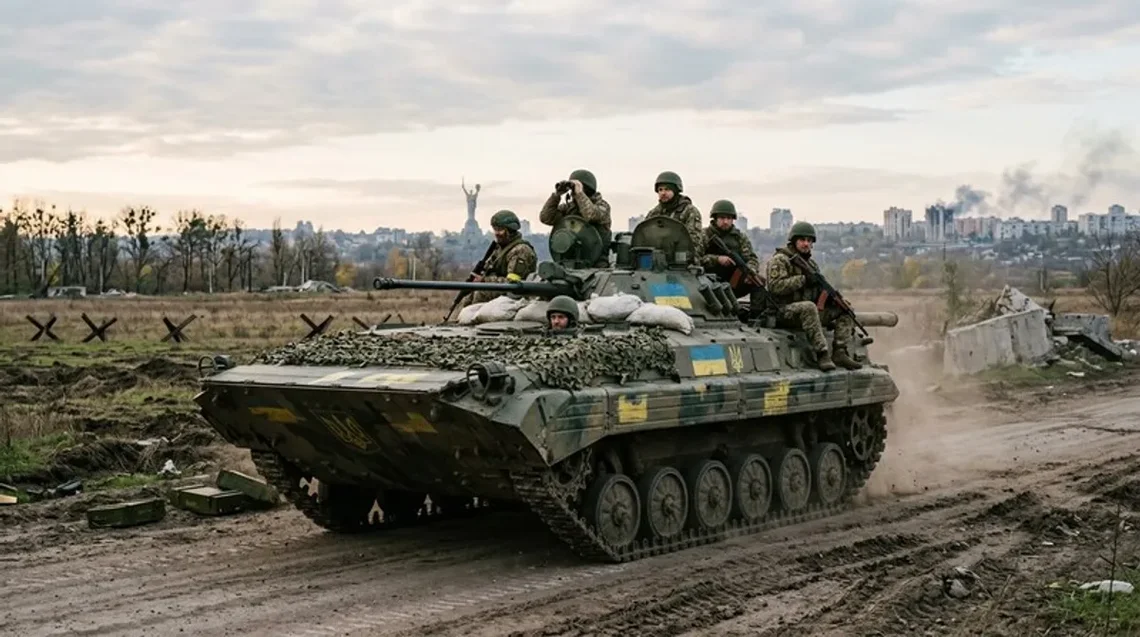
Ukrainian military officials reported significant Russian advances along multiple sectors of the eastern front on Tuesday, with Moscow's forces pressing forward in the Donetsk region in what analysts described as the most sustained offensive push in months. The General Staff of Ukraine's Armed Forces said Russian troops had intensified assault operations near Pokrovsk and Chasiv Yar, two strategically critical towns whose fall would substantially reshape the frontline geometry in Russia's favour.
Key Context: Russia has been waging a full-scale invasion of Ukraine since February 2022, following years of conflict in the Donbas that began in 2014. The eastern Donetsk region — partially occupied by Russian-backed separatists before the full invasion — remains the primary theatre of ground combat. Control of key logistics hubs such as Pokrovsk directly affects Ukraine's ability to supply and reinforce its frontline units across the entire eastern axis. Western nations, including the United Kingdom, have pledged billions in military and financial assistance to Kyiv, while NATO has reinforced its eastern flank in response to the broader security threat posed by Moscow's aggression.
Russian Forces Press Eastern Axis Under Sustained Pressure
According to Ukraine's General Staff, Russian units launched more than 180 combat engagements across the front within a 24-hour period, a figure that defence analysts noted represented one of the highest single-day attack tallies recorded in recent weeks. The bulk of the pressure was concentrated in the Donetsk direction, where Russian forces have been grinding forward through heavily fortified Ukrainian defensive lines at considerable human and material cost to both sides. (Source: Ukrainian General Staff)
Pokrovsk Remains a Strategic Priority
The logistics hub of Pokrovsk, which serves as a critical supply artery for Ukrainian forces operating across wide swathes of eastern Donetsk, has remained under intense pressure, officials said. Russian artillery and drone strikes have accelerated in and around the town's outskirts, with Ukrainian commanders acknowledging that their forces are engaged in continuous defensive operations to hold their positions. The loss of Pokrovsk would deprive Kyiv of a key resupply node, potentially forcing a wider redeployment of troops and straining already taxed logistics chains, according to military analysts cited by Reuters.
Related Articles
Chasiv Yar Fighting Enters a Critical Phase
Further north, the battle for Chasiv Yar — an elevated town that overlooks the ruins of Bakhmut and offers commanding views across the surrounding plain — has entered what Ukrainian officers described as a critical phase. Russian forces have penetrated portions of the town's western districts, though Ukrainian units continue to contest individual streets and buildings in attritional close-quarters fighting, officials said. Analysts at the Institute for the Study of War noted that Chasiv Yar's topographical advantage makes it a high-value objective for Moscow's military planners, as its capture would open further lines of advance toward Kostiantynivka and Kramatorsk. (Source: Institute for the Study of War)
Moscow's Strategic Calculus and Operational Tempo
Russia's intensified offensive push appears designed to exploit what Western officials have described as periods of delayed weapons deliveries and ammunition shortfalls on the Ukrainian side. Foreign Policy has reported that Moscow's military leadership has recalibrated its approach from large-scale mechanised thrusts — which proved costly during earlier phases of the war — toward smaller, incremental infantry assaults supported by overwhelming artillery and first-person-view drone strikes. This attritional methodology, while slow and expensive in manpower terms, has allowed Russian forces to register persistent if modest territorial gains across the eastern front over recent months. (Source: Foreign Policy)
Drone Warfare Reshapes the Battlefield
The proliferation of unmanned aerial systems on both sides has fundamentally altered the character of combat along the eastern front, analysts said. Russian forces have deployed an increasingly diverse arsenal of strike drones, including Iranian-designed Shahed variants and domestically produced systems, to target Ukrainian logistics, command posts, and troop concentrations with mounting precision. Ukraine, in turn, has developed a sophisticated counter-drone capability and continues to field its own long-range strike drones, some of which have reached deep into Russian territory. (Source: AP)
International Response and Western Military Support
The deteriorating frontline situation has renewed calls from Kyiv for accelerated delivery of Western military hardware, including longer-range artillery systems, air defence interceptors, and armoured vehicles. Ukrainian President Volodymyr Zelensky has repeatedly urged allied governments to remove restrictions on the use of Western-supplied weapons against targets inside Russian territory, a request that has generated significant political debate among NATO members. (Source: Reuters)
Allies have continued to coordinate support packages, with NATO allies boosting Ukraine aid amid the renewed Russian offensive, though disagreements persist over the pace and scope of deliveries. The United States, United Kingdom, Germany, and France have collectively provided billions of dollars in military assistance, but gaps between Ukrainian battlefield requirements and actual supply flows remain a persistent point of tension, officials acknowledged.
Separately, the European Union has moved to tighten its economic leverage on Moscow, with EU tightening Russia sanctions over the Ukraine offensive — targeting additional financial institutions, technology exports, and individuals linked to Russia's defence industrial base. Analysts noted that while sanctions have imposed measurable costs on the Russian economy, Moscow has partially insulated itself through expanded trade with China, India, and Gulf states, limiting the immediate battlefield impact of Western economic pressure. (Source: UN reports)
NATO's Eastern Posture and Alliance Cohesion
Reinforcing the Eastern Flank
In parallel with its support for Ukraine, NATO has bolstered eastern defences amid the Ukraine stalemate, deploying additional multinational battle groups to Poland, the Baltic states, and Romania. Alliance officials have described the reinforcements as a deterrence measure intended to prevent any potential spillover of the conflict into NATO territory, while also signalling to Moscow that the alliance's collective defence commitments under Article 5 remain inviolable, officials said. (Source: Reuters)
Internal Alliance Tensions
Despite outward shows of unity, cracks have periodically surfaced within NATO over burden-sharing, the pace of Ukrainian membership discussions, and the appropriate level of military escalation that Western governments are prepared to risk. Several alliance members — particularly those in Central and Eastern Europe — have pushed for a more assertive posture, while others have counselled caution to avoid direct confrontation with a nuclear-armed Russia. These tensions remain a live variable in Western strategic calculations, analysts said.
| Location | Region | Current Status | Strategic Importance |
|---|---|---|---|
| Pokrovsk | Donetsk | Under sustained Russian pressure; Ukrainian forces defending | Major logistics and supply hub for eastern Ukrainian forces |
| Chasiv Yar | Donetsk | Partial Russian penetration; street fighting ongoing | Elevated terrain commanding advance routes toward Kramatorsk |
| Toretsk | Donetsk | Contested; Russian forces making incremental advances | Industrial town with defensive infrastructure; blocks further Russian westward push |
| Zaporizhzhia line | Zaporizhzhia | Largely static; periodic artillery exchanges | Protection of Zaporizhzhia city and broader southern Ukrainian territory |
| Kherson front | Kherson | Frontline stabilised along Dnipro River; cross-river operations reported | River barrier limits large-scale offensives; strategic bridgehead value |
Ukraine's Counteroffensive Capacity and Territorial Ambitions
Even as Ukrainian forces absorb Russian pressure in the east, Kyiv has signalled its intention to maintain offensive options where conditions permit. Earlier operations demonstrated Ukraine's capacity for bold strategic manoeuvre, including the Ukrainian push deeper into Russian territory that reshaped the conflict's psychological and political dimensions, forcing Moscow to redirect military resources and exposing vulnerabilities in Russia's border defences. (Source: AP)
Ukrainian military planners have also demonstrated an ability to shift operational focus, as seen when Ukraine launched a major counteroffensive in eastern regions — a campaign that, while ultimately failing to achieve its maximalist territorial objectives, inflicted significant Russian casualties and disrupted Moscow's timetable for consolidating its eastern gains. (Source: Reuters)
Manpower and Mobilisation Pressures
Both sides face acute manpower challenges that will shape the conflict's trajectory over the coming months, analysts said. Ukraine has implemented revised mobilisation legislation to expand its recruitment pool, though the social and political sensitivities surrounding conscription of younger age cohorts remain pronounced. Russia, meanwhile, has continued to rely on a combination of contract soldiers, convicts offered pardons in exchange for frontline service, and mobilised reservists to sustain its offensive operations, according to Western intelligence assessments cited by Reuters.
What This Means for the UK and Europe
For Britain and its European partners, the intensification of Russia's eastern offensive carries direct and immediate strategic implications. The United Kingdom has been among Ukraine's most committed supporters, providing lethal aid including Storm Shadow cruise missiles, artillery systems, and training programmes for Ukrainian troops on British soil, officials confirmed. London's continued support reflects a broader strategic assessment that a Russian victory — or a settlement perceived as rewarding Moscow's aggression — would fundamentally destabilise European security architecture and embolden authoritarian revisionism elsewhere.
European energy markets, though substantially weaned off Russian gas supplies compared to pre-invasion levels, remain sensitive to conflict escalation that could disrupt remaining transit routes or trigger new waves of economic disruption. European governments are also grappling with the humanitarian dimension: the UN has recorded millions of Ukrainians displaced across the continent, placing sustained pressure on national welfare and integration systems. (Source: UN reports)
Defence spending across Europe has risen in response to the war, with multiple NATO members either meeting or committing to exceed the alliance's two-percent-of-GDP spending guideline — a shift that analysts at Foreign Policy have described as the most significant reorientation of European defence policy in a generation. Britain, which has consistently met that threshold, has framed its Ukraine commitment as integral to its post-Brexit foreign policy identity and its ambition to remain a tier-one security actor on the global stage. (Source: Foreign Policy)
As Russian forces continue to press their eastern offensive and diplomatic pathways toward a ceasefire remain remote, European capitals face an uncomfortable strategic reality: sustaining Ukraine's resistance requires not only continued financial sacrifice but a long-term political commitment whose domestic durability — in an era of rising populist pressures — cannot be taken for granted. The outcome on the fields of Donetsk will shape the security landscape of Europe for decades, officials and analysts alike have warned, underscoring why the frontline clashes near Pokrovsk and Chasiv Yar carry consequences that extend far beyond Ukraine's borders.