
Ukraine seeks fresh NATO pledge as Russia tightens grip
Kyiv calls for accelerated membership as frontline fighting intensifies
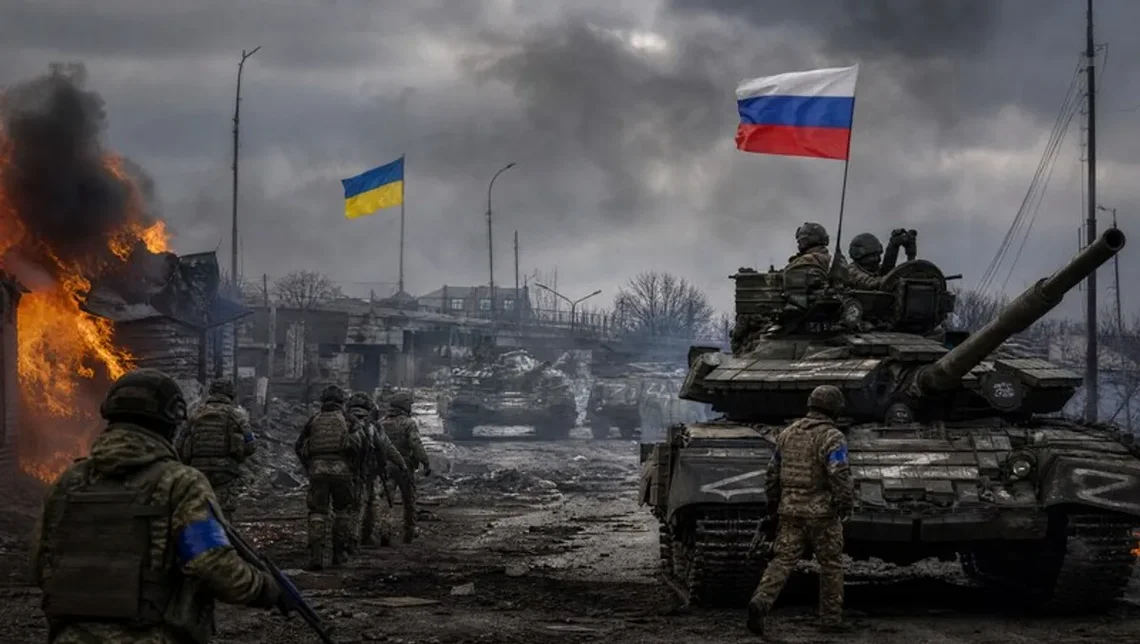
Ukraine has formally renewed calls for accelerated NATO membership, with President Volodymyr Zelensky urging alliance leaders to issue a concrete accession timeline as Russian forces consolidate territorial gains along the eastern front and intensify aerial bombardment of civilian infrastructure. The appeal comes amid some of the heaviest fighting recorded in months across the Donetsk region, where Ukrainian commanders acknowledge continued pressure on multiple defensive lines, according to officials in Kyiv and assessments reviewed by Reuters.
Key Context: Ukraine applied formally for expedited NATO membership in the aftermath of Russia's full-scale invasion. Under Article 10 of the NATO treaty, membership requires unanimous agreement from all 32 current member states. The alliance issued a declaration at the Vilnius summit stating Ukraine's future lies in NATO, but stopped short of issuing an invitation or timeline — a position Kyiv has repeatedly described as insufficient given the scale of ongoing hostilities. (Source: NATO)
The Case Kyiv Is Making
Ukrainian officials argue that a credible, time-bound membership pathway would carry immediate military deterrence value, independent of the formal accession process. Presidential adviser Mykhailo Podolyak has stated publicly that the absence of a clear NATO guarantee emboldens Russian strategic planning, allowing Moscow to calculate that it can outlast Western political will without facing an Article 5 collective defence obligation. Foreign Policy has reported that several senior Ukrainian officials privately frame NATO membership not merely as a post-war ambition but as a tool to alter Russian battlefield calculus before any ceasefire takes hold.
What Zelensky Is Demanding
Zelensky has specifically called for NATO to convene an extraordinary session on Ukrainian accession, proposing that member states issue an "irreversible invitation" analogous to language used for aspirant countries in the Western Balkans. Officials in Kyiv said the proposal does not require immediate full membership but asks the alliance to formally end the ambiguity that has surrounded Ukraine's candidacy since the Bucharest summit of 2008, when NATO famously affirmed that Ukraine "will become" a member without specifying conditions or timelines. That deliberate vagueness, Ukrainian officials said, has persisted at considerable strategic cost. (Source: Ukrainian Presidential Office)
Related Articles
The Precedent Problem
Analysts note that granting an invitation to a country actively engaged in armed conflict with a nuclear-armed state would mark an unprecedented departure in NATO's enlargement history. Every previous accession — including the Baltic states, which joined despite significant Russian objection — took place without active wartime conditions involving a nuclear power as the opposing belligerent. According to Foreign Policy, this structural dilemma continues to divide alliance members between those prioritising strategic boldness and those prioritising escalation management.
Russia's Military Posture and Frontline Developments
Russian forces have accelerated offensive operations across at least three axes in eastern Ukraine, with the Pokrovsk corridor and Chasiv Yar sectors recording elevated engagement levels, according to battlefield assessments published by the Institute for the Study of War and cross-referenced with AP reporting from the region. Ukrainian military officials confirmed that Russian units have sustained pressure on logistical supply routes that are critical to maintaining forward defensive positions in Donetsk oblast.
Aerial Campaign Escalation
Simultaneously, Russia has intensified its strategic bombing campaign, targeting energy generation facilities, district heating infrastructure, and rail hubs across central and western Ukraine. The UN Office for the Coordination of Humanitarian Affairs has documented a significant increase in civilian displacement linked to infrastructure destruction, with millions of Ukrainians facing recurring power outages during periods of peak demand. Ukraine's air defence network, while improved by Western deliveries, continues to face saturation tactics in which large drone and missile salvos are deployed simultaneously to overwhelm interception capacity. (Source: UN OCHA)
This aerial pressure forms the immediate backdrop against which Ukraine is demanding both accelerated membership and enhanced air defence commitments — two demands that, officials in Kyiv say, are analytically inseparable. For background on Ukraine's ongoing requests for air defence systems, see Ukraine seeks new NATO air defense as Russia intensifies strikes, which details the technical and political dimensions of those procurement negotiations.
Alliance Divisions and the Politics of Membership
Within NATO, the membership question continues to expose a fault line between frontline states and larger western European powers. Poland, the Baltic states — Estonia, Latvia, and Lithuania — and the Czech Republic have publicly backed a more assertive posture on Ukrainian accession, with Polish Foreign Minister Radosław Sikorski arguing that prolonged ambiguity creates strategic liability rather than stability for the alliance as a whole. Germany and France, however, remain cautious, wary of triggering a direct confrontation with Moscow and concerned about the domestic political costs of committing to obligations that could activate Article 5 in an active warzone. (Source: Reuters)
The United States Factor
Washington's position remains the decisive variable. The Biden administration signalled prior to this period that it would not support an imminent invitation, and while rhetorical support for Ukraine's "Euro-Atlantic future" has been consistent across US political leadership, it has not translated into formal endorsement of a membership timeline. According to Reuters, senior State Department officials have privately told allied counterparts that the focus should remain on military assistance, economic support, and diplomatic isolation of Russia rather than on the membership question, which they regard as a potential escalation trigger that could limit coalition cohesion.
Sanctions Landscape and Economic Pressure on Moscow
Parallel to the military dimension, the European Union has continued to refine its sanctions regime against Russia, targeting revenue streams that fund military operations. Multiple rounds of measures have focused on energy trade, financial system access, and technology exports. Despite the breadth of these measures, economists and independent analysts have noted that Russia's war economy has demonstrated greater resilience than initial projections anticipated, partly through trade rerouting via third-country intermediaries in Asia, the Middle East, and Central Asia. (Source: European Commission)
The EU's evolving approach to economic pressure is examined in detail in EU tightens Russia sanctions over Ukraine offensive and EU tightens Russia sanctions over Ukraine escalation, both of which trace the legislative and diplomatic mechanics of European sanction construction since the full-scale invasion began.
What This Means for the UK and Europe
For the United Kingdom, the Ukrainian membership drive carries both strategic and political weight that extends beyond the battlefield. As a major NATO contributor and the leading bilateral military supporter of Ukraine in Europe by some measures, Britain occupies a structurally significant position in the alliance debate. UK officials have publicly expressed support for Ukraine's "eventual" NATO membership without endorsing a specific timeline, a formulation that mirrors broader Western diplomatic hedging but that Ukrainian officials have signalled is no longer sufficient given frontline conditions.
British Defence and Alliance Commitments
The UK's bilateral security agreements with Ukraine, including commitments on long-term defence assistance, intelligence sharing, and training provision, have been cited by officials in London as a meaningful interim framework while the membership question remains unresolved. However, critics within British defence and foreign policy circles have argued that bilateral frameworks, however substantive, cannot replicate the deterrence architecture of a formal Article 5 guarantee, and that the UK's long-term security interests are better served by a NATO that credibly integrates Ukraine than by a prolonged frozen conflict on the European continent. (Source: UK Ministry of Defence)
For the broader European Union, which operates a partially overlapping but legally distinct security architecture from NATO, Ukraine's membership ambitions intersect with the question of EU accession negotiations — a process that has advanced further institutionally, with candidate status granted, though full membership remains years away. The dual-track ambiguity, analysts said, risks creating a prolonged strategic limbo in which Ukraine bears the costs of alignment without the legal protections of membership in either bloc. Details on how Western partners have calibrated collective military assistance are available in NATO allies boost Ukraine aid amid renewed Russian offensive.
| Event | Location | Outcome |
|---|---|---|
| Bucharest Summit Declaration | Bucharest, Romania | NATO affirms Ukraine "will become" a member; no timeline or invitation issued |
| Russia annexes Crimea | Crimea, Ukraine | NATO membership debate effectively frozen amid escalation concerns |
| Full-scale Russian invasion begins | Multiple Ukrainian fronts | Ukraine applies for expedited NATO membership; application not actioned |
| Madrid Summit | Madrid, Spain | Finland and Sweden invited; Ukraine not included in enlargement tranche |
| Vilnius Summit | Vilnius, Lithuania | Alliance removes MAP requirement for Ukraine; "irreversible path" language adopted without invitation |
| Washington Summit | Washington, D.C., USA | Pledge of "bridge" support reaffirmed; no formal membership invitation extended |
| Current Ukrainian Request | Kyiv / Alliance capitals | Zelensky calls for extraordinary session and binding accession timeline |
The Diplomatic Road Ahead
The next significant diplomatic juncture is the forthcoming NATO foreign ministers' meeting, where the Ukrainian accession question is expected to feature prominently alongside burden-sharing discussions and ongoing coordination on military assistance packages. Allied diplomats, speaking on condition of anonymity to Reuters, indicated that the meeting is unlikely to produce a formal change in alliance posture on the membership question but that pressure from frontline states and from Kyiv itself is creating conditions in which the current formula of deliberate ambiguity is becoming politically harder to sustain.
Russia, meanwhile, has consistently stated that any NATO membership for Ukraine — whether in wartime or post-conflict — would constitute an existential red line, a position Moscow has used to justify the original military intervention and continues to deploy in diplomatic communications with neutral and non-aligned states. Whether that threat retains the deterrent credibility it held in earlier phases of the conflict — or whether Western unity and Ukrainian military resilience have altered the strategic calculus — remains the central analytical question facing alliance capitals. For context on how European sanction architecture has evolved in parallel with military commitments, see EU tightens Russia sanctions over Ukraine stalemate.
What is clear, analysts said, is that the combination of intensified Russian military pressure, Ukrainian diplomatic urgency, and growing frontline exhaustion is forcing a reckoning within NATO that the alliance's carefully managed ambiguity was designed to defer. How member states navigate that reckoning — and whether they do so before or after any negotiated pause in hostilities — will shape European security architecture for a generation. (Source: Reuters; AP; Foreign Policy; UN OCHA)