
Ukraine seeks NATO air defense boost as Russia intensifies strikes
Kyiv pushes allies for advanced systems amid frontline pressure
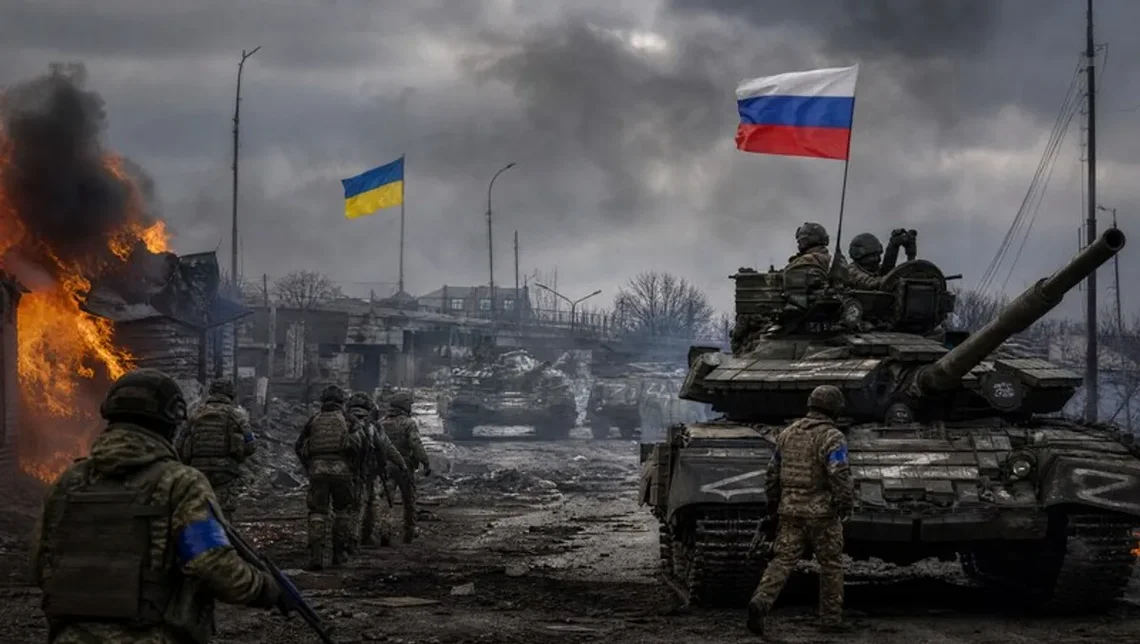
Ukraine has formally appealed to NATO allies for an urgent expansion of air defense capabilities as Russian forces intensify long-range missile and drone strikes against civilian infrastructure and frontline positions, placing renewed pressure on Western governments to accelerate military assistance. With energy networks, rail hubs, and residential districts suffering sustained bombardment, Kyiv's military leadership has warned that existing air defense coverage leaves critical gaps that Russian forces are actively exploiting, according to officials cited by Reuters.
Key Context: Ukraine currently operates a patchwork of Western-supplied air defense systems — including Patriot batteries provided by the United States and Germany, IRIS-T units from Germany, and NASAMS from Norway and the United States — alongside aging Soviet-era hardware. Demand consistently outpaces available interceptor missiles, and each Patriot battery must cover a vast geographic area. NATO allies have collectively committed billions in military assistance since the full-scale invasion began, but Kyiv argues that the pace and scale of deliveries remains insufficient to match Russia's evolving strike capacity. (Source: NATO, Reuters)
The Scale of Russia's Aerial Campaign
Russian forces have conducted some of their most sustained aerial bombardment campaigns in recent months, deploying combinations of Shahed-series drones manufactured with Iranian technical assistance, Kalibr cruise missiles launched from naval platforms in the Black Sea and Caspian regions, and ballistic missiles including the Iskander-M system. The targeting pattern has shifted notably toward energy generation and transmission infrastructure, with substations, thermal power plants, and hydroelectric facilities repeatedly struck, according to reporting by AP.
Civilian Infrastructure Under Pressure
UN monitoring bodies have documented widespread damage to civilian infrastructure across multiple Ukrainian regions, with electricity blackouts affecting millions of residents during periods of intensive strikes. The UN Office for the Coordination of Humanitarian Affairs has flagged the humanitarian consequences of repeated attacks on heating infrastructure, particularly as colder months approach. Ukrainian authorities have described the systematic destruction as a deliberate strategy to degrade civilian morale and strain emergency response capacity, officials said.
Related Articles
Independent military analysts cited by Foreign Policy have noted that Russia's targeting doctrine has become more sophisticated, with strike packages designed to overwhelm air defenses by combining slower drone waves — which exhaust interceptor stocks — with faster ballistic missile salvos timed to follow. This saturation approach places an acute premium on the quantity of interceptor missiles available to Ukrainian forces, not merely the number of launcher systems deployed.
Frontline Aerial Threats
Beyond strategic bombardment, Russian forces have increased the operational use of glide bombs — large unguided munitions fitted with navigation kits — dropped from aircraft operating behind Russian lines and well beyond the effective range of Ukrainian ground-based air defenses. These weapons have caused significant structural damage to urban areas near the front, including in Kharkiv, Zaporizhzhia, and Donetsk regions, according to Ukrainian military sources cited by Reuters. The inability to intercept aircraft launching these weapons, without dedicated long-range surface-to-air capability, represents one of the central arguments Kyiv is making to NATO partners.
Ukraine's Formal Appeals to NATO Allies
Ukrainian President Volodymyr Zelensky and senior military officials have made the expansion of air defense coverage a central demand in diplomatic engagements with NATO member governments throughout recent months. Kyiv has specifically requested additional Patriot systems, further IRIS-T units, and the transfer of older but functional systems such as the German Gepard anti-aircraft tank and additional HAWK medium-range missile batteries sourced from allied stockpiles or third-party inventories.
The Patriot Shortfall
The Patriot missile defense system has become the symbolic focal point of Ukraine's air defense diplomacy. Currently, Ukraine operates a limited number of Patriot batteries, with the precise count kept confidential for operational security reasons, though open-source analysts and officials speaking to Reuters have confirmed the number remains critically small relative to the territory requiring protection. Each battery carries a finite stock of interceptors, and the cost and production timeline for PAC-2 and PAC-3 interceptor missiles means resupply cannot keep pace with operational consumption during intensive strike periods.
Germany has transferred one additional Patriot battery and indicated willingness to facilitate transfers from allied nations, while the Netherlands and Romania have been engaged in discussions about contributing further units, according to AP. The United States, which holds the largest Patriot inventory among NATO members, faces competing demands from its own military readiness requirements and parallel commitments to partners in the Indo-Pacific and Middle East regions, officials said.
For more on how the alliance has responded to Kyiv's escalating requests, see our coverage of how NATO allies boost Ukraine aid amid renewed Russian offensive.
NATO's Collective Response and Political Tensions
The alliance's response to Ukraine's requests has been shaped by both military-industrial capacity constraints and domestic political considerations within member states. Several Eastern flank members — including Poland, the Baltic states, and Czechia — have been among the most vocal advocates for accelerating transfers, viewing Ukraine's air defense as a direct contributor to their own strategic depth. By contrast, some Western European governments have moved more cautiously, citing concerns about depleting national inventories and the political sensitivity of escalation dynamics with Moscow.
The Industrial Production Challenge
A core structural problem identified by NATO planners is that Western defense industries were not scaled for sustained high-intensity warfare at this tempo. Interceptor missile production lines that previously operated at peacetime rates have ramped up, but lead times for complex guided munitions remain measured in months or years rather than weeks. The NATO Industrial Capacity Expansion initiative, endorsed at recent alliance summits, aims to address this gap through coordinated procurement and joint investment incentives, but the practical benefits are not expected to fully materialize in the near term, according to alliance documents cited by Reuters.
Ukraine's ongoing campaign to secure pledges from partners is detailed further in our reporting on how Ukraine seeks fresh NATO pledge as Russia tightens grip, as well as the broader context of Ukraine seeks NATO arms as Russia digs in on frontline.
Military Assessment: Can the Gaps Be Closed?
Independent defense analysts assess that Ukraine's air defense network, even with current Western support, cannot provide comprehensive coverage across all strategically significant targets simultaneously. Triage decisions — prioritizing protection of capital cities, critical energy nodes, or frontline logistics — are a constant operational reality for Ukrainian air defense commanders.
Alternative and Complementary Approaches
Beyond additional hardware, military analysts cited by Foreign Policy have pointed to the importance of targeting Russian launch platforms and logistics chains as a complementary approach. Ukraine's requests to use Western-supplied long-range strike weapons against military airfields and missile storage facilities inside Russian territory have been partially accommodated by some allies but remain subject to significant restrictions, reflecting Western concern about direct escalation. The debate over these constraints continues to run parallel to the air defense supply discussion within NATO councils, officials said.
Electronic warfare investments, decoy infrastructure, and rapid dispersal of energy assets have also been cited by Ukrainian officials as mitigation strategies, though these address consequences rather than the root threat calculus. The UN's humanitarian coordination infrastructure has separately called for protections for civilian energy infrastructure under international humanitarian law, noting the documented pattern of targeting in multiple reports. (Source: UN Office for the Coordination of Humanitarian Affairs)
| System | Supplying Country | Range (approx.) | Primary Threat Addressed | Status |
|---|---|---|---|---|
| Patriot PAC-2/PAC-3 | USA, Germany, Netherlands | Up to 160 km | Ballistic missiles, cruise missiles | Operational; interceptor shortfall reported |
| IRIS-T SLM | Germany | Up to 40 km | Cruise missiles, drones, aircraft | Multiple units operational |
| NASAMS | USA, Norway | Up to 30 km | Low-to-medium altitude threats | Operational in multiple locations |
| HAWK (MIM-23) | USA (via third parties) | Up to 40 km | Aircraft, cruise missiles | Partially integrated; aging inventory |
| Gepard SPAAG | Germany | Up to 4 km | Low-altitude drones, helicopters | Operational; ammunition supply challenges |
| Crotale / Roland variants | France, Germany | Up to 10 km | Short-range aerial threats | Limited deployment |
What This Means for the UK and Europe
For the United Kingdom and European NATO members, Ukraine's air defense crisis carries direct strategic implications that extend well beyond solidarity considerations. European security planners have increasingly framed the conflict as a live demonstration of the kind of high-intensity aerial threat environment that NATO's eastern flank could face in any future confrontation with Russia. The lessons being drawn — about interceptor consumption rates, system survivability, and the limits of peacetime production schedules — are actively reshaping European defense procurement planning.
The UK government has been among the consistent suppliers of air defense components, contributing Starstreak man-portable air defense systems, Stormer armored vehicles fitted with Starstreak launchers, and, most significantly, advanced medium-range air defense missiles. British officials have also engaged in diplomatic advocacy within NATO councils for a more accelerated allied response to Ukrainian requests, according to reporting by Reuters. London has framed its contributions explicitly in terms of European security architecture, arguing that a degraded Ukrainian air defense increases long-term risk to NATO territory.
For European energy security, the pattern of Russian strikes on Ukrainian power infrastructure serves as a direct reminder of the vulnerability of interconnected grid systems. Several EU member states that share grid connectivity with Ukraine have monitored the cascading effects of infrastructure damage with concern. The European Commission has maintained financial and technical support for Ukraine's energy sector reconstruction, though officials acknowledge that repairs cannot keep pace with damage during intensive strike periods, according to AP.
Broader European defense budgets have already shifted upward in response to the threat environment illustrated by the conflict, with multiple NATO members recently committing to meet or exceed the two-percent-of-GDP defense spending threshold. The specific lesson of air defense — that even a sophisticated patchwork of systems faces critical vulnerabilities against a resourced adversary willing to conduct mass strikes — has accelerated interest in European-developed systems such as the Franco-Italian SAMP/T Aster battery, additional units of which are now under discussion for potential transfer or co-production arrangements.
Our earlier reporting tracks the evolving diplomatic landscape in detail: Ukraine seeks new NATO pledge as frontline fighting intensifies, as well as the foundational coverage of Ukraine seeks new NATO air defense as Russia intensifies strikes.
Outlook: The Diplomatic Path Forward
Senior NATO officials have signaled that air defense supply will remain a standing agenda item at alliance ministerial meetings and contact group gatherings in the coming months. The diplomatic pressure from Kyiv is not expected to diminish — if anything, Ukrainian officials have indicated that the tempo of Russian aerial operations makes the urgency more acute with each passing week, officials said.
The fundamental tension — between Ukraine's immediate operational needs, allied inventory constraints, domestic political considerations within NATO democracies, and industrial production timelines — does not admit of a simple resolution. What is clear, according to analysts cited by Foreign Policy, is that the adequacy of Western air defense support will remain one of the central variables shaping both the humanitarian situation inside Ukraine and the broader trajectory of the conflict. The decisions made in allied capitals in the coming months will carry consequences measured not only in diplomatic communiqués but in the protection — or exposure — of millions of Ukrainian civilians and the infrastructure upon which their survival depends.
(Sources: Reuters, Associated Press, United Nations Office for the Coordination of Humanitarian Affairs, Foreign Policy, NATO)