
Ukraine seeks NATO arms as Russia digs in on frontline
Kyiv presses allies for advanced weapons amid stalled offensive
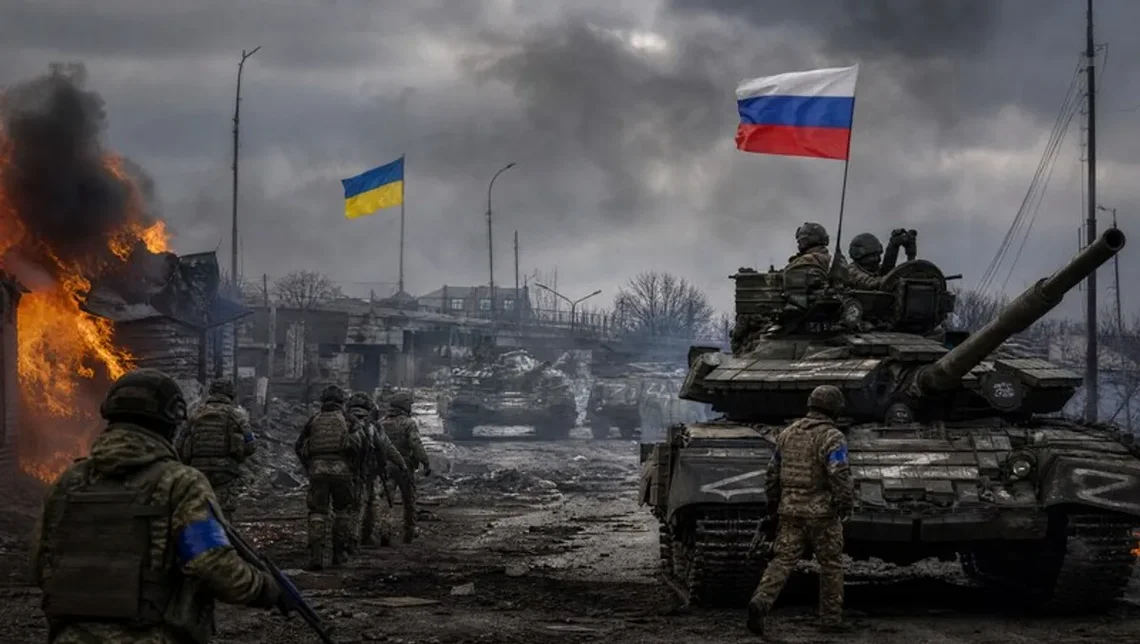
Ukraine has formally appealed to NATO member states for an accelerated transfer of advanced weapons systems, including long-range artillery, air defence batteries, and armoured vehicles, as Russian forces consolidate defensive positions along a nearly 1,000-kilometre frontline that has seen limited territorial movement in recent months. The request, conveyed through diplomatic channels and publicly reinforced by senior Kyiv officials, underscores the deepening urgency of a conflict that is increasingly defined by attrition rather than breakthrough.
Key Context: Ukraine's military has been engaged in sustained combat operations along a broad eastern and southern frontline since Russia launched its full-scale invasion. Despite significant Western military and financial assistance — totalling hundreds of billions of dollars in aggregate — neither side has achieved a decisive territorial shift in over a year of grinding attritional warfare. Russia has fortified its positions with extensive minefields, layered defensive lines, and drone surveillance networks, complicating any large-scale Ukrainian advance. NATO's collective defence commitments, enshrined in Article 5, do not formally cover Ukraine, which remains outside the alliance.
The Scale of Ukraine's Weapons Demands
Ukrainian Defence Minister Rustem Umerov and senior military commanders have outlined a specific list of requirements that goes well beyond existing commitments from Western partners, according to officials familiar with the diplomatic correspondence. The requests include additional Patriot air defence systems, longer-range missile capabilities such as ATACMS, F-16 fighter jet munitions, and increased supplies of 155mm artillery shells — the standard NATO calibre that Ukrainian forces have come to depend on.
Artillery and Ammunition Shortfalls
The shortage of artillery ammunition remains one of the most acute operational constraints facing Ukrainian forces, according to reports from multiple Western think-tanks and defence ministries. European NATO members have struggled to ramp up production to levels that match battlefield consumption rates, with Ukrainian commanders indicating that Russian forces frequently outshoot them in shell volume along key sectors of the front. The EU's ambition to deliver one million shells to Kyiv has fallen significantly short of target, with deliveries lagging by hundreds of thousands of rounds, according to European Commission data. (Source: European Commission)
Related Articles
For broader context on how alliance members are responding to these shortfalls, see how NATO allies boost Ukraine aid amid renewed Russian offensive has shaped the current supply picture.
Air Defence as a Strategic Priority
Beyond ground munitions, Kyiv's most pressing demand is for expanded air defence coverage. Russian forces have intensified long-range strike campaigns using Shahed drones and ballistic missiles targeting Ukrainian energy infrastructure, civilian housing, and military logistics hubs. Ukraine's existing air defence umbrella, anchored by Patriot batteries donated by the United States and Germany, is stretched across a vast geographic area. A single interception of a ballistic missile can cost upwards of $3 million in munitions — a fiscal and logistical equation that Ukrainian officials have described as unsustainable without sustained allied replenishment. (Source: Reuters)
The strategic calculus behind these requests is examined further in our coverage of Ukraine seeks new NATO air defense as Russia intensifies strikes.
Russia's Consolidation Along the Frontline
Russian military planners appear to have shifted strategic posture from costly offensive operations toward a deliberate defensive consolidation, particularly across the Zaporizhzhia, Donetsk, and Luhansk oblasts. Engineering units have constructed extensive layered trench systems, anti-tank ditches, and minefields — referred to in Western military analysis as the "Surovikin lines" — that have significantly complicated Ukrainian offensive manoeuvring.
Tactical Drone Dominance
Both sides have come to rely heavily on first-person-view (FPV) drones for reconnaissance and direct attack, but Russian forces currently hold an advantage in numbers and electronic warfare suppression capabilities, according to assessments cited by AP. Russian electronic jamming systems have degraded the effectiveness of some Western-supplied precision munitions, forcing Ukrainian commanders to adapt their targeting protocols in real time. (Source: AP)
Satellite imagery analysed by independent open-source intelligence groups indicates that Russian troop concentrations along the northern Kharkiv axis and the southern Kherson bank have remained largely static, suggesting a deliberate posture designed to absorb Ukrainian pressure rather than generate new offensive momentum.
NATO's Internal Debate Over Escalation Thresholds
Within the alliance, a persistent and unresolved tension exists between those member states — primarily the Baltic nations, Poland, and the United Kingdom — who advocate for providing Ukraine with the full spectrum of offensive capabilities without restriction, and those who continue to impose conditions on weapon types and range parameters to avoid direct confrontation with Russia. Germany and France have adopted more cautious postures on certain categories of weapons, though both have progressively expanded their contributions under sustained political pressure.
The Long-Range Missile Question
Perhaps no single issue has generated more internal NATO debate than the question of whether to permit Ukraine to use Western-supplied long-range missiles to strike targets inside Russian territory. The United States has partially relaxed its restrictions, allowing limited use of ATACMS against specific military targets inside Russia's internationally recognised borders, but a broader authorisation for unrestricted deep-strike operations remains politically contentious. Critics of the cautious approach argue it has allowed Russia to operate logistics hubs and command centres just across the border with near impunity. (Source: Foreign Policy)
The alliance's broader strategic calculus is discussed in our analysis of how NATO weighs expansion as Russia reinforces Ukraine border.
The Economic and Sanctions Dimension
Western governments have pursued a parallel track of economic pressure alongside military assistance, with the European Union having enacted multiple rounds of sanctions targeting Russian energy exports, financial institutions, and dual-use technology transfers. However, the effectiveness of these measures has been partially eroded by continued Russian trade with non-sanctioning states, including China, India, Turkey, and several Gulf nations, which have collectively provided Moscow with a degree of economic resilience that Western policymakers did not anticipate at the outset of the conflict. (Source: UN reports)
Russia's central bank and finance ministry have reported a federal budget under strain, with defence spending consuming a historically elevated share of GDP, but the economy has not collapsed under sanctions pressure in the way some Western analysts initially projected. Oil and gas revenues, re-routed through alternative customers and payment mechanisms, have continued to flow. (Source: Reuters)
For a detailed breakdown of the European Union's latest measures, see our report on how the EU tightens Russia sanctions over Ukraine offensive.
| Country / Actor | Weapons Committed to Ukraine | Estimated Aid Value | Key Restriction |
|---|---|---|---|
| United States | ATACMS, Patriot, M1 Abrams, HIMARS | $60bn+ (cumulative) | Partial deep-strike limits |
| United Kingdom | Storm Shadow missiles, Challenger 2, AS-90 | £7bn+ (cumulative) | Restrictions eased on Storm Shadow targets |
| Germany | Leopard 2, IRIS-T, Patriot units | €28bn+ (cumulative) | Cautious on offensive long-range authorisation |
| France | SCALP missiles, Caesar howitzers, armoured vehicles | €3bn+ (cumulative) | Evolving position on direct instruction personnel |
| Poland | T-72 tanks, MiG-29 jets, artillery | $4bn+ (cumulative) | Advocates for fewest restrictions within NATO |
| NATO Collective | Multi-domain support packages | $250bn+ (aggregate, all donors) | No Article 5 coverage for Ukraine |
What This Means for the UK and Europe
For the United Kingdom, the conflict represents the most consequential European security challenge since the Cold War, and British foreign policy has been explicitly framed around long-term support for Ukrainian sovereignty. The UK was among the first nations to supply long-range cruise missiles — the Storm Shadow — and has consistently pushed NATO partners to accelerate their own delivery timelines. Prime Minister Keir Starmer's government has reaffirmed commitments made by its predecessors, and British military advisers are reported to be involved in training programmes for Ukrainian personnel in the UK and in third countries, officials said.
European Security Architecture Under Strain
More broadly, the conflict has exposed fundamental vulnerabilities in European collective defence planning. NATO's eastern flank nations — Estonia, Latvia, Lithuania, Poland, Romania — have dramatically increased their own defence budgets and requested enhanced forward presence from allied troops. The European defence industrial base, long optimised for peacetime production volumes, is straining to meet wartime demand signals in a manner that raises serious questions about the continent's ability to sustain a prolonged conflict or to deter a wider confrontation.
European governments are simultaneously navigating a complex domestic politics of war fatigue, energy price volatility, and public scepticism about open-ended financial commitments to Kyiv, even as strategic elites maintain that Ukraine's defeat would represent an existential threat to the post-war European security order. The stakes of that debate are detailed in our coverage of Ukraine seeks fresh NATO pledge as Russia tightens grip.
The Path Forward: Negotiations or Prolonged Attrition?
Diplomatic sources indicate that informal back-channel discussions about potential ceasefire parameters have taken place, though neither Kyiv nor Moscow has publicly indicated willingness to accept conditions that the other side would consider remotely acceptable. Ukraine's stated position remains the full restoration of its internationally recognised borders, including Crimea. Russia has signalled it regards its current territorial gains as permanent and has moved to formally annex the four partially occupied oblasts under Russian domestic law — a step that has no recognition in international law and has been condemned by the United Nations General Assembly in successive resolutions. (Source: UN reports)
Western analysts cited by Foreign Policy caution against assuming the conflict is approaching a natural inflection point. Both sides retain significant residual capacity, and the fundamental strategic ambitions of each party remain irreconcilable in the near term. In that context, Ukraine's weapons demands are not merely a battlefield request — they represent a political signal to Moscow that Western support is not diminishing, and a message to Kyiv's own population that its allies remain committed to an outcome that preserves Ukrainian statehood and sovereignty.
The decisions made in NATO capitals over the coming weeks and months — on weapons authorisation, on ammunition production targets, and on the political will to sustain multi-year financial commitments — will in large measure determine whether Ukraine enters any future negotiating process from a position of military credibility or one of exhaustion. That calculation, more than any single battlefield development, now sits at the centre of European security policy.