
Ukraine seeks new NATO air defense as Russia intensifies strikes
Western allies weigh advanced systems for frontline protection
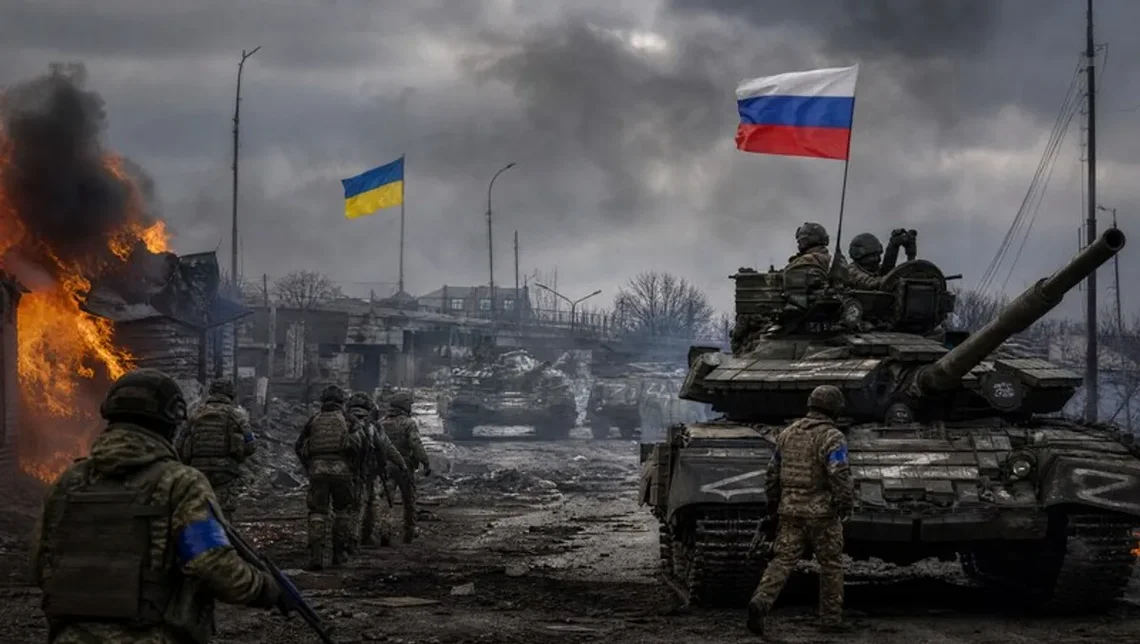
Ukraine has formally appealed to NATO allies for additional advanced air defence systems as Russian forces escalate long-range missile and drone strikes against civilian infrastructure and frontline positions, putting renewed pressure on Western governments to accelerate military assistance. The appeal comes amid growing concern among European defence planners that existing Ukrainian air defences are being systematically degraded faster than they can be replenished, according to officials cited by Reuters and the Associated Press.
Key Context: Ukraine currently operates a patchwork of Soviet-era and Western-supplied air defence systems, including Patriot batteries, IRIS-T units, and NASAMS launchers. Each system uses different interceptor missiles, complicating logistics and resupply. NATO Secretary General Jens Stoltenberg has repeatedly stated that air defence remains one of the alliance's highest-priority areas of assistance to Kyiv. Russia has responded to Western arms deliveries by adjusting strike tactics, combining ballistic missiles with cheaper Shahed-series drones to overwhelm Ukrainian intercept capacity. (Source: Reuters, AP)
The Scale of Russia's Aerial Campaign
Russia's aerial bombardment of Ukraine has intensified markedly in recent months, with strikes targeting power generation facilities, water treatment plants, railway junctions, and densely populated urban areas. According to United Nations reports, millions of Ukrainian civilians have experienced prolonged blackouts and heating failures as a direct result of infrastructure attacks, with repair crews working under fire to restore basic services.
Drone and Missile Saturation Tactics
Russian forces have refined a strategy of launching combined salvoes that blend Shahed-136 loitering munitions — originally sourced from Iran — with Kalibr cruise missiles and Iskander ballistic missiles. The approach is designed to force Ukrainian air defence operators to make rapid intercept-priority decisions, allowing some warheads to slip through. Defence analysts cited by Foreign Policy describe this as a deliberate "interceptor exhaustion" strategy, intended to deplete Ukraine's finite supply of surface-to-air missiles before a renewed ground offensive push.
Related Articles
Ukrainian military officials said the country has successfully intercepted a significant proportion of incoming projectiles, but acknowledged that the sheer volume of Russian launches is placing unsustainable strain on radar operators and munitions stockpiles. Several Patriot interceptor missiles, which cost approximately one million US dollars per unit, have been expended defending targets that Russian planners appear to have designated as decoys, officials said.
Ukraine's Formal Request to NATO Partners
Kyiv has now submitted a structured request to NATO's defence contact group — the so-called Ramstein format — for additional Patriot batteries, further IRIS-T SLM systems from Germany, and longer-range radar integration that would provide earlier warning of incoming ballistic threats. Ukrainian President Volodymyr Zelensky has stated publicly that his government requires at least seven additional Patriot batteries to adequately protect the country's most critical nodes, according to AP reporting.
German and American Contributions Under Scrutiny
Germany has supplied Ukraine with IRIS-T SLM medium-range air defence systems and has committed to additional deliveries, but Berlin faces its own procurement timelines and industrial capacity constraints, officials said. Washington, meanwhile, has provided Patriot systems but faces congressional scrutiny over the pace and scale of transfers, particularly given parallel commitments to partners in the Indo-Pacific region. The Biden administration's final months saw a push to accelerate deliveries, and subsequent policy continuity has been closely watched by European capitals. (Source: Reuters)
The United Kingdom has contributed components and technical expertise to Ukrainian air defence operations, including elements supporting the integration of different system types. British defence officials have declined to specify the precise nature of UK contributions, citing operational security, but confirmed that support is ongoing, according to AP.
For further context on how the alliance is adjusting its posture, see our earlier coverage on how NATO bolsters eastern flank amid Russia concerns, which details the broader repositioning of alliance assets since the full-scale invasion began.
Western Deliberations: What Systems Are on the Table
Discussions among NATO member states have moved beyond immediate resupply and into a more complex negotiation over which advanced systems might be transferred without setting precedents that allies are not yet prepared to establish. Several options are under active consideration, officials said.
The Patriot Question
The Patriot PAC-3 system remains the most capable option widely available within NATO inventories. The United States, Germany, the Netherlands, and Greece all operate Patriot batteries, though each country cites its own national defence requirements as a constraint on transfers. Greece in particular has been reluctant, given its own regional security concerns. US officials said the administration is exploring whether industrial production of Patriot interceptors can be accelerated, which would ease the political calculus around transfers from existing stockpiles. (Source: AP)
NASAMS and European Alternatives
Norway and the United States co-produce the NASAMS system, which Ukraine already operates. Additional deliveries are reportedly under negotiation, with Norway indicating a willingness to prioritise Ukrainian orders. France has discussed potential contributions from its SAMP/T Mamba system, which offers comparable capability to Patriot in some engagement scenarios, officials said. The European dimension of this discussion is significant: European defence industries are being pushed to scale production, and the Ukraine conflict has functioned as a catalyst for broader EU defence investment, as outlined in recent EU sanctions escalation coverage that traced how Brussels has linked economic pressure on Moscow to military support frameworks for Kyiv.
| System | Country of Origin | Range | Status in Ukraine | Availability for Transfer |
|---|---|---|---|---|
| Patriot PAC-3 | United States | Up to 160 km | Active (limited batteries) | Under negotiation |
| IRIS-T SLM | Germany | Up to 40 km | Active (multiple units) | Further deliveries committed |
| NASAMS | Norway / USA | Up to 30+ km | Active | Additional units in negotiation |
| SAMP/T Mamba | France / Italy | Up to 100 km | Not yet deployed | Under discussion |
| Hawk (upgraded) | United States (legacy) | Up to 40 km | Limited stocks | Some transferred via third parties |
Russia's Countermoves and Escalation Dynamics
Moscow has signalled that continued Western weapons deliveries will be met with intensified strikes, a threat that analysts at Foreign Policy note has been made repeatedly without altering the fundamental calculus of NATO support. Russian officials have characterised Western air defence transfers as "direct participation" in the conflict, a framing rejected by NATO governments who maintain a consistent legal and political distinction between arms supply and direct combat involvement.
Russia has also accelerated development and procurement of hypersonic strike weapons, including the Kinzhal air-launched ballistic missile and the Zircon sea-launched hypersonic cruise missile. These systems are designed to defeat existing Patriot configurations, though Ukrainian operators have reportedly achieved intercepts against Kinzhal missiles — a development that, if confirmed, would represent a significant operational milestone, officials said. (Source: Reuters)
The Risk of Escalation Thresholds
European security analysts have flagged concern that the conflict's aerial dimension is approaching a qualitative threshold. If Ukraine's air defences collapse meaningfully, the humanitarian consequences would be severe and the political pressure on NATO governments to intervene more directly would intensify. That scenario — rather than any formal alliance decision — may represent the most plausible path to a more direct Western military engagement, though officials across NATO capitals have been careful to avoid such language publicly. (Source: Foreign Policy)
The alliance's recent decisions on eastern flank reinforcement and the ongoing debate over Ukraine's potential membership path are closely tied to these questions, as explored in our report on how Ukraine pushes forward as NATO vows sustained support.
What This Means for the UK and Europe
For Britain and its European partners, Ukraine's air defence crisis carries implications that extend well beyond the immediate battlefield. The conflict has exposed the extent to which European NATO members allowed their air defence capabilities to atrophy during the post-Cold War period, leaving the alliance collectively dependent on US-sourced systems and interceptors at a moment of acute demand.
The UK's own air defence posture — built around the Sky Sabre system and a relatively thin inventory of surface-to-air missiles — has prompted defence planners in London to reassess national requirements. Senior British military figures have said publicly that the lessons of Ukraine are being incorporated into defence planning reviews, with implications for procurement priorities and stockpile targets, according to AP.
For continental Europe, the pressure is even more acute. Germany's decision to substantially increase defence spending, France's push to lead a European defence industrial base expansion, and Poland's massive military procurement programme are all — in part — direct responses to the vulnerabilities exposed by the Russia-Ukraine conflict. The economic dimension of this rearmament intersects with the sanctions architecture detailed in our analysis of how EU sanctions policy has evolved through the stalemate phase of the conflict.
European energy dependence on Russia — substantially reduced but not eliminated — also shapes the political space within which governments can operate. Domestic audiences in several EU member states have shown signs of fatigue, and governing coalitions in countries including Slovakia and Hungary have adopted positions that complicate alliance consensus. For the UK, outside the EU but deeply embedded in NATO, the strategic imperative remains to maintain cohesion among allies while sustaining bilateral military support to Kyiv.
Outlook: Pressure Points Ahead
The coming weeks are likely to bring intensified diplomatic activity around the Ramstein contact group format, with Ukrainian officials expected to press for concrete delivery commitments rather than expressions of political solidarity. Defence ministers from key contributor nations are scheduled to convene for further discussions, according to officials cited by Reuters.
Industrial capacity remains the binding constraint. Even where political will exists, the production of Patriot interceptors, IRIS-T missiles, and radar components cannot be accelerated overnight. Western defence companies have received substantial orders, but lead times are measured in months and years rather than days. This structural mismatch between Ukraine's immediate operational requirements and the pace of Western industrial production is, analysts said, the central challenge that no amount of political commitment can fully resolve in the near term. (Source: AP, Foreign Policy)
Russia, for its part, has shown no indication of moderating its aerial campaign. UN reports document a continued pattern of strikes against civilian infrastructure that international legal experts have characterised as potential violations of the laws of armed conflict, a characterisation Moscow rejects. The humanitarian toll continues to mount, and with it, the urgency of Ukraine's appeal to the alliance that has pledged, repeatedly, to support Kyiv for as long as necessary. Whether that pledge translates into sufficient hardware, fast enough, remains the defining operational question of this phase of the conflict.