
UN Security Council deadlocked on Gaza aid access
Russia, China veto Western resolution for humanitarian corridor
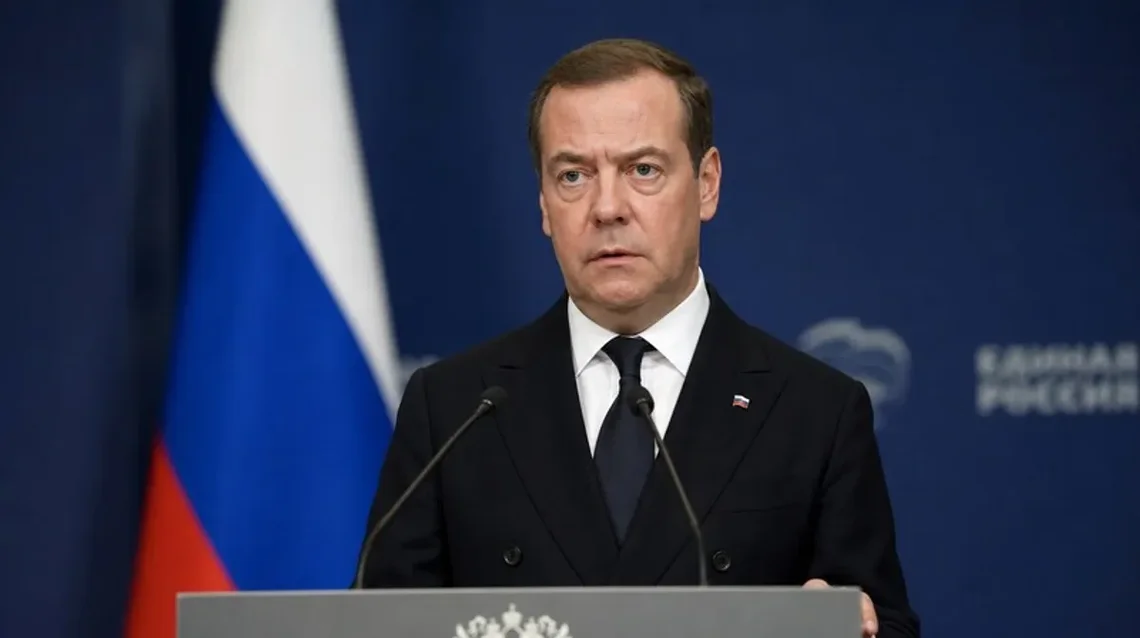
The United Nations Security Council has failed once again to act on the deepening humanitarian catastrophe in Gaza, after Russia and China vetoed a Western-backed resolution that would have established protected corridors for the delivery of food, medicine, and emergency supplies to the besieged Palestinian territory. The double veto, delivered in a rare display of unified opposition from Moscow and Beijing, has drawn sharp condemnation from European governments and human rights organisations, who warn that civilians are paying a fatal price for geopolitical paralysis at the world's highest diplomatic table.
Key Context: The UN Security Council has fifteen members, of which five hold permanent status with veto power: the United States, the United Kingdom, France, Russia, and China. Any one of these five nations can unilaterally block a resolution regardless of the overall vote tally. The Gaza crisis has now produced multiple failed resolutions at the Council, mirroring a pattern seen repeatedly over the conflict in Ukraine, where vetoes have similarly obstructed collective international action. The humanitarian situation in Gaza has been described by senior UN officials as among the most acute civilian crises currently active anywhere in the world, with aid agencies reporting critical shortfalls in food, water, and medical supplies for a population of over two million people.
The Vote and Its Immediate Aftermath
The resolution, tabled jointly by France, the United Kingdom, and the United States, called for immediate, unimpeded humanitarian access to Gaza through designated safe corridors, along with a temporary cessation of hostilities sufficient to allow aid convoys to reach civilian populations. According to diplomatic sources cited by Reuters and the Associated Press, the text had been carefully negotiated over several weeks in an attempt to secure broader Council support, including language that stopped short of demanding a permanent ceasefire — a concession aimed at avoiding a US veto from the opposite direction.
Thirteen of the fifteen Council members voted in favour. Russia and China voted against. Neither abstained.
Related Articles
Moscow and Beijing State Their Case
Russia's UN Ambassador argued before the vote that the resolution was politically motivated and amounted to Western interference dressed in humanitarian language, according to statements reviewed by AP. China's representative echoed similar concerns, contending that the text failed to address what Beijing described as the "root causes" of the conflict and did not adequately call for a permanent end to military operations. Both ambassadors framed their vetoes as protecting the broader interests of a negotiated peace settlement rather than obstructing aid, a characterisation that Western diplomats and NGOs rejected outright.
Western Powers React With Fury
The UK's UN Ambassador, speaking immediately after the vote, described the vetoes as "unconscionable" and accused Russia and China of using civilians as a geopolitical instrument. France's representative called the outcome "a failure of the international community's most basic obligations." The US State Department issued a written statement condemning the result, though Washington's own record of vetoing Gaza-related resolutions has complicated its moral standing on the issue, a tension noted pointedly by several non-aligned Council members, according to Foreign Policy analysis.
The Human Cost on the Ground
UN agencies operating in Gaza have described conditions that are deteriorating by the day. The World Food Programme has warned of famine-level conditions in northern Gaza, while the World Health Organisation has reported that the majority of hospitals in the territory are either non-functional or operating far below capacity. UNICEF has documented acute malnutrition among children, with rates described in internal UN reports as among the worst recorded in any active conflict zone currently being monitored. (Source: United Nations Office for the Coordination of Humanitarian Affairs)
Aid Agencies Blocked at the Border
Multiple relief organisations, including the International Committee of the Red Cross and Médecins Sans Frontières, have reported that convoys approved in principle have repeatedly been turned back at crossing points or subjected to lengthy delays that render time-sensitive medical supplies useless upon arrival. The UN's own humanitarian coordinator for the region has formally described the situation as a man-made catastrophe compounded by political obstruction. (Source: Reuters)
The Security Council deadlock means there is currently no enforceable international mandate compelling any party to the conflict to guarantee safe passage for humanitarian workers, leaving aid operations dependent entirely on ad hoc negotiations with military authorities — an arrangement that agencies say is failing consistently.
A Pattern of Paralysis: The Council's Structural Crisis
Gaza is far from the only file on which the Security Council has ground to a halt. The body has been rendered similarly ineffective on the conflict in Ukraine, where Russian vetoes have repeatedly blocked Western-backed resolutions. This pattern of mutual obstruction — in which permanent members exercise veto power not on the merits of individual resolutions but as instruments of strategic competition — has prompted a growing body of diplomatic opinion to question whether the Council, in its current form, is any longer capable of fulfilling its foundational mandate.
For context on how these dynamics have played out elsewhere, see the Council's record on Ukraine aid resolution deadlock, which shares structural similarities with the Gaza impasse, and the separate failure to agree on Ukraine aid corridor access, where Russian opposition proved similarly insurmountable. The pattern of vetoes has also intersected with arms-related diplomacy, as detailed in reporting on the Ukraine arms embargo deadlock.
Reform Proposals Gaining Traction
A number of member states, particularly from the African Union bloc and Latin America, have renewed calls for reform of the veto system, including proposals that would require vetoing powers to provide written justification and trigger automatic General Assembly review. While such changes would require amendments to the UN Charter — themselves subject to veto by the P5 — the political pressure behind reform is described by diplomatic analysts as more serious currently than at any point since the Cold War. (Source: Foreign Policy)
Implications for the UK and Europe
For the United Kingdom and its European partners, the failed vote carries consequences that extend well beyond the immediate diplomatic humiliation. British and European governments have invested considerable political capital in framing their foreign policy around a "rules-based international order" — a framework that depends, at its core, on the Security Council functioning as its ultimate enforcer. Every veto that blocks an overwhelmingly supported resolution weakens that framework and, by extension, the credibility of the Western powers that champion it.
Domestically, the vote is likely to intensify pressure on the UK government from opposition parties and civil society groups demanding more forceful action. Labour MPs and humanitarian organisations have already called on Downing Street to go further than diplomatic statements, including suspending arms export licences where there is credible risk of civilian harm — a step the government has so far resisted taking comprehensively. (Source: AP)
European Diplomatic Unity Under Strain
Within the European Union, the Gaza crisis has exposed significant divisions between member states over how assertively to push for a ceasefire. While France and Belgium have been among the more vocal advocates for humanitarian access, other EU governments have been considerably more cautious in their public statements. This lack of cohesion limits the bloc's collective leverage and has drawn criticism from smaller member states who argue that European solidarity should translate into a unified and unambiguous position at the Security Council. The sanctions debate within the EU — already complicated by disagreements over Russia — illustrates how difficult collective action has become; for background, see reporting on how the EU has tightened Russia sanctions over the Ukraine offensive and the separate track of EU sanctions linked to the Ukraine stalemate, both of which required protracted internal negotiation before adoption.
European officials are also acutely aware of the broader reputational stakes. Critics in the Global South have pointed, with increasing frequency, to what they characterise as a double standard: Western governments that demanded swift and sweeping international action in response to the invasion of Ukraine have been perceived as more equivocal — or in some cases actively obstructive — when it comes to comparable accountability mechanisms for Gaza. That perception, whether or not it is considered fair in Western capitals, is shaping diplomatic relationships and multilateral coalitions in ways that will outlast the immediate crisis. (Source: Foreign Policy)
What Comes Next
With the Security Council route now exhausted for the foreseeable future, attention is turning to whether the UN General Assembly — which cannot pass binding resolutions but can adopt politically significant ones without the veto — will be convened in emergency special session. Such sessions have been used previously on both the Ukraine and Gaza crises, producing large-majority votes that carry moral weight even absent enforcement mechanisms.
Separately, several states have indicated they may pursue action through the International Court of Justice, building on proceedings already underway that examine whether the conditions in Gaza meet the legal threshold for a finding requiring urgent provisional measures. (Source: UN reports)
Humanitarian Corridors: A Practical Alternative?
Some relief organisations and independent analysts have proposed that regional powers — particularly Egypt, Qatar, and Jordan — could take a more assertive role in guaranteeing access arrangements outside the UN framework, potentially with EU logistical support. While such arrangements would lack the legal authority of a Security Council resolution, proponents argue that a functioning unofficial corridor is preferable to a legally impeccable mandate that delivers nothing. Whether any regional actor has the political will and operational capacity to fill that vacuum remains, for now, an open question.
| Resolution | Primary Sponsors | Votes In Favour | Vetoing Power(s) | Stated Veto Rationale |
|---|---|---|---|---|
| Humanitarian corridor access | UK, France, USA | 13 of 15 | Russia, China | Politically motivated; fails to address root causes |
| Immediate ceasefire (earlier session) | Arab bloc, France | 12 of 15 | USA | Premature; undermines hostage negotiations |
| Temporary humanitarian pause | Brazil (rotating presidency) | 12 of 15 | USA | Does not sufficiently address security concerns |
| Independent investigation mechanism | EU-aligned bloc | 11 of 15 | Russia, China | Biased framing; infringes on sovereignty |
The Security Council's latest failure on Gaza is more than a procedural setback. It is a statement about the limits of multilateral governance in an era of great-power competition — and a reminder that the architecture built after the Second World War to prevent exactly these kinds of humanitarian catastrophes is only as functional as the political will of the states that sit atop it. For the millions of civilians in Gaza waiting for aid that the world's most powerful diplomatic body cannot agree to deliver, that is a distinction without a difference.