
UN Security Council deadlocked on Gaza aid extension
Russia, China block resolution as humanitarian crisis deepens
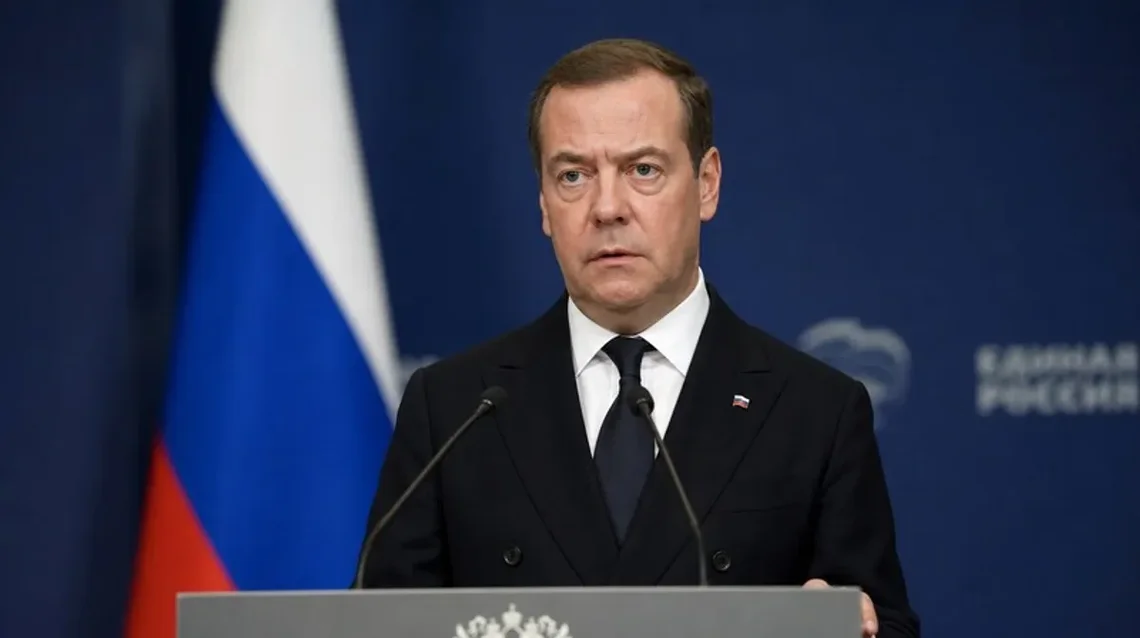
The United Nations Security Council has failed to renew a critical humanitarian aid mechanism for Gaza after Russia and China vetoed a Western-backed resolution, leaving millions of Palestinian civilians facing deepening food insecurity, medical shortages, and displacement as diplomatic paralysis grips the world's foremost peacekeeping body. The twin vetoes, cast during an emergency session at UN headquarters in New York, mark the latest episode in a sustained pattern of great-power obstruction that has rendered the Security Council effectively unable to respond to one of the most acute humanitarian emergencies of the modern era.
Key Context: The UN Office for the Coordination of Humanitarian Affairs (OCHA) estimates that more than 2.1 million people in Gaza require urgent humanitarian assistance. The Security Council's cross-border aid authorisation mechanism, which permits the delivery of food, medicine, and shelter materials through designated entry points without host-government consent, has been a cornerstone of international relief efforts. Its lapse or non-renewal directly threatens the operational capacity of agencies including the World Food Programme (WFP), UNICEF, and UNRWA. (Source: UN OCHA)
What Happened at the Security Council
The United States and the United Kingdom tabled a draft resolution that would have extended the existing cross-border humanitarian aid authorisation for an additional twelve months, maintaining established delivery corridors and oversight mechanisms. France and other European elected members co-sponsored the text, which passed a procedural majority among the fifteen-seat council. Russia and China, both permanent members holding veto power, blocked the resolution, arguing that the mechanism infringed upon Israeli sovereignty and that aid delivery should be routed exclusively through Israeli-controlled channels.
The Veto Arguments
Russian Ambassador Vasily Nebenzya characterised the draft resolution as a politically motivated instrument designed to bypass bilateral agreements and undermine state authority, according to statements recorded in the UN press briefing system. China's representative echoed those arguments, calling for a renegotiated framework that, in Beijing's framing, would more adequately reflect the consent of the parties involved. Western diplomats and human rights organisations rejected both positions, arguing that conditions on the ground make reliance on any single government-controlled corridor operationally untenable and potentially dangerous for aid workers. (Source: Reuters)
Related Articles
Council Dynamics and Procedural Fallout
The deadlock is consistent with a broader pattern of Security Council dysfunction on Gaza-related dossiers. Since the current conflict escalated, the council has convened numerous emergency sessions without producing binding resolutions, with permanent members repeatedly using veto powers to shield allied parties from international accountability mechanisms. Analysts writing in Foreign Policy have described the current impasse as evidence of a structural legitimacy crisis within the UN system, noting that the council's inability to act on humanitarian mandates — as distinct from political or military ones — marks a significant escalation in institutional breakdown. For background on related procedural failures, see UN Security Council deadlocked on Gaza aid renewal.
The Humanitarian Toll on the Ground
Independent assessments from UN agencies paint a deteriorating picture inside Gaza. The World Food Programme has reported that famine-like conditions are present across significant portions of the territory, with acute malnutrition rates among children under five among the highest recorded in any active conflict zone currently monitored by the agency. Medical supply chains have been severely disrupted, with the WHO documenting the partial or total destruction of dozens of healthcare facilities. (Source: WHO, WFP)
UNRWA's Operational Constraints
The UN Relief and Works Agency for Palestine Refugees (UNRWA) has warned that without a renewed cross-border authorisation, it cannot guarantee continuity of food distribution, shelter provisioning, or emergency medical response at current operational levels. The agency, which serves as the primary relief infrastructure for Palestinian civilians, has been operating under severe resource constraints compounded by the funding suspensions imposed by several donor governments earlier this year following contested allegations regarding staff conduct — allegations UNRWA has said an independent review substantially qualified. (Source: UN OCHA, AP)
Access Routes and Bottlenecks
Aid agencies report that existing crossing points remain subject to lengthy inspection delays, periodic closures, and capacity constraints that significantly reduce the volume of supplies reaching civilian populations. The Rafah crossing, once the primary southern entry point for humanitarian goods, has been intermittently closed for extended periods. Alternative northern crossings have faced security and logistical impediments that limit throughput. According to AP reporting from the field, convoys have encountered bureaucratic obstacles that result in perishable food stocks spoiling before distribution. The expiration or non-renewal of the UN mechanism removes a key instrument of international pressure on those bottlenecks.
Geopolitical Fault Lines Driving the Deadlock
The veto by Russia and China at the Security Council is not occurring in isolation. It reflects a calculated diplomatic posture by both powers to contest Western multilateral frameworks across multiple theatres simultaneously. Moscow's obstructionism on Gaza dovetails with its ongoing efforts to limit Western influence at the UN more broadly, a strategy visible in parallel disputes over Ukraine. Observers tracking the council's Ukraine dossiers note structural parallels — for context, see UN Security Council deadlocked on Ukraine arms embargo and UN Security Council deadlocked on Ukraine aid corridor.
The Russia-China Alignment
The coordination between Moscow and Beijing on Gaza votes represents a significant evolution in their diplomatic alignment at the UN. Historically, the two powers have not always voted in concert on Middle Eastern resolutions. Their convergence signals a shared strategic interest in challenging the post-Cold War norm of humanitarian intervention authorised through multilateral bodies — a norm both countries view as a Western instrument for imposing conditions on sovereign states. Foreign Policy analysts have noted that this alignment is now sufficiently consistent to be considered a structural feature of Security Council politics rather than an episodic tactical calculation. (Source: Foreign Policy)
International Reactions and Alternative Mechanisms
The diplomatic fallout from the veto was immediate. The United States and European Union issued coordinated statements expressing grave concern about the humanitarian consequences of the council's failure to act. The UK Foreign Secretary characterised the outcome as a moral and institutional failure, according to statements reported by Reuters, and indicated that London would pursue alternative mechanisms to sustain aid delivery.
Several humanitarian organisations have called on the UN General Assembly to invoke the Uniting for Peace procedure, which allows the 193-member body to take up matters when the Security Council is deadlocked — a procedural mechanism with persuasive but not binding authority. The Arab League convened an emergency session, with member states urging immediate resumption of unrestricted humanitarian access and calling for a special envoy to be dispatched to coordinate logistics outside the Security Council framework. (Source: AP)
NGO and Civil Society Response
Major international NGOs operating in Gaza, including Médecins Sans Frontières and Oxfam, issued urgent public statements warning that the council's failure would directly cost civilian lives. MSF field teams currently operating inside Gaza have reported critical shortages of surgical supplies, anaesthetics, and blood products, according to agency communications cited by Reuters. Oxfam described the veto as a politically motivated act that instrumentalises civilian suffering.
What This Means for the UK and Europe
For the United Kingdom and European Union member states, the Security Council deadlock creates both immediate policy dilemmas and longer-term strategic questions. In practical terms, several European governments are among the largest bilateral donors to UNRWA and other agencies operating in Gaza. The collapse of the cross-border mechanism increases pressure on those donors to identify alternative delivery channels, which carry higher logistical costs and greater operational risk for aid workers.
Politically, the veto deepens a crisis of confidence in the rules-based international order that European governments have positioned as the cornerstone of their foreign policy identity — particularly in the wake of the Ukraine conflict. British and European diplomats face the challenge of maintaining credibility as champions of humanitarian law while operating within a Security Council architecture that has been rendered procedurally inert on one of the most visible humanitarian emergencies of the decade. The UK's seat at the council as a permanent member places it in a particularly visible position, and pressure from domestic civil society and parliamentary blocs to pursue more assertive unilateral measures is expected to intensify. (Source: Reuters, AP)
The European Commission has separately indicated it is reviewing direct funding mechanisms that would circumvent UNRWA's current political constraints, potentially channelling assistance through bilateral or regional intermediaries. That approach, while operationally feasible in the short term, carries its own political complications, including questions about accountability and the risk of fragmenting the humanitarian architecture that has historically given international relief efforts their legal standing.
For further coverage of the Security Council's prior failures on Gaza-related access questions, see UN Security Council deadlocked on Gaza aid access and UN Security Council deadlocked over Gaza aid extension.
The Road Ahead: Diminishing Options
Diplomatic sources indicated that the US and UK intend to reintroduce a modified resolution in the coming weeks, though prospects for overcoming the Russia-China veto remain dim absent significant shifts in the underlying geopolitical landscape. Parallel efforts to convene a donor conference for Gaza outside the UN framework are reportedly under discussion among G7 foreign ministers, according to AP. Some diplomatic analysts have suggested that the repeated failure of the Security Council to act on humanitarian mandates may eventually force a wider renegotiation of the UN's institutional architecture — including reform proposals long resisted by permanent members who would stand to lose their veto privileges.
| Country / Bloc | Position on Resolution | Stated Rationale | Key Interest |
|---|---|---|---|
| United States | In favour | Humanitarian necessity; cross-border access essential | Multilateral credibility; regional stability |
| United Kingdom | In favour | Rules-based order; civilian protection under international law | Foreign policy credibility; domestic political pressure |
| France | In favour (co-sponsor) | Humanitarian law obligations; EU coordination | EU foreign policy leadership |
| Russia | Veto | Sovereignty concerns; bilateral aid channel preference | Counter-Western multilateralism; strategic alignment |
| China | Veto | Host-state consent framework; renegotiation demanded | Non-interference doctrine; Russia alignment |
| Arab League members (elected seats) | In favour | Regional solidarity; civilian protection | Political accountability; domestic public opinion |
Until a viable alternative mechanism is agreed upon or the geopolitical calculus shifts sufficiently to allow a resolution to pass, humanitarian agencies warn that civilians in Gaza will continue to pay the heaviest price for a diplomatic failure that is entirely man-made. The Security Council's founding promise — to act collectively in response to threats to international peace and security — has rarely appeared more hollow, or the distance between institutional aspiration and operational reality more vast. (Source: UN OCHA, Reuters, AP)