
UN Security Council deadlocked on Gaza ceasefire
Russia blocks resolution as humanitarian crisis deepens
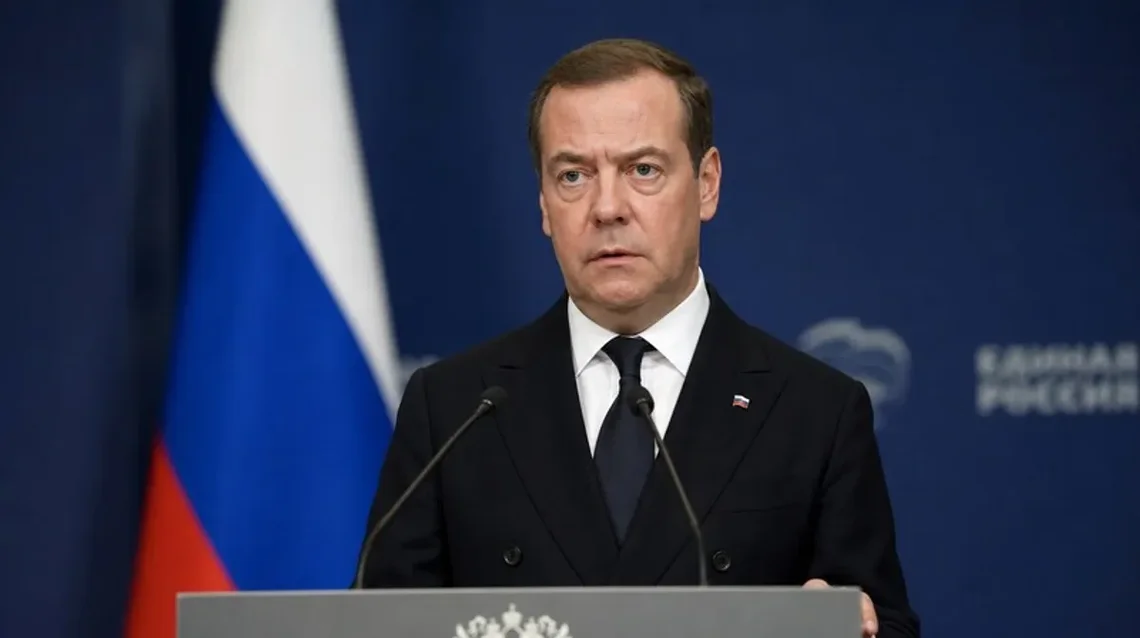
Russia has vetoed a United States-drafted resolution at the United Nations Security Council calling for an immediate ceasefire in Gaza, deepening a diplomatic impasse that has left more than two million Palestinians facing acute shortages of food, medicine and clean water. The veto, cast in a session marked by sharp exchanges between permanent members, underscores the structural paralysis at the heart of the world's principal peace and security body at one of its most critical moments in decades.
Key Context: The UN Security Council has fifteen members, of which five — the United States, United Kingdom, France, Russia and China — hold permanent seats and the power of veto. Any single veto from a permanent member is sufficient to block a resolution, regardless of how many other members vote in favour. Since the outbreak of the current conflict in Gaza, the Council has failed to pass binding resolutions on multiple occasions due to competing vetoes from the United States, Russia and China. The deadlock reflects not only disagreements over the conflict itself but broader fractures in the post-Cold War international order. (Source: United Nations)
The Vote and Its Immediate Fallout
Russia cast its veto against the US-sponsored text, which called for an immediate and unconditional ceasefire, the release of all hostages held in Gaza, and unhindered humanitarian access throughout the territory. China abstained rather than joining Russia in the veto, a move diplomats described as a calculated attempt to avoid full international opprobrium while still denying the resolution the unanimous backing it required to carry moral weight, according to officials familiar with the session.
Russia's Stated Justification
Moscow's UN ambassador argued that the resolution was "one-sided" and failed to address what Russia characterised as the root causes of the conflict, including longstanding Palestinian dispossession and the absence of a credible pathway to a two-state solution. Russian officials also criticised the text for not explicitly condemning what they described as disproportionate use of force. Western diplomats rejected those characterisations, calling the veto a cynical exercise in geopolitical positioning rather than a genuine concern for Palestinian welfare. (Source: Reuters)
Related Articles
Reactions from Council Members
The United Kingdom's ambassador expressed "profound disappointment" at the outcome, stating that the failure to act was inexcusable given the scale of civilian suffering. France's representative called for an emergency session of the UN General Assembly, where vetoes do not apply, although resolutions passed there carry no binding legal force. Several non-permanent members, including representatives from the Global South, issued joint statements calling the Council's dysfunction a failure of collective responsibility. (Source: AP)
The Humanitarian Situation on the Ground
UN agencies have described conditions in Gaza as among the most severe documented in any recent conflict, with the World Food Programme warning that large portions of the population are experiencing catastrophic food insecurity. Hospitals have reported critical shortages of surgical supplies, anaesthetics and blood products. Fuel for generators powering intensive care units has been intermittently cut off, with direct consequences for patient survival, according to reports filed by the World Health Organisation.
Aid Access Blocked at Multiple Entry Points
Humanitarian organisations operating in the territory have reported that convoys have been delayed, turned back or destroyed before reaching their intended recipients. The UN Office for the Coordination of Humanitarian Affairs documented hundreds of aid delivery failures in recent months, attributing the disruptions to both active hostilities and deliberate obstruction at crossing points. (Source: UN OCHA)
The pattern of blocked aid has been a central concern in multiple Council sessions, and it connects directly to earlier diplomatic failures documented in related reporting. Readers tracking the full arc of Security Council negotiations can find additional context in coverage of the UN Security Council deadlocked on Gaza aid access, which examined the specific mechanisms through which humanitarian corridors have been contested at the diplomatic level.
A Pattern of Institutional Failure
The latest veto is not an isolated incident. It represents the most recent episode in a sustained pattern of Security Council paralysis on the Gaza file that has accumulated across multiple sessions and draft resolutions. Analysts at Foreign Policy have argued that the repeated cycle of vetoes has fundamentally degraded the Council's credibility as a mechanism for crisis management, and that member states are increasingly looking to alternative frameworks — including regional bodies and ad hoc coalitions — to fill the governance vacuum. (Source: Foreign Policy)
Comparing Deadlocks: Gaza and Ukraine
The structural dynamics at play in the Gaza impasse bear a troubling resemblance to the Council's handling of the war in Ukraine, where Russia's permanent membership has similarly prevented binding resolutions. The parallel failure modes across both conflicts suggest a systemic problem rather than a case-specific one. Coverage of the UN Security Council deadlocked on Ukraine ceasefire vote provides useful comparative analysis of how veto power has been weaponised across distinct geopolitical theatres to shield actors from international accountability.
| Session | Resolution Focus | Veto Cast By | Outcome |
|---|---|---|---|
| Early conflict phase | Humanitarian pause | United States | Resolution blocked |
| Mid-conflict phase | Aid corridor access | United States | Resolution blocked |
| Ceasefire debate (recent) | Immediate ceasefire and hostage release | Russia | Resolution blocked |
| Aid renewal talks | Cross-border aid mandate renewal | Contested — ongoing | Partial agreement only |
| Ukraine — invasion response | Ceasefire and troop withdrawal | Russia | Resolution blocked |
| Ukraine — civilian protection | Civilian infrastructure safeguards | Russia | Resolution blocked |
Diplomatic Alternatives and Their Limitations
With the Security Council effectively neutralised, diplomatic energy has shifted toward alternative forums. The UN General Assembly has passed several non-binding resolutions calling for a ceasefire, each backed by an overwhelming majority of member states. However, these resolutions carry no enforcement mechanism and have produced no measurable change in the conduct of hostilities on the ground.
Regional Mediation Efforts
Qatar, Egypt and the United States have at various points served as intermediaries in indirect negotiations between Israeli officials and Hamas leadership. Those talks have produced intermittent agreements on hostage exchanges and temporary pauses in fighting, but a comprehensive, durable ceasefire has remained elusive. Arab League members have pushed for a stronger international mandate, while the African Union has called on the Security Council to reform its veto structure — a proposal that has gained rhetorical support but faces near-zero prospect of adoption given that reform requires the consent of permanent members. (Source: AP)
The stalling of ceasefire negotiations has also complicated the broader question of humanitarian aid renewal mandates, a process that has been contentious in its own right. Earlier reporting on the UN Security Council deadlocked on Gaza aid renewal outlined the specific procedural obstacles that have prevented even narrow humanitarian agreements from achieving the threshold required for Council passage.
Implications for the United Kingdom and Europe
For the United Kingdom and its European partners, the Security Council deadlock carries significant strategic and domestic political consequences. The UK, as a permanent Council member that voted in favour of the US-drafted resolution, has placed itself in public opposition to Russia — a position consistent with its broader posture on Ukraine — but faces growing pressure from within to take more assertive unilateral action on humanitarian access.
European governments have been divided on the question of how forcefully to challenge Israeli policy while maintaining long-standing security partnerships. Several EU member states have moved to recognise Palestinian statehood, a development that has created visible friction within the bloc and prompted debate about whether European foreign policy instruments are adequate for the demands of the current moment. (Source: Reuters)
British aid organisations operating in or near Gaza have called on the government to use its Council seat more proactively to push for enforceable humanitarian guarantees, arguing that abstaining from vetoes is insufficient when the overall outcome is continued civilian suffering. The Foreign, Commonwealth and Development Office has faced parliamentary questions about whether the UK's diplomatic leverage is being deployed to maximum effect, with opposition MPs arguing it is not.
European capitals are also watching the Gaza deadlock with an eye on the precedent it sets for future Security Council behaviour. If permanent members can freely veto resolutions with no political cost, the argument for reforming or bypassing the Council gains traction — a debate with direct implications for European security architecture at a time when the continent is already managing the pressures of the war in Ukraine.
What Comes Next
Diplomats have indicated that further draft resolutions are likely to be tabled in coming weeks, though the prospects for a breakthrough remain dim given the current alignment of permanent member positions. Some Council members have proposed a narrower resolution focused exclusively on humanitarian access rather than a ceasefire, calculating that a more limited text might attract broader support and avoid triggering a veto. (Source: UN reports)
For ongoing comprehensive coverage of how the Council's repeated failures have shaped the humanitarian and political landscape, detailed documentation is available in reporting on the UN Security Council deadlocked on Gaza aid as ceasefire stalls and earlier analysis tracking the UN Security Council deadlocked on Gaza ceasefire vote, both of which offer granular accounts of the procedural and political obstacles that have defined this crisis from its earliest stages.
The immediate outlook is one of continued stalemate. With no binding resolution in force, no enforceable ceasefire framework in place, and humanitarian conditions deteriorating by documented measures, the burden falls increasingly on individual states and non-governmental actors operating at the margins of a system that has demonstrably failed to perform its central function. Whether that failure prompts serious structural reform or simply consolidates into a new and diminished normal for international crisis response remains, for now, an open and deeply consequential question.