
UN Security Council deadlocked on new sanctions against Russia
China and India block Western-backed resolution over Ukraine
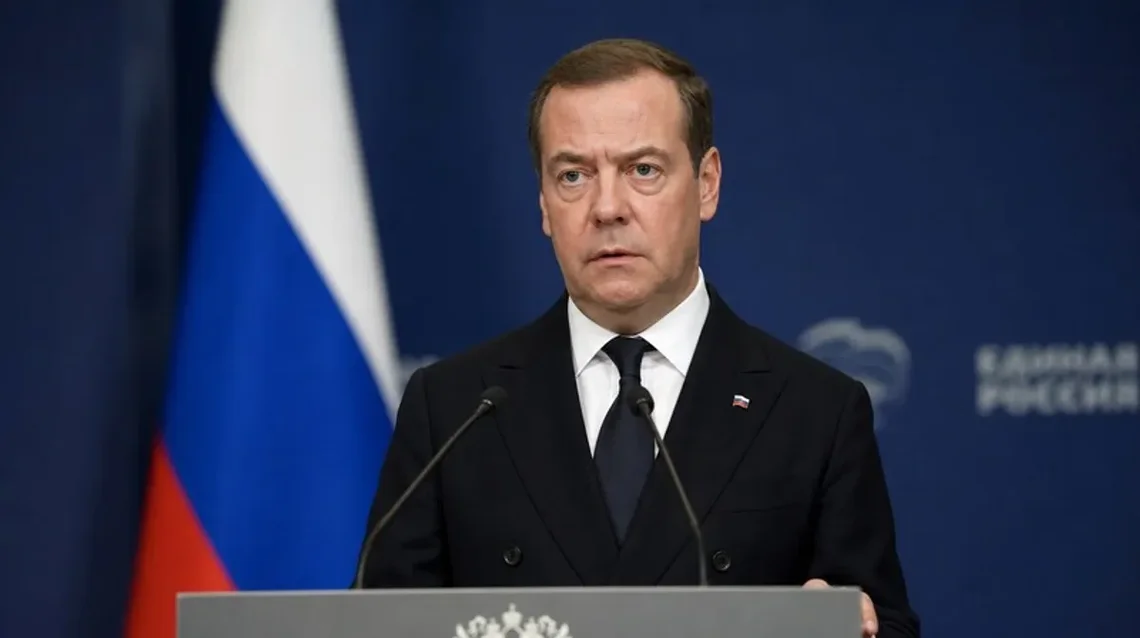
The United Nations Security Council has failed to pass a new package of sanctions against Russia over its ongoing war in Ukraine, after China and India exercised their procedural weight to block a Western-backed resolution that would have expanded financial and energy-sector restrictions on Moscow. The vote, which ended in deadlock, marks yet another crushing blow to Western ambitions to use multilateral institutions to impose meaningful costs on the Kremlin — and raises urgent questions about the future of international law enforcement in an era of fractured great-power politics.
Key Context: The UN Security Council has fifteen members, five of which hold permanent seats and the power of veto: the United States, the United Kingdom, France, China, and Russia. Russia itself vetoed earlier Western-led resolutions condemning its invasion of Ukraine, while China and India — though not permanent members with individual veto power — have consistently abstained or opposed resolutions perceived as hostile to Moscow, effectively denying the procedural majority needed for non-veto procedural votes and coalition-building efforts. The current deadlock reflects a broader fracturing of the post-Cold War international order.
What Happened at the Security Council Vote
Western nations, led by the United States, the United Kingdom, and France, put forward a resolution calling for expanded sanctions targeting Russian oil revenues, defence procurement networks, and financial institutions with links to the war effort in Ukraine. The draft text had been in negotiation for several weeks, according to diplomatic sources cited by Reuters, and was presented as a response to renewed Russian missile strikes on Ukrainian civilian infrastructure.
The Positions of China and India
China's UN ambassador reiterated Beijing's long-standing position that sanctions imposed outside the framework of Security Council consensus are illegitimate and counterproductive, arguing that unilateral economic pressure by Western nations already constitutes a violation of international economic norms, according to AP reporting. India, which holds a non-permanent seat on the Council in the current cycle, abstained from procedural votes and declined to co-sponsor the resolution, citing its policy of strategic autonomy and its substantial energy and defence trade ties with Moscow.
Related Articles
Neither Beijing nor New Delhi formally characterised the Russian military campaign in Ukraine as an unprovoked invasion in their Council statements, a stance consistent with positions both countries have maintained since the conflict began, according to UN session transcripts reviewed by Foreign Policy.
Russia's Response
Russia's permanent representative to the United Nations welcomed the outcome and described the Western resolution as a "politically motivated instrument of economic warfare" rather than a legitimate security measure, officials said. Moscow has consistently used its veto to shield itself from binding Security Council action and has framed Western sanctions as part of a broader geopolitical campaign to weaken Russia rather than as a response to specific violations of international law.
The Anatomy of the Deadlock
For more detailed background on how this impasse developed, see our earlier reporting on the UN Security Council deadlocked over new Russia sanctions, which traces the diplomatic manoeuvring in the weeks leading up to this vote.
Structural Weaknesses in the Veto System
The Security Council's architecture — designed during a moment of post-Second World War optimism about great-power cooperation — has come under sustained criticism from international legal scholars and smaller UN member states. The veto system, which grants each permanent member the ability to block any substantive resolution, effectively renders the Council incapable of acting against any of its five permanent members or their close strategic allies, according to analysis published by Foreign Policy.
A growing number of international relations scholars argue that Russia's invasion of Ukraine represents the clearest possible case of the system's failure: a permanent member of the body charged with maintaining international peace and security is itself waging a war of aggression against a recognised sovereign state, while simultaneously blocking any Council-level response to its own conduct.
| Country | Position on Resolution | Reason Stated | UN Role |
|---|---|---|---|
| United States | In Favour | Accountability for war crimes and civilian targeting | Permanent Member (P5) |
| United Kingdom | In Favour | Enforcement of international humanitarian law | Permanent Member (P5) |
| France | In Favour | Solidarity with Ukraine, deterrence of escalation | Permanent Member (P5) |
| Russia | Against / Veto | Resolution described as politically motivated | Permanent Member (P5) |
| China | Against | Opposes unilateral sanctions framework | Permanent Member (P5) |
| India | Abstained | Strategic autonomy; maintains ties with Moscow | Non-Permanent Member |
Implications for the Ukraine Conflict
The failure of the resolution is not merely a procedural setback — it has direct consequences for the trajectory of the Ukraine war and the international community's capacity to respond to it. Ukraine's foreign ministry issued a statement calling the outcome a "victory for Russian impunity" and urged Western nations to accelerate their bilateral and multilateral sanctions regimes outside the UN framework, according to Reuters.
Sanctions Fatigue and Enforcement Gaps
Western nations have already imposed sweeping unilateral and coordinated sanctions on Russia through mechanisms including the European Union, the G7, and bilateral measures by the United Kingdom and United States. However, independent economists and policy researchers have noted significant enforcement gaps, particularly around Russian oil exports routed through third countries including India and Turkey, according to data published by the Kyiv School of Economics and referenced in Foreign Policy analysis. The failure to achieve a UN Security Council mandate weakens the legal and political pressure on non-Western nations to comply with the broader sanctions architecture.
For a deeper examination of how previous sanctions efforts have stalled at the Council level, our correspondent's earlier piece on the UN Security Council deadlocked over new sanctions on Russia remains essential reading.
What This Means for the UK and Europe
For the United Kingdom and its European partners, the Council deadlock carries both diplomatic and practical consequences that extend well beyond the chamber on Manhattan's East Side.
Britain's Diplomatic Position
The UK's ambassador to the United Nations described the outcome as "deeply regrettable" and reaffirmed London's commitment to maintaining and expanding its own sanctions programme against Russia, officials said. The British government has positioned itself as one of Ukraine's most steadfast supporters, providing military hardware, financial assistance, and political backing. However, the Council deadlock exposes the limits of UK influence within multilateral institutions when great-power competition overrides consensus-building.
Analysts at the Royal United Services Institute have previously noted that UK diplomatic effectiveness at the UN is increasingly contingent on its ability to coordinate with Washington and Brussels simultaneously — a task complicated by post-Brexit trade tensions with the EU and the volatile nature of US foreign policy in the current political environment, according to Foreign Policy.
European Energy and Security Consequences
For European nations more broadly, the failure to tighten multilateral sanctions on Russian energy revenues means that Moscow continues to generate substantial income from oil and gas exports — income that independent analysts say directly funds the military campaign in Ukraine. The European Union has moved to reduce its dependence on Russian energy supplies and has introduced successive packages of its own sanctions, but the absence of a binding UN framework allows third-country buyers to purchase Russian commodities without fear of binding international legal censure, according to European Commission briefing documents cited by Reuters.
European security officials have also expressed concern that a Security Council that cannot act against an aggressor state sends a destabilising signal to other potential revisionist powers — most notably regarding China's posture toward Taiwan — though officials are careful to avoid drawing explicit parallels publicly.
Broader Geopolitical Ramifications
The vote reflects a world increasingly divided between a Western-led liberal international order and a looser coalition of states — led by China and Russia — that prioritise national sovereignty, non-interference, and resistance to what they characterise as Western hegemony. India occupies a careful middle ground, maintaining democratic institutions domestically while refusing to align with Western-led coalitions on questions touching its strategic interests.
This tripartite fracture has been visible across a range of international forums, from climate negotiations to trade disputes, but it is perhaps most consequentially exposed in the Security Council chamber, where the stakes are existential. Additional context on how earlier efforts to build a sanctions coalition failed can be found in our report on the UN Security Council deadlocked on new Russia sanctions.
The Future of UN Reform
Calls for reform of the Security Council's veto mechanism have intensified in the wake of successive deadlocks over Ukraine. A General Assembly resolution passed recently — with broad support from Africa, Latin America, and Pacific island nations — required that the full UN General Assembly be convened whenever a permanent Security Council member exercises its veto, creating a mechanism for public deliberation even when binding action is blocked (Source: United Nations General Assembly). However, critics note that General Assembly resolutions carry no binding force under international law, and reforming the veto system itself would require the consent of the very states that benefit most from it.
As reported by AP, the United States and European allies are currently exploring whether the General Assembly's "Uniting for Peace" mechanism — historically invoked during Cold War paralysis — could be expanded to provide a broader legal basis for coordinated action outside the Council framework. Legal scholars contacted by Foreign Policy described such efforts as politically significant but legally untested at the required scale.
Outlook
With the Security Council paralysed and Western unilateral sanctions showing diminishing returns at the margins, the international community faces a stark choice: adapt its institutions to reflect the realities of 21st-century multipolarity, or accept that the enforcement architecture built after the Second World War is structurally incapable of constraining great-power aggression. For Ukraine, that philosophical debate carries an immediate and lethal urgency. For the United Kingdom and Europe, it demands a recalibration of diplomatic strategy — one that accounts for a world in which multilateral consensus can no longer be assumed, and in which the rules-based international order must be defended through coalition, not consensus.
Further developments on this issue and related Council manoeuvring are tracked in our ongoing coverage of the UN Security Council deadlocked over fresh Russia sanctions and the UN Security Council deadlocked over Russia sanctions extension.
(Sources: Reuters, Associated Press, United Nations session records, Foreign Policy, European Commission, Kyiv School of Economics)