
UN Security Council deadlocked on Syria aid access
Russia blocks humanitarian resolution for fourth time
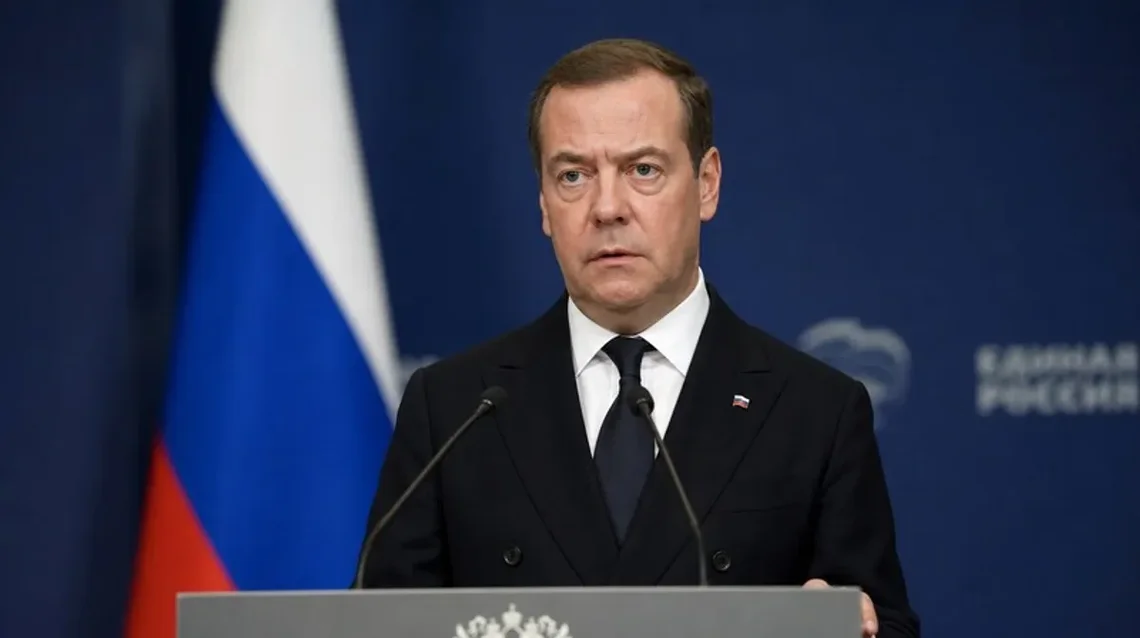
Russia has vetoed a United Nations Security Council resolution on humanitarian aid access to Syria for the fourth time, leaving millions of civilians dependent on cross-border relief shipments facing an increasingly uncertain future. The move, condemned by Western diplomats and aid organisations alike, has renewed urgent questions about the Council's capacity to function as a meaningful instrument of international protection — and drawn sharp criticism from London and Brussels.
Key Context: Cross-border humanitarian operations into northwestern Syria — home to an estimated 4.1 million people, the majority of whom are displaced — have been subject to UN Security Council authorisation since 2014. The Bab al-Hawa border crossing with Turkey remains the sole legally sanctioned entry point for UN-coordinated aid following the closure of additional crossings in previous years. Russia, a permanent member of the Council and close ally of the Syrian government, has consistently opposed resolutions it characterises as violating Syrian sovereignty. Without Council renewal, UN agencies cannot legally guarantee the continuity of cross-border operations to opposition-held territory.
The Vote and Its Immediate Aftermath
The Security Council session, held at UN headquarters in New York, saw thirteen of fifteen members vote in favour of extending the humanitarian mandate. Russia cast its veto, with China abstaining. The resolution, co-drafted by Ireland and Norway — the two elected members who have led humanitarian negotiations on the Council — called for a twelve-month renewal of cross-border aid access through Bab al-Hawa, according to diplomatic sources cited by Reuters.
The vote was the fourth time Moscow has used its veto power specifically to block or curtail Syria aid authorisations at the Security Council level, a pattern that stretches back several years and that UN Secretary-General António Guterres has previously described as a source of deep frustration for the international community. The United States Ambassador to the United Nations called the outcome "unconscionable," while the UK's Permanent Representative to the UN issued a formal statement condemning the veto as an abuse of the Council's structural architecture.
Related Articles
Diplomatic Reactions
British officials said the veto represented a "deliberate obstruction of life-saving operations" and pledged to pursue alternative legal and logistical frameworks to maintain aid flows where possible. France, Germany, and the European Union foreign policy secretariat echoed those remarks in separate statements, according to AP. The United States indicated it would explore whether any emergency measures could be enacted through the General Assembly, though such mechanisms carry no binding enforcement power.
Russia's UN Ambassador maintained that cross-border operations bypassed the Syrian government and undermined national sovereignty, a position Moscow has held consistently throughout the conflict. Damascus has repeatedly argued that aid should be channelled exclusively through government-controlled areas, a demand that most Western governments and humanitarian organisations say would render effective delivery to opposition-held regions functionally impossible.
The Humanitarian Stakes on the Ground
The operational consequences of the veto are immediate and severe. According to UN OCHA data, roughly 4.1 million people in northwestern Syria — primarily in Idlib and parts of Aleppo and Latakia provinces — depend on cross-border assistance for food, medicine, shelter, and water. The World Food Programme has estimated that more than two-thirds of the population in these areas are food insecure, with acute malnutrition rates among children registering at levels that meet international emergency thresholds. (Source: UN Office for the Coordination of Humanitarian Affairs)
Medical and Food Supply Vulnerabilities
Médecins Sans Frontières and other international medical organisations have warned that hospitals and clinics in Idlib rely on cross-border supply chains for up to 80 percent of their pharmaceutical and surgical inventory. Without guaranteed UN-authorised logistics corridors, humanitarian organisations face both legal ambiguity and the practical risk that individual donor governments may reduce funding to operations that lack formal international legal cover. Several NGOs operating in the region have already begun contingency planning for a significant reduction in operational capacity, according to briefings reported by Reuters.
Food pipelines are similarly precarious. The most recent WFP situation report noted that convoy volumes through Bab al-Hawa had already been declining due to procedural uncertainty in the weeks leading up to the vote, with local partners reporting reduced stock levels at distribution points across Idlib. (Source: World Food Programme)
Displacement and Refugee Pressure
Any further deterioration in humanitarian conditions in northwestern Syria risks triggering renewed displacement waves toward the Turkish border, a scenario that Ankara — already hosting the world's largest refugee population — has described as politically and logistically untenable. Turkish officials have privately communicated to Western counterparts that increased refugee outflows cannot be absorbed without substantially expanded international financial support, according to diplomatic cables referenced in Foreign Policy. The link between Syrian internal displacement and European migration pressures remains direct and documented.
Russia's Strategic Calculus
Moscow's repeated use of the veto on Syria humanitarian files is not merely reflexive. Analysts at the Council on Foreign Relations and the European Council on Foreign Relations have outlined a consistent Russian strategic framework: by controlling the multilateral architecture of aid delivery, the Kremlin maintains diplomatic leverage over both the Syrian political process and Western engagement with Damascus. (Source: Foreign Policy)
The Sovereignty Argument as Geopolitical Tool
Russia's invocation of Syrian sovereignty as justification for the veto is legally contested. International humanitarian law scholars have long argued that where a government demonstrably fails to provide or facilitate aid to portions of its own civilian population, the principle of sovereignty cannot serve as an absolute shield against external assistance. The UN's own legal counsel has previously indicated that cross-border operations conducted under Security Council authorisation are consistent with international law. That Russia continues to frame the issue in sovereignty terms is widely understood by diplomats and analysts as a negotiating posture designed to extract concessions on the broader Syria political file — including the partial lifting of Western sanctions — rather than a principled legal position. (Source: Reuters)
This pattern mirrors dynamics observed in other Council deadlocks. Readers tracking the Council's broader dysfunction may wish to review coverage of the UN Security Council deadlocked over Syria sanctions vote, which illustrated identical structural paralysis over the related but distinct question of economic measures targeting Damascus.
A Pattern of Security Council Paralysis
The Syria veto does not exist in isolation. The Security Council has faced repeated criticism for its inability to act on major humanitarian and security crises wherever the interests of a permanent member are engaged. The Council's structural design — with five permanent members each holding veto power — was conceived in the immediate postwar period as a mechanism to prevent great-power conflict. Critics argue it has instead evolved into a tool through which those same powers shield allies and client states from accountability.
The phenomenon has been most visible in the Middle East and Eastern Europe. Coverage of the UN Security Council deadlocked on Gaza aid access and the UN Security Council deadlocked on Ukraine aid corridor demonstrates that the Syria veto is part of a broader pattern in which Council action on mass civilian suffering is systematically blocked along geopolitical fault lines. The humanitarian consequences in each case have been severe and well-documented.
Reform Proposals and Their Limits
Calls for Security Council reform — including the restriction or abolition of the veto in cases involving mass atrocities or humanitarian emergencies — have intensified in recent years. France and Mexico have led a diplomatic initiative known as the Political Declaration on Suspension of the Veto, which has attracted more than 100 signatory states. However, any formal amendment to the UN Charter requires the approval of all five permanent members, creating a structural paradox: those who benefit most from the veto are precisely those whose agreement is required to curtail it. (Source: UN reports)
| Veto Instance | Resolution Focus | Council Vote (For/Against/Abstain) | Outcome |
|---|---|---|---|
| First | Multi-crossing cross-border authorisation | 13 / 1 / 1 | Resolution failed; mandate reduced |
| Second | Renewal of reduced crossing mandate | 13 / 1 / 1 | Resolution failed; further restrictions imposed |
| Third | Extension of Bab al-Hawa authorisation | 12 / 1 / 2 | Resolution failed; short-term extension negotiated |
| Fourth (Current) | Twelve-month renewal of cross-border mandate | 13 / 1 / 1 | Resolution failed; mandate status uncertain |
Implications for the UK and Europe
For the United Kingdom, the veto carries consequences that extend well beyond the diplomatic. Britain has been one of the largest bilateral donors to the Syria humanitarian response, committing hundreds of millions of pounds since the conflict began, and Foreign Office officials have consistently described northwest Syria as a tier-one humanitarian priority. A breakdown in cross-border operations would not only waste a significant portion of existing UK investment but would likely accelerate refugee flows toward Europe — flows that carry direct political salience in British domestic politics regardless of the post-Brexit border architecture. (Source: AP)
European governments face an analogous calculation. The EU's humanitarian arm, ECHO, funds a substantial share of NGO programming in Idlib. European intelligence assessments — portions of which have been reported by Foreign Policy — have consistently linked instability in northwest Syria to secondary migration pressures through Turkey, Greece, and the Balkan corridor. A humanitarian collapse in Idlib would test the EU-Turkey migration agreement, already under strain, and could reinvigorate far-right political movements across member states that have mobilised around migration as a defining issue.
UK and European policymakers are therefore confronting a stark choice: accept the continued erosion of the UN multilateral framework and manage the downstream consequences domestically, or invest significantly in alternative aid delivery mechanisms that operate outside the Security Council's authorisation structure — a legally and logistically complex undertaking that carries its own risks of escalation and politicisation.
What Comes Next
Diplomatic sources at the UN indicated that Ireland and Norway intend to bring a revised, narrowed resolution back to the Council within days, in the hope that a more limited mandate might survive a Russian veto. However, previous attempts to negotiate compromise language have consistently failed once Moscow determined that any cross-border mechanism sets an unwanted precedent. (Source: Reuters)
UN agencies have indicated they will maintain operations at Bab al-Hawa on a provisional basis while legal and diplomatic options are explored, but have cautioned that sustained operations without renewed authorisation expose both staff and partner organisations to significant legal and reputational risk. Humanitarian funding cycles are also closely tied to the existence of a formal mandate, meaning that donor governments may face internal legal constraints on continuing disbursements without Security Council cover.
The broader Council dysfunction documented here echoes crises tracked across multiple theatres. The UN Security Council deadlocked over Syria sanctions vote and parallel impasses such as the UN Security Council deadlocked on Ukraine aid corridor collectively illustrate a multilateral system under fundamental stress — one in which the architecture designed to protect civilians has become, in practice, a mechanism through which great powers shield their partners from accountability at the direct expense of the populations the system was designed to serve.
For the 4.1 million people in northwest Syria whose survival depends on the next convoy through Bab al-Hawa, the abstractions of Security Council procedure are anything but abstract. The coming days will test whether diplomacy can produce a workable alternative — or whether the Council's paralysis will once again be paid for in human lives.
Reporting informed by Reuters, AP, UN OCHA situation reports, World Food Programme assessments, and Foreign Policy analysis of Security Council dynamics.