
UN Security Council deadlocked on Ukraine aid extension
Russia blocks resolution as humanitarian crisis deepens
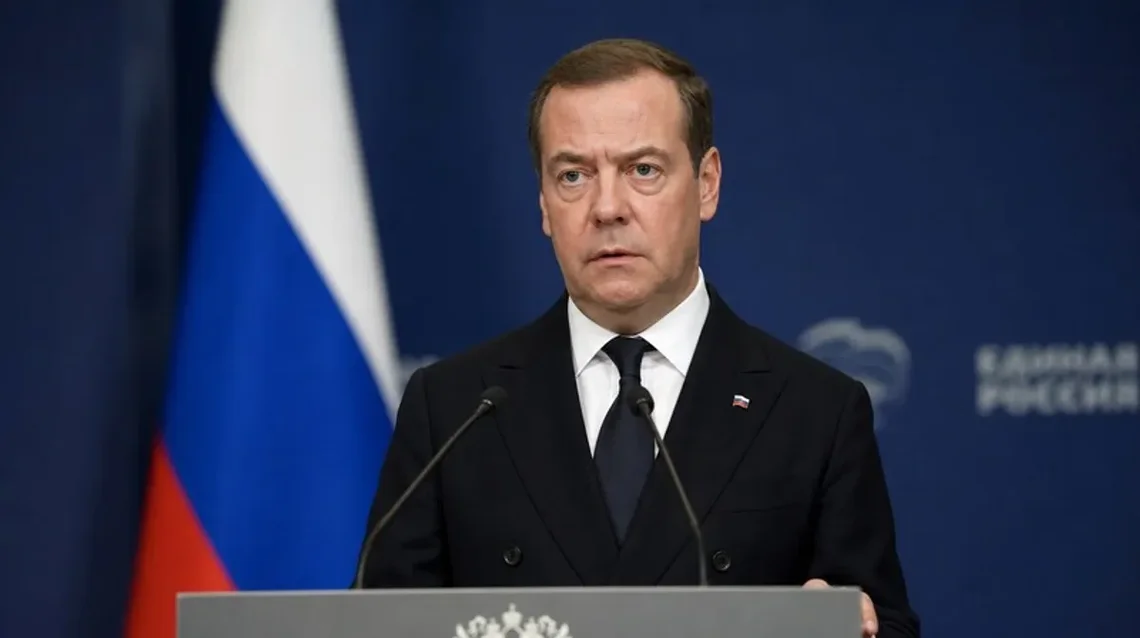
Russia has once again vetoed a United Nations Security Council resolution that would have extended emergency humanitarian aid authorisation for Ukraine, leaving millions of civilians in conflict-affected regions facing an increasingly precarious situation as winter deepens and frontline conditions deteriorate. The deadlock marks the latest in a series of procedural collapses at the world's most powerful multilateral body, raising urgent questions about the UN's capacity to respond to one of the largest humanitarian emergencies in Europe since the Second World War.
Key Context: The UN Security Council consists of 15 members — five permanent (the P5: United States, United Kingdom, France, China, and Russia) and ten elected non-permanent members. Any one of the five permanent members may exercise a veto to block any substantive resolution. Russia has used this power repeatedly since the full-scale invasion of Ukraine began, preventing binding Council action on aid delivery, ceasefires, and accountability mechanisms. The Office for the Coordination of Humanitarian Affairs (OCHA) estimates that more than 14.6 million people inside Ukraine currently require humanitarian assistance. (Source: UN OCHA)
The Veto and Its Immediate Consequences
Russia cast its veto against a Western-drafted resolution that sought to renew and expand the authorisation of cross-border and cross-line humanitarian aid operations in Ukraine, officials said. The draft text, co-sponsored by the United Kingdom, France, and the United States, would have extended existing mechanisms for another twelve months and introduced additional transparency requirements for aid monitoring.
China abstained from the vote rather than exercising its own veto, a position that Beijing has maintained throughout much of the conflict — declining to actively shield Moscow while simultaneously refusing to endorse Western-backed initiatives. The resolution required nine affirmative votes and no vetoes to pass; it received thirteen votes in favour, one abstention, and one veto. (Source: Reuters)
Related Articles
Russia's Stated Justification
Russia's UN ambassador argued that the resolution represented a politically motivated mechanism that undermined Ukrainian sovereignty and was being exploited to funnel Western intelligence assets under humanitarian cover — allegations that Western diplomats and humanitarian organisations have consistently rejected as unfounded. Moscow has long maintained that bilateral arrangements between Ukraine and its neighbours represent the appropriate framework for aid delivery, a position that critics argue is designed to weaponise access rather than facilitate it. (Source: AP)
Humanitarian Organisations Sound the Alarm
The International Committee of the Red Cross, Médecins Sans Frontières, and the UN World Food Programme issued a joint statement expressing grave concern about the operational vacuum created by the Council's failure, warning that existing authorisations would lapse within weeks, according to officials familiar with the statement. Aid workers in eastern and southern Ukraine said the uncertainty had already prompted some logistics partners to pause convoy planning, further disrupting supply chains to areas near active combat lines. (Source: UN reports)
A Pattern of Paralysis at the Security Council
This latest failure is not an isolated incident. The Security Council has been structurally paralysed on the Ukraine file since the earliest days of the conflict, with Russia's permanent membership functioning as an effective shield against binding multilateral action. Analysts and diplomats have increasingly questioned whether the Council's architecture — designed in the aftermath of the Second World War — remains fit for purpose when one of its permanent members is itself the subject of collective international concern.
The Council's dysfunction on Ukraine has been extensively documented across multiple issue areas. Previous disputes over UN Security Council deadlocked on Ukraine aid corridor negotiations revealed similar structural limitations, with Russia blocking passage of resolutions that had broad support among elected Council members. Efforts to address the underlying arms dynamics have fared no better, as demonstrated by repeated failures around UN Security Council deadlocked on Ukraine arms embargo votes that exposed the depth of geopolitical fracture lines within the body.
The Role of the General Assembly
With the Security Council rendered effectively inoperative on Ukraine, the UN General Assembly has assumed a more prominent — though legally non-binding — role. General Assembly resolutions demanding Russian withdrawal and humanitarian access have passed with large majorities on multiple occasions, providing political legitimacy to Ukraine's position while exerting reputational pressure on Moscow. However, the absence of enforcement mechanisms means these resolutions carry no compulsory force. (Source: Foreign Policy)
Reform Proposals Gaining Momentum
The repeated failures have reinvigorated long-standing calls for Security Council reform, with Germany, Japan, India, and Brazil — the so-called G4 nations — renewing their push for expanded permanent or semi-permanent membership. The United Kingdom and France have indicated openness to limited reform discussions, though any structural change to the Council would itself require amendment of the UN Charter and ratification by all five current permanent members, creating a near-impossible procedural hurdle. (Source: Foreign Policy)
The Human Cost Behind the Diplomatic Failure
Statistics from UN agencies paint a stark picture of what Council inaction means at ground level. Approximately 3.7 million people remain internally displaced within Ukraine, while a further six million have sought refuge across Europe. Infrastructure damage to water, heating, and electricity systems has been particularly severe in regions including Kherson, Zaporizhzhia, Kharkiv, and Donetsk oblasts, where civilian populations face intersecting threats from active hostilities, energy blackouts, and food insecurity. (Source: UN OCHA)
Medical supply chains have been among the most critically affected components of the humanitarian response. The World Health Organisation has recorded hundreds of attacks on healthcare facilities since the full-scale invasion began, and the inability to guarantee stable humanitarian corridors compounds the difficulty of resupplying hospitals and clinics in frontline areas. (Source: UN reports)
Winter as a Strategic and Humanitarian Variable
Humanitarian analysts warn that the timing of the aid authorisation lapse could not be worse, coinciding with the onset of sub-zero temperatures across Ukraine. Heating fuel, thermal clothing, and emergency shelter materials top the priority lists of relief organisations currently operating in the country. The collapse of the resolution means that some operational frameworks may face legal ambiguity at precisely the moment when need is highest, officials said.
| Resolution Focus | Votes In Favour | Abstentions | Vetoes Cast | Outcome |
|---|---|---|---|---|
| Aid Extension (Current) | 13 | 1 (China) | 1 (Russia) | Blocked |
| Aid Corridor Authorisation | 12 | 2 | 1 (Russia) | Blocked |
| Ceasefire Demand | 11 | 3 | 1 (Russia) | Blocked |
| Peace Plan Framework | 13 | 1 (China) | 1 (Russia) | Blocked |
| Arms Embargo Proposal | 10 | 4 | 1 (Russia) | Blocked |
Implications for the United Kingdom and Europe
For the United Kingdom and its European partners, the humanitarian aid impasse carries both moral and strategic weight. Britain has been among the most prominent Western supporters of Ukraine since the full-scale invasion, committing billions in military, financial, and humanitarian assistance and playing an active role in diplomatic efforts at the UN. The failure of the current resolution is a direct setback for British foreign policy objectives and raises pressure on London to identify alternative multilateral or bilateral mechanisms to sustain aid flows.
European Union member states and the broader European humanitarian architecture — including national civil protection agencies and the EU Civil Protection Mechanism — have been operating in parallel to UN frameworks, but officials acknowledge that the symbolic and operational authority conferred by Security Council mandates is difficult to replicate through alternative channels. A lapse in UN authorisation could complicate customs, transit, and legal liability frameworks that some NGOs rely upon for their operations. (Source: Reuters)
British Diplomatic Response
The UK's UN mission issued a statement condemning the veto as "an unconscionable act that will cost civilian lives," according to officials, and pledged to work with European and transatlantic partners to explore Emergency Special Session mechanisms through the General Assembly. Foreign Office sources indicated that bilateral aid commitments would be maintained regardless of the Security Council outcome, but acknowledged that the diplomatic failure handed Russia a strategic narrative victory by demonstrating the limits of Western multilateral leverage. (Source: AP)
European Aid Architecture Under Pressure
Several EU member states, including Poland, Germany, and the Baltic nations, have already begun accelerating domestic legislative processes to ensure that bilateral humanitarian aid frameworks with Ukraine remain legally robust and operationally agile in the event of prolonged Security Council dysfunction. European Commission officials have indicated that EU humanitarian funding streams, which operate independently of UN Security Council authorisations, will be maintained and potentially expanded. (Source: Reuters)
Diplomatic Efforts and Alternative Pathways
Following the failed vote, Western diplomats convened an emergency consultative session — held under Chatham House rules — to assess options for circumventing the Security Council deadlock without formally bypassing it. Proposals under discussion reportedly include invoking the Uniting for Peace resolution procedure, which allows the General Assembly to convene in emergency session when the Security Council fails to act, as well as expanding bilateral aid memoranda between Ukraine and neighbouring countries that already host significant humanitarian infrastructure. (Source: Foreign Policy)
These deliberations intersect with broader unresolved disputes, including the stalled negotiations documented in coverage of the UN Security Council deadlocked on Ukraine aid resolution earlier this year, and the fundamental strategic disagreements exposed by the UN Security Council deadlocked on Ukraine peace plan discussions that collapsed without agreement. Taken together, these failures suggest that the Council's utility as an instrument of conflict management in the Ukraine context has been effectively exhausted for as long as the current geopolitical alignment persists.
The Role of NGOs and Civil Society
Non-governmental organisations with operations inside Ukraine have warned that diplomatic uncertainty directly translates into field-level paralysis. Programme managers told regional media that donor governments sometimes withhold disbursements pending formal UN authorisation, meaning that even organisations with full funding pipelines can experience operational delays when the multilateral legal framework is unclear. The current void could last weeks or months if alternative arrangements are not formalised rapidly, officials said. (Source: AP)
The Broader Geopolitical Stakes
Analysts writing in Foreign Policy and elsewhere have framed the repeated Security Council failures not merely as procedural frustrations but as evidence of a deeper fracture in the post-Cold War international order. The assumption that great-power competition had been sufficiently sublimated within multilateral institutions to allow collective humanitarian action — even during conflicts involving major powers — has been fundamentally challenged by the Ukraine crisis. Russia's consistent use of the veto has demonstrated that the P5 structure provides any permanent member with near-absolute impunity from binding Council action concerning its own military conduct.
This dynamic has renewed debates about whether the architecture of global governance, built at a moment of particular Western dominance and great-power exhaustion following the Second World War, requires wholesale reimagining. Those conversations remain largely theoretical, however, as no realistic near-term pathway to Charter reform exists given the veto power that any reform proposal would itself require Russia — and China — to relinquish. (Source: Foreign Policy)
The Council's latest failure on Ukraine humanitarian aid extension is unlikely to be its last. With no ceasefire in prospect and the conflict entering what military analysts describe as a grinding attritional phase, the gap between humanitarian need and the international community's institutional capacity to meet it will remain one of the defining tensions of the current global order. The coming weeks will test whether Western nations, regional bodies, and civil society organisations can construct a sufficiently robust alternative operational framework — and whether that framework can move at the speed the crisis demands. For the millions of Ukrainian civilians who depend on sustained, predictable humanitarian access, the consequences of failure are not abstract. They are measured in cold homes, empty supply depots, and lives that hang in a diplomatic balance that the Security Council has once again refused to hold.