
UN Security Council deadlocked on Ukraine arms embargo
Russia vetoes Western proposal amid ongoing frontline tensions
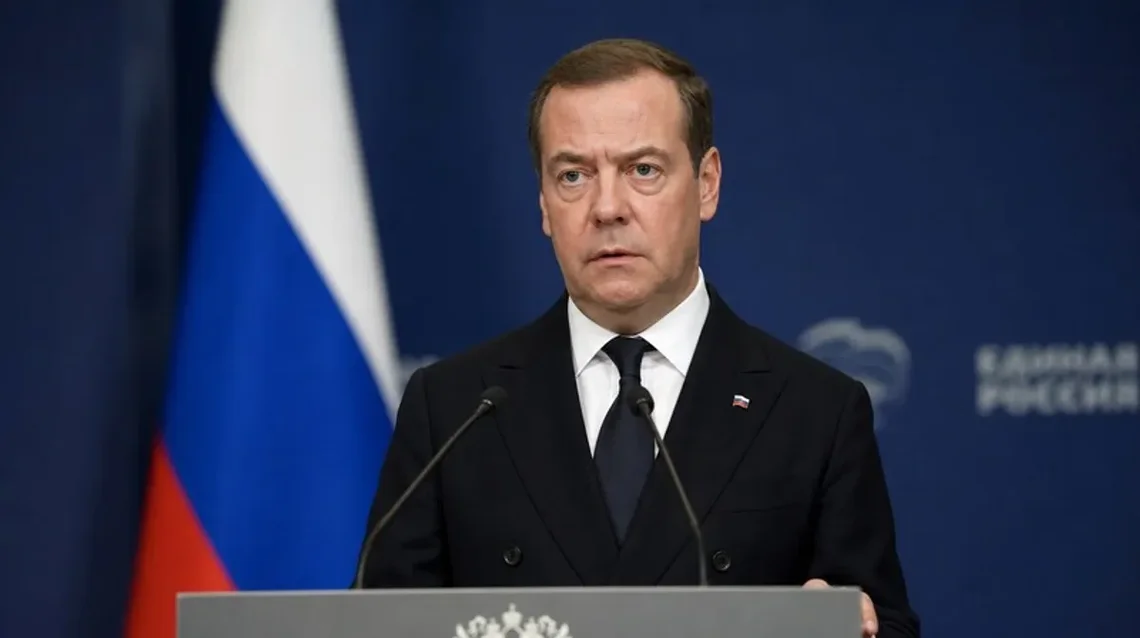
Russia exercised its veto power at the United Nations Security Council on Tuesday, blocking a Western-backed resolution that would have imposed a comprehensive arms embargo on all parties to the conflict in Ukraine — a move that drew immediate condemnation from European and North American diplomats and deepened the impasse at the world's foremost multilateral body. The vote, which ended eleven in favour, one against and three abstentions, exposed the structural fault lines that have paralysed the Council since the full-scale invasion began, raising fresh doubts about the UN's capacity to enforce international law in major power conflicts. (Source: UN Department of Global Communications)
Key Context: Russia holds one of five permanent seats on the UN Security Council, granting it an unconditional veto over any binding resolution. Since the full-scale invasion of Ukraine commenced, Russia has used or threatened its veto on every substantive Ukraine-related resolution, rendering the Council unable to pass legally binding measures on the conflict. Western nations have repeatedly criticised this structural asymmetry as a critical failure of the post-1945 international order. The UN General Assembly has passed multiple non-binding resolutions condemning Russian actions, most recently with over 140 nations voting in favour of Ukrainian sovereignty. (Source: UN General Assembly records)
The Vote and Its Immediate Fallout
The draft resolution, co-sponsored by the United Kingdom, the United States, France and Germany, called for an immediate halt to the transfer of offensive weapons systems into the conflict zone and would have authorised a UN monitoring mechanism to track arms flows across Ukraine's borders. Proponents argued the measure was a humanitarian necessity, citing escalating civilian casualties along the frontline in eastern Ukraine and mounting evidence of long-range missile strikes on civilian infrastructure. (Source: Reuters)
Russia's Justification
Russia's permanent representative to the United Nations described the resolution as "a transparent attempt to disarm a sovereign state defending its legitimate interests," according to remarks delivered to the full Council chamber. The Kremlin's position, reiterated consistently in official statements, frames Western arms deliveries to Ukraine as the primary driver of the conflict's continuation, rather than the territorial occupation of Ukrainian soil. Chinese and North Korean diplomatic positioning, according to analysts monitoring Council dynamics, effectively reinforced Moscow's stance, with Beijing abstaining while issuing statements broadly sympathetic to the Russian framing. (Source: AP)
Western Response
The UK's Ambassador to the United Nations called the veto "an act of institutional sabotage" in remarks to reporters outside the Council chamber, officials said. The US representative went further, arguing that Russia's repeated use of the veto was now so systemic that the General Assembly should convene an emergency special session under the Uniting for Peace resolution — a Cold War-era procedural mechanism last invoked in relation to Gaza. France and Germany issued a joint statement expressing their intention to pursue additional bilateral arms support for Kyiv outside the UN framework, signalling that the failed resolution would not curtail European military assistance. (Source: Reuters)
Strategic Context: What Is Actually at Stake
The proposed arms embargo, had it passed, would have applied universally — meaning it would theoretically have constrained both Russian resupply operations and Western deliveries to Ukraine. Critics of the resolution, including several Ukrainian civil society groups, argued the measure was structurally disadvantageous to Kyiv, which relies almost entirely on external arms supplies, while Russia maintains its own domestic military-industrial base producing tanks, artillery and missile systems without dependency on foreign transfer. (Source: Foreign Policy)
The Frontline Situation
Current battlefield assessments from independent monitoring organisations indicate ongoing Russian pressure along a broad front stretching from Kharkiv oblast in the northeast to Zaporizhzhia in the south. Ukrainian forces have reported increased frequency of long-range drone and missile strikes on logistics infrastructure deep behind the front line, while Russian ground forces have made incremental territorial advances in the Donetsk region, according to open-source intelligence trackers. The intensity of the conflict shows no signs of abating, and neither side has publicly indicated willingness to enter ceasefire negotiations on the current trajectory. (Source: AP)
| Resolution Subject | Outcome | Russia Vote | China Vote | Result |
|---|---|---|---|---|
| Condemnation of Invasion (Full-Scale) | Vetoed at Council | Against | Abstain | Failed — Passed non-binding at UNGA |
| Humanitarian Corridors Resolution | Vetoed at Council | Against | Abstain | Failed |
| Zaporizhzhia Nuclear Plant Safety | Vetoed at Council | Against | Abstain | Failed |
| Independent Investigation Mandate (MH17 Tribunal) | Vetoed at Council | Against | Abstain | Failed |
| Arms Embargo (Current Resolution) | Vetoed at Council | Against | Abstain | Failed — Western bilateral support continues |
Implications for European Security Architecture
The veto arrives at a particularly sensitive moment for European defence planning. NATO allies are currently navigating competing pressures: domestic political debates over defence spending, the operational challenge of maintaining consistent arms flows to Ukraine over an extended conflict, and the broader strategic question of what a negotiated settlement — or a prolonged stalemate — means for the continent's security architecture. (Source: Foreign Policy)
NATO's Posture
Alliance officials, speaking on background, confirmed that the failed Security Council vote would have no practical effect on NATO member states' bilateral arms commitments to Ukraine, which operate entirely outside the UN framework and are governed by individual national legislation and alliance coordination mechanisms. The Secretary General reiterated that member states retain the sovereign right to supply defensive weapons to a country under armed attack under Article 51 of the UN Charter — the same legal basis Russia invokes for its own operations. Germany recently approved an additional tranche of air defence systems for Ukrainian forces, while the United States continues to process military aid authorisations through congressional channels, officials said. (Source: Reuters)
What This Means for the UK and Europe
For the United Kingdom, the failed resolution crystallises a diplomatic reality that has shaped British foreign policy since the conflict escalated: meaningful multilateral action on Ukraine is functionally impossible through the Security Council, and strategic objectives must be pursued through alternative mechanisms — bilateral military assistance, EU and G7 sanctions coordination, and political support for Ukrainian diplomatic goals including ICC accountability processes.
London has been among Kyiv's most consistent military backers, providing Storm Shadow cruise missiles, armoured vehicles and substantial quantities of artillery ammunition. The government's position, reiterated by the Foreign Secretary this week, holds that continued support is both a moral obligation and a direct investment in UK national security — the argument being that a precedent of unchallenged territorial revision by force in Europe carries existential implications for the rules-based international order that underpins British trade, treaty relationships and strategic positioning. (Source: AP)
For the broader European Union, the veto reinforces the logic of EU sanctions escalation against Russia as the primary multilateral lever available to Western powers in the absence of binding UN mechanisms. Brussels has now passed fourteen packages of restrictive measures, targeting energy revenues, financial institutions, dual-use technology exports and individual members of Russia's political and military establishment. Whether those measures are achieving their intended strategic effect remains contested among European economists and defence analysts. (Source: Foreign Policy)
Reform Pressure and the Future of the UN System
The repeated exercise of the Russian veto has intensified long-standing calls for Security Council reform, a debate that has gained new urgency as the gap between the Council's nominal mandate and its operational capacity widens visibly in real time. Proposals range from limiting veto use in cases of mass atrocities — championed by the Accountability, Coherence and Transparency group of UN member states — to more ambitious restructuring that would expand permanent membership to reflect contemporary geopolitical realities. (Source: UN reports)
Prospects for Structural Change
Substantive reform of the Security Council requires an amendment to the UN Charter, which itself must be approved by two-thirds of the General Assembly and ratified by all five permanent members — meaning Russia and China retain an effective block on any changes that would diminish their own institutional privileges. Analysts tracking the reform debate describe the process as "institutionally self-sealing," with no realistic pathway to meaningful change on a near-term horizon. The more likely near-term development, several scholars of international law argue, is a continued shift of effective multilateral action toward regional organisations, ad hoc coalitions and bilateral frameworks that bypass the Council entirely. (Source: Foreign Policy)
Kyiv's Reaction and the Diplomatic Outlook
Ukrainian officials reacted to the veto with a mixture of frustration and pragmatism, noting that expectations for productive Security Council action on Ukraine have been negligible for some time. The Foreign Ministry issued a statement characterising Russia's veto as "predictable confirmation that the aggressor state will use every procedural instrument to shield itself from accountability," officials said. Kyiv's primary diplomatic focus remains channelled toward maintaining Western coalition cohesion, advancing the peace formula framework at bilateral and multilateral forums, and prosecuting accountability proceedings through the International Criminal Court and other mechanisms that do not require Security Council authorisation. (Source: Reuters)
The broader diplomatic picture suggests that the conflict's resolution — whether through negotiation, military exhaustion or a fundamental shift in one party's strategic calculus — will not be mediated through the United Nations in any meaningful sense. The Security Council veto, used by Russia for the fifth time on a directly Ukraine-related resolution, has effectively confirmed that the international system's primary enforcement body remains a passive observer to one of the most consequential conflicts in post-Cold War European history. For European governments and their publics, the practical consequence is unambiguous: the burden of supporting Ukraine, deterring further aggression and managing the economic and security spillovers of a prolonged war will continue to fall on national governments, regional alliances and bilateral partnerships — not on the multilateral architecture that was constructed precisely to prevent such outcomes.