
UN Security Council deadlocked on Ukraine ceasefire proposal
Russia vetoes resolution as Western powers push for peace talks
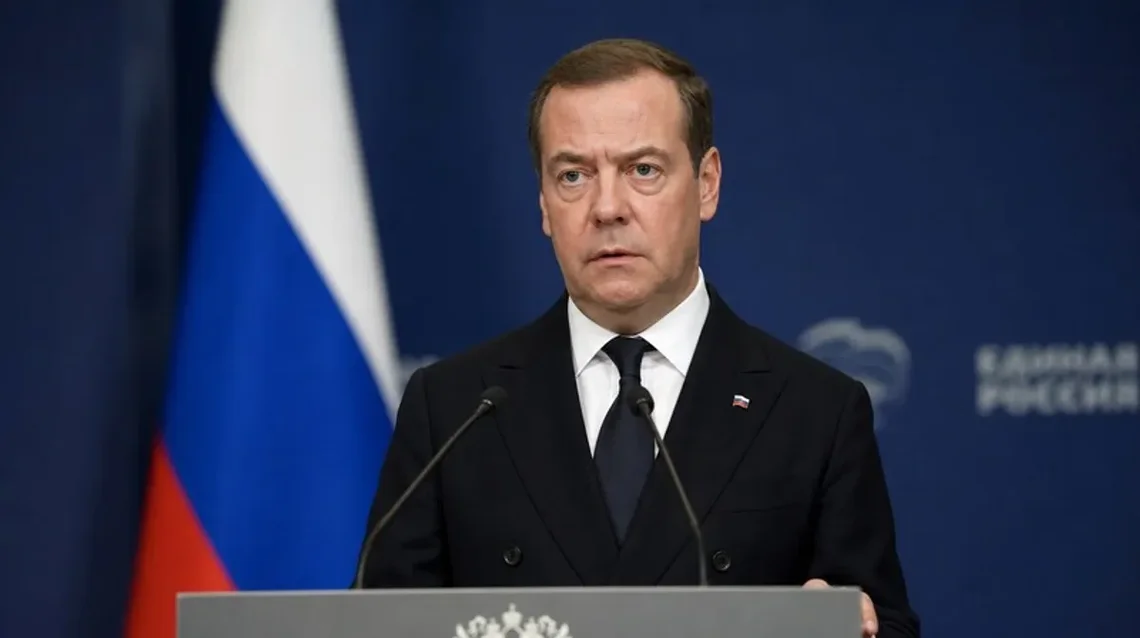
Russia has once again exercised its veto power at the United Nations Security Council, blocking a Western-backed resolution calling for an immediate ceasefire in Ukraine and the commencement of formal peace negotiations — a move that diplomats say has left the international community's most powerful body paralysed at one of its most consequential moments. The vote, held in emergency session at UN headquarters in New York, saw thirteen members vote in favour, with Russia voting against and China abstaining, rendering the resolution dead on arrival. (Source: Reuters)
Key Context: Russia holds one of five permanent seats on the UN Security Council, granting it unconditional veto power over any binding resolution. Since the full-scale invasion of Ukraine began, Russia has exercised this veto multiple times to block resolutions on ceasefires, humanitarian corridors, and arms embargoes. The deadlock reflects a structural flaw critics have long identified in the Council's architecture — that permanent members cannot be held accountable by the very body designed to maintain international peace and security. (Source: UN reports)
The Vote and Its Immediate Aftermath
The resolution, co-sponsored by the United Kingdom, France, the United States, and a coalition of European and Latin American nations, called for an "immediate, comprehensive, and unconditional ceasefire" along all active lines of conflict in Ukraine, alongside the withdrawal of Russian forces to pre-invasion boundaries and the initiation of internationally mediated peace talks. It was the latest in a string of failed diplomatic efforts within the Council chamber.
Russia's Justification
Russia's UN Ambassador characterised the resolution as a politically motivated document designed not to achieve peace but to humiliate Moscow and provide Kyiv with a tactical military reprieve. Russian officials argued that any ceasefire must account for what they described as "security guarantees" and the "political realities" of currently occupied territories — language Western diplomats rejected outright as a precondition for legitimising territorial annexation. (Source: AP)
Related Articles
China's decision to abstain rather than veto was interpreted by analysts as a carefully calibrated diplomatic posture — one that avoids direct confrontation with Western powers while declining to undercut Moscow. Beijing reiterated its call for a "negotiated political solution" without endorsing the specific terms of the resolution. (Source: Foreign Policy)
Western Powers' Response
Speaking after the vote, the UK's Permanent Representative to the United Nations described Russia's veto as "a deliberate act of obstruction against the will of the international community" and warned that the Security Council's credibility was being systematically eroded. US officials echoed those remarks, stating that Russia's conduct demonstrated it had no genuine interest in a negotiated settlement and was using the veto as a shield for continued military operations. (Source: Reuters)
Ukraine's foreign ministry, in a statement issued from Kyiv, called the outcome "predictable but no less devastating," and urged the General Assembly — which does not carry veto power but can issue non-binding resolutions — to convene an emergency session to signal global consensus. This follows a pattern seen previously, as detailed in coverage of the UN Security Council deadlocked on Ukraine ceasefire vote, where similar procedural workarounds were explored.
A Recurring Pattern of Paralysis
The latest veto is not an isolated incident. Since the full-scale invasion commenced, the Security Council has been rendered functionally inoperative on the Ukraine file on multiple occasions. Russia has blocked resolutions addressing humanitarian access, weapons flows, and now a direct ceasefire — each time citing sovereign prerogative and what it frames as Western aggression by proxy.
Timeline of Key Security Council Votes on Ukraine
| Resolution Type | Outcome | Russia's Vote | China's Vote | Result |
|---|---|---|---|---|
| Ceasefire Resolution | 13 in favour, 1 against, 1 abstention | Veto | Abstain | Failed |
| Arms Embargo Proposal | 11 in favour, 2 against, 2 abstentions | Veto | Against | Failed |
| Humanitarian Aid Corridor | 12 in favour, 1 against, 2 abstentions | Veto | Abstain | Failed |
| Aid Resolution (Civilian Access) | 13 in favour, 1 against, 1 abstention | Veto | Abstain | Failed |
| Peace Plan Framework | 10 in favour, 2 against, 3 abstentions | Veto | Against | Failed |
The cumulative pattern has sparked renewed debate about whether the Security Council is structurally capable of addressing conflicts in which a permanent member is the aggressor. Analysts at Foreign Policy have described the Council as "architecturally compromised" when confronting P5 misconduct, a critique that has gained traction among smaller member states who feel the multilateral system is failing them. (Source: Foreign Policy)
For broader context on how these failures intersect, readers can refer to prior reporting on the UN Security Council deadlocked on Ukraine arms embargo and the UN Security Council deadlocked on Ukraine aid corridor, both of which illustrate how Moscow has systematically used its veto to insulate its military campaign from international legal accountability.
Humanitarian Dimensions of the Deadlock
The failure to pass any binding ceasefire resolution has direct and measurable consequences on the ground. UN humanitarian agencies have documented sustained civilian casualties, widespread displacement, and deteriorating access to essential services across conflict-affected regions of Ukraine. Millions of people remain internally displaced, and cross-border refugee flows into EU nations continue to place significant pressure on reception and integration systems. (Source: UN reports)
The Cost of Council Inaction
According to UN reports, the conflict has produced one of the largest displacement crises in Europe since the Second World War, with humanitarian organisations struggling to maintain access to frontline communities. Aid organisations operating in Ukraine have repeatedly warned that without a political framework — even a temporary ceasefire — the delivery of medical supplies, food, and shelter materials to the most vulnerable populations remains dangerously uncertain.
The humanitarian dimension is inseparable from the political one. As the UN Security Council deadlocked on Ukraine aid resolution coverage has previously examined, every blocked resolution on humanitarian access directly translates into delayed or denied assistance for civilian populations caught in active conflict zones.
What This Means for the UK and Europe
For Britain and its European partners, the Security Council deadlock carries consequences that extend well beyond the diplomatic arena. The UK has been one of Ukraine's most consistent supporters, providing military equipment, financial assistance, and political backing since the outset of the conflict. A prolonged stalemate — with no ceasefire, no peace framework, and no binding UN mechanism — means British policy will continue operating in a reactive mode, responding to battlefield developments rather than shaping a political endgame.
European Security Architecture Under Strain
European NATO members face compounding pressures: continued Ukrainian requests for advanced weaponry, domestic debates over defence spending commitments, and the political volatility associated with a conflict showing no clear trajectory toward resolution. For the UK specifically, the post-Brexit imperative to maintain relevance in European security affairs means continued, high-profile engagement — but also heightened exposure to escalatory risk.
Senior European officials have warned that the longer the Security Council remains paralysed, the greater the likelihood that bilateral and multilateral coalitions outside UN structures — such as NATO arrangements and the Ukraine Defence Contact Group — will become the default architecture for managing the conflict. While effective in the short term, analysts caution this approach risks further fragmenting the rules-based international order. (Source: AP)
The UK government has indicated it will continue pressing for a diplomatic solution through alternative forums, including the G7 and direct engagement with non-aligned states that may be persuaded to apply diplomatic pressure on Moscow. Whether those efforts can compensate for the structural dysfunction at the Security Council level remains an open question.
Reform Calls Grow Louder
The repeated vetoing of Ukraine-related resolutions has reinvigorated longstanding calls for reform of the Security Council's permanent membership and veto structure. A coalition of mid-sized nations — including Germany, Brazil, Japan, and India — has renewed advocacy for expanding permanent membership and curtailing veto power in cases of mass atrocities or large-scale military aggression.
The Achilles Heel of the UN System
Legal scholars and former UN officials have noted that the veto was designed as a mechanism to prevent great-power conflict, not to enable it. When a permanent member is itself the subject of a resolution, the veto transforms from a safeguard into a shield. The situation in Ukraine, they argue, has exposed this contradiction more starkly than any previous case. (Source: Foreign Policy)
The UN Security Council deadlocked on Ukraine peace plan has previously illustrated how even substantive diplomatic frameworks — proposals carrying broad international support — collapse the moment they reach the Council chamber and encounter Russian opposition. Without structural reform, observers warn, the pattern is likely to continue indefinitely.
The Road Ahead
With the Security Council effectively neutralised as an instrument of conflict resolution in Ukraine, the diplomatic terrain shifts to bilateral negotiations, regional forums, and the UN General Assembly — none of which carries the binding legal authority of a Council resolution. Western governments have signalled their intention to continue building international pressure through economic sanctions, military support for Ukraine, and diplomatic isolation of Moscow, but acknowledge that a durable peace ultimately requires a political framework that no current mechanism appears capable of delivering.
For now, the ceasefire resolution joins a growing archive of failed diplomatic initiatives — each one a marker of the Security Council's deepening dysfunction and a reminder that the international system designed to prevent exactly this kind of protracted conflict has, in this instance, been rendered structurally incapable of doing so. The implications for global governance, European security, and the credibility of multilateral institutions will be debated long after the guns eventually fall silent. (Source: Reuters, AP, UN reports)