
UN Security Council deadlocked on Ukraine peace plan
Russia blocks resolution as Western powers push diplomacy
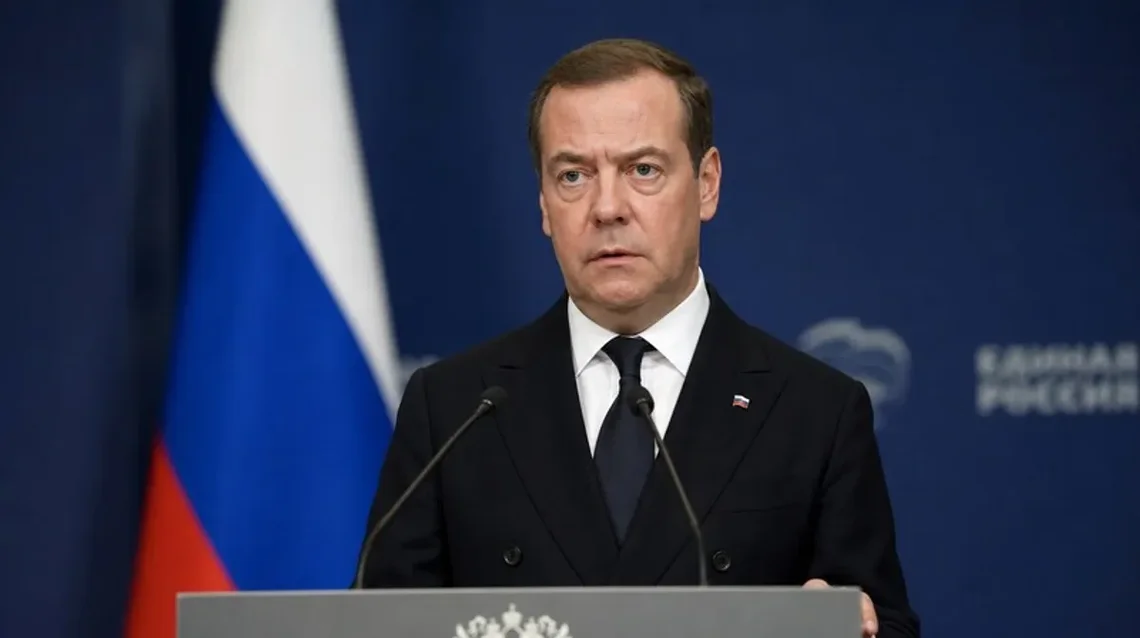
The United Nations Security Council has once again failed to reach consensus on a framework peace resolution for Ukraine, after Russia exercised its veto power to block a Western-backed draft proposal that called for an immediate ceasefire, the withdrawal of Russian forces, and the resumption of internationally mediated negotiations. The deadlock, confirmed by multiple diplomatic sources and reported by Reuters and the Associated Press, underscores the structural paralysis at the heart of the world's most powerful multilateral body and raises urgent questions about the future of international diplomacy in the conflict.
Key Context: Russia holds one of five permanent seats on the UN Security Council, granting it an unconditional right of veto over any binding resolution. Since the full-scale invasion of Ukraine began, Russia has exercised this veto multiple times to block humanitarian, ceasefire, and accountability measures. The United States, United Kingdom, and France — also permanent members — have consistently co-sponsored resolutions condemning Russian military action. China has abstained on several key votes, declining to align explicitly with either bloc. The General Assembly has passed non-binding resolutions demanding Russian withdrawal by large majorities, but these carry no enforcement power under international law. (Source: UN Reports)
What Happened at the Security Council
The draft resolution, circulated by the United States, the United Kingdom, and France, called for an unconditional ceasefire along current lines of contact, the immediate withdrawal of all foreign military forces from internationally recognised Ukrainian territory, and the establishment of a UN-supervised negotiating process. It also mandated unimpeded humanitarian access to conflict-affected civilian populations, officials said.
Russia's Veto and Diplomatic Response
Russia's permanent representative to the United Nations cast the lone veto that killed the resolution, characterising the text as a politically motivated document drafted to legitimise what Moscow describes as a hostile military posture by NATO-aligned states. China did not veto the measure but abstained, offering language consistent with its publicly stated position of neutrality, according to UN reporting. The vote tally, confirmed by AP, showed 13 members in favour, one abstention, and one veto — a result that illustrates the near-universal isolation Russia faces on this issue within the council chamber, even as that isolation produces no binding legal outcome.
Related Articles
Western ambassadors responded with sharp public statements. The UK's UN envoy called the veto "a deliberate obstruction of the international community's most fundamental instrument for peace," according to diplomatic readouts reviewed by Reuters. The US representative echoed that framing, describing Russia's action as evidence that Moscow has no genuine interest in a negotiated resolution to a conflict it initiated.
The Procedural Constraints of the Veto System
Legal analysts and UN observers have long argued that the veto architecture — enshrined in Article 27 of the UN Charter — renders the Security Council structurally incapable of enforcing accountability against any of its five permanent members or their close allies. The system was designed in the post-Second World War era to prevent great-power conflict by giving major states a stake in the institution's decisions. Critics argue it has instead created a mechanism by which powerful states can shield themselves and their proxies from consequence. (Source: Foreign Policy)
This latest deadlock follows a pattern that has become familiar over the course of the conflict. For broader context on similar episodes, see previous reporting on the UN Security Council deadlocked on Ukraine aid resolution and the UN Security Council deadlocked on Ukraine arms embargo, both of which collapsed under identical procedural circumstances.
The Western Diplomatic Strategy
Despite the predictable outcome, Western powers say the resolution was never primarily intended to pass. Rather, diplomats from the US, UK, and EU missions described the vote as a deliberate effort to force Moscow into a visible, internationally recorded act of obstruction — an exercise in what one senior European diplomat, speaking on background to Reuters, termed "accountability diplomacy." The logic holds that repeated, documented vetoes erode Russia's international legitimacy and build political groundwork for longer-term pressure strategies.
The Role of Ukraine's Allies
Behind the procedural theatre, Western states continue to debate the substantive terms under which any genuine peace negotiation might eventually occur. The United States has signalled a willingness to facilitate talks but has insisted that any framework must be acceptable to Kyiv. European Union member states have expressed broadly similar positions while navigating internal divisions over the pace and scale of military assistance to Ukraine. (Source: Reuters)
The EU's broader sanctions architecture remains a parallel instrument of coercion. For context on how that strategy is evolving alongside the diplomatic track, see reporting on how EU tightens Russia sanctions over Ukraine offensive, a measure that Western governments argue is designed to alter Moscow's cost-benefit calculus over time.
Proposals for UN Reform
The repeated deadlocks have reinvigorated calls for structural reform of the Security Council, including proposals to limit the use of the veto in cases involving mass atrocities or breaches of the UN Charter's prohibition on the use of force. The Liechtenstein-led initiative, which has gained support from over 100 General Assembly member states, would trigger an automatic General Assembly session whenever a permanent member exercises its veto. The measure has been adopted as a procedural norm but carries no enforcement mechanism of its own. (Source: UN Reports)
Russia's Position and Stated Rationale
Moscow's public position remains consistent: it describes its military operations in Ukraine as a legitimate response to what it characterises as an existential threat posed by NATO's eastward expansion and the political orientation of Ukraine's government following the 2014 Maidan uprising. Russian officials have repeatedly framed Western peace proposals as attempts to impose terms favourable to Kyiv while preserving what Moscow describes as a hostile security architecture on Russia's borders.
The China Factor
Beijing's continued abstention rather than outright veto reflects the complexity of its position. China has presented itself as a potential mediator, releasing a twelve-point peace framework that received a cool reception from Ukraine and Western governments, who argued it lacked concrete enforcement provisions and implicitly legitimised Russia's territorial claims. (Source: AP) Chinese officials have publicly called for restraint on all sides while continuing to deepen economic ties with Russia in ways that Western governments argue undermine the sanctions regime. (Source: Foreign Policy)
Humanitarian Dimensions of the Deadlock
Beyond the geopolitical mechanics, the failure to pass the peace resolution has immediate humanitarian consequences. UN agencies report that millions of civilians in eastern and southern Ukraine remain in areas of active or recent conflict, with access for aid organisations restricted by ongoing hostilities. The International Committee of the Red Cross and UN agencies have consistently called for guaranteed safe corridors and the protection of civilian infrastructure, requests that remain unaddressed in the absence of any binding Security Council mandate.
Aid Access as a Separate and Equally Blocked Track
Efforts to secure even limited humanitarian access through the Security Council have similarly stalled. As documented in previous ZenNewsUK coverage of the UN Security Council deadlocked on Ukraine aid corridor, Russia has blocked measures that would have established neutral humanitarian zones and guaranteed ICRC access to prisoner-of-war populations. The pattern reflects a broader use of humanitarian infrastructure as an instrument of military pressure — a practice documented extensively by UN human rights monitoring missions. (Source: UN Reports)
The Security Council's inability to act on Ukraine is part of a wider crisis of multilateral dysfunction that also affects other active conflicts. Observers note structural similarities with the UN Security Council deadlocked on Gaza aid access, where veto dynamics have equally prevented binding action despite acute civilian suffering.
What This Means for the UK and Europe
For the United Kingdom and its European partners, the Security Council's paralysis carries both strategic and domestic political implications. On the strategic level, the failure of multilateral diplomacy increases pressure on bilateral and coalition frameworks — including NATO, the G7, and EU coordination mechanisms — to carry the weight of both military support for Ukraine and long-term diplomatic planning. UK officials have consistently framed their support for Ukraine as a matter of foundational international law: if the prohibition on territorial conquest by force is not enforced, they argue, European security architecture built since the Cold War loses its credibility.
Domestically, the continued impasse tests public patience and political consensus in countries where the economic costs of the war — including energy price volatility, inflation pressures, and defence budget demands — are acutely felt. European governments face the challenge of sustaining public support for a policy of continued pressure on Russia at a time when war fatigue is measurable in polling data across multiple EU member states, according to analysis published by Foreign Policy.
The UK government has indicated it will continue co-sponsoring resolutions at the Security Council even in full expectation of Russian vetoes, describing the process as an essential exercise in international norm-setting. British officials also continue to support the International Criminal Court's proceedings against Russian officials, which operate independently of Security Council authorisation — a legal track that remains active regardless of diplomatic deadlock. (Source: Reuters)
| Resolution Subject | Proposed By | Outcome | Russia's Position | China's Position |
|---|---|---|---|---|
| Condemning invasion of Ukraine | US, UK, France, Albania | Vetoed — referred to General Assembly | Veto | Abstain |
| Humanitarian access corridors | France, Mexico | Vetoed | Veto | Abstain |
| Arms embargo (Russian forces) | US, UK, EU partners | Vetoed | Veto | Abstain |
| Accountability tribunal for Ukraine | UK, France, US | Vetoed | Veto | Abstain |
| Ceasefire and peace framework (current) | US, UK, France | Vetoed — 13 in favour, 1 abstention | Veto | Abstain |
Outlook: Diplomacy Beyond the Security Council
With the Security Council effectively neutralised as a venue for binding action, diplomatic energy is shifting toward alternative frameworks. The Swiss-hosted peace summit process, which Ukraine and its Western partners have championed as a multilateral alternative, has attracted broad participation but has struggled to draw in Russia or key Global South intermediaries such as India and Brazil, limiting its practical authority. (Source: AP)
Analysts at Foreign Policy and within European foreign ministries argue that genuine ceasefire negotiations are unlikely to emerge from multilateral forum pressure alone, and that any durable settlement will ultimately require direct engagement between the principal parties — an outcome that currently appears distant given the stated positions of both Kyiv and Moscow. In the meantime, the Security Council's veto paralysis endures as both a symptom and a symbol of a broader fracture in the global rules-based order that the council was originally designed to uphold.
The immediate consequence of this week's failed resolution is clear: no binding ceasefire obligation exists, no UN-supervised negotiating mechanism will be established, and the conflict continues under conditions in which the world's primary international security institution remains unable to act. For Ukraine's civilian population, for Europe's security planners, and for the credibility of international law itself, the cost of that institutional failure is neither abstract nor remote.