
UN Security Council deadlocked on Ukraine peacekeeping plan
Russia vetoes resolution as Western powers push for international oversight
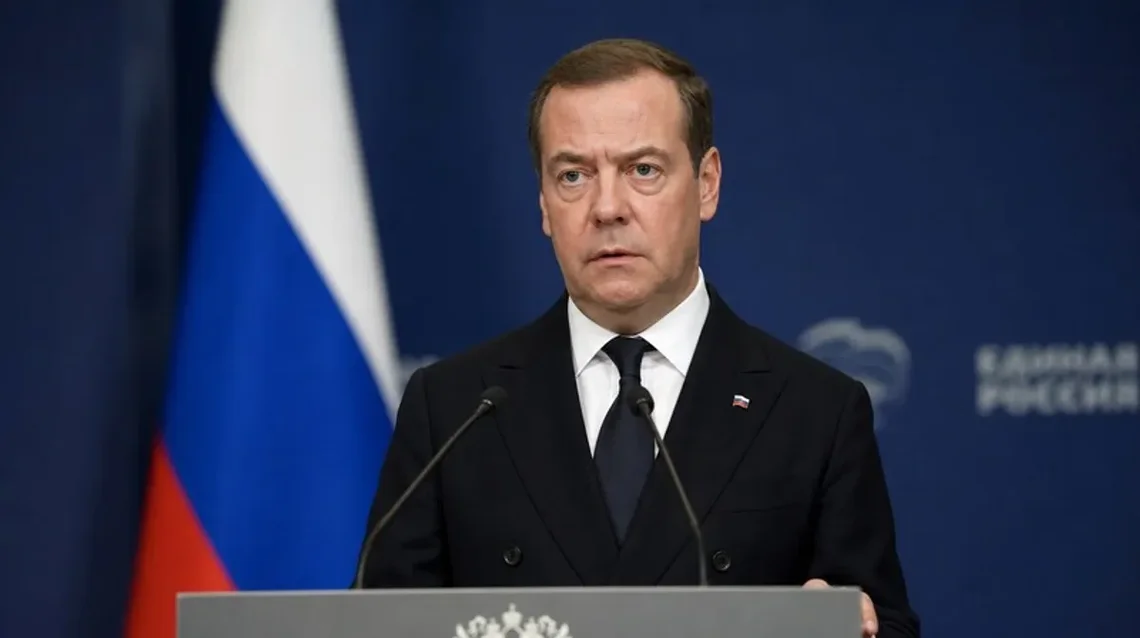
Russia has vetoed a United Nations Security Council resolution that would have established an international peacekeeping force along front lines in Ukraine, plunging diplomatic efforts into fresh deadlock and exposing the structural limits of the world body's ability to enforce peace in active conflict zones. The vote, which drew sharp condemnation from Western delegations, underscores a pattern of paralysis at the Council that analysts say has rendered multilateral diplomacy increasingly ineffectual in the war's current phase, according to UN reports and wire service accounts.
Key Context: The UN Security Council has five permanent members — the United States, United Kingdom, France, China, and Russia — each holding veto power. Russia's use of that veto has now blocked multiple Ukraine-related resolutions, including measures on ceasefires, humanitarian aid, and arms oversight. Under the UN Charter, no binding enforcement resolution can pass without unanimous consent among permanent members, meaning a single veto is legally sufficient to kill any proposal regardless of broader Council support. (Source: United Nations)
The Vote and What Was Proposed
The resolution, tabled by the United Kingdom, France, and the United States, called for the deployment of a multinational peacekeeping mission under UN auspices to monitor and enforce a prospective ceasefire along Ukraine's contested front lines. The proposal outlined a monitoring framework that would have included troops from non-aligned or neutral nations, civilian oversight mechanisms, and a reporting structure directly accountable to the Security Council, officials said.
Voting Breakdown
Thirteen of the fifteen Council members voted in favour of the resolution. Russia cast its veto, as had been widely anticipated in diplomatic circles. China abstained, a position it has maintained across several Ukraine-related votes, reflecting Beijing's stated policy of non-interference while avoiding direct alignment with Moscow's position, according to Reuters. The abstention was not sufficient to block the resolution, but Russia's veto rendered the outcome moot under the Council's procedural rules.
Related Articles
The UK's UN ambassador described the outcome as a "deliberate obstruction of international law and the collective will of the international community," according to Reuters. Russia's representative countered that the resolution represented a hostile act dressed in the language of humanitarianism and that any Western-led peacekeeping force would constitute a direct threat to Russian security interests.
Russia's Rationale and the Broader Diplomatic Context
Moscow has consistently argued that Western nations cannot serve as neutral parties in any peacekeeping architecture given their military and financial support for Kyiv. Russian officials have maintained that the resolution was designed not to establish peace but to legitimise what they characterise as NATO's encroachment into the conflict zone, officials said. That position, however broadly contested by Western governments, carries procedural weight inside the Council where veto power requires no justification.
Pattern of Vetoes on Ukraine
This latest veto is not an isolated incident. The Council has faced repeated deadlock on Ukraine since the full-scale invasion began, with Russia blocking or diluting resolutions on multiple occasions. Related disputes have included votes on humanitarian access, arms oversight, and ceasefire frameworks — each stalled by the same structural mechanism. Readers tracking the trajectory of Council inaction can review prior coverage on the UN Security Council deadlocked on Ukraine ceasefire vote, which laid out earlier failed attempts to advance binding language on hostilities.
Foreign Policy, in analysis published recently, characterised Russia's veto strategy as a deliberate and legally unassailable method of preventing international scrutiny from gaining institutional footing in the conflict. The publication noted that Moscow has used the same mechanism in Syria, creating a precedent for insulating its military operations from UN-level accountability. (Source: Foreign Policy)
Western Reaction and the Push for Alternative Mechanisms
Following the vote, Western delegations convened an emergency session of the UN General Assembly, a body that lacks the enforcement powers of the Security Council but can pass resolutions by simple majority. The General Assembly route has become an increasingly common workaround for Western nations frustrated by Council paralysis, though analysts note its symbolic limitations — resolutions passed there carry no binding legal force under international law, according to AP.
UK and European Response
For the United Kingdom specifically, the failed vote carries direct strategic implications. Britain has been one of Ukraine's most vocal and materially significant supporters, contributing artillery, training programmes, and financial assistance throughout the conflict. The inability to establish a formal multilateral peacekeeping framework means that any future stabilisation effort would likely depend on ad hoc coalitions — potentially including UK troops — rather than a structured UN mandate, officials said.
European Union foreign policy officials indicated they would pursue discussions within the European Political Community framework and through NATO consultations to assess whether a non-UN peacekeeping architecture remains viable. Several European governments have floated the idea of a European-led monitoring mission operating outside the UN framework, though that proposal remains at an early conceptual stage and faces significant legal and logistical questions, according to Reuters.
For ordinary Europeans, the deadlock sustains the uncertainty that has characterised this conflict throughout its duration — with no internationally recognised ceasefire line, no neutral monitoring body, and no clear diplomatic pathway to a negotiated end. Energy markets, refugee policy, and defence spending across the continent remain directly conditioned on the conflict's trajectory, and the Council's inability to act perpetuates that exposure.
What the Deadlock Means for Ukraine
On the ground, the failure of the peacekeeping resolution leaves Ukrainian authorities without the international legitimacy infrastructure that a UN mandate would have provided. Kyiv had publicly backed the resolution, viewing an international peacekeeping presence as a potential guarantee against renewed Russian military pressure during any hypothetical negotiation or pause in fighting, officials said.
Kyiv's Position
Ukrainian officials have consistently argued that without hard security guarantees — whether through NATO membership, bilateral treaties, or UN-sanctioned monitoring — any ceasefire would represent a temporary operational pause rather than a durable settlement. The veto reinforces that concern, signalling that the multilateral route to such guarantees remains blocked for as long as Russia retains its permanent seat and veto privilege, according to AP.
Those interested in the parallel failure to establish protected humanitarian corridors can find detailed background in coverage of the UN Security Council deadlocked on Ukraine aid corridor, which documented earlier attempts to secure civilian protection guarantees through Council mechanisms.
| Resolution Subject | Tabled By | Result | Russia's Position | China's Position |
|---|---|---|---|---|
| Condemnation of invasion | US, UK, Albania | Vetoed | Veto | Abstain |
| Humanitarian aid access | France, Mexico | Vetoed | Veto | Abstain |
| Ceasefire framework | US, EU-aligned members | Vetoed | Veto | Abstain |
| Arms embargo inquiry | Western coalition | Vetoed | Veto | Abstain |
| International peacekeeping force | UK, France, US | Vetoed | Veto | Abstain |
The Structural Problem: UN Reform and Its Limits
The vote has reignited longstanding calls for reform of the Security Council's veto structure. Proposals circulating in diplomatic channels include a measure that would require veto-wielding members to justify their use of the veto before the General Assembly — a procedural mechanism already adopted in principle by the Assembly in a non-binding resolution — though implementation remains contested, according to UN reports.
The Reform Debate
Advocates for reform argue that the veto, designed for a post-World War Two world to prevent great-power conflict, has become a tool for great powers to insulate their own military operations from international accountability. Critics of reform counter that abolishing or constraining the veto would reduce major powers' incentive to participate in the UN system at all, potentially producing a worse outcome than structured deadlock, according to Foreign Policy analysis. (Source: Foreign Policy)
Neither position commands the unanimous support necessary to amend the UN Charter, which itself requires approval from all five permanent members — creating a recursive problem in which the same powers most likely to abuse the veto are also those whose consent is required to remove it.
Further context on arms-related deadlocks at the Council is available in coverage of the UN Security Council deadlocked on Ukraine arms embargo, while the record of failed aid resolutions is documented in reporting on the UN Security Council deadlocked on Ukraine aid resolution.
What Comes Next
Diplomatic sources indicate that Western powers are unlikely to abandon the multilateral route entirely, even after successive failures. A return to the General Assembly is expected in the coming days, and European capitals are expected to hold bilateral consultations aimed at assembling a broader coalition willing to consider non-UN security guarantee frameworks, officials said. Whether such arrangements can provide the legal and military deterrence that a UN mandate would have offered remains deeply uncertain, according to Reuters.
For the United Kingdom and its European partners, the immediate practical consequence is that any stabilisation mission — should a political opening emerge — would require construction from scratch outside the UN architecture. That raises questions of legitimacy, funding, rules of engagement, and political sustainability that a Security Council mandate would otherwise have resolved. British officials have not publicly committed to participation in any alternative force, though Ministry of Defence planning for such contingencies is understood to be ongoing, according to Reuters.
The broader lesson of this vote, as with prior Council failures documented in coverage of the UN Security Council deadlocked on Ukraine peace plan, is that the architecture designed to manage great-power conflict in the postwar era is structurally incapable of constraining a permanent member engaged in active warfare. That reality does not eliminate diplomacy as an instrument — but it does sharply define its current limits. (Source: United Nations; Reuters; AP; Foreign Policy)