
UN Security Council deadlocked over fresh Russia sanctions
Veto powers block measures as Ukraine war enters fourth year
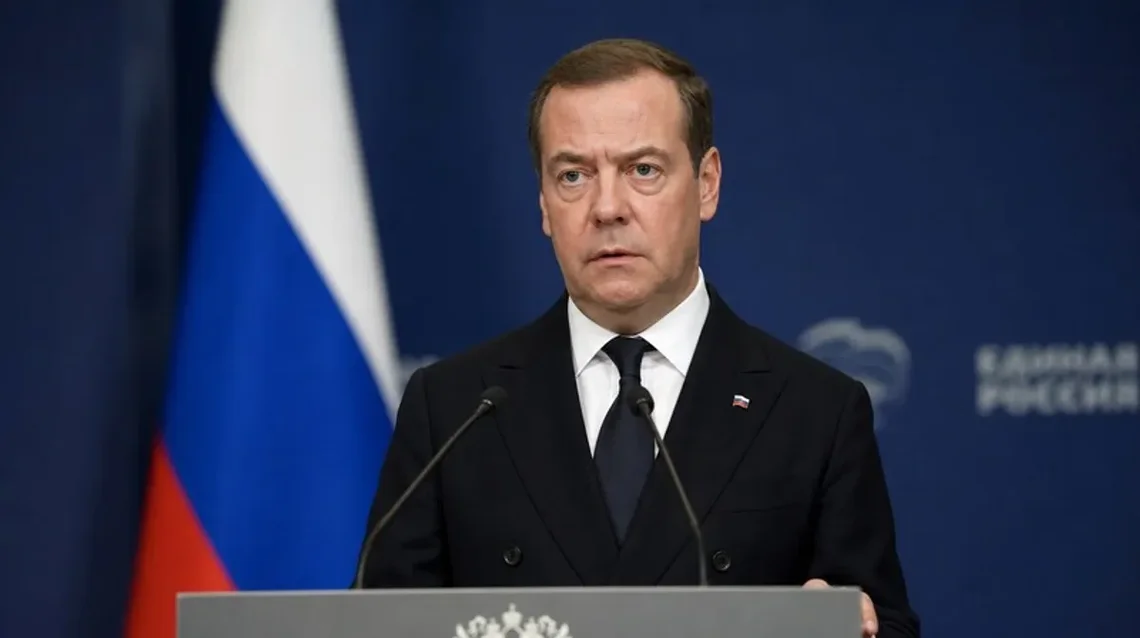
The United Nations Security Council has again failed to agree on a new package of sanctions targeting Russia over its continued war in Ukraine, as Moscow and Beijing exercised their veto powers to block a Western-backed resolution, deepening the institutional paralysis that has defined the Council's response since the conflict began. The vote, which ended in deadlock, represents the latest in a series of failed attempts by the United States, United Kingdom, and European allies to use the Council as a lever of collective pressure against Moscow.
Key Context: Russia is one of five permanent members of the UN Security Council, each holding the power to unilaterally veto any substantive resolution. Since the full-scale invasion of Ukraine began, Russia has used this power repeatedly to block resolutions on ceasefires, humanitarian access, accountability mechanisms, and sanctions. China has either vetoed or abstained on most Ukraine-related resolutions, providing diplomatic cover for Moscow. The war, now in its fourth year, has resulted in hundreds of thousands of casualties and the largest displacement crisis in Europe since the Second World War, according to UN estimates.
The Vote and What Happened
Western members of the Security Council — including the United States, United Kingdom, and France — put forward a draft resolution this week calling for targeted economic measures against Russian energy revenues, additional asset freezes on senior Kremlin officials, and tighter restrictions on the transfer of dual-use technologies to Russia. The proposal received backing from a majority of the Council's fifteen members, but Russia cast its veto as a permanent member, with China abstaining in a manner that further blunted the resolution's passage, officials said.
The Anatomy of the Deadlock
According to diplomats briefed on the session, the draft resolution had been under negotiation for several weeks, with Western delegations making concessions on language around energy exports in an effort to attract broader support. Despite those compromises, Russia's ambassador rejected the text outright, describing it as a "politically motivated instrument of economic warfare" rather than a legitimate peace-seeking measure, according to remarks cited by Reuters. China's delegation argued that sanctions would "further inflame tensions" and called instead for renewed diplomatic negotiations, according to AP.
Related Articles
The outcome has prompted fresh calls from Kyiv and its allies to reform the veto system, though any such structural change to the UN Charter would itself require Security Council approval — a procedural paradox that analysts say makes meaningful reform virtually impossible in the near term. For more on the structural dynamics at play, see our earlier coverage on the UN Security Council deadlocked on new Russia sanctions.
Ukraine's Fourth Year: The Broader Military Picture
The diplomatic stalemate arrives as the ground war grinds into its fourth year with no sign of a negotiated settlement on the horizon. Ukrainian forces are holding defensive lines across a front that stretches more than a thousand kilometres, while Russian forces have continued grinding offensives in the Donetsk and Zaporizhzhia regions, according to assessments from the Institute for the Study of War and cited by Foreign Policy. Both sides have suffered significant attrition, with Western intelligence agencies estimating Russian casualties in the hundreds of thousands since the full-scale invasion began.
Arms Flows and the International Response
Western military support for Ukraine has continued, though at a pace that Ukrainian officials have publicly described as insufficient. The United States recently approved additional tranches of military aid, while the United Kingdom has maintained its position as one of Kyiv's most consistent bilateral military partners, providing long-range missiles, armoured vehicles, and training programmes to Ukrainian forces. EU member states have also collectively pledged artillery shells and air defence systems, though delivery timelines have slipped repeatedly, according to reporting by Reuters and AP.
The UN Security Council deadlocked on Ukraine arms embargo in an earlier session, demonstrating that the dysfunction at the Council extends beyond sanctions to virtually every mechanism designed to influence the conflict's trajectory.
Humanitarian Crisis and Aid Access
Beyond the military dimension, the Security Council deadlock has direct consequences for humanitarian operations inside Ukraine. UN agencies operating in the country have repeatedly sought Security Council backing for protected aid corridors, particularly in frontline areas of eastern Ukraine where civilian populations remain trapped. Those efforts have largely been frustrated by Russian opposition.
Civilian Toll and Displacement
According to UN reports, more than six million Ukrainians remain displaced within Europe, making the crisis the continent's largest forced displacement event in decades. Civilian infrastructure — including power grids, water systems, and hospitals — has been systematically targeted, UN monitors said, with the Office for the Coordination of Humanitarian Affairs documenting thousands of strikes on civilian objects since the conflict began. The failure to establish protected corridors has compounded the suffering of populations in active combat zones, aid workers have said. Earlier Council negotiations on this specific issue stalled, as detailed in our reporting on the UN Security Council deadlocked on Ukraine aid corridor.
Western Response and Sanctions Outside the UN
Frustrated by the Council's paralysis, Western governments have increasingly pursued sanctions through alternative multilateral frameworks. The Group of Seven nations has enacted successive rounds of restrictions on Russian oil, gas, and financial institutions, while the European Union has adopted more than a dozen sanctions packages targeting Russian individuals, entities, and sectors since the invasion began. The United States Treasury has expanded its own designations substantially, and the UK's Office of Financial Sanctions Implementation has coordinated closely with its transatlantic partners.
The Oil Price Cap Mechanism
One of the more innovative Western instruments has been the G7-designed oil price cap, which attempts to limit Russian energy revenues by restricting the use of Western shipping, insurance, and financial services for Russian crude sold above a set price threshold. Initial assessments suggested the mechanism had some impact on Russian fiscal receipts, though subsequent analysis by the International Energy Agency and cited in Foreign Policy has shown Russia adapting through the use of a so-called "shadow fleet" of tankers operating outside Western regulatory reach. Enforcement of the cap has proven uneven, with some EU member states and non-Western purchasers continuing to circumvent its provisions, officials said. (Source: International Energy Agency, Foreign Policy)
The continued reliance on these parallel mechanisms underscores the degree to which the UN Security Council has been rendered functionally irrelevant on the Ukraine question. As one Western diplomat was quoted as saying by Reuters, the Council "cannot be the last word when one party to the conflict holds a veto."
What This Means for the UK and Europe
For the United Kingdom and its European partners, the Security Council's enduring deadlock carries several distinct implications. First, it signals that any ceasefire or peace process will need to be engineered outside the UN framework — likely through direct bilateral diplomacy or under the auspices of a grouping such as the G7 or OSCE, neither of which has the binding authority of a Security Council resolution. Second, it places a greater burden on European capitals to sustain both military and economic pressure on Russia independently, at a time when domestic political pressures in several EU member states are complicating unified responses.
In the UK specifically, the government has maintained strong rhetorical and material support for Ukraine, and British officials have been vocal in condemning Russian vetoes at the Council. However, questions persist in Westminster about the long-term financial sustainability of British aid commitments, particularly given domestic fiscal constraints. The broader European security picture has also been complicated by ongoing debates within NATO about burden-sharing and the reliability of American commitments under evolving US domestic politics, analysts have noted. (Source: Reuters, AP)
The risk for Europe extends beyond Ukraine's borders. Security analysts and EU officials have consistently argued that a failure to hold Russia accountable emboldens revisionist behaviour across the continent — from hybrid attacks on critical infrastructure to interference in democratic processes. Without a functioning Security Council mechanism, the rules-based international order that underpins European security architecture is under sustained pressure, officials said.
| Resolution Focus | Proposed By | Vetoed By | Outcome |
|---|---|---|---|
| Condemnation of invasion / demand for withdrawal | US, UK, EU allies | Russia | Failed; referred to General Assembly |
| Humanitarian ceasefire resolution | France, Mexico | Russia | Failed at Council level |
| Independent investigation into civilian killings | US, UK | Russia, China abstained | Blocked; ICC proceedings pursued separately |
| Ukraine aid corridor protections | Western bloc | Russia | Deadlocked; UN agencies operating without mandate |
| Targeted sanctions on Russian energy and officials | US, UK, France | Russia; China abstained | Failed; G7 pursuing parallel measures |
Reform Pressure and the Future of the Council
The sustained dysfunction has reignited longstanding debates about reforming the Security Council's veto structure. A coalition of nations — including Germany, Japan, India, and Brazil, known informally as the G4 — has pushed for expanded permanent membership and veto restrictions, but such reforms face the structural barrier of requiring the consent of existing permanent members to amend the UN Charter. (Source: UN reports)
The "Uniting for Peace" Mechanism
In the absence of Council action, the General Assembly has been convened under the "Uniting for Peace" procedure — a Cold War-era mechanism that allows the Assembly to take up matters when the Council is deadlocked — on multiple occasions since the invasion began. While General Assembly resolutions carry significant political weight and reflect global opinion, they are non-binding and cannot compel member states to comply with their terms. Ukraine and Western governments have used these votes to isolate Russia diplomatically, but the practical effect on the ground has been limited, officials and analysts noted. (Source: UN reports, AP)
For continued coverage of this evolving story and related diplomatic developments, see our in-depth reporting on the UN Security Council deadlocked over new Russia sanctions and the UN Security Council deadlocked over new sanctions on Russia.
As the war enters its fourth year with no resolution in sight, the Security Council's failure to act on sanctions is more than a procedural setback — it is a structural indictment of an international security architecture designed for a different era. For Ukraine, for European security, and for the broader question of whether multilateral institutions can constrain great-power aggression, the consequences of this deadlock will be felt long after the guns eventually fall silent. (Source: Reuters, AP, Foreign Policy, UN reports)