
UN Security Council deadlocked over Iran nuclear talks
Russia, China block resolution as negotiations stall
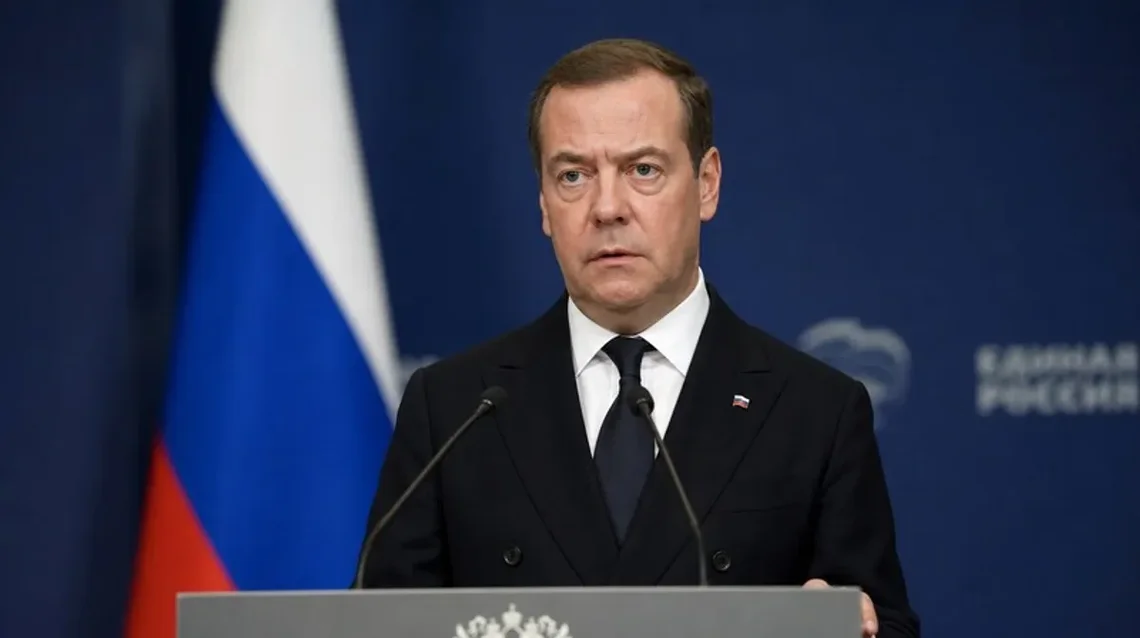
The United Nations Security Council has again failed to reach consensus on one of the world's most pressing proliferation crises, with Russia and China blocking a Western-backed resolution that sought to reinforce international oversight of Iran's rapidly advancing nuclear programme. The deadlock marks a further deterioration in multilateral efforts to contain Tehran's nuclear ambitions and underscores the deepening fractures within the UN's most powerful body.
Key Context: Iran currently enriches uranium to 60% purity — a technical step away from weapons-grade levels of 90% — according to the International Atomic Energy Agency (IAEA). The original Joint Comprehensive Plan of Action (JCPOA), agreed in 2015, capped enrichment at 3.67%. Since the United States withdrew from that agreement, Iran has progressively dismantled its commitments, and no replacement framework has entered into force. The IAEA has reported that Iran has accumulated sufficient enriched uranium to potentially produce multiple nuclear devices if it chose to further enrich to weapons-grade levels. (Source: International Atomic Energy Agency)
The Vote and Its Immediate Fallout
The resolution, co-sponsored by the United Kingdom, France, Germany, and the United States, called for a return to full IAEA inspection access and the reimposition of hard caps on uranium enrichment. When the measure came to a vote, Russia and China — two of the five permanent veto-wielding members — blocked its passage, citing what they described as a politically motivated and counterproductive approach to diplomacy, officials said.
The outcome was anticipated by analysts following the Council's pattern of behaviour on Iran-related matters, but its confirmation nonetheless drew sharp criticism from Western delegations. Britain's UN ambassador described the veto as "deeply irresponsible" in remarks reported by Reuters, arguing that the international community had been denied a critical tool of accountability at precisely the moment it was most needed.
Related Articles
Veto Politics and Geopolitical Calculations
Russia and China's opposition reflects a broader strategic alignment with Tehran that has solidified in recent years. Both nations have deepened trade and energy ties with Iran, and both view Western-led sanctions regimes with scepticism, framing them as instruments of coercion rather than legitimate security tools. According to Foreign Policy, Moscow and Beijing have consistently advocated for a return to diplomacy without preconditions, a position that Tehran has publicly welcomed but that Washington and its European allies regard as insufficient given Iran's enrichment trajectory.
The bloc's position is not without internal nuance. Chinese officials have privately signalled discomfort with full Iranian nuclear weapons capability, according to diplomatic sources cited by Reuters, yet Beijing's public posture remains one of opposition to what it characterises as Western unilateralism at the UN. This pattern of behaviour mirrors the Council's paralysis on other critical files, including the UN Security Council deadlocked on Ukraine arms embargo, where similar fault lines have rendered collective action impossible.
State of the Negotiations
Direct negotiations between Iran and the United States, conducted through Omani intermediaries, have stalled following a period of cautious optimism earlier this period. Talks in Muscat and Rome produced no binding commitments, and Iran's chief negotiator has since indicated that further sessions are contingent on the United States providing clearer sanctions relief guarantees upfront — a condition Washington has so far declined to meet, according to AP.
Iran's Enrichment Trajectory
The IAEA's most recent quarterly report confirmed that Iran has continued to expand its stockpile of uranium enriched to 60% purity, with centrifuge operations at the Fordow and Natanz facilities running at elevated capacity. The Agency also reported ongoing restrictions on inspector access, including limitations on the deployment of certain monitoring equipment — a development that has alarmed proliferation experts. According to the UN's own documentation, the IAEA's Director General has described the situation as one where the Agency's ability to provide assurances about the exclusively peaceful nature of Iran's programme has been "seriously undermined." (Source: United Nations, IAEA)
The Role of European Diplomacy
The E3 — Britain, France, and Germany — has sought to keep diplomatic channels open while simultaneously preparing punitive measures should talks collapse entirely. European officials have been exploring the use of the JCPOA's "snapback" mechanism, which allows original signatories to reimpose all UN sanctions without being subject to a Russian or Chinese veto. That mechanism has a finite operational window, and its potential activation has become a central point of leverage in European diplomatic strategy, officials said. Readers can find detailed coverage of those parallel efforts in the article on EU to tighten Iran nuclear curbs amid stalled talks.
What This Means for the UK and Europe
The Security Council deadlock carries direct and serious implications for British and European security. A nuclear-armed or near-nuclear Iran would fundamentally alter the strategic calculus across the Middle East, increasing pressure on Gulf states to seek their own deterrent capabilities and elevating the risk of regional miscalculation. For Britain, with its significant Gulf defence commitments, commercial interests in regional stability, and treaty obligations to allies including Israel, the consequences of further proliferation are not abstract.
Economic and Energy Exposure
Europe's energy markets, still recalibrating following disruptions linked to the war in Ukraine, are highly sensitive to any escalation in the Persian Gulf. A significant portion of global oil supply transits the Strait of Hormuz, and any military confrontation arising from a further breakdown in nuclear diplomacy would send immediate shockwaves through commodity markets. The Bank of England and European Central Bank have both flagged geopolitical risk in the Gulf region as among the factors warranting close monitoring in their financial stability assessments, according to publicly available institutional reports. (Source: Bank of England)
Beyond energy, European exporters and financial institutions remain subject to stringent secondary sanctions risks whenever engaging with entities that have any Iranian nexus. British businesses operating in sectors from aviation to pharmaceuticals have found compliance costs elevated significantly by the ongoing sanctions uncertainty, according to industry bodies cited by Reuters.
The Broader Pattern of UN Paralysis
The Iran deadlock does not exist in isolation. It is part of a widening pattern of Security Council dysfunction that has increasingly called into question the body's fitness for purpose in managing twenty-first century security challenges. On Ukraine, successive attempts to craft meaningful collective responses have been stymied by the same veto dynamics now blocking progress on Iran. The Council's inability to act cohesively has been documented across multiple files, including the UN Security Council deadlocked on Ukraine aid corridor and the UN Security Council deadlocked on Gaza aid access, where humanitarian imperatives have similarly been subordinated to great-power competition.
Reform Debates and Their Limits
Pressure for Security Council reform has intensified among smaller member states and regional powers, with the African Union, India, Brazil, and others renewing calls for an expanded permanent membership that better reflects contemporary geopolitical realities. However, any structural reform of the Council requires the approval of two-thirds of the General Assembly and ratification by all five current permanent members — a threshold that makes meaningful change functionally impossible in the near term, analysts note. According to Foreign Policy, the reform debate has become something of a perennial exercise in diplomatic frustration, serving primarily to highlight the institution's limitations rather than to generate actionable solutions.
Regional Dimensions and Proxy Dynamics
The stalled talks and Security Council paralysis are occurring against a backdrop of heightened regional tension. Iran's network of allied non-state actors across Lebanon, Iraq, Syria, Yemen, and Gaza continues to operate in ways that Western governments characterise as destabilising. For Gulf Arab states — particularly Saudi Arabia and the United Arab Emirates — the prospect of an emboldened, near-nuclear Iran with no effective international constraint represents an existential concern, officials from those governments have said in various public forums.
Israel, which maintains a policy of deliberate ambiguity regarding its own nuclear capabilities, has repeatedly stated that it will not permit Iran to acquire nuclear weapons. Israeli officials have declined to rule out unilateral military action against Iranian nuclear facilities, and that possibility — however unpredictable its consequences — continues to shape the diplomatic environment in ways that complicate negotiated solutions, according to AP reporting.
| Milestone / Parameter | JCPOA Limit (2015) | Current Status | Significance |
|---|---|---|---|
| Uranium enrichment ceiling | 3.67% | Up to 60% | Weapons-grade threshold is ~90% |
| Enriched uranium stockpile | 300 kg | Several thousand kg (est.) | Sufficient for multiple devices if further enriched |
| IAEA inspector access | Full "Additional Protocol" | Significantly restricted | Agency cannot provide full assurances |
| Advanced centrifuges (IR-6, IR-8) | Prohibited | Operational at Fordow, Natanz | Dramatically speeds enrichment capacity |
| Snapback sanctions mechanism | Available to E3/US/EU | Under active E3 consideration | Last multilateral leverage tool remaining |
| Direct US-Iran talks | Ongoing (JCPOA era) | Stalled; no agreed framework | No timeline for resumption confirmed |
Outlook: Where Diplomacy Goes From Here
With the Security Council effectively neutralised as a forum for collective action, the initiative has passed to a smaller constellation of actors. The E3's potential invocation of the snapback mechanism remains the most substantive multilateral tool available. US officials have continued to assert that diplomacy remains the preferred path, while declining to specify what conditions would prompt a shift in posture, according to State Department briefings cited by AP.
The Council deadlock also raises the question of whether the international community possesses the institutional architecture to manage a nuclear proliferation crisis in an era of renewed great-power competition. The answer, based on the trajectory of the past several years, appears increasingly doubtful. For Britain and its European partners, the immediate imperative is to maintain diplomatic coherence, preserve the snapback option, and ensure that lines of communication — however strained — remain open to Tehran. The alternative, a region in which nuclear proliferation cascades without effective international constraint, is one that no serious policymaker regards as acceptable. The Council's failure to act makes that outcome marginally but meaningfully more likely.
For further context on the Security Council's broader difficulties reaching consensus on high-stakes resolutions, see also the UN Security Council deadlocked on Ukraine aid resolution, which examines similar structural obstacles in a parallel geopolitical file. (Sources: Reuters, AP, International Atomic Energy Agency, United Nations, Foreign Policy)