
UN Security Council deadlocked over Syria sanctions vote
Russia and China veto Western-backed resolution
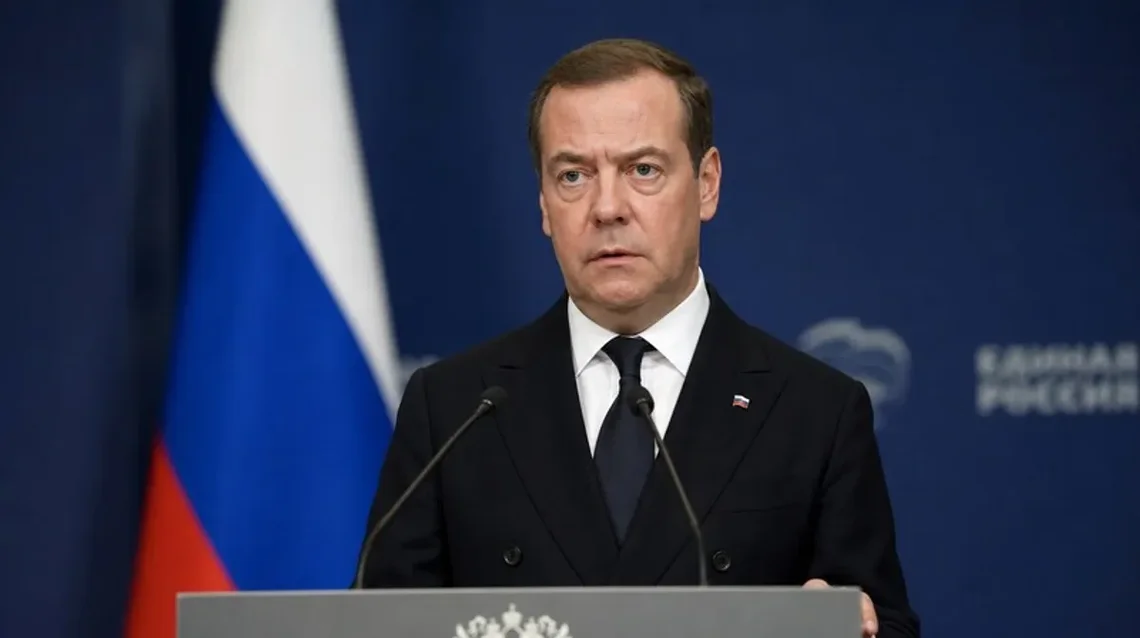
The United Nations Security Council has once again failed to act on a major humanitarian and security crisis, after Russia and China vetoed a Western-backed resolution that would have imposed sweeping new sanctions on Syria's government and expanded access for international aid organisations. The twin vetoes, cast during an emergency session at UN headquarters in New York, drew immediate condemnation from Western powers and human rights groups, deepening fears that the Council's paralysis is becoming structural rather than episodic.
Key Context: Russia has used its veto power at the UN Security Council more than a dozen times to block resolutions targeting the Syrian government since the conflict began. China has co-vetoed the majority of those resolutions. The latest draft resolution, co-sponsored by France, the United Kingdom, and the United States, sought to introduce targeted sanctions on Syrian military commanders and government officials accused of directing attacks on civilian infrastructure, as well as to authorise expanded cross-border humanitarian access through additional entry points. Syria's civil war has displaced more than 13 million people and killed hundreds of thousands, according to UN reports. The country remains one of the world's most severe humanitarian catastrophes.
What Was in the Resolution
The Western-backed text called for the imposition of asset freezes and travel bans on a list of senior Syrian officials, including military officers linked to documented strikes on hospitals and water facilities, according to diplomatic sources familiar with the draft. The resolution also sought to renew and expand the mandate for cross-border humanitarian aid delivery, which has been progressively restricted in previous years through successive Russian vetoes that reduced the number of authorised border crossings from four to a single entry point at Bab al-Hawa.
Humanitarian Aid Provisions
Aid agencies including the United Nations Office for the Coordination of Humanitarian Affairs (OCHA) had publicly urged the Council to pass the resolution, warning that the current single crossing was insufficient to meet escalating need. According to OCHA figures, more than 16 million Syrians currently require some form of humanitarian assistance. The World Food Programme has separately described conditions in parts of northern Syria as approaching famine-level severity. The resolution's failure means the existing restricted framework remains in place with no timeline for review.
Related Articles
Sanctions Scope and Targets
The sanctions provisions were designed as targeted measures rather than broad economic restrictions, focusing specifically on individuals rather than Syria's already devastated economy. Western diplomats argued this approach addressed past Russian objections that sanctions harmed ordinary Syrians. Moscow rejected that framing, with Russia's UN ambassador characterising the resolution as a pretext for regime change and external interference in Syrian sovereignty, according to Reuters. Beijing aligned with Moscow's position, stating the draft resolution would destabilise an already fragile situation.
Reactions from the Security Council Chamber
The vote produced a stark procedural result: thirteen members voted in favour of the resolution, with Russia and China casting the only dissenting votes. No member abstained, a result that Western diplomats noted as unusually unified support among the Council's elected and non-permanent members. The United States ambassador to the United Nations called the vetoes "a moral failure" in remarks delivered immediately following the vote, according to AP. France and the United Kingdom issued a joint statement describing the outcome as "an affront to the victims of systematic violence" and pledging to pursue accountability through alternative multilateral mechanisms.
Russia's Justification
Russian officials framed their veto as a defence of Syrian sovereignty and a rejection of what they described as politically motivated pressure from Western states. The Russian UN ambassador argued that the sanctions list was compiled without due process and that the humanitarian provisions were designed to bypass the Syrian government rather than coordinate with it. Moscow has consistently maintained that international aid should be channelled through Damascus, a position Western governments and most aid organisations reject as incompatible with impartial humanitarian principles (Source: UN Security Council verbatim records).
A Pattern of Council Deadlock
The Syria veto is the latest in a sequence of high-profile failures at the Security Council that have raised fundamental questions about the body's ability to fulfil its charter mandate. Analysts at Foreign Policy have described the current period as the most pronounced episode of Council dysfunction since the Cold War, driven by the erosion of great-power consensus that briefly characterised the post-1991 international order. The Syria vote follows similarly unsuccessful attempts to compel action on other crisis files.
Readers tracking the Council's broader impasse may recall related deadlocks on other fronts: the body has been similarly paralysed on European security issues, with members unable to reach agreement on ceasefire mechanisms. As previously reported by ZenNewsUK, the Council has faced repeated failures on Eastern European security files — see our coverage of the UN Security Council deadlocked on Ukraine ceasefire vote for comparative context on how veto dynamics have played out across different crisis theatres.
The pattern extends to economic pressure tools as well. The Council has been unable to advance punitive economic measures on multiple fronts, as documented in our earlier reporting on the UN Security Council deadlocked over new Russia sanctions and the UN Security Council deadlocked over fresh Russia sanctions. In each instance, the structural dynamic has been identical: Western members propose, Russia and China veto, and the underlying crisis continues unaddressed.
The Veto as a Geopolitical Instrument
Academic and policy analysts have increasingly argued that the veto is no longer functioning as an emergency brake against hasty Council action, but rather as a routine instrument of geopolitical protection for aligned governments. The Syria file is perhaps the clearest illustration of this dynamic: over more than a decade of conflict, the veto has shielded Damascus from international accountability mechanisms at the Council level even as independent UN investigative bodies have documented systematic atrocities. According to Foreign Policy analysis, the cumulative effect has been to render the Council structurally incapable of responding to conflicts in which a permanent member has a direct strategic interest.
Implications for the UK and Europe
The Council's failure carries immediate and practical consequences for the United Kingdom and European Union member states. Britain and France, both permanent Council members, co-sponsored the failed resolution and have now exhausted the primary multilateral mechanism available to them for applying pressure on Damascus. For the UK's Foreign, Commonwealth and Development Office, the veto represents a significant diplomatic setback following what officials described as months of careful negotiation to craft a resolution designed to withstand Russian objections.
Refugee and Migration Pressures
European governments face a secondary consequence tied directly to the humanitarian situation on the ground. Aid organisations have warned repeatedly that continued restrictions on cross-border assistance, combined with the deterioration of conditions inside Syria, risk driving a new wave of displacement toward Turkey and onward into Europe. The EU border agency Frontex has noted elevated irregular crossing attempts on Eastern Mediterranean and Balkan routes in recent months, a trend analysts link partly to worsening conditions in Syrian displacement camps (Source: Frontex Risk Analysis reports). A resolution that expanded aid access could have reduced some of those pressures; its failure removes that near-term prospect.
UK Bilateral Sanctions as an Alternative
With the multilateral route closed, the UK government is expected to explore expanding its autonomous sanctions regime targeting Syrian officials under the Global Human Rights Sanctions Regulations. British officials have previously used this mechanism to designate individuals connected to chemical weapons use and attacks on civilians in Syria. The approach allows London to act independently of the Security Council, though it lacks the coercive reach of a binding UN resolution and cannot compel other states to comply. European partners are expected to pursue parallel measures through the EU's existing Syria sanctions framework, which has been regularly updated and extended (Source: UK Foreign, Commonwealth and Development Office; European Council).
What Happens Next at the UN
Following the veto, Western diplomats indicated they would seek to bring the matter before the UN General Assembly under the "Uniting for Peace" procedure, which allows the 193-member body to consider matters when the Security Council is blocked. While General Assembly resolutions are non-binding, they carry significant political weight and can be used to build international consensus and document the positions of member states for the historical record. A similar approach was employed following Council vetoes on Ukraine-related resolutions, resulting in General Assembly votes that demonstrated broad international opposition to Russian positions (Source: UN General Assembly records).
Independent accountability mechanisms are also expected to remain active. The Independent International Commission of Inquiry on Syria, established by the Human Rights Council, continues to document atrocities regardless of Security Council action, and its findings contribute to ongoing legal proceedings in European national courts under universal jurisdiction principles. Several cases against Syrian officials are currently proceeding in German and Swedish courts, representing a legal accountability track that operates entirely outside the Security Council framework.
| Country / Actor | Vote on Resolution | Position | Key Stated Rationale |
|---|---|---|---|
| United States | Yes | Co-sponsor | Accountability for civilian targeting; humanitarian access |
| United Kingdom | Yes | Co-sponsor | Targeted sanctions; humanitarian corridor expansion |
| France | Yes | Co-sponsor | International law enforcement; civilian protection |
| Russia | No (Veto) | Opponent | Syrian sovereignty; rejects sanctions list methodology |
| China | No (Veto) | Opponent | Non-interference; risk of destabilisation |
| Remaining 10 members | Yes | Supporters | Humanitarian necessity; accountability norms |
The Broader Crisis of Multilateralism
The Syria veto does not exist in isolation. It is part of a broader pattern in which the Security Council's enforcement architecture has been rendered ineffective on precisely the crises where effective international action is most urgently needed. The body's founding logic — that great-power unity was a prerequisite for collective security — has been exposed as a vulnerability rather than a strength in an era of renewed great-power competition. Reform proposals, including French-German initiatives to voluntarily restrain veto use in cases of mass atrocity, have gained rhetorical support but no binding traction among the P5.
For further context on the Council's recurring impasse over economic coercive tools, see ZenNewsUK's earlier reporting on the UN Security Council deadlocked on new Russia sanctions, which examined the legal and diplomatic frameworks available when the Council's primary enforcement mechanism is blocked by permanent member opposition.
The failure of the Syria sanctions resolution leaves the international community without a binding multilateral response to one of the world's most prolonged and documented humanitarian crises. For the United Kingdom, France, and their partners, the path forward runs through secondary mechanisms — autonomous sanctions regimes, General Assembly resolutions, and universal jurisdiction prosecutions — none of which carry the legal force or global reach of a binding Security Council Chapter VII resolution. The structural problem remains what it has been for years: a Council designed to prevent the unilateral use of force has itself become a vehicle for the unilateral prevention of collective accountability. Until the underlying architecture changes, the cycle of proposal, veto, and condemnation will continue (Source: Reuters; AP; UN Security Council verbatim records; Foreign Policy).