
UN Security Council deadlocked over Ukraine aid extension
Russia blocks humanitarian assistance vote for third time
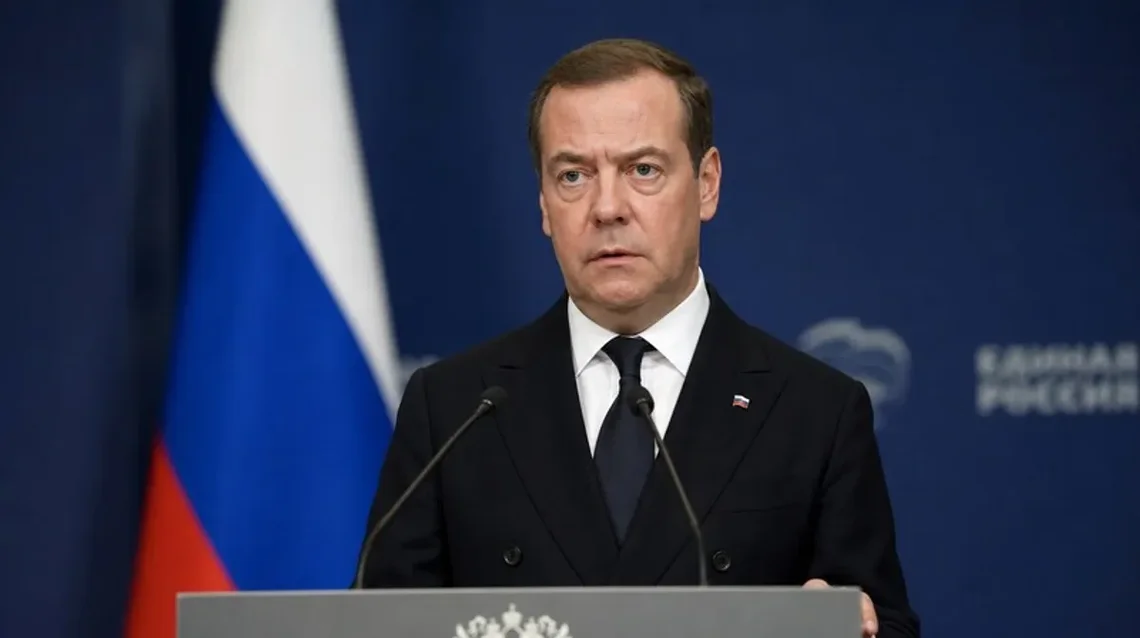
Russia has vetoed a United Nations Security Council resolution to extend humanitarian aid access into Ukraine for the third consecutive time, leaving millions of civilians facing an increasingly precarious situation as winter deepens and front-line hostilities continue unabated. The latest procedural collapse underscores what Western diplomats describe as a systematic Russian strategy to weaponise the Security Council's veto architecture, paralyzing the body's ability to respond to one of the largest humanitarian emergencies in Europe since the Second World War.
Key Context: The UN Security Council has 15 members, of which five — the United States, United Kingdom, France, China, and Russia — hold permanent veto power. A single veto by any permanent member is sufficient to block any substantive resolution, regardless of how many other members vote in favour. Russia has repeatedly used this mechanism to block resolutions relating to Ukraine since the full-scale invasion began, drawing widespread condemnation from Western governments and human rights organisations. The UN Office for the Coordination of Humanitarian Affairs (OCHA) estimates that more than 14 million people inside Ukraine currently require some form of humanitarian assistance. (Source: UN OCHA)
The Vote and Its Immediate Aftermath
The resolution, co-sponsored by the United Kingdom, France, and the United States among others, sought to renew a cross-border humanitarian aid mechanism that has been a critical lifeline for civilian populations in areas not fully accessible via routes controlled by Ukrainian authorities. According to UN officials, the proposal received thirteen votes in favour, with Russia voting against and China abstaining — an outcome broadly consistent with the pattern of previous blocked votes on Ukraine-related humanitarian measures.
Diplomatic Reactions in the Chamber
Following the veto, the UK's Ambassador to the United Nations characterised Russia's action as "a deliberate act of cruelty against civilian populations who have no part in military decisions," according to remarks reported by Reuters. The US representative echoed that framing, stating that Russia had "once again demonstrated its contempt for the rules-based international order." Russia's ambassador, for his part, argued that the resolution was politically motivated and that humanitarian aid should be channelled exclusively through the Ukrainian government — a position Western states rejected as functionally unworkable given conditions on the ground. (Source: Reuters)
Related Articles
China's Abstention and What It Signals
China's decision to abstain rather than veto was noted by analysts as a subtle but meaningful distinction. Foreign Policy has observed in recent coverage that Beijing has been careful to avoid direct complicity in blocking humanitarian measures, even as it refuses to openly criticise Moscow. Analysts suggest this reflects China's dual interest in maintaining its relationship with Russia while protecting its international standing on humanitarian norms — a balancing act that has grown increasingly difficult to sustain. (Source: Foreign Policy)
A Pattern of Obstruction: The Broader Timeline
This is not an isolated incident. Russia has now blocked humanitarian aid-related resolutions on Ukraine on three separate occasions within the current cycle, a pattern that has drawn sustained criticism from UN Secretary-General António Guterres and a broad coalition of member states. The recurring deadlock has prompted serious discussions about structural reform of the Security Council, though any amendment to the UN Charter would itself require Security Council approval — a near-impossible threshold given the veto powers involved.
| Vote Instance | Resolution Focus | Result | Russia's Position | China's Position |
|---|---|---|---|---|
| First Veto (Earlier This Year) | Cross-border aid corridor authorisation | Blocked | Veto | Abstain |
| Second Veto (Mid-Year) | Aid mechanism renewal and civilian protection | Blocked | Veto | Abstain |
| Third Veto (Most Recent) | Humanitarian assistance extension | Blocked | Veto | Abstain |
| Arms Embargo Resolution | Weapons transfer restrictions | Blocked | Veto | Veto |
| Peace Framework Vote | Ceasefire and negotiations framework | Blocked | Veto | Abstain |
For a detailed account of previous procedural failures at the Security Council, see our earlier reporting on the UN Security Council deadlocked on Ukraine aid corridor and the UN Security Council deadlocked on Ukraine arms embargo.
Humanitarian Conditions on the Ground
The consequences of successive vetoes are not merely procedural. According to OCHA's most recent situation reports, access to clean water, functioning healthcare infrastructure, and consistent food supply has deteriorated markedly in conflict-affected oblasts, particularly in the east and south of Ukraine. The UN World Food Programme has warned that disruption to aid corridors risks compounding existing shortages, with particular concern for elderly residents, internally displaced persons, and those with medical conditions requiring regular treatment. (Source: UN World Food Programme)
Winter as a Compounding Factor
Humanitarian organisations operating in Ukraine have consistently identified the winter season as a critical vulnerability window. Infrastructure damage — including repeated strikes on energy generation and heating facilities — has left large segments of the urban population exposed to temperatures well below freezing. The International Committee of the Red Cross has documented widespread disruption to district heating systems in multiple cities, and has called on all parties to guarantee safe passage for emergency relief convoys. (Source: ICRC)
The blockage at Security Council level means that coordinated UN-mandated operations cannot proceed with the legal certainty and access guarantees that a formal resolution would provide. NGOs operating in the field have described the situation as forcing them into improvised, ad hoc arrangements that increase both cost and risk to aid workers. (Source: AP)
Implications for the UK and Europe
For European governments, and for the United Kingdom in particular, the Security Council deadlock carries both moral and strategic weight. The UK, as a permanent member of the Security Council, co-sponsored the failed resolution and has been among the most vocal advocates for maintaining institutional pressure on Russia through multilateral channels. British officials have stated that the veto pattern reinforces the necessity of sustaining bilateral and coalition-based aid efforts outside the formal UN framework, including through the UK-Ukraine bilateral assistance programme and the G7 Ukraine Assistance Coordination Mechanism.
European Aid Architecture Under Strain
The European Union has separately committed substantial humanitarian funding for Ukraine, channelled through mechanisms that do not require Security Council authorisation. However, European diplomats have acknowledged in background briefings that the UN framework carries unique legitimacy and access guarantees that bilateral arrangements cannot fully replicate, particularly in areas where the humanitarian situation is most acute. There is growing concern among European foreign ministries that donor fatigue, combined with institutional paralysis at the UN, could leave critical gaps in assistance coverage. (Source: AP)
In Westminster, the Ukraine situation continues to generate cross-party consensus on the need for sustained support, though debates have intensified around the long-term fiscal implications of open-ended commitments. Senior figures in the Foreign, Commonwealth and Development Office have privately expressed frustration that Russia's use of the veto effectively nullifies Britain's investment in UN institutional reform efforts. (Source: Reuters)
Reform Proposals and Structural Limitations
The recurring impasse has reinvigorated calls — particularly from the Global South and smaller UN member states — for reform of the veto system. A "Veto Initiative" championed by Liechtenstein and backed by over 100 member states requires the General Assembly to convene automatically whenever a veto is cast in the Security Council, creating a forum for public deliberation even when the Council itself is blocked. While this mechanism does not carry binding power, advocates argue it increases accountability and diplomatic cost for veto-wielding states. (Source: UN General Assembly documentation)
The Uniting for Peace Mechanism
Some legal scholars and diplomats have pointed to the "Uniting for Peace" resolution — originally invoked during the Korean War — as a potential alternative pathway for authorising humanitarian action when the Security Council is paralysed. However, invoking this mechanism on Ukraine has been resisted by key states concerned about setting precedents that could be used against their own interests in future conflicts. The debate reflects a deeper tension within the UN system between the pragmatic demands of crisis response and the structural protections built into the Charter framework. (Source: Foreign Policy)
For broader context on the evolving diplomatic landscape, our coverage of the UN Security Council deadlocked on Ukraine aid resolution and the UN Security Council deadlocked on Ukraine peace plan provides essential background on the trajectory of these negotiations. Further reporting on procedural developments is available in our earlier analysis of the UN Security Council deadlocked on Ukraine aid extension.
What Comes Next
Diplomatic sources suggest that Western co-sponsors will bring an adapted resolution before the Council again within weeks, potentially restructuring the language to test whether any formulation can either attract Chinese support or create sufficient political pressure on Moscow to abstain. However, analysts tracking the Security Council process express scepticism that such manoeuvres will produce materially different results in the near term. (Source: Reuters)
In parallel, the UN General Assembly is expected to consider a non-binding resolution expressing support for humanitarian access — a measure that carries no enforcement mechanism but serves as a diplomatic indicator of global opinion. Meanwhile, NGOs and bilateral donors are being urged to scale up direct operations as the UN framework remains frozen, accepting higher operational risk in exchange for maintaining at least partial continuity of aid delivery to the most vulnerable civilian populations inside Ukraine.
The broader significance of the Security Council's repeated failures extends beyond the immediate humanitarian emergency. It speaks to a fundamental crisis of multilateral governance at a moment when the international rules-based order faces its most serious stress test in decades. For the UK, Europe, and the wider Western alliance, the question is no longer simply how to help Ukraine — it is how to sustain the institutional frameworks that underpin global stability when those frameworks are actively subverted by one of their own architects.