
UN Security Council deadlocked over Ukraine ceasefire proposal
Russia vetoes resolution as Western powers push for negotiations
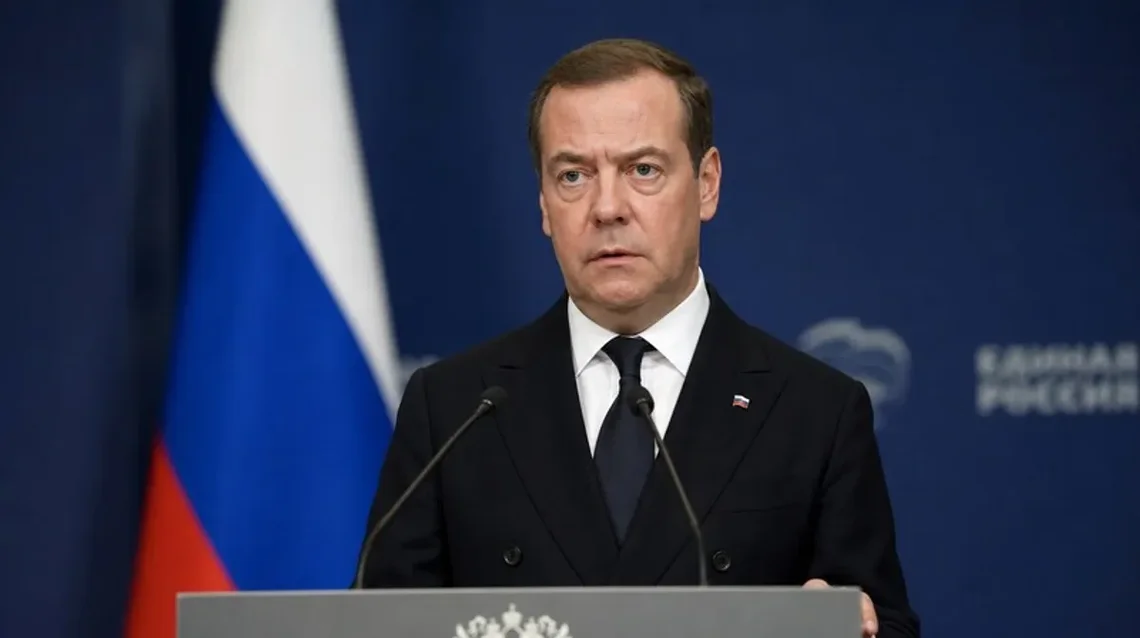
Russia's veto at the United Nations Security Council has once again paralysed international efforts to halt the war in Ukraine, blocking a Western-backed ceasefire resolution and deepening concerns about the body's capacity to manage one of the most consequential conflicts in post-Cold War history. The failed vote marks the latest in a succession of diplomatic impasses at Turtle Bay, with analysts warning that the Council's structural dysfunction is prolonging civilian suffering and complicating Europe's security architecture at a critical moment.
Key Context: Russia holds permanent membership on the UN Security Council alongside the United States, the United Kingdom, France, and China — giving it the unilateral power to veto any substantive resolution. Since the full-scale invasion of Ukraine began, Russia has exercised this veto multiple times to block resolutions demanding ceasefires, humanitarian access, and accountability measures. China has largely abstained, declining to condemn Russian actions while stopping short of open endorsement. The structural deadlock has prompted growing calls for UN Charter reform, though any such change would itself require Security Council approval — a circular dilemma that has frustrated reformers for decades. (Source: UN Department of Political and Peacebuilding Affairs)
The Vote and Its Immediate Aftermath
The resolution, tabled by the United States and co-sponsored by European Union member states and the United Kingdom, called for an immediate and verifiable ceasefire along current front lines, with provisions for international monitoring and the resumption of direct negotiations. The text also referenced the need for humanitarian corridors and protections for civilian infrastructure, issues that have been at the centre of prior deadlocks explored in coverage of the UN Security Council deadlocked on Ukraine aid corridor dispute.
The draft resolution received thirteen votes in favour, with Russia casting its veto and China abstaining. Under the UN Charter's Article 27, a single negative vote from any permanent member on a substantive matter is sufficient to kill a resolution outright, regardless of the broader consensus among elected and permanent members. The result was immediately condemned by Western delegations on the floor of the Security Council chamber.
Related Articles
Western Delegations React
The United Kingdom's ambassador to the United Nations described the veto as "a cynical use of procedural privilege to shield ongoing violations of international law," according to statements carried by Reuters. The United States representative echoed that characterisation, calling on the international community to find alternative mechanisms for accountability, potentially through the UN General Assembly's Uniting for Peace procedure, which bypasses Security Council authority in cases of deadlock. (Source: Reuters)
France's envoy stressed that the veto did not reflect the will of the broader international community and pledged that Paris would continue to push for a diplomatic settlement through bilateral and multilateral channels, including the G7 and the Organisation for Security and Co-operation in Europe. (Source: AP)
Russia's Stated Justification
Russia's permanent representative to the United Nations argued that the resolution was a Western political instrument rather than a genuine peace initiative, claiming that the ceasefire framework contained within it would freeze territorial lines in a manner prejudicial to Russian security interests. Moscow further contended that Western military assistance to Ukraine rendered any ceasefire proposal from those same nations inherently compromised. The Russian delegation also raised objections to the monitoring provisions, which it characterised as a pretext for the introduction of hostile military observers into sovereign Ukrainian and Russian-administered territory. (Source: UN official records)
A Pattern of Paralysis
The latest veto is not an isolated event but rather a structural feature of how the Security Council has operated since hostilities escalated. The body has been UN Security Council deadlocked on Ukraine ceasefire vote proceedings on multiple previous occasions, with Russia deploying its veto to neutralise resolutions ranging from humanitarian access to legal accountability. The cumulative effect has been to render the Security Council functionally inoperative on the Ukraine file — a situation that analysts writing in Foreign Policy have described as the most severe test of multilateral governance architecture since the Cold War. (Source: Foreign Policy)
The Arms Embargo Dimension
The paralysis extends beyond ceasefire talks. Proposals to implement an international arms embargo — aimed at reducing the flow of weapons fuelling the conflict — have met a similarly impassable wall. Readers tracking the full scope of this institutional breakdown can review prior ZenNewsUK reporting on the UN Security Council deadlocked on Ukraine arms embargo, which details how competing geopolitical interests have prevented even limited consensus on weapons controls.
The disconnect between the scale of the humanitarian crisis and the paralysis of the body nominally mandated to address it has intensified pressure on the General Assembly and regional organisations to fill the void. The General Assembly has passed several non-binding resolutions demanding a ceasefire and Russian withdrawal, with substantial majorities, but these carry no enforcement mechanism and have had limited practical effect on the trajectory of the conflict. (Source: UN General Assembly records)
Humanitarian Consequences of the Deadlock
Beyond the geopolitical chess match, the Security Council's inability to act translates into measurable human cost. UN humanitarian agencies have documented ongoing strikes on civilian infrastructure including water treatment facilities, energy grids, and hospitals — particularly through the winter months. Aid delivery has been repeatedly disrupted, with access in frontline regions severely constrained.
Aid Resolution Failures
The failure to establish protected humanitarian corridors is directly connected to the broader pattern of institutional failure. Previous attempts to secure formal Security Council backing for aid access were similarly vetoed, as documented in reporting on the UN Security Council deadlocked on Ukraine aid resolution. The UN Office for the Coordination of Humanitarian Affairs has warned that prolonged inaccessibility in conflict zones is creating cascading secondary crises, including food insecurity, disease risk, and mass displacement. (Source: UN Office for the Coordination of Humanitarian Affairs)
The UN High Commissioner for Refugees has noted that Ukraine remains one of the largest displacement crises currently active globally, with millions of people displaced internally and across European borders. The inability of the Security Council to mandate even basic protections for civilian populations compounds this crisis and places additional strain on host nations, many of which are European Union members. (Source: UN High Commissioner for Refugees)
Implications for the UK and Europe
For the United Kingdom and its European partners, the Security Council deadlock carries consequences that extend well beyond diplomatic frustration. Europe is directly absorbing the economic and social costs of the war in the form of energy market disruption, defence spending increases, and the integration of millions of Ukrainian refugees into public services systems already under fiscal pressure.
Britain's position is particularly complex. As a permanent member of the Security Council itself, the UK is directly implicated in the body's functioning and has a reputational stake in demonstrating that Western-led multilateralism can deliver outcomes. The repeated failure to advance Ukraine resolutions risks reinforcing a narrative — promoted by Moscow and echoed in parts of the Global South — that Western nations use multilateral institutions selectively, when it suits their interests, and lack genuine commitment to universal rules-based governance.
UK defence commitments to Ukraine, including the supply of long-range missiles and armoured vehicles, have been calibrated in part to compensate for diplomatic channels that have proven ineffective. British officials have argued that continued military support is not an obstacle to peace but a necessary condition for it — the logic being that Ukrainian leverage in any eventual negotiation depends on its capacity to resist on the ground. Critics, including voices in academic and think-tank circles, have questioned whether this calculus risks entrenching the conflict rather than shortening it. (Source: AP)
European NATO members have accelerated bilateral security agreements with Ukraine in parallel to UN processes, recognising that formal multilateral mechanisms are unlikely to deliver binding commitments in the near term. The EU has also expanded its own military assistance and training missions, stepping into governance and security roles that might traditionally have fallen under UN oversight. (Source: AP)
| Resolution Type | Votes In Favour | Against (Veto) | Abstentions | Outcome |
|---|---|---|---|---|
| Ceasefire Resolution (current) | 13 | Russia | China | Vetoed — Failed |
| Humanitarian Aid Corridor | 12 | Russia | China | Vetoed — Failed |
| Arms Embargo Proposal | 11 | Russia | China, India | Vetoed — Failed |
| Accountability/War Crimes Referral | 13 | Russia | China | Vetoed — Failed |
| General Assembly Emergency Session (non-binding) | 141 | 5 | 35 | Passed — Non-binding |
The Case for UN Reform — and Its Obstacles
The accumulated weight of failed resolutions has reinvigorated a long-running debate about the fitness for purpose of the UN Security Council's veto structure. Proposals for reform have circulated for decades, including suggestions that the veto be limited to chapter seven enforcement actions, that a supermajority of General Assembly members be able to override a veto, or that permanent membership be expanded to include major regional powers such as India, Brazil, Germany, Japan, and an African Union representative.
Structural Barriers to Change
Any amendment to the UN Charter requires the approval of two-thirds of General Assembly members and, critically, ratification by all five permanent Security Council members. This means that reforming or abolishing the veto is itself subject to the veto — a structural paradox that has defeated every serious reform effort to date. Russia and China have consistently opposed any dilution of the P5 veto, while the United States has also historically resisted meaningful reform when its own interests would be affected. (Source: UN Department of Political and Peacebuilding Affairs)
Some analysts have proposed using the Uniting for Peace resolution mechanism more aggressively, as was done during earlier Cold War crises, to route decision-making through the General Assembly when the Security Council is deadlocked. While this approach lacks binding enforcement authority, it carries significant normative weight and has been used to isolate states diplomatically. (Source: Foreign Policy)
What Comes Next
With the Security Council route effectively closed for now, diplomatic energy is shifting toward bilateral and small-group formats. Talks under various mediation frameworks — including proposals advanced by non-aligned states and the African Union — remain active but face significant scepticism from both Kyiv and Moscow about their neutrality and enforceability.
The United Kingdom and its European partners have signalled that they will continue to press for accountability measures at the International Criminal Court, which operates independently of the Security Council and has already issued arrest warrants connected to the conflict. European governments are also advancing asset seizure frameworks targeting frozen Russian sovereign funds, seeking to use these as future leverage in any eventual negotiated settlement. (Source: Reuters)
Further developments in the Security Council's handling of this conflict can be tracked through ongoing ZenNewsUK coverage of the UN Security Council deadlocked on Ukraine ceasefire proposal, which will be updated as diplomatic conditions evolve.
What the latest veto makes unmistakably clear is that the path to ending the war in Ukraine does not run through the Security Council chamber — at least not in its current configuration. The question facing Western governments, Ukraine's leadership, and the broader international community is whether alternative frameworks can generate sufficient pressure and credibility to bring the parties to a durable settlement, or whether the conflict will continue to grind forward in the absence of functional multilateral governance. The answer to that question will shape European security, global institutional credibility, and the lives of millions of people for years to come.