
UN Security Council deadlocked over Ukraine peace talks
Russia vetoes resolution as Western powers push diplomacy
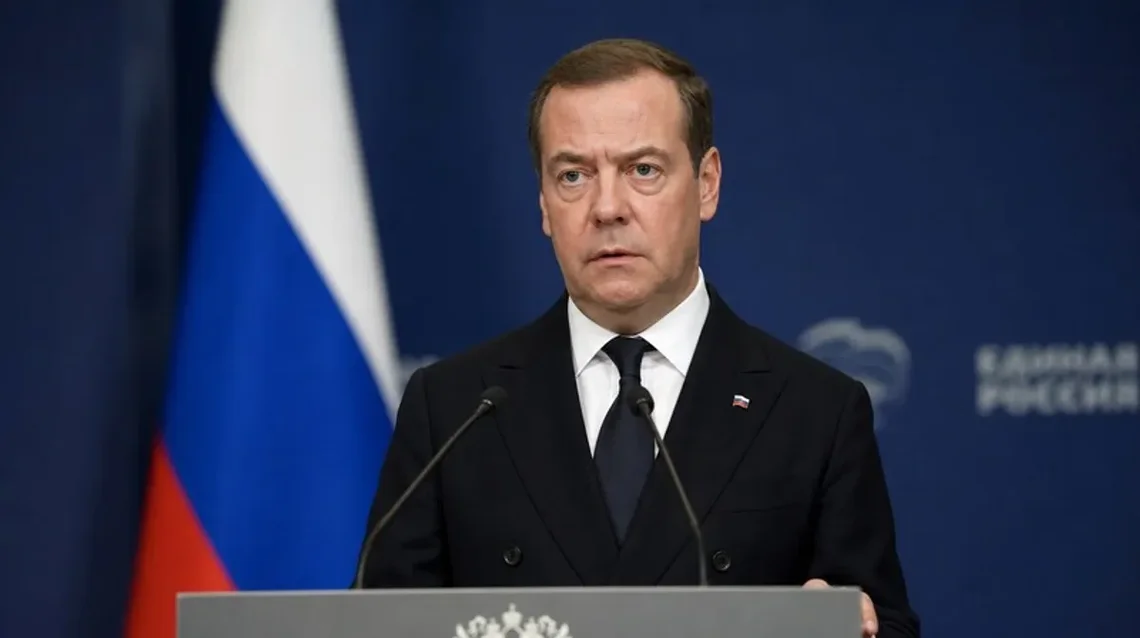
Russia's veto of a United Nations Security Council resolution calling for structured peace negotiations over Ukraine has plunged the body's diplomatic machinery into renewed paralysis, exposing the deepening fractures between Moscow and Western powers at a moment when battlefield conditions continue to exact a devastating toll on civilian populations. The move, which Western ambassadors condemned as a deliberate obstruction of international law and multilateral diplomacy, underscores the fundamental dysfunction now embedded at the heart of the world's most powerful international security institution.
Key Context: Russia holds one of five permanent seats on the UN Security Council, granting it an unconditional veto over any binding resolution. Since the full-scale invasion of Ukraine began, Russia has used or threatened its veto power on multiple occasions to block resolutions addressing accountability, humanitarian access, and ceasefire frameworks. The United States, United Kingdom, France, and China also hold permanent seats with equivalent veto authority. Ukraine is not a Security Council member and has no direct vote on resolutions concerning its own territorial integrity.
The Veto and Its Immediate Fallout
Russia cast its veto against a draft resolution co-sponsored by the United States, the United Kingdom, and France that would have called on all parties to engage in a formal, UN-mediated peace negotiation framework with internationally monitored conditions. Thirteen of the fifteen Security Council members voted in favour of the measure, with China abstaining, according to UN records. Russia stood alone in opposition — but that was sufficient to kill the resolution entirely.
Western delegates responded with sharp condemnation. British Ambassador Barbara Woodward stated that the veto demonstrated Russia's unwillingness to pursue a just and durable peace, characterising Moscow's action as a repudiation of international norms. The United States representative echoed those remarks, calling the obstruction a disservice to the Ukrainian people and to the institution itself, officials said. (Source: Reuters)
Related Articles
China's Abstention: A Calculated Ambiguity
China's decision to abstain rather than veto or support the resolution is being closely interpreted by diplomatic analysts. Beijing has consistently positioned itself as a neutral actor in the conflict, promoting a twelve-point peace framework that Western governments have largely dismissed as insufficient. The abstention preserves China's image as a mediating party while avoiding direct confrontation with Moscow, a posture consistent with its broader strategic calculation, according to Foreign Policy analysis. The abstention did not alter the outcome but carries significant symbolic weight in terms of where Beijing's diplomatic allegiances ultimately lie.
A Pattern of Deadlock at Turtle Bay
The failed resolution is not an isolated event. The Security Council has been repeatedly rendered ineffective on Ukraine-related matters since the full-scale invasion began, creating a trail of blocked resolutions and procedural standoffs that have fundamentally undermined confidence in the body's ability to manage great-power conflicts. Readers can trace this pattern across a series of related impasses: the earlier UN Security Council deadlocked on Ukraine peace plan illustrated the initial collapse of diplomatic consensus, while subsequent attempts to forge compromise have met with equivalent resistance.
Further efforts to establish operational mechanisms have fared no better. The UN Security Council deadlocked on Ukraine peacekeeping plan revealed the impossibility of deploying international monitors without Russian consent, and the UN Security Council Deadlocked on Ukraine Peace Framework demonstrated the structural limits of multilateral diplomacy when one of the conflict's primary belligerents retains veto authority over every proposed solution.
The Veto Mechanism: Structural Barrier to Resolution
The UN Charter's Article 27 grants each permanent member the power to block any non-procedural resolution with a single negative vote. Established at the conclusion of the Second World War, the veto was designed to prevent the world's most powerful nations from being outvoted into actions they opposed — a provision intended to ensure great-power participation rather than great-power impunity. Critics argue that in the context of a conflict involving a permanent member as an aggressor, the mechanism has become a structural guarantee of accountability evasion. Proposals to reform the veto system, including a French-Mexican initiative that would have permanent members voluntarily abstain in cases of mass atrocity, have gained limited traction. (Source: UN reports)
Humanitarian Dimensions of the Diplomatic Failure
Beyond the procedural drama, the Security Council deadlock carries immediate consequences for millions of people living under active conflict conditions. Humanitarian organisations operating in Ukraine have reported severe constraints on their ability to access conflict-affected areas, and previous attempts to formalise safe passage arrangements have stalled alongside the broader political impasse. The failure to establish agreed corridors is directly connected to the diplomatic gridlock: the UN Security Council deadlocked on Ukraine aid corridor illustrates how even narrowly humanitarian proposals have been caught in the broader geopolitical standoff.
Aid Access and Civilian Casualties
The UN Office for the Coordination of Humanitarian Affairs has documented persistent deterioration in civilian access to essential services across frontline regions, with displacement figures remaining at historically elevated levels. Food insecurity, infrastructure destruction, and the collapse of healthcare systems in conflict zones have been compounded by the inability of international bodies to enforce humanitarian law or guarantee safe passage for aid workers. Without a Security Council mandate, international pressure on parties to the conflict to respect humanitarian corridors remains largely aspirational rather than enforceable. (Source: AP)
Western Diplomatic Strategy: Beyond the Council Chamber
Faced with a structurally blocked Security Council, Western powers have increasingly pursued parallel diplomatic tracks. The Group of Seven, NATO, and the European Union have each mounted independent efforts to sustain political and material support for Ukraine, circumventing the UN framework where it proves inadequate. US Secretary of State officials and European foreign ministers have engaged in shuttle diplomacy across multiple capitals, seeking to build coalitions of support that can exert meaningful pressure without requiring Security Council authorisation.
Sanctions regimes, military assistance programmes, and financial support packages have all been assembled outside the UN framework — a tacit acknowledgment that the Security Council is, for the foreseeable future, unavailable as a vehicle for managing this conflict. The question confronting Western strategists is whether this parallel architecture can sustain sufficient pressure over a prolonged period, or whether conflict fatigue will erode the coalition's cohesion. (Source: Reuters)
The Arms Embargo Dimension
Proposals to establish international controls on weapons flows into the conflict zone have encountered the same structural obstruction as peace frameworks. The UN Security Council deadlocked on Ukraine arms embargo reflected competing interpretations of what arms restrictions would mean in practice — with Western governments arguing that any embargo favouring the status quo would effectively reward Russian territorial advances. The impasse on arms controls reinforces the broader pattern: every mechanism that might constrain Russian freedom of action in Ukraine faces insurmountable opposition from Moscow within the Council chamber.
What This Means for the UK and Europe
For the United Kingdom and its European partners, the Security Council's continued dysfunction carries both strategic and institutional implications that extend well beyond the immediate conflict. Britain, as a permanent member, has expended considerable diplomatic capital in supporting the draft resolution and in building the thirteen-vote majority that ultimately proved insufficient. The episode reinforces the argument made by successive UK foreign secretaries that European security cannot be outsourced to multilateral bodies when a major revisionist power holds veto authority within those very institutions.
The practical implications for Europe are substantial. Continued fighting in Ukraine drives displacement flows that affect European labour markets, welfare systems, and social cohesion. Energy pricing, grain supplies, and regional stability all remain hostage to a conflict that the international community's primary security institution is constitutionally incapable of resolving through collective action. European defence budgets, already under revision across multiple NATO member states, face continued upward pressure as the conflict persists without a foreseeable diplomatic resolution. (Source: Foreign Policy)
For British foreign policy specifically, the Security Council veto has reinvigorated debate about the reform of international institutions. Senior Foreign Office officials have repeatedly argued in recent months that the current architecture requires structural adaptation, though the path to reform — which would itself require approval from the permanent members — remains deeply problematic. The UK's commitment to Ukraine has been consistent and bipartisan in parliamentary terms, but sustaining that commitment over an indefinite horizon requires domestic political management that the government is increasingly aware of.
Prospects for Diplomacy: Narrow but Not Absent
Analysts caution against concluding that diplomacy has been rendered entirely irrelevant by the Security Council's failure. Back-channel communications between Western and Russian officials have continued through intermediaries including Turkey and the Vatican, and there remains a theoretical possibility that shifts in battlefield conditions or domestic political pressures could alter Moscow's calculus over time. The UN Secretary-General's office has indicated its willingness to facilitate direct negotiations should conditions permit, though the current posture of all parties makes near-term breakthroughs appear unlikely. (Source: AP)
What the latest veto makes clear, however, is that the UN Security Council — as currently constituted — cannot serve as the primary vehicle for ending this conflict. The gap between the institution's mandate and its operational capacity has rarely been more starkly exposed. Whether that recognition accelerates reform efforts or simply drives more diplomacy outside formal multilateral channels will define the international community's response to great-power conflict for a generation to come.
| Resolution Type | Votes In Favour | Against | Abstentions | Outcome |
|---|---|---|---|---|
| Peace Negotiation Framework | 13 | 1 (Russia) | 1 (China) | Vetoed – Failed |
| Humanitarian Aid Corridor | 12 | 1 (Russia) | 2 | Vetoed – Failed |
| Peacekeeping Deployment Plan | 11 | 1 (Russia) | 3 | Vetoed – Failed |
| Arms Embargo Proposal | 9 | 2 (Russia, China) | 4 | Vetoed – Failed |
| Condemnation of Invasion (General Assembly referral) | 11 | 1 (Russia) | 3 | Vetoed – Referred to UNGA |
The Security Council's repeated failure to act on Ukraine reflects a crisis of legitimacy that now shadows every dimension of its work. Until the architecture of international security is reformed to account for conflicts in which permanent members are direct belligerents, the institution will remain a theatre of accountability rather than an instrument of it — and the human cost of that paralysis will continue to be paid by those least able to bear it.