
Bank of England holds rates as inflation fears persist
Central bank signals cautious approach amid wage pressures
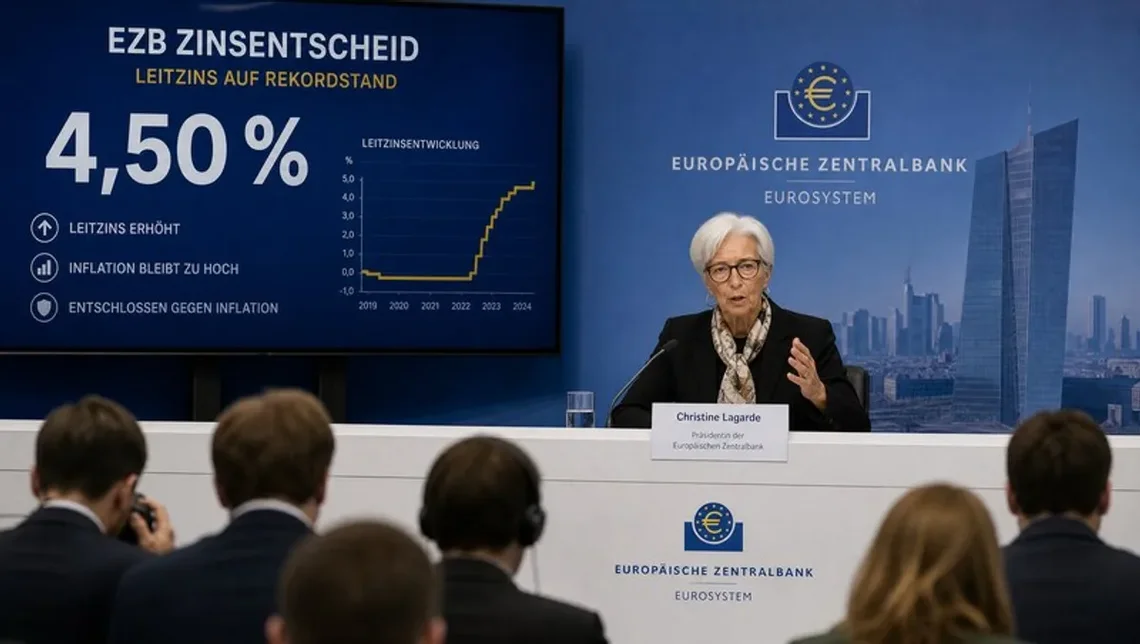
The Bank of England has held its benchmark interest rate steady at 5.25 percent, resisting calls for an early cut as policymakers cited persistent wage growth and stubborn services inflation as key obstacles to monetary easing. The decision, which was widely anticipated by financial markets, underscores the central bank's determination to bring inflation durably back to its two percent target before loosening policy.
Members of the Monetary Policy Committee voted to maintain rates, with the majority favouring a cautious hold while a minority pushed for an immediate reduction. The split vote reflects deepening divisions within the committee over how quickly price pressures are genuinely abating in the British economy, according to officials familiar with the deliberations.
| Indicator | Current Level | Previous Period | Target / Benchmark |
|---|---|---|---|
| Bank Rate | 5.25% | 5.25% | N/A |
| CPI Inflation | 3.2% | 4.0% | 2.0% |
| Services Inflation | 6.0% | 6.5% | 2.0% |
| Wage Growth (ex-bonuses) | 6.0% | 6.2% | ~3.5% (sustainable) |
| UK GDP Growth | 0.1% | -0.3% | Trend ~1.5–2.0% |
| Unemployment Rate | 4.2% | 3.9% | N/A |
Why the Bank Held: The Inflation Arithmetic
Headline consumer price inflation has fallen sharply from its double-digit peak, but the Bank of England remains deeply uncomfortable with the secondary indicators that tend to predict where prices are heading over the medium term. Services inflation — which strips out energy and goods and reflects domestic cost pressures far more directly — remained at six percent, significantly above the level consistent with the two percent overall target, according to data published by the Office for National Statistics (Source: ONS).
Wage Growth: The Central Concern
Private sector wage growth, excluding bonuses, has held above six percent on an annualised basis. Policymakers regard this figure with particular concern because sustained pay increases at that level are incompatible with returning services prices to target without a significant slowdown in economic activity. The Bank has consistently signalled that it needs to see wage growth moderate toward approximately three and a half percent before it can be confident that the inflation target will be met sustainably (Source: Bank of England).
Related Articles
Labour market data from the ONS have shown unemployment edging higher, which some economists argue should begin to ease wage pressures over coming quarters. However, the pace of loosening has so far been slower than the Bank projected in earlier forecasts, complicating the case for cutting rates in the near term (Source: ONS).
Services Inflation and the Domestic Price Puzzle
The persistence of services inflation has become a defining feature of the current monetary policy cycle in the United Kingdom. Unlike goods inflation, which fell rapidly as global supply chains normalised and energy costs retreated, services prices are more directly tied to labour costs, rents, and domestic demand conditions. As reported by the Financial Times, the stickiness of services inflation has prompted several MPC members to revise upward their estimates of how long it will take before a sustained easing cycle can begin (Source: Financial Times).
Economic Indicator: UK services inflation stood at 6.0 percent, more than three times the Bank of England's two percent target. Services account for approximately 80 percent of the UK economy, making this measure a critical barometer of underlying domestic price pressures. The Bank considers services inflation, alongside wage growth, as the primary indicators guiding the timing of any future rate cuts (Source: Bank of England, ONS).
Market Reaction and Forward Guidance
Financial markets had fully priced the hold ahead of the announcement, with overnight index swaps pointing to a first rate cut no earlier than late in the current calendar year. Sterling held broadly steady against the dollar and euro in immediate trading following the decision, reflecting the absence of any major policy surprise. Gilt yields moved marginally lower at the short end of the curve as investors parsed the committee's language for any shift in tone toward a more dovish stance.
What Traders Are Watching
Bloomberg data show that market participants are closely monitoring two forthcoming rounds of labour market and inflation statistics before finalising expectations for the first cut (Source: Bloomberg). A meaningful deceleration in wage growth, combined with services inflation dropping toward five percent, would likely be sufficient to trigger a majority on the MPC to vote for easing, analysts said. The International Monetary Fund has separately urged advanced economy central banks, including the Bank of England, to remain patient and not ease prematurely, warning that second-round inflation effects remain a live risk in labour-intensive service sectors (Source: IMF).
For further context on how the committee has navigated this difficult balance, see our earlier coverage of how the Bank of England Holds Rates Steady Amid Inflation Fears and the background analysis examining the period when the Bank of England holds rates amid persistent inflation.
Winners and Losers: Who Is Affected by the Hold
The decision to maintain rates at a restrictive level distributes economic consequences unevenly across households, businesses, and asset classes. Understanding those distributional effects is essential to assessing the broader economic and political stakes of the Bank's current stance.
Savers and Fixed-Income Investors
Higher-for-longer rates have been broadly beneficial for savers, who have accessed returns on cash deposits and short-term fixed-rate bonds that were unavailable for more than a decade during the post-financial-crisis era of ultra-low rates. Money market funds and short-duration gilt products have attracted substantial inflows as retail and institutional investors seek to lock in yields while they persist. This group represents a clear, if politically underreported, beneficiary of the Bank's restrictive policy stance.
Mortgage Holders and the Housing Market
For the approximately 1.6 million UK households whose fixed-rate mortgage deals expire in the coming twelve months, the prolonged hold represents a source of ongoing financial strain. Those rolling off sub-two-percent deals onto products priced in the five percent range face monthly payment increases that, in many cases, amount to several hundred pounds. The housing market has softened accordingly, with transaction volumes and new mortgage approvals both running below their long-run averages, according to Bank of England data (Source: Bank of England).
Residential property prices have declined in real terms across most of the country, though the falls have been concentrated in higher-value segments that are most sensitive to financing costs. First-time buyers with large deposits have found some relief from lower nominal asking prices, though affordability remains stretched by historical standards when measured against income multiples.
Corporate Sector: Diverging Fortunes
The impact on businesses varies substantially by sector, size, and financing structure. Large, investment-grade companies with access to bond markets have been able to manage refinancing needs by issuing at higher yields, albeit at increased cost. However, smaller businesses that rely on floating-rate bank lending have faced a direct and sustained compression of margins, particularly in sectors such as hospitality, retail, and construction, where labour costs have simultaneously surged.
The commercial real estate sector remains under considerable stress, with office and retail property valuations continuing to adjust to a higher discount rate environment. Several large property funds have restricted redemptions or revised net asset values downward as a consequence, a trend that has drawn scrutiny from financial stability watchdogs.
Financial services firms, particularly banks and building societies, have benefited materially from the higher rate environment through expanded net interest margins, though analysts caution that rising loan impairments as economic conditions weigh on borrowers could partially offset those gains in subsequent reporting periods.
The Global Context: Britain Is Not Alone
The Bank of England's decision sits within a broader pattern of central bank caution among developed economies. The US Federal Reserve has similarly resisted pressure to begin an easing cycle, citing comparable concerns about services inflation and wage dynamics. The European Central Bank has been somewhat more forthcoming about the conditions under which it might cut, but has also stressed that any move will be data-dependent rather than calendar-driven.
The IMF, in its most recent World Economic Outlook assessment, projected that global disinflation would continue but at an uneven pace, warning that premature easing could require painful policy reversals if inflation were to re-accelerate (Source: IMF). The United Kingdom's particular challenge, as outlined in analysis by the Financial Times, is that its labour market remains tighter than many peer economies relative to pre-pandemic norms, amplifying the risk of domestically generated price persistence (Source: Financial Times).
Our detailed coverage of how the Bank of England Holds Rates as Inflation Pressures Persist examines the international dimension of this policy challenge in greater depth.
Outlook: When Will Cuts Begin?
The consensus view among economists surveyed by Bloomberg points to a first quarter-point reduction arriving no sooner than the second half of the current year, with the base case now shifting toward fewer total cuts than were anticipated at the start of the year (Source: Bloomberg). A more optimistic scenario, in which wage data soften faster than expected and services inflation drops decisively, could bring forward the first move. A deterioration in the inflation trajectory — or an exogenous shock such as an energy price spike — could push any easing well into the following year.
The MPC's Stated Conditions
Officials have been explicit about what they need to observe before shifting policy. The Bank's public communications have consistently identified three conditions: services inflation trending clearly toward the target, wage growth moderating to a level consistent with two percent CPI on a sustained basis, and inflation expectations among households and businesses remaining anchored. On none of these three metrics has the committee declared itself fully satisfied, according to minutes of recent deliberations (Source: Bank of England).
The debate within the MPC is not binary. Several members have argued publicly that maintaining rates at the current level for too long risks an unnecessary and avoidable slowdown in economic growth, particularly given that real incomes have only recently turned positive after an extended squeeze. The dissenting votes in favour of a cut reflect a genuine analytical disagreement about whether the Bank is now erring on the side of excessive caution rather than prudent restraint.
For readers tracking this story over time, previous coverage exploring the interplay between growth risks and inflation vigilance is available in our report on how the Bank of England holds rates as inflation concerns persist.
Political and Fiscal Dimensions
The prolonged period of high rates has added a politically charged dimension to monetary policy, with government officials in Westminster acutely aware that elevated borrowing costs affect both public sector debt servicing and the financial wellbeing of millions of mortgage holders. The Treasury has maintained the formal independence of the Bank of England and refrained from public criticism of the MPC's decisions, but pressure on the central bank to begin easing has been evident in parliamentary testimony and ministerial statements.
Public debt servicing costs have risen substantially as a share of government expenditure, constraining fiscal headroom and limiting the government's ability to offer offsetting support to households squeezed by high rates. The Office for Budget Responsibility has incorporated higher-for-longer rate assumptions into its debt sustainability projections, a development that has sharpened the political stakes around the timing of any future monetary easing (Source: ONS).
The Bank of England's hold decision reflects an institution that believes the cost of moving too early substantially outweighs the cost of waiting slightly longer. With inflation still running above target, wage growth elevated, and services prices sticky, the MPC's cautious approach is unlikely to shift decisively until the data make a compelling case that the domestic price cycle has genuinely turned. Until that point, rates will remain where they are — and the economic consequences will continue to be felt unevenly across the British economy.