Bank of England holds rates as inflation remains stubborn
MPC maintains policy amid mixed economic signals
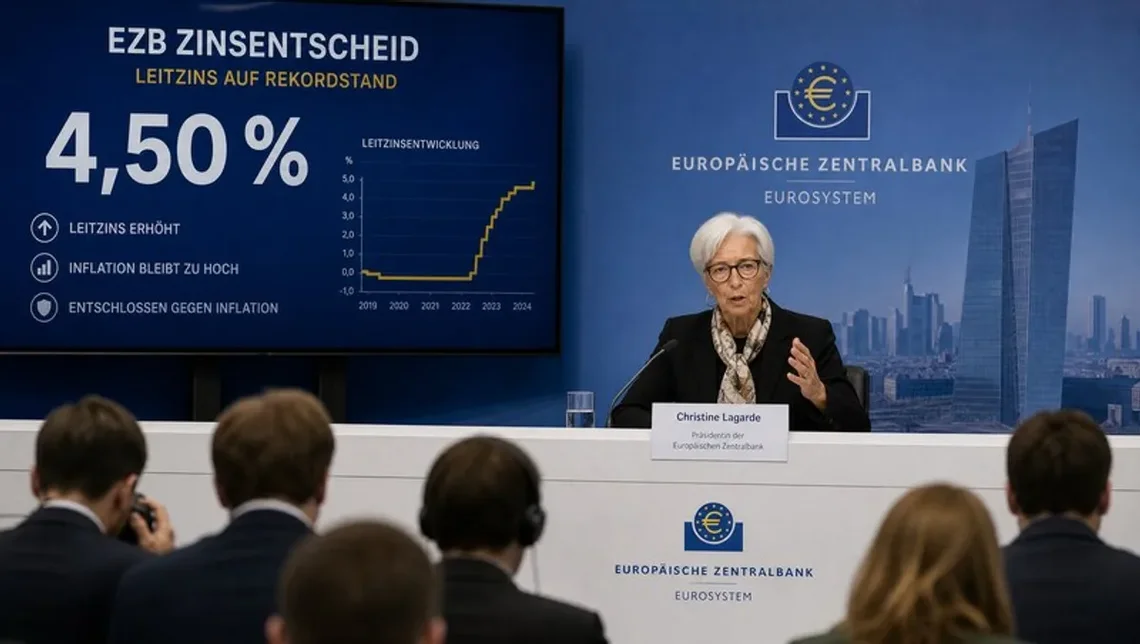
The Bank of England has held its benchmark interest rate at 5.25 percent, as the Monetary Policy Committee voted to maintain its restrictive stance in the face of inflation that continues to run above the central bank's two percent target, complicating the outlook for households, businesses, and financial markets alike. The decision, widely anticipated by analysts and markets, underscores the difficult balancing act facing policymakers as they weigh persistent price pressures against growing signs of economic weakness across the United Kingdom.
The MPC voted by a majority to keep rates on hold, with a minority of members favouring either a cut or a further increase, according to minutes released alongside the decision. The split reflects the genuine uncertainty gripping the committee as it navigates a domestic economy that is sending conflicting signals — slowing growth on one side, stubborn services inflation on the other. (Source: Bank of England)
| Indicator | Current Level | Previous Period | Target / Benchmark |
|---|---|---|---|
| Bank Rate | 5.25% | 5.25% | N/A |
| CPI Inflation | 3.2% | 3.4% | 2.0% |
| Services Inflation | 6.0% | 6.1% | 2.0% |
| GDP Growth (quarterly) | 0.1% | -0.3% | N/A |
| Unemployment Rate | 4.2% | 3.9% | N/A |
| Wage Growth (private sector) | 5.9% | 6.1% | N/A |
The MPC Decision in Detail
The Monetary Policy Committee's decision to hold rates reflects a committee that is not yet confident inflation is on a sufficiently durable downward path to justify easing monetary conditions, officials said. Headline consumer price inflation has fallen considerably from its peak above eleven percent, but it remains well above the two percent mandate, and the committee has repeatedly stressed that the last mile of disinflation is proving to be the most difficult. (Source: Bank of England)
The Vote Split and Its Significance
The internal divisions within the MPC are themselves a market-moving data point. A vote split that shows growing support for rate cuts signals to traders that the committee's next move is likely downward rather than upward, even if the timing remains uncertain. Conversely, any dissent in favour of further hikes suggests that a subset of policymakers remains concerned that the current rate level is insufficient to return inflation to target in a timely manner. Financial markets have recalibrated their expectations for rate cuts several times in recent months, reflecting the fluid nature of the data. (Source: Bloomberg)
Related Articles
As previously reported by ZenNewsUK, the debate around timing has been a consistent theme. Readers following this story may refer to our earlier analysis, Bank of England holds rates amid stubborn inflation, which examines the committee's reasoning in depth.
Inflation: Still Above Target, But the Trend Is Downward
Consumer price inflation stands at 3.2 percent, according to the latest data from the Office for National Statistics, down from a peak above eleven percent but still sixty percent above the Bank's official target. The trajectory is encouraging, but the pace of decline has slowed, and the composition of inflation has shifted in ways that concern policymakers. (Source: ONS)
Services Inflation: The Stubborn Core
Services inflation — which the Bank of England considers a more reliable gauge of domestically generated price pressures — remains elevated at around six percent. This category includes items such as restaurant meals, hotel stays, haircuts, and financial services, and it is significantly influenced by wage growth. With private sector pay still rising at nearly six percent annually, businesses in labour-intensive service industries are passing cost increases on to consumers, keeping services prices sticky even as goods inflation has retreated sharply. (Source: ONS)
The persistence of services inflation is the single most important factor preventing the MPC from beginning its easing cycle, economists have argued. According to analysis published by the Financial Times, the Bank is effectively waiting for the labour market to loosen sufficiently to take wage pressure out of the system before it feels comfortable cutting. (Source: Financial Times)
Economic Indicator: Services inflation in the United Kingdom currently stands at approximately 6.0 percent — three times the Bank of England's two percent target — and represents the primary obstacle to the MPC beginning an interest rate cutting cycle. Private sector wage growth of 5.9 percent is widely cited as the key driver of this persistence, creating a feedback loop between labour costs and consumer prices that policymakers are working to break. (Source: ONS, Bank of England)
Energy and Goods: A Deflationary Tailwind
Not all components of the inflation basket are proving troublesome. Energy prices, which were the primary catalyst for the inflation surge following the disruption to global commodity markets, have fallen significantly and are now exerting a deflationary drag on the headline figure. Goods inflation has similarly retreated as global supply chains normalised and shipping costs fell. These deflationary tailwinds have been instrumental in bringing headline inflation down from double digits, but their contribution is diminishing as base effects fade. (Source: ONS)
Economic Growth and the Risk of Over-Tightening
The United Kingdom's economy returned to marginal growth after two consecutive quarters of contraction technically meeting the definition of a technical recession, but the recovery is fragile and uneven. GDP expanded by just 0.1 percent in the most recent quarter, and forward-looking indicators suggest that the drag from higher interest rates is increasingly being felt by households and businesses. (Source: ONS)
The Mortgage Market Squeeze
The most direct transmission mechanism from Bank Rate to the real economy runs through the mortgage market. Millions of households who took out fixed-rate mortgages at historically low rates are rolling onto new deals at rates that are two, three, or even four times higher, delivering a sharp hit to disposable income. The Resolution Foundation has estimated that the aggregate mortgage payment shock facing UK households represents one of the largest peacetime squeezes on household finances in modern history. Housing market activity has cooled considerably, with transaction volumes well below their recent peaks. (Source: Bank of England)
For further context on how earlier decisions have shaped current conditions, see our report Bank of England holds rates as inflation stays stubborn, which traces the cumulative effect of the Bank's tightening cycle.
Winners, Losers, and Sectors in Focus
Monetary policy decisions of this magnitude do not affect all parts of the economy equally. The decision to hold rates at 5.25 percent produces a clear set of winners and losers across households, industries, and financial markets.
Winners: Savers and the Financial Sector
Those with cash savings have benefited considerably from the current rate environment. Savings accounts, cash ISAs, and money market funds are offering returns not seen in well over a decade, providing a meaningful income boost to asset-rich households, particularly retirees. High street banks and financial institutions with significant deposit franchises have reported strong net interest margins — the difference between what they earn on loans and what they pay on deposits — though regulators and politicians have urged institutions to pass rate increases on to savers more quickly and fully. The insurance sector and pension funds, which hold large quantities of fixed-income assets, have also benefited from higher yields. (Source: Financial Times)
Losers: Mortgage Holders, Small Businesses, and Property
Households with variable-rate or recently refinanced fixed-rate mortgages are bearing the brunt of the tightening cycle. Small and medium-sized enterprises, which typically rely on bank lending rather than capital markets, face elevated borrowing costs that are compressing margins and in some cases deterring investment. The commercial property sector has been particularly hard hit, with valuations under pressure as yields on risk-free government debt rise, reducing the relative attractiveness of property as an asset class. Housebuilders have reported falling order books, and the broader construction sector is contracting. (Source: ONS, Bloomberg)
Sectors Under the Microscope
Retail and consumer discretionary sectors face a twin headwind: squeezed household budgets on the demand side and elevated wage bills on the cost side. The hospitality industry — restaurants, pubs, and hotels — is particularly exposed, given its labour intensity and its sensitivity to discretionary consumer spending. Technology and growth-oriented businesses, which tend to be valued on future cash flows, have seen their equity valuations sensitive to interest rate expectations, with the prospect of prolonged higher rates weighing on sentiment. Exporters have found some relief in a weaker pound, which makes UK goods more price-competitive internationally, though sterling has been volatile. (Source: Bloomberg)
Global Context: The Bank of England in International Perspective
The Bank of England's decision does not occur in a vacuum. Central banks across the advanced economies are grappling with variants of the same challenge: how to complete the disinflationary process without tipping their economies into severe downturns. The United States Federal Reserve has similarly held rates at elevated levels as it awaits greater confidence in the inflation outlook. The European Central Bank has been among the first major central banks to begin trimming rates, responding to weaker growth dynamics on the continent and a faster decline in headline inflation. (Source: IMF)
The International Monetary Fund has warned that central banks risk holding rates too high for too long, potentially causing unnecessary economic damage, but has simultaneously cautioned against premature easing that could allow inflation to become re-entrenched. The IMF's World Economic Outlook noted that the path back to two percent inflation remains "the last and most difficult stretch" for advanced economy central banks. (Source: IMF)
For readers tracking the evolution of Bank of England policy across our coverage, our analysis Bank of England holds rates as inflation remains sticky provides additional detail on the structural factors driving UK price persistence.
What Comes Next: Rate Cut Expectations and Market Pricing
Financial markets have repeatedly revised their expectations for the first Bank of England rate cut over recent months, with optimism giving way to caution as inflation data surprised to the upside. Current market pricing, as implied by overnight index swap contracts, suggests traders are anticipating the first reduction in Bank Rate sometime in the second half of the current calendar year, though economists caution that this timeline remains highly data-dependent. (Source: Bloomberg)
The Bank itself has been deliberate in avoiding forward guidance that would lock the committee into a particular path. Officials have stressed that future decisions will be made meeting by meeting, based on the incoming data, and that the MPC is not on a pre-set course. This approach is consistent with frameworks adopted by peer central banks, but it has occasionally frustrated market participants seeking clarity. (Source: Bank of England)
Some economists have argued that the Bank should be willing to begin cutting rates even with inflation above target, on the grounds that monetary policy operates with a long and variable lag and that waiting for inflation to return fully to target before easing risks an unnecessarily sharp economic slowdown. Others maintain that a credible central bank must see the job through, and that any premature cut would risk reigniting inflationary expectations. This debate is likely to intensify in coming months as the data evolves and the MPC's internal divisions come under greater scrutiny. (Source: Financial Times)
For background on earlier turning points in this cycle, see also Bank of England holds rates as inflation pressures ease, which documents the shift in the committee's risk assessment as price growth began its descent from peak levels.
The coming months will be decisive. Labour market data, services inflation prints, and wage growth figures will each carry significant weight in shaping the MPC's next move. With the economy barely growing, households under financial strain, and the political calendar adding its own pressures to the economic backdrop, the Bank of England finds itself at one of the most consequential junctures in its recent history — a institution that must hold the line on price stability while remaining alert to the very real costs of doing so for too long.