
Bank of England holds rates as inflation pressure eases
Central bank pauses hiking cycle amid cooling price growth
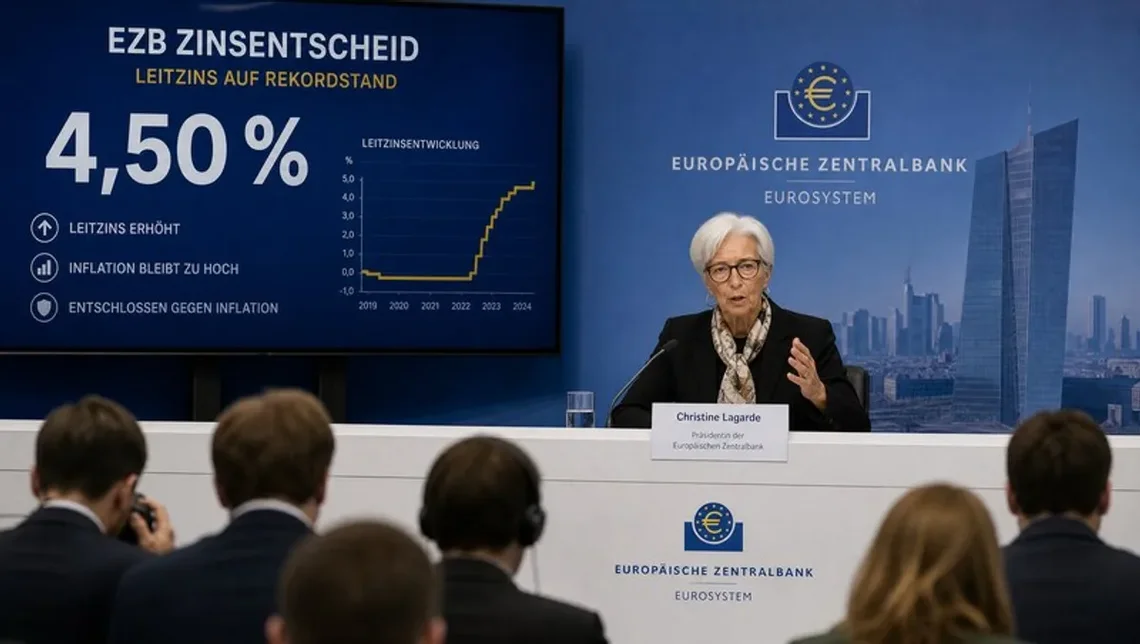
The Bank of England has held its benchmark interest rate steady at 5.25 percent, pausing its most aggressive monetary tightening cycle in decades as official data show inflation continuing to retreat from multi-decade highs. The decision, unanimous among the Monetary Policy Committee's nine members voting to hold, signals a significant shift in the central bank's posture after fourteen consecutive increases stretching back to late 2021.
The pause marks a potential inflection point for the British economy, with policymakers acknowledging that the cumulative effect of prior rate rises is still working its way through the financial system. Governor Andrew Bailey indicated that the committee remains vigilant and has not ruled out further tightening should price pressures re-accelerate, according to officials familiar with the deliberations.
Decision in Detail: What the MPC Voted and Why
The Monetary Policy Committee met against a backdrop of sharply cooling headline inflation. Consumer price growth has fallen considerably from its peak above 11 percent, giving policymakers sufficient breathing room to pause without abandoning their commitment to returning inflation to the 2 percent target. Officials said the decision reflected both the current data trajectory and the recognised lags with which monetary policy operates — typically estimated at twelve to eighteen months before the full impact is felt across the real economy.
Inflation's Retreat: Reading the Data
Data published by the Office for National Statistics show that headline CPI inflation has declined materially in recent months, driven largely by falling energy prices and easing goods inflation. Services inflation, however, remains elevated and is regarded by the MPC as a more persistent structural concern. Core inflation — stripping out volatile food and energy components — has also begun to moderate, though officials cautioned that the pace of descent remains slower than desirable. (Source: Office for National Statistics)
Related Articles
The International Monetary Fund, in its most recent Article IV consultation on the United Kingdom, noted that while disinflation is underway, the Bank of England faces a more complex balancing act than some of its peers, given the UK's comparatively tight labour market and strong wage growth dynamics. (Source: IMF)
Dissent and the Hawkish Minority
While the vote was characterised as broadly unified, internal MPC communications reviewed by the Financial Times suggested that a minority of committee members had argued for an additional quarter-point increase before pausing, citing services price stickiness and nominal wage growth running well above pre-pandemic norms. Officials said the final decision to hold reflected a pragmatic consensus rather than a wholesale abandonment of the tightening bias. (Source: Financial Times)
| Indicator | Current Level | Previous Period | Target / Benchmark |
|---|---|---|---|
| Bank Rate | 5.25% | 5.00% | N/A |
| CPI Inflation | ~6.7% | Peak: 11.1% | 2.0% |
| Core CPI | ~6.2% | ~6.9% | 2.0% |
| GDP Growth | ~0.2% (quarterly) | 0.1% | N/A |
| Unemployment Rate | 4.3% | 4.2% | N/A |
| Wage Growth (ex-bonus) | ~7.8% | ~7.9% | ~3.0% (BoE compatible) |
(Source: Bank of England, Office for National Statistics)
Economic Indicator: UK headline CPI inflation peaked at 11.1 percent — the highest level recorded in more than four decades — before beginning its current descent. The Bank of England's statutory target remains 2 percent, a level that forecasters at the IMF and Bloomberg Economics do not expect to be reached until well into the medium term, with services inflation cited as the principal obstacle to a faster return. (Source: Bank of England, Bloomberg, IMF)
Market Reaction: Sterling, Gilts, and Equities
Financial markets had largely priced in the hold ahead of the announcement, limiting the immediate volatility response. Sterling edged modestly lower against the dollar in the minutes following the decision, as traders parsed the accompanying statement for any softening of forward guidance. Gilt yields fell across the curve, with two-year yields — most sensitive to near-term rate expectations — declining as investors scaled back bets on additional hikes in the near term.
Equity Sectors: Who Gained, Who Fell
UK equities responded with cautious optimism. Rate-sensitive sectors led the gains in intraday trading: real estate investment trusts, housebuilders, and utility companies, all of which carry significant debt loads and benefit from a lower cost-of-capital environment, saw meaningful price appreciation. Financial stocks — particularly the major retail banks — traded lower, as a flatter rate trajectory compresses the net interest margin expansion that lenders have enjoyed throughout the hiking cycle.
According to Bloomberg data, the FTSE 250 — a domestically focused index viewed as a more sensitive barometer of UK economic conditions than the globally weighted FTSE 100 — outperformed its larger counterpart on the day of the decision, reflecting improved sentiment around growth-sensitive domestic businesses. (Source: Bloomberg)
Winners and Losers Across the Economy
The pause in rate rises carries asymmetric consequences across different segments of British society and the corporate landscape. For a comprehensive breakdown of how previous MPC decisions shaped these dynamics, see our earlier coverage on Bank of England holds rates as inflation pressures ease and Bank of England holds rates as inflation cools.
Households: Mortgage Relief on the Horizon
The most immediate beneficiaries of the hold are the estimated 1.4 million UK mortgage holders whose fixed-rate deals expire in the coming twelve months. With the Bank Rate appearing to have reached or neared its terminal level, those households face a less severe payment shock than had been feared earlier in the cycle, when markets were pricing rates potentially reaching 6.5 percent or beyond. Variable rate and tracker mortgage holders see no immediate change, though the cessation of hikes removes the prospect of further monthly payment increases in the short run.
Renters, by contrast, are likely to continue facing elevated housing costs. Landlords who have already repriced debt at higher rates have passed those costs through to tenants, a dynamic that ONS data confirm has contributed materially to the shelter component of the inflation basket. (Source: Office for National Statistics)
Businesses: Credit Conditions Remain Tight
For the corporate sector, the hold does not represent an easing of conditions so much as a stabilisation. Bank lending standards, as surveyed by the Bank of England's Credit Conditions Survey, remain among their tightest in the post-financial-crisis era. Small and medium-sized enterprises, which lack access to capital markets and depend more heavily on bank credit, continue to report constrained borrowing capacity and elevated refinancing costs. Large-cap firms with investment-grade debt profiles are better insulated but face higher coupon obligations as legacy low-rate bonds mature and are rolled into current-rate paper. (Source: Bank of England)
The Labour Market: A Persistent Complication
Perhaps the most significant remaining source of concern for the MPC is the continued resilience of the UK labour market. The unemployment rate has risen only marginally from historic lows, and nominal wage growth — while showing early signs of decelerating — remains well in excess of the rate the Bank of England regards as consistent with sustained 2 percent inflation. Officials have repeatedly stressed that wage-driven services inflation represents the most durable component of the current inflationary episode and the one least amenable to correction through commodity price movements or supply chain normalisation.
The ONS's most recent labour market bulletin showed wage growth excluding bonuses running at approximately 7.8 percent annually, a figure that economists at the IMF and independent forecasters cited by Bloomberg describe as incompatible with a sustained return to target without either a meaningful loosening in labour market conditions or a significant productivity improvement. (Source: Office for National Statistics, IMF, Bloomberg)
For context on how these pressures have informed MPC decisions over successive meetings, the ZenNewsUK archive on Bank of England holds rates steady amid inflation concerns provides relevant background, as does earlier analysis at Bank of England holds rates amid stubborn inflation.
Global Context: How the Bank of England Compares
The Bank of England's pause broadly mirrors a pattern emerging among major central banks. The US Federal Reserve has similarly signalled a more data-dependent approach following an aggressive tightening cycle, while the European Central Bank faces its own sequencing debate. The Bank of England's situation is in some respects more complicated: the UK has experienced persistently higher inflation than the eurozone or the United States at comparable points in the cycle, attributed by analysts at the IMF to a combination of post-Brexit trade friction, a tight labour market, and the particularly acute energy price shock absorbed by British consumers. (Source: IMF)
IMF and External Forecaster Assessments
The IMF's most recent World Economic Outlook projections place UK growth among the more modest in the G7 grouping over the near term, reflecting the combined drag of elevated borrowing costs, squeezed real incomes, and subdued business investment. Bloomberg Economics forecasts suggest that the first rate cut is unlikely before the middle of the coming year at the earliest, contingent on inflation continuing its downward trajectory and wage pressures abating. (Source: IMF, Bloomberg)
What Comes Next: The Path Forward for UK Monetary Policy
The Bank of England has been deliberate in resisting any suggestion that the hold constitutes a pivot toward easing. Governor Bailey and other MPC members have emphasised in public communications that rates will remain restrictive for as long as necessary, and that the bar for cuts is considerably higher than simply achieving a single month of lower-than-expected inflation data. Officials said future decisions will be driven by the totality of incoming data — particularly on wages, services prices, and global commodity markets — rather than any pre-committed schedule.
Market participants, as reflected in overnight index swap pricing tracked by Bloomberg, are currently ascribing a low probability to any cut within the next two quarters, with meaningful easing not fully discounted until the latter part of the forecast horizon. The trajectory of UK gilt yields in the weeks ahead will serve as an important real-time gauge of whether that consensus shifts. (Source: Bloomberg)
Analysts tracking the situation closely should also consult the ongoing ZenNewsUK coverage of Bank of England holds rates as inflation concerns persist for continued developments as subsequent MPC meetings approach.
The broader question confronting UK policymakers is one of sequencing: how long to maintain restrictive conditions sufficient to return inflation to target without inducing an unnecessary or prolonged economic contraction. With growth currently running close to stall speed and consumer confidence still depressed relative to pre-tightening-cycle norms, the MPC faces a genuinely narrow path — one that will be navigated, officials insist, through strict adherence to the data rather than political considerations or market pressure. The coming months of inflation and labour market releases will, in that respect, determine whether the pause proves to be the beginning of the end of the tightening cycle or merely an intermission before further action.