NATO bolsters Eastern European defenses amid Russia concerns
Alliance expands military presence across Poland, Baltic states
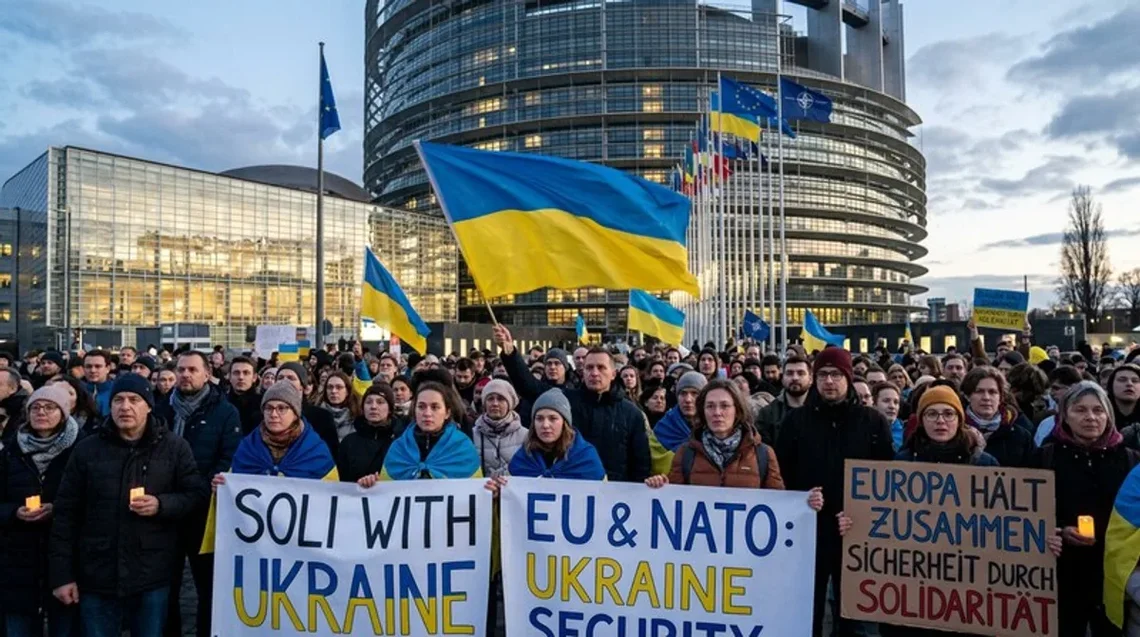
NATO has significantly expanded its military footprint across Poland and the three Baltic states — Estonia, Latvia, and Lithuania — deploying thousands of additional troops, armoured units, and air defence systems in what alliance officials describe as a generational shift in collective defence posture. The move comes as Western governments assess the sustained threat posed by Russian military doctrine along the alliance's eastern perimeter, with senior NATO commanders warning that the risk of miscalculation remains dangerously elevated.
Key Context: NATO's eastern flank stretches approximately 2,000 kilometres from the Arctic Circle to the Black Sea. Following Russia's full-scale invasion of Ukraine, the alliance activated its defence plans for the first time in its history, triggering a cascade of force deployments and infrastructure investment that has fundamentally altered the security architecture of Central and Eastern Europe. Eight multinational battlegroups now operate across the eastern member states, up from four prior to the invasion, according to NATO's official force structure documentation.
The Scale of the Deployment
The reinforcement represents the largest sustained repositioning of alliance forces since the Cold War. NATO's Enhanced Forward Presence now comprises rotating battlegroups in Poland, Estonia, Latvia, Lithuania, Slovakia, Hungary, Romania, and Bulgaria, with the Polish contingent — anchored by a permanent US Army garrison at Camp Kosciuszko in Poznań — serving as the largest single concentration of alliance land power on the eastern flank, officials said.
Ground Forces and Armour
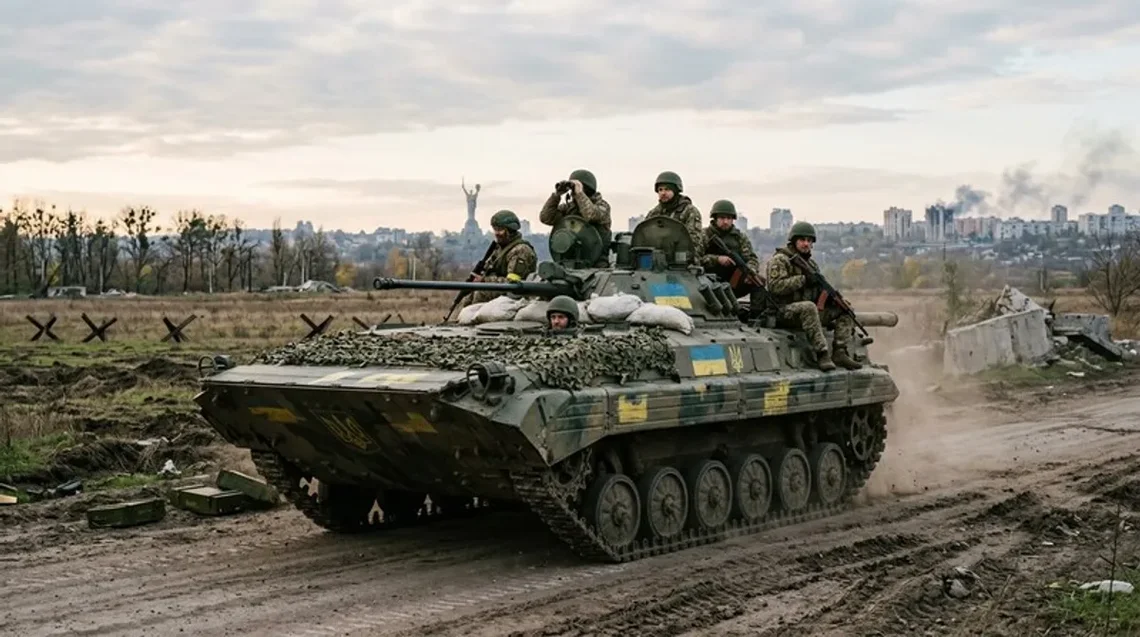
The United States has permanently stationed a full armoured brigade combat team in Poland, a force of roughly 5,000 soldiers equipped with M1A2 Abrams main battle tanks and Bradley infantry fighting vehicles. The United Kingdom contributes a battle group to Estonia under Operation Cabrit, currently deploying Challenger 2 tanks for the first time in that theatre. Germany leads the multinational battlegroup in Lithuania and has committed to basing a full brigade of approximately 4,800 troops there — a decision described by German defence officials as a permanent rather than rotational arrangement, according to Reuters.
Related Articles
Air and Missile Defence
Air defence has emerged as a focal point of the expansion. The United States has deployed Patriot missile batteries to Poland and, on a rotational basis, to the Baltic states. Romania hosts elements of the US Aegis Ashore ballistic missile defence system at Deveselu. Meanwhile, Finland and Sweden — both recently integrated into the alliance — have added Arctic and Baltic Sea dimensions to NATO's air defence architecture that fundamentally change the geometry of any potential conflict scenario in northern Europe, analysts said.
For related background on how the alliance has repositioned its assets over successive planning cycles, see our earlier reporting on NATO bolsters eastern flank amid Russia concerns.
Baltic Vulnerabilities and the Suwałki Corridor
Strategic planners in Washington, London, and Brussels have long identified the Suwałki Corridor — a roughly 100-kilometre land border between Poland and Lithuania, flanked by Russia's Kaliningrad exclave to the west and Belarus to the east — as NATO's most exposed geographical pressure point. A successful Russian interdiction of that corridor would physically sever the Baltic states from the rest of the alliance, defence analysts have consistently warned.
Reinforcing the Corridor
In direct response to that vulnerability, NATO has accelerated infrastructure investment along the corridor, including the construction of pre-positioned equipment storage sites, the upgrading of road and rail connections capable of sustaining heavy military traffic, and the deployment of additional multinational rapid-reaction elements specifically designated to reinforce the area within hours of any triggering event, according to AP. Polish military engineers have also worked with NATO counterparts to harden border crossing points and improve logistics nodes that would be essential in any reinforcement scenario.
The strategic logic underpinning current deployments is explored in depth in our coverage of NATO bolsters eastern defences amid Russia concerns, which traces the doctrinal evolution from tripwire deterrence to a forward defence concept that aims to deny rather than merely complicate any potential aggression.
Russia's Response and Escalation Calculus
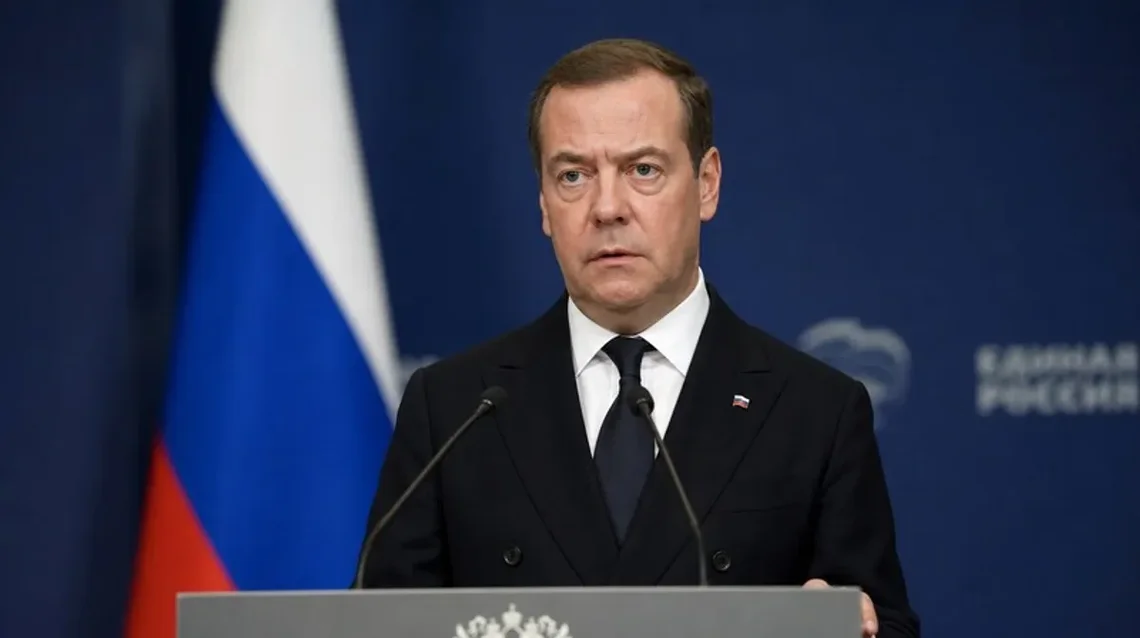
Moscow has consistently characterised NATO's eastern expansion as a provocation and a violation of the spirit, if not the letter, of understandings reached with Western governments following the dissolution of the Soviet Union. Russian officials have announced the creation of a new military district — the Moscow Military District — and the reconstitution of a Leningrad Military District facing Finland and the Baltic, moves that Western defence analysts interpret as institutional acknowledgements of a permanent confrontational footing, according to Foreign Policy.
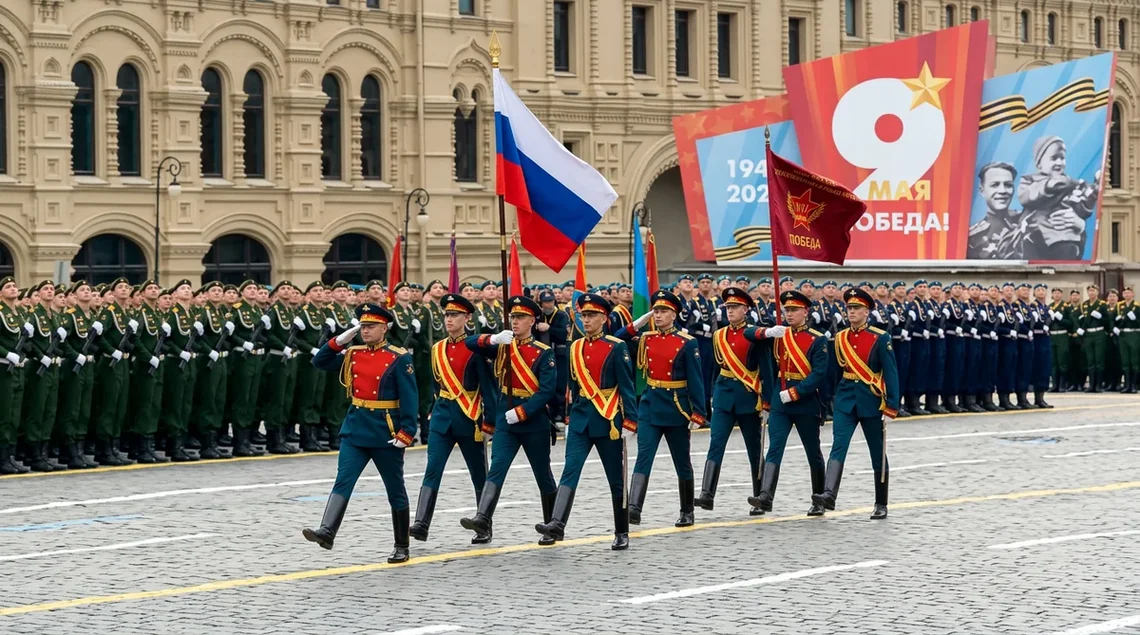
The Russian military has simultaneously accelerated exercises near NATO borders, conducted drone and missile overflights in the vicinity of alliance airspace, and maintained a posture of deliberate ambiguity regarding the operational status of its tactical nuclear arsenal. NATO's Nuclear Planning Group has convened with increased frequency in response, officials said, though no changes to the alliance's own nuclear posture have been publicly announced.
Belarus as a Force Multiplier
The integration of Belarusian territory into Russian military planning has significantly altered the threat calculus for Poland and Lithuania in particular. Russian forces conducted large-scale exercises on Belarusian soil in the period preceding the full-scale Ukraine invasion and have maintained a persistent rotational presence there since. The presence of Russian military assets within striking distance of Warsaw, Vilnius, and Riga has directly informed NATO's decision to upgrade its battlegroups from battalion-level formations to brigade-equivalent forces, according to alliance planning documents cited by Reuters.
NATO's Spending and Capability Gaps
The surge in threat perception has accelerated burden-sharing debates within the alliance. All but a handful of NATO's 32 member states have now either met or publicly committed to meeting the alliance's target of spending two percent of gross domestic product on defence — a threshold that had been met by only a minority of members prior to the invasion of Ukraine, according to NATO's own annual defence expenditure data.
| Country | Defence Spend (% GDP) | NATO Contribution | Key Asset Deployed |
|---|---|---|---|
| United States | ~3.5% | Armoured Brigade Combat Team (Poland) | M1A2 Abrams, Patriot Systems |
| United Kingdom | ~2.3% | Battlegroup Estonia (Op Cabrit) | Challenger 2 Tanks, Light Infantry |
| Germany | ~2.1% | Lead Nation Lithuania | Leopard 2 Tanks, Permanent Brigade Commitment |
| Poland | ~4.0% | Host Nation, Framework Brigade | K2 MBTs, F-35 (on order), HIMARS |
| Estonia | ~3.4% | Host Nation, Territorial Defence | HIMARS, CV90 IFVs |
| Latvia | ~3.1% | Host Nation, National Guard Integration | Anti-armour systems, UAVs |
| Lithuania | ~2.9% | Host Nation, Suwałki Corridor Defence | NASAMS (on order), infantry brigades |
(Source: NATO Defence Expenditure Data; Reuters; AP)
Industrial Capacity and Ammunition Shortfalls
Despite headline spending increases, defence industrial capacity across the alliance remains a serious vulnerability. The Ukraine conflict has exposed the extent to which NATO member states had drawn down their ammunition stockpiles and artillery production lines during the post-Cold War peace dividend era. The UN Secretary-General's office has separately noted, in broader disarmament context reports, the paradox of escalating military expenditure alongside persistent procurement bottlenecks. Several European governments have since signed long-term production contracts with domestic and allied manufacturers, but analysts at Foreign Policy have cautioned that meaningful output increases remain at least several years away.
What This Means for the United Kingdom and Europe
For the United Kingdom, the reinforcement of NATO's eastern flank carries direct strategic, financial, and political implications that extend well beyond the deployment of a single battlegroup in Estonia. The UK's commitment to Operation Cabrit has deepened considerably, with Challenger 2 tanks deployed in an operational deterrence role for the first time since the formation's establishment. British defence officials have framed the Estonia mission as a flagship demonstration of post-Brexit strategic relevance within the Euro-Atlantic security architecture, though critics in Westminster have questioned whether the UK's overall force structure is sufficiently funded to sustain concurrent commitments in Eastern Europe, the Indo-Pacific, and the Middle East.
More broadly, the eastern reinforcement has accelerated a fundamental reorientation of European security thinking. The European Union's own defence initiatives — including the European Defence Fund and the Act in Support of Ammunition Production — have gained political momentum in parallel with NATO's force generation efforts, reflecting a recognition among European governments that strategic autonomy, however defined, requires industrial and military foundations that the continent currently lacks at scale, analysts said.
The humanitarian and displacement consequences of sustained conflict in Ukraine, meanwhile, have placed enormous pressure on European social systems, with the UN High Commissioner for Refugees documenting millions of displaced persons across EU member states. That pressure has domestic political ramifications in Germany, Poland, and several other frontline states that complicate the consensus required to sustain long-term defence investment.
Our ongoing coverage of NATO bolsters eastern defenses amid Russia tensions examines how alliance cohesion has held — and where fault lines persist — as member governments navigate the tension between domestic priorities and collective security obligations.
The Road Ahead: Permanence Versus Rotation
A central unresolved question within NATO concerns the legal and political framework governing force deployments. The NATO-Russia Founding Act of 1997 contains language that some member governments interpret as constraining the permanent basing of substantial allied forces in countries that joined the alliance after that date. Russia has cited those provisions, while many Eastern European governments and a growing number of Western planners argue that Russian actions have rendered the document functionally void.
Germany's commitment to a permanent brigade in Lithuania signals that at least some allies are prepared to move beyond rotational arrangements regardless of the founding act's status. Poland has gone further, explicitly calling for a permanent US divisional headquarters on its territory and committing its own defence budget — currently the highest in the alliance as a share of GDP — to acquiring capabilities that would allow it to function as the eastern flank's primary land power, according to AP.
For a comprehensive timeline of how the alliance's posture has evolved in response to the conflict's shifting dynamics, see our analysis of NATO bolsters eastern defenses amid Ukraine stalemate.
Whether the current surge in NATO presence translates into durable deterrence or becomes a frozen escalation dynamic will depend, analysts broadly agree, on three variables: the trajectory of the conflict in Ukraine, the cohesion of alliance political will over a multi-year timeframe, and the pace at which European defence industries can generate the material reserves that credible deterrence ultimately requires. For now, the soldiers, tanks, and missile batteries positioned from the Baltic coast to the Carpathian foothills represent the most consequential repositioning of Western military power in Europe in a generation — one whose strategic logic, officials insist, is defensive in intent but unmistakable in signal.