Senate Deadlocked on Border Bill as Election Season Looms
Republicans, Democrats clash over immigration funding amid 2026 campaigns
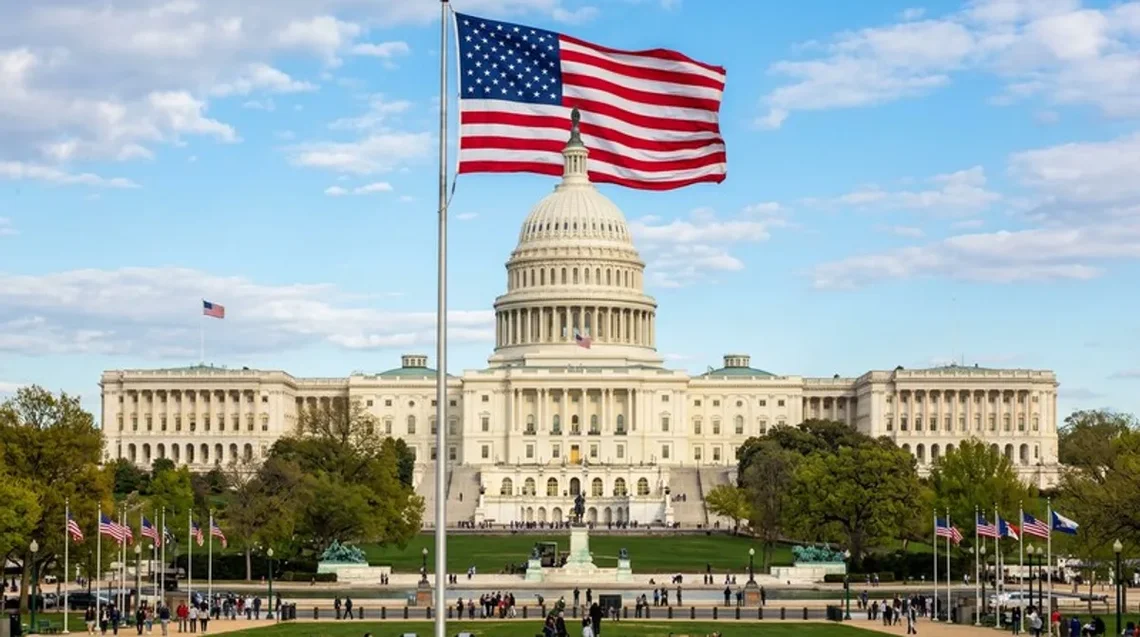
The United States Senate remains locked in a bitter standoff over a sweeping border security and immigration funding package, with both parties hardening their positions as the midterm election cycle gains momentum and lawmakers calculate the political cost of every vote cast. The impasse threatens to leave key enforcement and humanitarian programmes without authorised funding for the foreseeable future, drawing sharp condemnation from advocacy groups and law enforcement officials across the country.
Key Positions: Republicans argue the bill fails to include sufficient enforcement mechanisms, mandatory detention expansions, and asylum restriction measures that they say are essential to deterring illegal crossings; Democrats contend the legislation already incorporates significant border security investment and insist that stripping humanitarian protections would be both unlawful and unconscionable; White House officials have urged Congress to act swiftly, stating that the administration supports a bipartisan compromise but will not accept provisions that it views as targeting legal asylum seekers.
A Legislature Frozen in Place
The Senate's failure to advance the border package follows weeks of closed-door negotiations that multiple senior aides described as increasingly acrimonious, according to congressional officials. The bill, which would allocate approximately $14 billion toward border infrastructure, staffing, and immigration court backlogs, failed to secure the 60 votes necessary to overcome a procedural hurdle, with the final tally falling short by a margin that underscored the depth of partisan division.
For context on how this pattern of gridlock has developed, see earlier reporting on the Senate Deadlocked on Border Bill as Recess Looms, which traced the legislative deterioration through the spring session. The current standoff represents the latest chapter in a prolonged cycle of failed negotiations that has left immigration agencies operating under continued uncertainty.
Related Articles
The Vote Count
| Vote / Metric | Figure | Source |
|---|---|---|
| Cloture vote — Yes | 48 | Senate records |
| Cloture vote — No | 49 | Senate records |
| Threshold required to advance | 60 | Senate rules |
| Americans citing immigration as top concern | 28% | Gallup |
| Americans who favour increased border enforcement | 55% | Pew Research |
| Projected 10-year cost of border package | $14.2 billion | Congressional Budget Office |
| Immigration court backlog (cases pending) | 3.7 million+ | Justice Department data via AP |
Republican Objections: Enforcement First
Senate Republicans have made clear they will not endorse any immigration package that does not fundamentally reshape the legal framework governing asylum claims at the southern border. Senior Republican senators have argued in floor speeches and press briefings that the current bill represents, in their characterisation, little more than a funding vehicle dressed up as border security — one that would, they contend, facilitate rather than reduce irregular migration by processing more arrivals faster without meaningful restrictions on eligibility.
The Conservative Policy Wish List
Among the provisions Republicans are demanding: expanded mandatory detention authorities, a significant reduction in the number of nationalities eligible for humanitarian parole, tighter restrictions on the standard of proof required for initial asylum credible fear screenings, and a formal cap on the number of asylum applications processed daily. Several members of the Republican conference have also pushed for the inclusion of legislation modelled on state-level enforcement statutes, a measure that legal scholars cited by Reuters have described as constitutionally dubious given the federal government's exclusive jurisdiction over immigration law.
The hardline faction within the Republican caucus has further complicated matters by demanding that any final bill be linked to broader spending cuts elsewhere in the federal budget — a condition that Democrats have flatly rejected as a poison pill designed to ensure failure rather than facilitate agreement, officials said.
Democratic Counterarguments: Humanitarian Stakes
Democratic senators have pushed back vigorously, arguing that the Republican position is driven by electoral strategy rather than genuine policy concern. Minority and majority members alike have pointed to independent analyses, including projections from the Congressional Budget Office, showing that properly funded immigration courts and asylum processing infrastructure would actually reduce long-term costs to the federal government by resolving cases more rapidly and reducing the population of individuals in legal limbo.
Progressive Pressure from the Left
Democrats are navigating internal tensions of their own. Progressive members of the caucus have expressed concern that even the current version of the bill concedes too much ground on enforcement, particularly provisions that would expand the use of expedited removal proceedings and restrict certain categories of humanitarian protection. Immigrant rights organisations have publicly urged senators to reject what they describe as enforcement-heavy compromises, according to reporting by AP.
The challenge for Democratic leadership is to maintain a coalition that stretches from centrist members in competitive states to progressives in safe seats — each group with a distinct read on what the politics of immigration demand. That balancing act has contributed to the lack of a unified Democratic counter-proposal, leaving negotiations stalled at both ends of the ideological spectrum.
For a broader look at how this stalemate fits within recent congressional history, the detailed analysis available through the coverage of the Senate Stalls on Immigration Bill as Election Looms provides essential background on earlier rounds of failed compromise.
The Electoral Calculus
Few issues carry more electoral weight heading into the next midterm cycle than immigration, and every senator engaged in these negotiations is acutely aware of the political terrain. Gallup polling consistently places immigration among the top three concerns cited by American voters, and the issue has demonstrated a particular capacity to mobilise turnout among both parties' base constituencies. For Republicans, hardline immigration positions have proven effective in primary contests; for Democrats, the issue presents a more complex challenge, with general election voters showing measurably more moderate views than the activist wing of the party.
Swing-State Senators Under Pressure
Senators from competitive states face the sharpest pressure. Several Democrats representing states that have trended Republican in recent cycles are under significant constituent pressure to demonstrate toughness on border security, while simultaneously resisting what their own base frames as punitive or discriminatory enforcement measures. Republicans in states with large Latino electorates face their own version of this dilemma, though polling by Pew Research suggests that Latino voters hold more varied views on immigration enforcement than is often assumed by political strategists.
Multiple incumbent senators facing competitive re-election contests have reportedly sought assurances that any bill they support will not be weaponised against them in campaign advertising — a concern that has itself become a factor in the negotiating dynamic, making political cover as important as policy substance in the final stages of any potential deal, officials said.
Funding Gaps and Agency Strain
The practical consequences of continued deadlock are significant. Customs and Border Protection, Immigration and Customs Enforcement, and the Executive Office for Immigration Review — the agency that administers the immigration courts — are all operating under resource constraints that agency heads have characterised as unsustainable in testimony before the relevant Senate committees.
The Congressional Budget Office has estimated that the pending package, if enacted, would fund the hiring of more than 1,500 additional immigration judges and support staff, a number that analysts say would be necessary to begin making meaningful progress on a case backlog that has ballooned to more than 3.7 million pending proceedings, according to data reported by AP. Without action, wait times for asylum hearings — already measured in years in many jurisdictions — are projected to worsen further.
Impact on Detention and Processing Infrastructure
Beyond the courts, the bill includes appropriations for physical infrastructure at ports of entry, expanded humanitarian processing facilities, and technology investment intended to accelerate identity verification and background check procedures. Opponents of the bill have argued that some of these infrastructure investments would facilitate rather than reduce the flow of migrants — a characterisation that the bill's sponsors have strongly disputed, citing the operational assessments of career officials rather than political appointees, according to congressional testimony reviewed by Reuters.
The broader question of how to fund border operations without a new legislative vehicle is one that the administration and Congress will need to confront in the coming weeks. Existing authorities and carryover funding provide only limited flexibility, and officials have warned that absent new appropriations, certain programmes will face operational disruptions before the end of the fiscal year.
What Comes Next
Leadership on both sides has indicated that negotiations will continue, though there is little optimism among senior aides that a breakthrough is imminent. Procedural options remain available — including attempts to advance a narrower, more targeted package — but any such effort would require buy-in from members who have already demonstrated a willingness to walk away from broader agreements.
The prospects for action are further complicated by the legislative calendar. As detailed in earlier coverage of the Senate Deadlocked on Border Funding as Summer Recess Looms, the window for floor action is narrowing as senators balance legislative responsibilities with campaign commitments in their home states. Similarly, reporting on the Senate Deadlocked on Spending Bill as Recess Looms illustrates how recurrent recesses have repeatedly compressed the available time for difficult negotiations across multiple spending priorities this session.
Whether the political pain of continued inaction ultimately proves greater than the electoral risk of casting a difficult vote remains the central question hanging over the Senate chamber. Both parties have calculated, at various points, that the politics of failure on immigration serve their interests better than the politics of compromise — a dynamic that has defined congressional immigration debates for the better part of two decades, and one that shows, as yet, no clear sign of breaking. Voters and advocacy groups on all sides have made clear they are watching closely, and the consequences of this deadlock will be measured not only in legislative outcomes but in ballot box results when the next election cycle reaches its conclusion, officials and analysts said. (Sources: Congressional Budget Office, Gallup, Pew Research, AP, Reuters)