UK Accelerates Grid Overhaul to Meet 2030 Clean Energy Target
Major investment in renewables infrastructure announced amid climate pressure

The UK government has committed to a multi-billion-pound overhaul of its national electricity grid, accelerating infrastructure investment to meet an ambitious target of decarbonising the power sector by the end of the decade. The announcement marks one of the most significant structural shifts in British energy policy in a generation, with officials signalling that delays in grid expansion have become the single largest bottleneck to deploying renewable energy at scale.
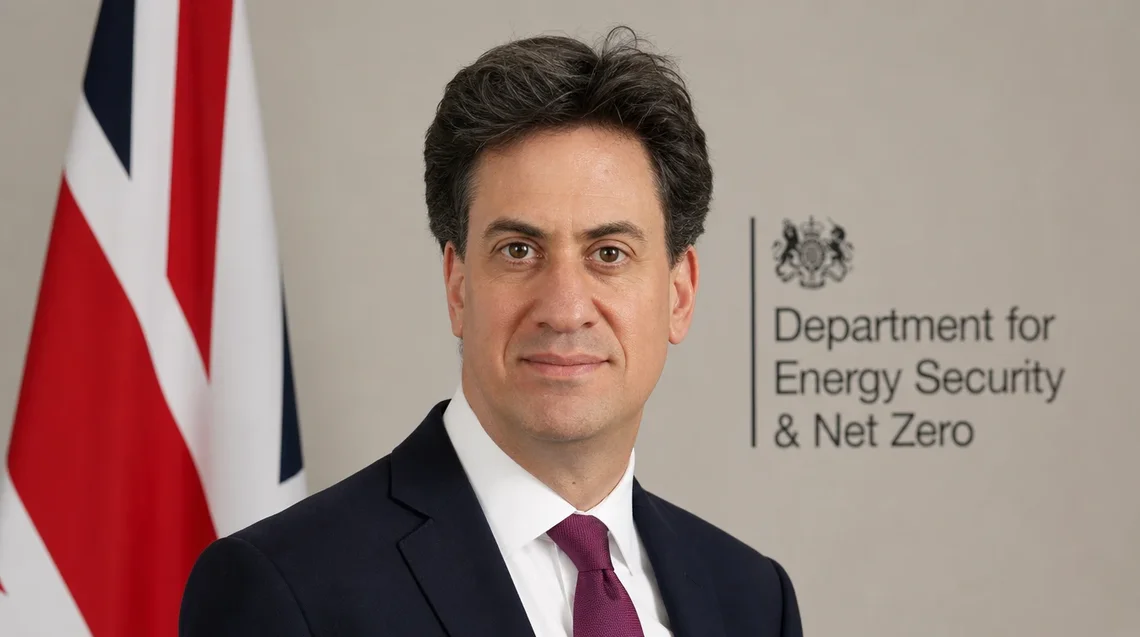
Energy Secretary Ed Miliband confirmed that the government is working alongside the newly established National Energy System Operator (NESO) to fast-track planning approvals, expand offshore and onshore transmission capacity, and reduce the connection queue that currently holds back hundreds of renewable energy projects. The plan draws on recommendations from the independent review led by former Ofgem chief executive Nick Winser, which identified grid infrastructure as the critical constraint on the clean energy transition.
Climate figure: The UK power sector currently accounts for approximately 11% of total national greenhouse gas emissions, down from over 30% a decade ago, according to the Climate Change Committee. Global average surface temperature has risen by approximately 1.2°C above pre-industrial levels, with the IPCC's Sixth Assessment Report warning that limiting warming to 1.5°C requires near-total decarbonisation of electricity systems in developed economies by the early 2030s.
Why Grid Infrastructure Has Become the Central Battleground
For years, the UK's renewable energy sector has operated under a paradox: ambition has outpaced delivery not because of a shortage of wind or solar investment, but because the physical infrastructure to carry that power to homes and businesses has lagged critically behind. Industry analysts and government advisers have repeatedly flagged a connection queue — the waiting list of projects seeking access to the national grid — that stretches to well over 700 gigawatts of proposed capacity, dwarfing current total installed generation.
Related Articles
The Connection Queue Problem
National Grid and NESO data show that many projects approved for renewable generation have been waiting years for a physical connection point on the grid. This bottleneck has inflated costs, delayed commercial operation, and in some cases caused developers to abandon projects entirely. Reforms announced recently aim to restructure the queue system, prioritising projects that are furthest advanced and removing speculative applications that have clogged the system. According to government officials, the reforms could unlock tens of gigawatts of stranded renewable capacity within the current planning cycle.
Planning Reform and Public Opposition
New transmission lines — particularly high-voltage pylons crossing rural England — have historically faced intense local opposition, adding years to delivery timelines. The government has moved to streamline the Nationally Significant Infrastructure Projects regime, reducing the number of legal challenges that can delay consent. Environmental groups broadly support faster grid build-out but have urged ministers to ensure that ecological impact assessments remain rigorous and that communities receive meaningful benefit-sharing arrangements from new infrastructure passing through their land.
Investment Figures and Financing Mechanisms
Officials have indicated that total public and private investment required to meet the clean power target could reach £60 billion or more over the remainder of this decade. The government is expected to use Great British Energy — the newly created publicly owned clean energy company — as a vehicle to co-invest alongside private developers, reducing risk and accelerating financial close on projects that would otherwise stall. The International Energy Agency has consistently argued that public financing instruments of this type are essential to closing the investment gap in grid infrastructure globally (Source: IEA).
The Role of Great British Energy
Great British Energy, capitalised with an initial £8.3 billion public commitment, is designed to take equity stakes in offshore wind, tidal, and other clean generation projects, as well as in transmission and storage assets. Analysts at Carbon Brief have noted that the structure gives government a direct financial interest in project delivery, aligning public and private incentives in a way that previous contract-based mechanisms did not (Source: Carbon Brief). Critics, including some Conservative MPs and business groups, have questioned whether the capitalisation level is sufficient given the scale of investment required.
Offshore Wind: The Cornerstone Technology
Offshore wind remains the centrepiece of the UK's clean power strategy. The government's target of 50 gigawatts of offshore wind capacity by the end of the decade represents a near-tripling of current installed capacity and would make the UK one of the most wind-dense power systems in the world relative to population. Recent auction rounds under the Contracts for Difference scheme have delivered record-low strike prices, demonstrating that the technology has matured to cost-competitive levels without subsidy in most market conditions.
Developments in the North Sea, Celtic Sea, and Scottish waters are all progressing through various stages of planning and consenting, with floating offshore wind — suited to deeper waters — moving from demonstration to early commercial scale. Research published in Nature Energy has highlighted floating wind as potentially transformative for countries with limited shallow-water shelf areas, opening up vast new resource geographies (Source: Nature).
For more on the broader infrastructure context, see our coverage of UK Accelerates Net Zero Grid Overhaul Amid Energy Targets, which examines how electricity network investment fits within the wider net zero legislative framework.
Sector Comparison: How the UK Measures Up Internationally
The UK's clean power ambitions place it among the most aggressive decarbonisers in the G7, though comparisons reveal both strengths and gaps relative to peer nations.
| Country | Clean Power Target | Current Renewables Share (%) | Grid Investment Status |
|---|---|---|---|
| United Kingdom | Clean power by 2030 | ~45% | Accelerated reform underway |
| Germany | 80% renewables by 2030 | ~59% | Grid expansion ongoing; delays reported |
| United States | 100% clean electricity by 2035 | ~23% | IRA-funded; state-level bottlenecks persist |
| France | Nuclear-led low-carbon by 2035 | ~27% (excl. nuclear) | Offshore wind expansion announced |
| Denmark | 100% renewables by 2027 | ~80% | Grid largely adapted; export capacity built |
Data compiled from IEA, national government sources, and Carbon Brief analysis. Renewables share figures reflect most recently reported annual generation data.
The Guardian Environment has reported extensively on how grid connection delays are a Europe-wide phenomenon, with Germany, Spain, and Poland all confronting similar infrastructure constraints despite different energy mixes and regulatory systems (Source: Guardian Environment).
Storage, Interconnectors, and System Flexibility
A grid running predominantly on wind and solar requires a fundamentally different approach to system management than one anchored by baseload fossil fuel or nuclear generation. Intermittency — the fact that wind does not always blow and solar does not always shine — demands large-scale storage and the ability to move power rapidly across borders.
Battery Storage and Long-Duration Solutions
Grid-scale battery storage capacity in the UK has grown substantially in recent years, with hundreds of projects currently in operation or under construction. Lithium-ion technology dominates the current pipeline, providing short-duration balancing services. However, engineers and policymakers are increasingly focused on long-duration storage — systems capable of holding power for days rather than hours — to address seasonal mismatches between renewable generation and consumer demand. Technologies under active development include compressed air energy storage, flow batteries, and green hydrogen, though none has yet achieved the cost profile necessary for widespread deployment without policy support.
Interconnector Expansion
The UK currently operates several high-voltage direct current interconnectors linking the electricity system to France, Belgium, the Netherlands, Norway, and Denmark. Officials have confirmed that additional interconnector capacity is planned, including links to Germany and potentially further into Scandinavia. The ability to import Norwegian hydropower during periods of low wind — and to export surplus UK offshore wind when generation peaks — is seen by system operators as a key tool for maintaining security of supply throughout the transition period.
Further analysis of the policy mechanisms underpinning this transition is available in our related reporting on UK Accelerates Grid Overhaul to Meet Net Zero Target and the longer-term legislative picture covered in UK Accelerates Net Zero Grid Overhaul Amid Climate Targets.
Workforce, Supply Chains, and Industrial Strategy
Ministers have acknowledged that the pace of deployment required over the next five years will place significant strain on the skilled workforce available to deliver it. Electrical engineers, offshore construction specialists, cable-laying vessel operators, and grid technicians are all in short supply across the UK and Europe simultaneously, as multiple countries pursue parallel decarbonisation programmes on compressed timelines.
The government has announced partnerships with further education colleges and existing offshore energy training centres — particularly in Scotland and northeast England — to expand vocational pathways into the clean energy sector. Officials said the industrial strategy dimension of the clean power target is as important as the energy dimension, with ministers explicitly framing the grid overhaul as an opportunity to rebuild manufacturing capacity in steel, cable, and turbine components that had largely left the UK over the previous two decades.
Supply chain resilience has also emerged as a geopolitical concern. The dominance of Chinese manufacturers in solar panels, battery cells, and certain wind turbine components has prompted discussion among UK and EU officials about the degree of dependency that is strategically acceptable, particularly given trade tensions and shifting alliances. The IPCC has noted in its mitigation reports that supply chain diversification is a risk management priority for countries scaling clean energy rapidly (Source: IPCC).
What Success — and Failure — Would Mean
Meeting the clean power target by the end of the decade would make the UK's electricity system one of the first large economies in the world to effectively eliminate fossil fuels from its generation mix at scale. It would deliver significant reductions in both carbon emissions and energy import costs, reduce exposure to volatile international gas markets of the kind that drove the cost-of-living crisis across Europe in recent years, and position British industry to compete in a global economy increasingly structured around low-carbon production.
Failure, by contrast, would not simply mean a missed target. It would leave the UK more exposed to carbon border adjustment mechanisms being introduced by trading partners, undermine the credibility of British climate diplomacy ahead of future international negotiations, and potentially delay the emissions reductions required under the Climate Change Act. The Climate Change Committee has stated clearly that grid infrastructure is currently the area of greatest concern in its assessment of delivery risk against the UK's legally binding carbon budgets.
The scale of the ambition is not in question. What remains to be seen is whether the planning reforms, public investment structures, and workforce development programmes announced in recent months will translate into the physical infrastructure on which the entire clean energy transition depends. As our coverage of UK Accelerates Grid Overhaul to Meet 2030 Clean Energy Goals has documented, the gap between policy announcement and project completion has historically been the defining challenge in British energy infrastructure — and this decade's programme will be the most demanding test of delivery capacity the sector has ever faced.