UK Misses Interim Carbon Target Ahead of 2030 Review
Government faces pressure to strengthen net zero policies

Britain has failed to meet its fourth carbon budget interim milestone, government figures confirm, leaving ministers under mounting pressure to close a widening gap between legislative commitments and actual emissions reductions ahead of the critical 2030 policy review. The shortfall — running to tens of millions of tonnes of CO₂ equivalent — underscores what independent analysts describe as a structural mismatch between the UK's net zero ambitions and the policies currently in place to deliver them.
Climate figure: The UK's fourth carbon budget required average annual emissions of roughly 1,950 MtCO₂e over the budget period. Official data indicate the country is tracking above that ceiling, with the Climate Change Committee estimating a delivery gap of approximately 140 MtCO₂e by the end of the period if current policy trajectories hold. Global mean surface temperature is now running at approximately 1.2°C above pre-industrial levels, according to the IPCC Sixth Assessment Report, reinforcing the urgency of near-term national action.
What the Data Show
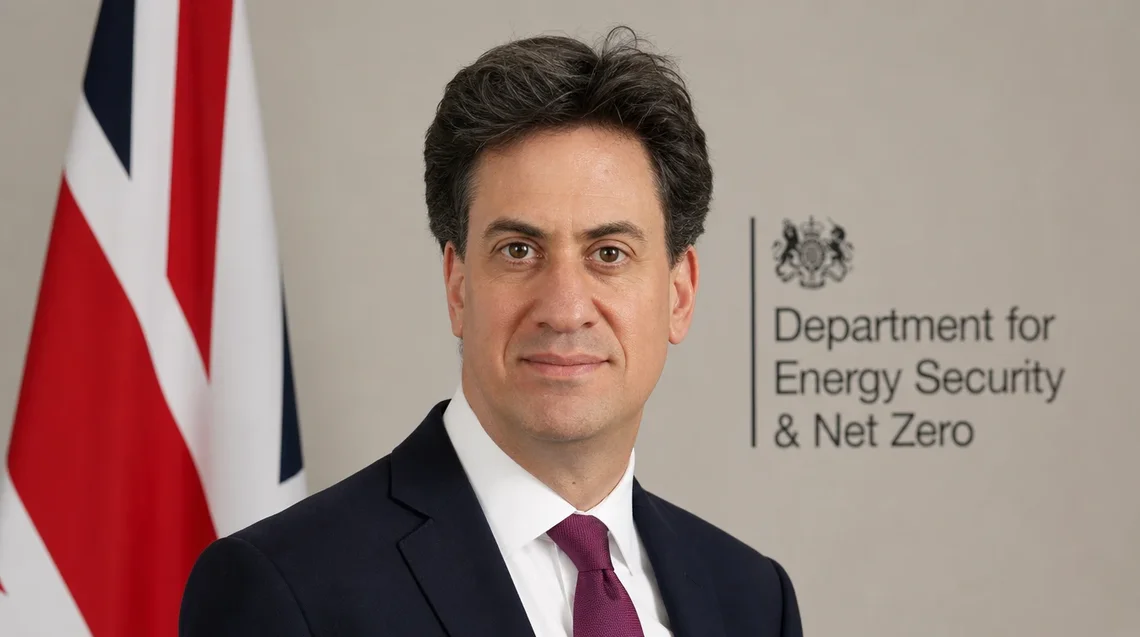
Official statistics released by the Department for Energy Security and Net Zero confirm that total UK greenhouse gas emissions have not fallen at the pace required to stay within the legislated carbon budget pathway. While emissions have declined significantly from their peak — driven primarily by the near-complete decarbonisation of the electricity sector — progress across transport, heating, industry and agriculture has stalled or reversed in recent years.
The Carbon Budget Framework Explained
The UK operates under a system of five-year carbon budgets enshrined in the Climate Change Act. Each budget sets a legally binding ceiling on cumulative net greenhouse gas emissions. The fourth carbon budget, covering the current medium-term period, was set in law and advised by the independent Climate Change Committee (CCC). Missing it does not carry an automatic financial penalty, but it triggers a legal obligation on the government to explain its response and revise its policies accordingly. Analysts at Carbon Brief have noted that successive governments have relied on aspirational policy announcements rather than firm regulatory mechanisms to close delivery gaps — a pattern critics argue is repeating itself.
Related Articles
Sectors Driving the Shortfall
Transport remains the UK's single largest source of greenhouse gas emissions, accounting for roughly a quarter of the national total, according to government figures. The rollout of electric vehicles has accelerated, but the fleet turnover rate is insufficient to drive the rapid emissions cuts the budget requires. Meanwhile, buildings — the second most significant sector — continue to depend overwhelmingly on natural gas for heating. The government's flagship boiler upgrade scheme has fallen significantly short of its installation targets, officials acknowledged in parliamentary evidence sessions. Agriculture and land use, historically difficult to abate, have also shown minimal progress against sectoral benchmarks.
Government Response and Political Context
Ministers have defended the overall direction of travel, pointing to continued growth in offshore wind capacity, the phased-out sale of new petrol and diesel vehicles, and investment through the Contracts for Difference scheme as evidence that the structural foundations for decarbonisation remain intact. However, the government has faced repeated criticism for delaying or diluting key policies, including pushing back the ban on new fossil fuel boilers and softening zero-emission vehicle mandates in response to industry lobbying.
The Role of the Climate Change Committee
The CCC, the statutory advisory body chaired by Lord Deben until recently, has issued increasingly stark assessments of the credibility gap between government targets and delivery mechanisms. Its most recent progress report to Parliament described the current policy framework as "insufficient" to meet legislated carbon budgets, calling for urgent measures across heat pump deployment, active travel infrastructure, grid expansion and industrial decarbonisation. The committee's analysis, widely cited in academic literature and by bodies including the IEA, forms the primary evidence base against which the government must formally respond. For further background on the legal and regulatory dimensions of this issue, see UK Misses Interim Carbon Emissions Target.
International Comparison
The UK's difficulties in translating high-level ambition into measurable near-term emissions reductions are not unique among major economies, but they are particularly visible given Britain's self-styled leadership role in international climate diplomacy, including its presidency of COP26 in Glasgow.
| Country / Bloc | 2030 Emissions Target | Current Policy Gap (estimated) | Key Lagging Sector |
|---|---|---|---|
| United Kingdom | 68% reduction vs 1990 | ~140 MtCO₂e (CCC estimate) | Buildings / Transport |
| European Union | 55% reduction vs 1990 | Moderate — ETS reforms ongoing | Transport / Agriculture |
| United States | 50–52% reduction vs 2005 | Significant — IRA implementation variable | Industry / Buildings |
| Germany | 65% reduction vs 1990 | Moderate — coal exit ahead of schedule | Transport / Heating |
| Japan | 46% reduction vs 2013 | Substantial | Industry / Energy mix |
(Source: IEA World Energy Outlook; Climate Action Tracker; Carbon Brief analysis)
The IEA's most recent Net Zero Roadmap report warns that no major economy is currently on track to meet 1.5°C-aligned pathways without significantly accelerating policy implementation across all sectors simultaneously. Research published in Nature Climate Change has further demonstrated that stated national policies, as opposed to announced targets, put the world on track for warming in excess of 2.5°C by the end of this century — a finding that lends urgency to accountability mechanisms like the UK carbon budget system.
The 2030 Review: What Is at Stake
The forthcoming comprehensive review of the UK's climate policy framework, due to culminate around the 2030 milestone, is shaping up as the most consequential domestic climate policy moment of the decade. The review will assess whether existing legislation, regulations and spending commitments are sufficient to meet the fifth carbon budget and the legally binding 2035 target of a 78% reduction in emissions against 1990 levels — a target that the CCC describes as a prerequisite for reaching net zero by mid-century.
Risks to the 2035 Target
Analysts and officials are increasingly candid about the compounding risk: every year of underperformance against near-term carbon budgets narrows the feasible pathway to 2035 and forces greater reliance on costly or unproven abatement options in the later years of the trajectory. Carbon capture and storage, green hydrogen, and demand-side behavioural change — all flagged in government strategy documents as significant contributors — remain in early deployment phases with substantial cost and engineering uncertainties. For detailed reporting on how this near-term underperformance may complicate the mid-decade outlook, see UK Misses Interim Net Zero Target, Raises 2035 Questions and UK Misses Net Zero Interim Target by Wide Margin.
Civil Society, Industry and Legal Pressure
Beyond parliamentary scrutiny, the government faces pressure from multiple directions. Environmental law organisations have repeatedly used judicial review proceedings to challenge the adequacy of the Net Zero Strategy, with courts ruling on more than one occasion that the government's published plans did not demonstrate with sufficient specificity how statutory targets would be met. Industry groups, meanwhile, present a more divided picture: renewable energy developers and heat pump manufacturers argue that regulatory certainty would unlock significant private investment, while some trade bodies in carbon-intensive sectors continue to lobby for slower transition timelines and greater use of carbon offsets.
The Role of Carbon Markets and Offsets
The use of domestic and international carbon credits to bridge any residual gap between actual emissions and budget ceilings remains a contested area of policy. The CCC has consistently advised that the UK should not rely on international credits to meet its domestic carbon budgets, arguing that genuine territorial emissions reductions must form the backbone of any credible pathway. However, pressure to allow greater flexibility — particularly from aviation and heavy industry — has intensified as the political cost of accelerating physical decarbonisation becomes clearer. The Guardian Environment desk and Carbon Brief have both reported extensively on the integrity concerns surrounding voluntary carbon markets and their applicability to national accounting frameworks.
What Comes Next
With the government required by law to respond formally to the CCC's latest progress report, attention is now focused on whether the autumn fiscal and legislative cycle will include substantive new policy measures or a further round of review and consultation. The energy security agenda — accelerated by gas price volatility in recent years — has at points aligned with the net zero agenda through investment in domestic renewables, but critics argue it has also provided political cover for licensing new North Sea oil and gas fields that are difficult to reconcile with the UK's own emissions trajectories, as Carbon Brief analysis has made clear.
For a broader assessment of the systemic governance failures that have contributed to repeated target misses, see UK Misses Interim Net Zero Targets, Report Warns and the detailed data breakdown at UK Misses Interim Net Zero Emissions Target.
The fundamental tension — between the legal architecture of UK climate commitments and the political economy of rapid decarbonisation — shows no sign of resolving ahead of the 2030 review. Whether that review produces a serious tightening of policy or a managed retreat from ambition will be one of the defining domestic policy questions of the coming years, with implications extending well beyond the UK's own carbon accounts and into its credibility as an advocate for stronger global climate action.