Ukraine seeks fresh NATO backing amid renewed Russian offensive
Kyiv presses allies for advanced weapons as fighting intensifies
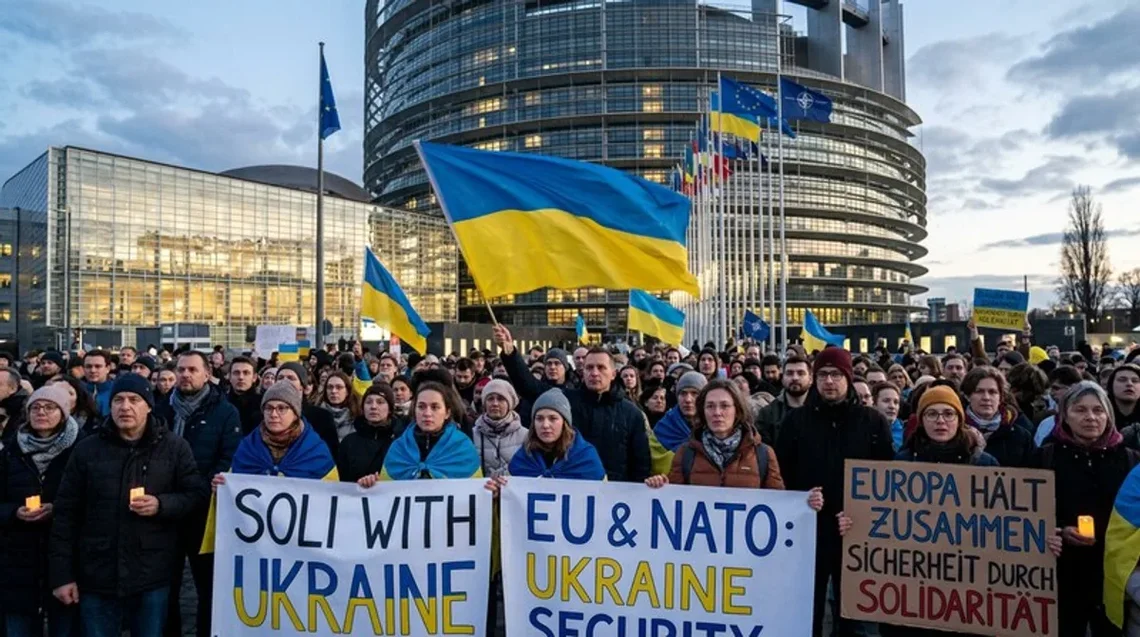
Ukraine has intensified diplomatic pressure on NATO allies to accelerate deliveries of advanced weaponry as Russian forces press forward with a renewed offensive across multiple eastern and southern fronts, officials said. President Volodymyr Zelensky warned this week that without sustained Western military support, Ukrainian defensive lines face mounting strain at a critical juncture in the conflict.
Key Context: Russia's full-scale invasion of Ukraine, now in its third year, has claimed hundreds of thousands of casualties on both sides, according to UN estimates. NATO members have collectively committed tens of billions of dollars in military aid to Kyiv, but Ukrainian officials argue that the pace and quality of deliveries continue to lag behind battlefield needs. The alliance's next ministerial meeting is expected to address long-range strike capabilities, air defence systems, and ammunition shortfalls as frontline conditions deteriorate in the Donetsk and Zaporizhzhia regions.
Diplomatic Push Intensifies at NATO Level
Ukrainian Foreign Minister Dmytro Kuleba has conducted a series of emergency consultations with senior NATO officials in Brussels, urging the alliance to fast-track commitments on long-range artillery, F-16 munitions packages, and additional Patriot air defence batteries, officials said. According to Reuters, Kyiv is specifically requesting an accelerated timeline for the transfer of ATACMS ground-launched missiles and expanded air defence coverage ahead of what Ukrainian commanders describe as a high-risk operational period.
Zelensky's Diplomatic Strategy
Zelensky has framed the current moment as decisive, arguing that delays in weapons transfers directly translate into territorial losses. In a video address broadcast to allied capitals, he called for the removal of remaining restrictions on Ukrainian strikes against Russian territory using Western-supplied weapons — a demand that has divided alliance members, particularly Germany and the United States, according to Foreign Policy. The Ukrainian president has also sought bilateral meetings with leaders of the United Kingdom, France, and Poland, all of whom have signalled varying degrees of willingness to expand their support packages.
Related Articles
For deeper background on how the alliance has responded to previous escalation cycles, see our coverage of Ukraine seeks fresh NATO pledge as Russia tightens grip, which charts the evolution of Western commitments since the early stages of the full-scale invasion.
Alliance Divisions and Internal Debates
Behind closed doors, NATO members remain divided on the scope and speed of support, diplomats said. While Poland, the Baltic states, and the United Kingdom advocate for maximum military assistance with minimal restrictions, Germany and Hungary have urged caution, citing escalation risks. According to AP, alliance consensus is being tested by domestic political pressures in several member states, including a shifting policy environment in Washington where congressional approval of new aid packages has faced procedural delays.
Battlefield Conditions: Eastern and Southern Fronts
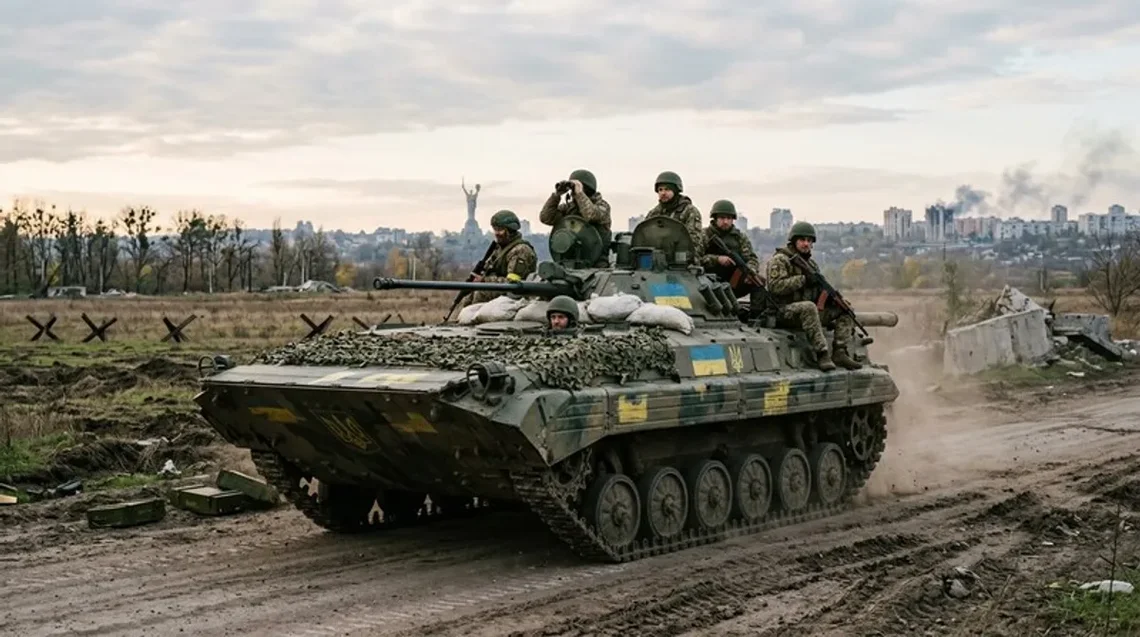
Russian forces have registered incremental but significant advances across the Donetsk region, with fighting reported near the strategic logistics hubs of Pokrovsk and Kurakhove, Ukrainian military officials said. The General Staff of the Armed Forces of Ukraine confirmed dozens of combat engagements per day along a front line stretching more than one thousand kilometres, describing Russian tactics as relying on massed infantry assaults supported by aerial glide bombs — a combination that has proven difficult to counter without adequate air defence.
The Glide Bomb Threat
Russian KAB-series glide bombs have emerged as one of the most destructive weapons in Moscow's current arsenal, capable of being released from aircraft operating well behind the front line and outside the range of many existing Ukrainian air defence systems, analysts said. According to the Royal United Services Institute, Russia has dramatically scaled up production of these munitions, enabling daily strikes against Ukrainian cities, infrastructure, and forward positions that Ukrainian forces struggle to intercept with current capabilities. Ukrainian officials have specifically requested additional radar systems and interceptor missiles to address this gap, and the request has taken on renewed urgency as civilian casualties from aerial bombardment rise.
Our report on Ukraine seeks new NATO air defense as Russia intensifies strikes provides detailed analysis of the technical and political dimensions of the air defence shortfall.
What NATO Has Committed — and What Remains Outstanding
| Country | Key Commitments | Notable Restrictions | Status |
|---|---|---|---|
| United States | ATACMS, Abrams tanks, Patriot batteries, ammunition | Limits on strikes inside Russian territory | Ongoing, subject to congressional funding |
| United Kingdom | Storm Shadow missiles, Challenger 2 tanks, training | Guidance restrictions partially eased | Active deliveries continuing |
| Germany | IRIS-T air defence, Leopard 1 tanks, artillery | No Taurus cruise missiles approved | Under domestic political review |
| France | SCALP missiles, Caesar howitzers, armoured vehicles | Restrictions partially lifted | Expanding support package |
| Poland | MiG-29 aircraft, ammunition, logistics support | Minimal restrictions | Most proactive among eastern members |
| Netherlands | F-16 fighter jets, air defence components | Delivery timeline subject to training completion | First aircraft transferred |
According to the Kiel Institute for the World Economy, total bilateral aid committed to Ukraine by Western governments currently exceeds two hundred billion euros in military, financial, and humanitarian support, though the distribution of that figure varies significantly across categories and timeframes. Military hardware continues to represent the most contested and politically sensitive component of overall assistance packages. (Source: Kiel Institute for the World Economy)
Russia's Strategic Calculus and Moscow's Position
Moscow has characterised NATO's continued weapons supplies as direct participation in the conflict and has repeatedly warned of unspecified consequences if alliance members escalate their involvement, Russian state media reported. The Kremlin has signalled confidence that Russian industrial capacity — bolstered by arms transfers from North Korea and Iran, according to US intelligence assessments — can sustain the current rate of offensive operations for an extended period.
North Korean and Iranian Involvement
US and South Korean intelligence officials have confirmed the transfer of ballistic missiles and artillery shells from Pyongyang to Russian forces, a development that NATO Secretary-General Jens Stoltenberg described as deeply destabilising. According to UN reports, the arrangement represents a significant expansion of material support for Russia's war effort and has prompted calls from several alliance members for tighter international sanctions on both supplier nations. Iran's provision of Shahed-series drones has similarly been documented in multiple UN monitoring reports, with Ukrainian air defence units reporting interceptions of hundreds of such munitions in recent months. (Source: United Nations Monitoring Group reports)
Analysis of the broader pattern of Russian offensive operations can be found in our reporting on Ukraine reports Russian advances in eastern offensive, which tracks territorial changes and operational trends along the contact line.
Implications for the United Kingdom and Europe
For Britain and its European partners, the stakes extend well beyond Ukraine's borders. Senior British defence officials have stated explicitly that a Russian victory or a frozen conflict on Moscow's terms would embolden further aggression and fundamentally alter the European security architecture that has underpinned stability since the Cold War. The UK government has positioned itself as among the most hawkish of NATO's European members, having taken early decisions to supply Storm Shadow cruise missiles and to ease restrictions on their operational use — a posture that has drawn both praise from Kyiv and sharp rhetoric from Moscow.
British defence spending has come under renewed scrutiny in this context, with Prime Minister Rishi Sunak pledging to increase the defence budget toward three percent of GDP over the coming years, though critics argue the timeline is insufficiently urgent given the pace of Russian rearmament. European NATO members collectively face what analysts at the International Institute for Strategic Studies describe as a "readiness gap" — a shortfall in stockpiles, trained personnel, and industrial capacity that would take years to fully address even under accelerated programmes. (Source: International Institute for Strategic Studies)
Beyond the immediate military dimension, European governments are grappling with the economic consequences of prolonged conflict — elevated energy prices, refugee integration costs, and the political pressures generated by war fatigue in electorates across the continent. According to Foreign Policy, the durability of Western support will increasingly depend on political leadership sustaining public will in the face of these cumulative pressures.
For a comprehensive overview of the alliance's evolving response strategy, our analysis of NATO allies boost Ukraine aid amid renewed Russian offensive and the related assessment in NATO allies bolster Ukraine aid amid Russian offensive provide important context on how member states have calibrated their commitments over successive phases of the conflict.
Outlook: What Comes Next
The coming weeks are widely expected to be operationally significant, with Ukrainian commanders indicating that Russian forces are likely to attempt further advances before the ground conditions of autumn complicate large-scale manoeuvre. Kyiv's diplomatic strategy — pressing simultaneously for faster weapons deliveries, expanded strike permissions, and a credible path toward NATO membership — reflects a calculated effort to shape the military and political environment before any potential negotiating dynamics emerge.
Alliance officials have acknowledged privately that sustaining the current level of support through a prolonged conflict presents genuine political challenges, particularly as electoral cycles in the United States and several European states introduce new variables into defence decision-making. What is clear, analysts said, is that the decisions taken by NATO members in the coming months will have consequences that extend far beyond Ukraine — shaping the credibility of Western deterrence, the cohesion of the transatlantic alliance, and the broader international rules-based order for years to come. (Source: Reuters, AP, United Nations)