Bank of England Holds Rate as Inflation Cools
Central bank pauses amid mixed economic signals
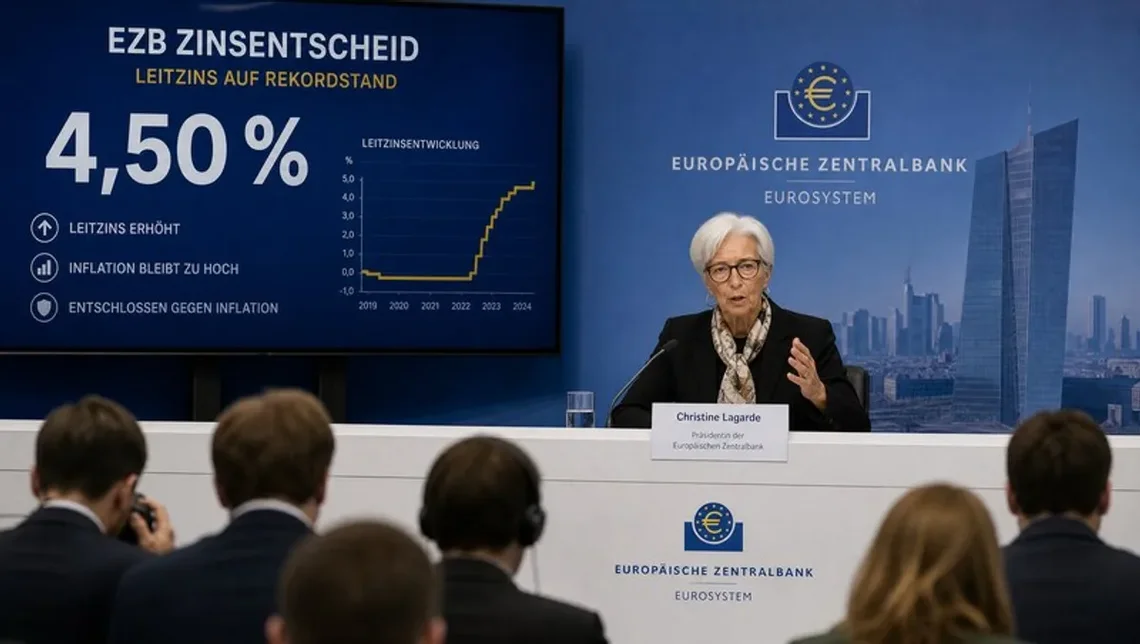
The Bank of England has held its benchmark interest rate steady at 4.25%, pausing its easing cycle as policymakers weigh cooling headline inflation against persistent pressure in services prices and an uncertain global growth outlook. The decision, which was widely anticipated by markets, signals that the Monetary Policy Committee remains cautious about declaring victory over inflation too early, even as the cost-of-living squeeze that has dominated the British economy for the past two years begins to visibly loosen its grip.
The nine-member Monetary Policy Committee voted to maintain the base rate, with a majority favouring the hold while a minority pushed for a further quarter-point cut, according to officials. The split underscores the genuinely difficult balancing act facing Governor Andrew Bailey and his colleagues, who must navigate slowing consumer price growth on one hand and stubborn domestic wage and services inflation on the other.
The Rate Decision: What the MPC Said
The Bank of England confirmed the hold following its scheduled policy meeting, citing a need for "more evidence that inflationary persistence is fading" before committing to further cuts, officials said. The committee acknowledged that headline Consumer Price Index inflation had fallen closer to its 2% target but stressed that the trajectory of services inflation — which currently sits well above that benchmark — warranted ongoing vigilance.
Services Inflation: The Stubborn Core
Services inflation, which the Bank regards as a key measure of domestically generated price pressure, remained elevated, according to data published by the Office for National Statistics. This component of the inflation basket tracks prices in sectors such as hospitality, transport, and professional services — areas that are less sensitive to global commodity swings and more reflective of domestic wage dynamics. With wage growth still running at a pace the Bank considers inconsistent with its 2% inflation target over the medium term, policymakers indicated they are not yet confident enough in the disinflation trend to accelerate the pace of rate reductions. (Source: Office for National Statistics)
Related Articles
Dissenting Voices on the MPC
The internal split within the MPC was notable. Those favouring a cut argued that the economic outlook had deteriorated sufficiently to justify pre-emptive easing, pointing to weakening consumer confidence and subdued business investment data. Those in the majority countered that premature easing risked re-igniting inflation expectations — a scenario the committee is acutely sensitive to given the inflationary episode of recent years. The debate reflects a broader global conversation among central banks about when to pivot decisively. (Source: Bank of England)
Inflation Trends and the Macro Backdrop
Headline CPI inflation has fallen significantly from its peak, offering tangible relief to households who faced double-digit price growth not long ago. The ONS reported that the decline has been driven primarily by lower energy costs, easing food price pressures, and base effects that make year-on-year comparisons more favourable. However, analysts caution that much of this disinflation has been imported — driven by falling global commodity prices — rather than reflecting a fundamental cooling of domestic price-setting behaviour. (Source: Office for National Statistics)
Global Factors at Play
The IMF has noted in recent assessments that the disinflation process across advanced economies is proceeding but unevenly, with services sectors in particular proving resistant to the easing cycle. For the United Kingdom, this global dynamic is compounded by specific domestic factors including a tight labour market, continued robust public sector pay settlements, and a housing market that, while under pressure, has not collapsed in the way some forecasters anticipated. (Source: IMF)
Economic Indicator: The Bank of England's base rate currently stands at 4.25%, down from its cycle peak but still at a level considered restrictive by historical standards. The MPC's 2% inflation target remains the anchor of UK monetary policy, with the committee mandated to return CPI to that level on a sustainable basis.
| Indicator | Current Level | Previous Period | Target / Benchmark |
|---|---|---|---|
| Bank of England Base Rate | 4.25% | 4.50% | N/A (restrictive territory) |
| CPI Inflation (Headline) | ~2.3% | ~2.6% | 2.0% (BoE target) |
| Services Inflation | ~5.4% | ~5.7% | Consistent with 2% CPI target |
| UK GDP Growth (quarterly) | ~0.3% | ~0.1% | IMF forecast: ~1.1% annually |
| Unemployment Rate | ~4.5% | ~4.4% | Pre-pandemic average: ~4.0% |
| Average Weekly Earnings Growth | ~5.5% (ex-bonuses) | ~5.8% | BoE estimate for 2% consistency: ~3.0–3.5% |
Sources: Bank of England, Office for National Statistics, IMF. Figures are approximate and reflect latest available data at time of publication.
Winners and Losers From the Hold
A decision to hold rates rather than cut produces clear distributional effects across the economy, benefiting some groups while prolonging strain for others. The picture is not straightforwardly positive or negative — it depends almost entirely on one's position in the financial system.
Savers and Deposit Holders
For those with savings in interest-bearing accounts, the hold is broadly welcome news. Higher-for-longer rates mean that competitive savings rates — which surged as the Bank tightened policy — remain available for longer. Cash ISAs and fixed-term deposits continue to offer returns that savers had not seen for well over a decade. However, financial commentators including those writing in the Financial Times have noted that the real-terms benefit depends on whether savings rates keep pace with still-elevated inflation, and that many retail banks have been slower to pass on rate rises than they were to absorb them when rates were falling. (Source: Financial Times)
Mortgage Holders and the Housing Market
For the approximately 1.5 million households facing mortgage refinancing in the near term, the hold offers no immediate relief. Many are rolling off fixed-rate deals taken out when the base rate was near zero, and face substantially higher monthly payments regardless of whether the Bank cuts in this cycle or the next. The British property market has shown resilience in transaction volumes but price growth remains muted in many regions. Estate agents and mortgage brokers have reported that buyer sentiment is highly sensitive to rate expectations, with each hint of a future cut triggering a brief uptick in enquiries. (Source: Bank of England, ONS)
Business Investment and the Corporate Sector
The hold is a mixed signal for the corporate sector. Smaller businesses reliant on floating-rate borrowing continue to face elevated financing costs, squeezing margins in sectors such as retail, hospitality, and construction. Larger companies with access to bond markets have generally refinanced at longer durations, insulating themselves somewhat from short-term rate moves. Bloomberg reported that UK corporate bond spreads have tightened in recent months, suggesting credit markets are pricing in a relatively benign economic landing — though analysts caution that this optimism could unwind rapidly if growth disappoints. (Source: Bloomberg)
Sectors Under the Microscope
Several industries are acutely sensitive to the interest rate environment and are watching the Bank's deliberations with particular attention.
The housing and construction sector remains the most directly exposed. Housebuilders have scaled back output in response to reduced demand, and the pipeline of new development approvals is subdued. The government's stated ambition to dramatically increase housing delivery depends partly on a more accommodative rate environment unlocking mortgage demand.
The retail sector faces a compound challenge: consumers, while relieved that inflation has fallen, are not yet spending with the confidence of a post-squeeze recovery. Real wages have returned to positive territory, but the accumulated loss of purchasing power over the inflationary period has left household balance sheets under strain for many lower-income families.
In financial services, banks have benefited from the higher-rate environment through expanded net interest margins, though this advantage narrows as rates plateau and eventually fall. The sector is also managing increased arrears in unsecured lending portfolios, reflecting the broader affordability pressure on consumers. For more on how prior rate decisions have shaped these dynamics, see our earlier coverage on how Bank of England holds rates amid stubborn inflation affected lending markets.
Market Reaction and Forward Guidance
Financial markets had largely priced in the hold ahead of the announcement, meaning the immediate market reaction was muted. Sterling traded broadly flat against the dollar and euro in the hours following the decision, while gilt yields ticked marginally lower as traders interpreted the MPC's language as leaving the door open to cuts later in the year. Equity markets, particularly rate-sensitive sectors such as real estate investment trusts and utilities, edged higher on expectations that borrowing costs would eventually ease. (Source: Bloomberg)
The Bank's forward guidance remained deliberately non-committal. Governor Bailey has previously indicated that the committee intends to proceed "gradually and carefully" with any further easing — language that markets have interpreted as signalling one or two additional cuts over the coming twelve months, but with the exact timing dependent on incoming data. For context on how the committee's communications have evolved, our earlier report on the Bank of England holds rates as inflation pressures ease provides useful background on the MPC's shifting tone.
Rate Expectations and the Yield Curve
The implied rate path derived from overnight index swaps — a closely watched market-based measure — suggests that traders expect the base rate to fall modestly over the next twelve months, with cuts coming in measured increments rather than a rapid unwinding of the tightening cycle. This trajectory is broadly consistent with what the Bank itself has signalled, though the range of outcomes remains wide given the uncertainty in global trade conditions, energy markets, and domestic wage dynamics. (Source: Bloomberg, Bank of England)
The Broader Policy Context
The Bank's decision does not exist in isolation. It comes against a backdrop of significant global monetary policy divergence, with the US Federal Reserve also proceeding cautiously, while some European central banks have moved more aggressively to cut rates in response to weaker growth. The IMF has urged central banks to avoid premature easing but has equally cautioned against keeping policy too tight for too long, warning that excessive restraint could tip already fragile economies into unnecessary recession. (Source: IMF)
Domestically, the government faces its own fiscal constraints that limit its ability to compensate for tight monetary policy through spending. The Chancellor has signalled a commitment to fiscal rules that restrict borrowing headroom, meaning that monetary policy remains the primary lever for macroeconomic stabilisation — increasing the weight of expectation on each MPC decision.
Analysts at the Financial Times noted that the Bank is effectively threading a needle: cutting too fast risks undoing hard-won disinflation gains and undermining its credibility, while cutting too slowly risks choking off a recovery that is already fragile. The path ahead is narrow, and the data dependency the MPC has emphasised means that each month's inflation and employment releases will be scrutinised with unusual intensity. (Source: Financial Times)
For a longer-run perspective on how the Bank has navigated this rate cycle, readers can refer to our previous analysis of how Bank of England holds rates steady amid inflation concerns set the tone for the committee's current approach, as well as the detailed breakdown in our report on how the Bank of England holds rates as inflation pressure eases across different segments of the consumer price basket.
With the next MPC meeting scheduled in the weeks ahead, all eyes will be on the ONS's forthcoming labour market and inflation releases. A further softening in services inflation or a meaningful rise in unemployment could tilt the balance toward a cut; any upside surprise in either wages or core prices would likely reinforce the case for continued patience. For now, the Bank has chosen to hold its ground — cautious, data-dependent, and acutely aware that the credibility it spent years building is not something to be risked on a premature pivot.