EU tightens Russia sanctions over Ukraine military gains
Brussels targets energy sector amid frontline advances
The European Union has adopted a sweeping new package of sanctions against Russia, directly targeting the country's energy export infrastructure and a network of third-party enablers, as Russian forces consolidate territorial gains along key sectors of the eastern Ukrainian front. The measures, agreed by EU foreign ministers in Brussels, represent the bloc's most expansive punitive action in months and signal a deliberate escalation in economic pressure as diplomatic options remain effectively frozen.
Key Context: The EU has now enacted more than a dozen successive sanctions packages against Russia since the full-scale invasion of Ukraine began. Each successive round has sought to close loopholes exploited by Russian entities to circumvent earlier measures. The latest package specifically addresses the so-called "shadow fleet" of oil tankers, intermediary financial institutions in third countries, and individuals tied to military procurement networks — areas identified by European Commission investigators and corroborated by UN monitoring reports as central to Russia's continued war financing capacity.
What the New Sanctions Package Contains
The latest package extends asset freezes and travel bans to hundreds of additional individuals and entities, according to statements from the European Council. Crucially, the measures introduce new restrictions on liquefied natural gas (LNG) re-exports that transit through European ports — a significant tightening that previous packages had conspicuously left untouched due to internal EU disagreement, officials said.
Energy Sector Restrictions
For the first time, the sanctions directly restrict the transhipment of Russian LNG through EU-based terminals to third countries. European ports — most notably in Belgium, France, and Spain — had continued to serve as staging points for Russian gas destined for Asia and elsewhere, generating revenue that critics argued undermined the purpose of the broader sanctions regime. The new rules prohibit EU operators from facilitating such transhipments, closing what analysts at Foreign Policy described as a gaping structural loophole in Brussels' energy sanctions architecture.
Related Articles
The package also adds additional Russian energy companies and their executives to the asset freeze list, alongside Kremlin-linked trading firms that European Commission investigators identified as acting as intermediaries in petroleum product sales (Source: European Commission). The restrictions stop short of a full Russian gas import ban, reflecting the continuing dependency of several Central and Eastern European member states on Russian pipeline supplies, despite years of diversification efforts.
Shadow Fleet and Maritime Enforcement
A major component of the new package targets the so-called shadow fleet — a collection of aging, opaquely owned oil tankers used by Russia to move crude outside the reach of the G7 price cap mechanism. The EU has designated additional vessels, bringing the total number of sanctioned shadow fleet ships to well over 70, according to data cited by Reuters. Member states with significant port infrastructure have been directed to tighten inspections and deny port access to listed vessels.
The UN's Panel of Experts on Ukraine sanctions compliance had previously documented the operational mechanics of the shadow fleet in detail, noting that many vessels operate under flags of convenience from states that are not party to Western sanctions (Source: UN Panel of Experts). The EU's latest designations are intended to increase friction costs for these operations, though enforcement across international waters remains a persistent challenge.
The Military Context: Russian Advances on the Front
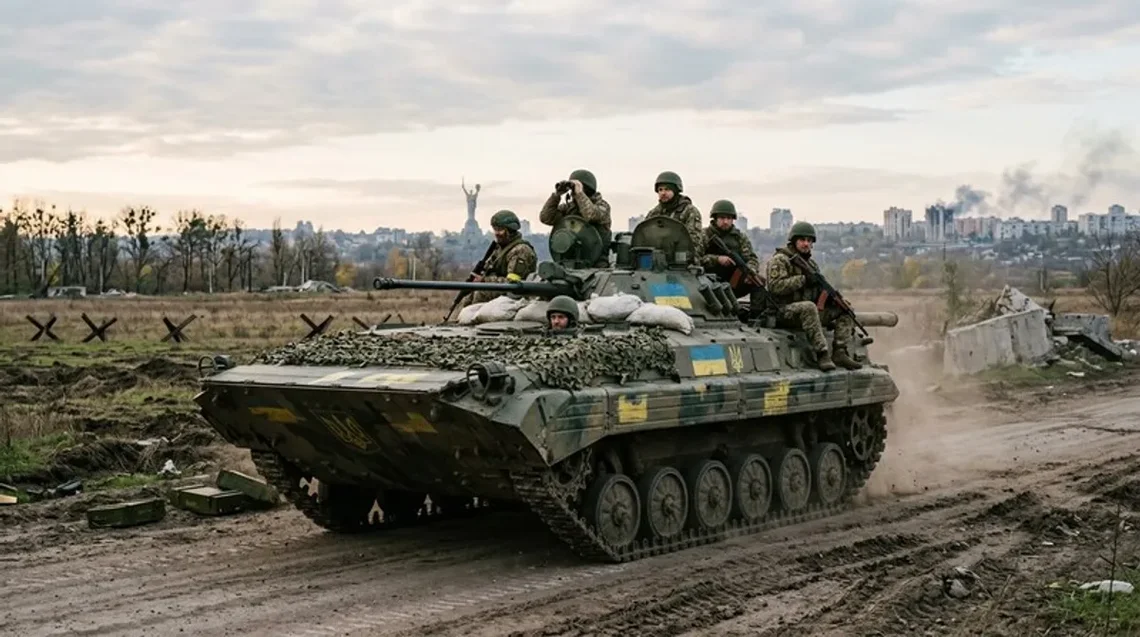
The sanctions announcement comes against the backdrop of continued Russian pressure along multiple sectors of the front in eastern Ukraine. Russian forces have made incremental but strategically significant advances in the Donetsk region, tightening their hold on logistics corridors that Ukrainian commanders have described as critical to their defensive posture. AP wire reporting from correspondents in the region corroborates a pattern of grinding Russian infantry assaults supported by sustained artillery and glide bomb strikes (Source: AP).
Pressure on Ukrainian Supply Lines
Ukrainian officials have publicly acknowledged difficulties in maintaining adequate ammunition flows to forward positions. The issue of EU tightens Russia sanctions over Ukraine supply lines has been a recurring theme in Brussels policy discussions, with member states debating whether to accelerate military assistance alongside punitive economic measures. The current consensus within the European Council appears to favour a dual-track approach: intensified sanctions combined with accelerated defence procurement support for Kyiv.
European defence officials have noted that Russian battlefield momentum is partly sustained by an industrial base that has significantly ramped up munitions production — a development that makes sanctions on procurement networks and dual-use goods all the more operationally significant, analysts said.
Reactions From Kyiv, Moscow, and Brussels
Ukrainian President Volodymyr Zelensky welcomed the sanctions package but reiterated Kyiv's longstanding position that economic measures alone are insufficient without matching military and financial support. His office issued a statement calling for accelerated delivery of advanced air defence systems and additional artillery ammunition (Source: Office of the President of Ukraine).
The Kremlin dismissed the new measures as counterproductive and legally invalid under international trade law — a position Moscow has maintained consistently throughout successive rounds of sanctions. Russian state media framed the announcement as evidence of Western desperation in the face of what it characterised as irreversible gains on the battlefield, according to Reuters monitoring of state broadcasts (Source: Reuters).
Internal EU Tensions
The package was not adopted without friction. Hungary, which has repeatedly blocked or diluted sanctions measures citing economic concerns and its government's closer diplomatic posture toward Moscow, again sought modifications. Officials familiar with the negotiations said a compromise was reached on the LNG transhipment clause that included a transitional period for existing commercial contracts — a concession that critics within the European Parliament immediately condemned as weakening the measure's immediate impact.
This pattern of internal negotiation has characterised every sanctions round since the invasion. The politics behind each successive package are explored in depth in reporting on EU Tightens Russia Sanctions Over Ukraine Escalation, which documented earlier episodes of member state divergence and the mechanisms through which qualified majority decisions have been navigated.
Sanctions Effectiveness: The Ongoing Debate
The fundamental question surrounding the EU's sanctions architecture remains whether cumulative economic pressure is materially degrading Russia's capacity and will to prosecute the war. The evidence is genuinely mixed. Russia's GDP growth has surprised many Western economists to the upside in the near term, driven by state military spending and import substitution policies. However, structural indicators — including inflation, labour market strain, capital flight, and declining access to advanced components — point to mounting systemic stress, according to analysis published by the International Monetary Fund and corroborated by European Central Bank assessments (Source: International Monetary Fund).
The Ruble, Inflation, and Long-Term Erosion
The Russian ruble has experienced significant volatility, and domestic inflation has run well above the Central Bank of Russia's targets, forcing aggressive interest rate increases that are themselves a drag on non-military investment. Foreign Policy analysts have argued that sanctions are operating on a longer time horizon than political commentary typically allows for — that their cumulative effect on Russia's technological base, financial reserves, and international economic integration represents a structural weakening that will constrain Russian strategic options over the medium to long term, even if battlefield effects are not immediately visible (Source: Foreign Policy).
The debate mirrors earlier analytical disagreements documented in coverage of EU Tightens Russia Sanctions Over Ukraine Stalemate, which examined the tension between short-term economic resilience and long-term structural degradation of Russia's war economy.
Implications for the United Kingdom
The UK, which operates its own parallel sanctions regime following Brexit, has announced it will align substantially with the new EU package. The Office of Financial Sanctions Implementation (OFSI) is expected to publish corresponding designations, while the Foreign, Commonwealth and Development Office has indicated that additional shadow fleet vessel listings will be incorporated into UK maritime guidance (Source: UK Foreign, Commonwealth and Development Office).
For British businesses with residual exposure to Russian energy markets — primarily through financial instruments and commodity trading — the alignment with EU LNG transhipment restrictions carries direct compliance implications. The City of London's significant role in global commodity financing means that UK institutions face heightened scrutiny from regulators on transactions that could, directly or indirectly, benefit listed Russian entities.
More broadly, the UK's commitment to matching EU sanctions demonstrates a post-Brexit foreign policy alignment on Russia that cuts against narratives of strategic divergence with the continent. Officials in London have been explicit that Ukrainian security is a core British national interest, a position that commands cross-party political support at Westminster.
| Sanctions Package | Key Target Sector | New Designations (approx.) | Notable Measure |
|---|---|---|---|
| Package 9 | Technology / Dual-use goods | ~200 entities | Expanded export controls on electronics |
| Package 10 | Defence procurement networks | ~120 individuals | Restrictions on Iranian drone components |
| Package 11 | Anti-circumvention / third countries | ~90 entities | First use of "special status" for non-EU firms |
| Package 12 | Diamonds / luxury goods | ~140 individuals | G7-aligned diamond import ban |
| Current Package | Energy / Shadow fleet / LNG | 200+ entities | LNG transhipment ban via EU ports |
What Comes Next
European officials have signalled that further packages are under preparation, with a focus on tightening controls on goods routed through Central Asian and Caucasian intermediary states that have emerged as primary conduits for sanctioned technology reaching Russia. The challenge of third-country circumvention has become the defining enforcement problem of the entire sanctions regime, as documented in analysis of EU tightens Russia sanctions over Ukraine arms escalation.
Negotiations with governments in Georgia, Armenia, Kazakhstan, and Uzbekistan — all of which have seen dramatic increases in re-exports to Russia since the invasion — are ongoing, with the EU using market access and trade incentive frameworks as leverage. Whether these diplomatic tools will prove sufficient to substantially restrict the flow of sanctioned goods remains an open question, officials concede.
The broader strategic calculus in Brussels is increasingly defined by a recognition that the war in Ukraine will not be resolved quickly, and that sustaining European political will for both sanctions and military support over a prolonged period is itself a central strategic challenge. As Russia consolidates incremental territorial gains and winter approaches, the pressure on European governments to demonstrate resolve — to their own publics, to Kyiv, and to Moscow — will only intensify. The latest sanctions package is, by any measure, a significant step. Whether it is sufficient is a question that neither Brussels nor the battlefield has yet answered.