EU Tightens Sanctions on Russia Over Ukraine Arms Buildup
Brussels targets financiers backing military expansion near frontlines
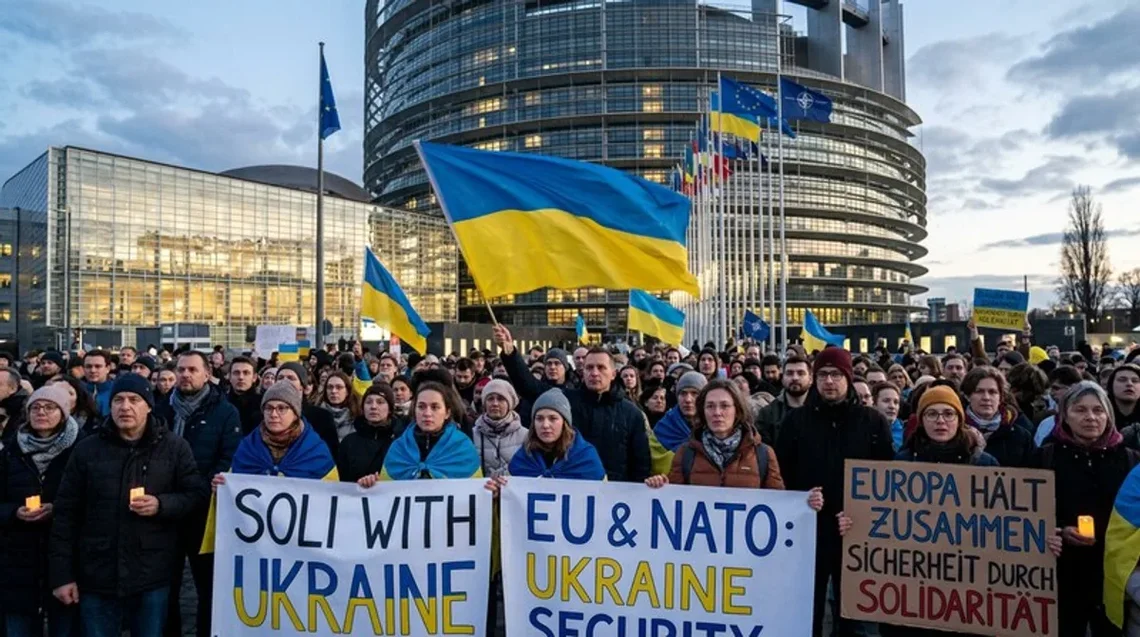
The European Union has unveiled its most expansive package of economic and financial sanctions against Russia to date, targeting a network of financiers, intermediaries, and logistics companies accused of funding and facilitating Moscow's accelerating military buildup along active frontlines in Ukraine. The measures, announced in Brussels and endorsed by all 27 member states, represent a significant escalation in the bloc's sustained campaign to choke off the financial arteries sustaining Russia's war machine, according to senior EU officials.
Key Context: The EU has now adopted fifteen successive rounds of sanctions against Russia since the full-scale invasion of Ukraine began. Each package has progressively widened the net — moving from oligarch asset freezes and energy embargoes to increasingly granular targeting of third-country entities enabling sanctions circumvention. The latest round follows documented intelligence reports indicating that Russia has significantly accelerated drone production, artillery shell output, and the forward deployment of materiel along the eastern and southern frontlines. (Source: European Commission)
What the New Sanctions Package Contains
The latest round of restrictive measures lists more than 200 individuals and entities — including Russian state financiers, private wealth managers operating through Gulf and Central Asian jurisdictions, and shipping companies registered in third countries — as designated targets subject to asset freezes and travel bans, EU Council documents confirmed. A number of Chinese-linked electronics exporters supplying dual-use components were also identified, though Brussels stopped short of formally sanctioning Chinese entities, a move that diplomats described as politically sensitive given ongoing trade dependencies.
Financial Sector Restrictions
Among the most consequential elements of the package is a broadening of restrictions on Russian financial institutions, including secondary prohibitions targeting foreign banks that continue to process transactions connected to Russia's defence procurement networks. Officials said the measures are specifically designed to disrupt the shadow financing corridors that have allowed Moscow to circumvent earlier restrictions by routing payments through jurisdictions in the South Caucasus, Southeast Asia, and the Gulf. According to Reuters, EU negotiators spent several weeks attempting to build consensus on the scope of secondary sanctions, with some member states expressing concern about legal and diplomatic blowback.
Related Articles
Energy and Technology Restrictions
The package also extends restrictions on liquefied natural gas trading, tightening loopholes that had allowed Russian LNG cargoes to be transshipped through EU ports before onward delivery to third-country buyers. Separately, new export controls target an expanded list of semiconductor components, machine tools, and propellant chemicals assessed to have direct military applications. Data from the European Commission's trade monitoring unit show that Russia's imports of controlled technology items declined sharply after earlier rounds but began recovering as alternative supply chains emerged through intermediary states. (Source: European Commission)
The Strategic Context: Arms Buildup Along the Frontlines
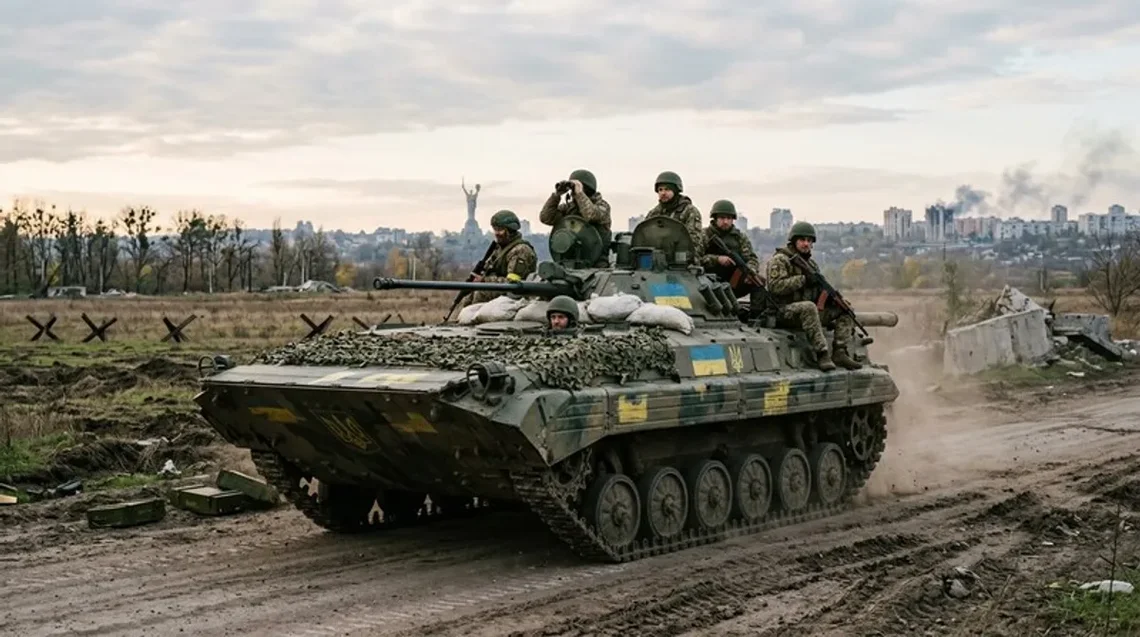
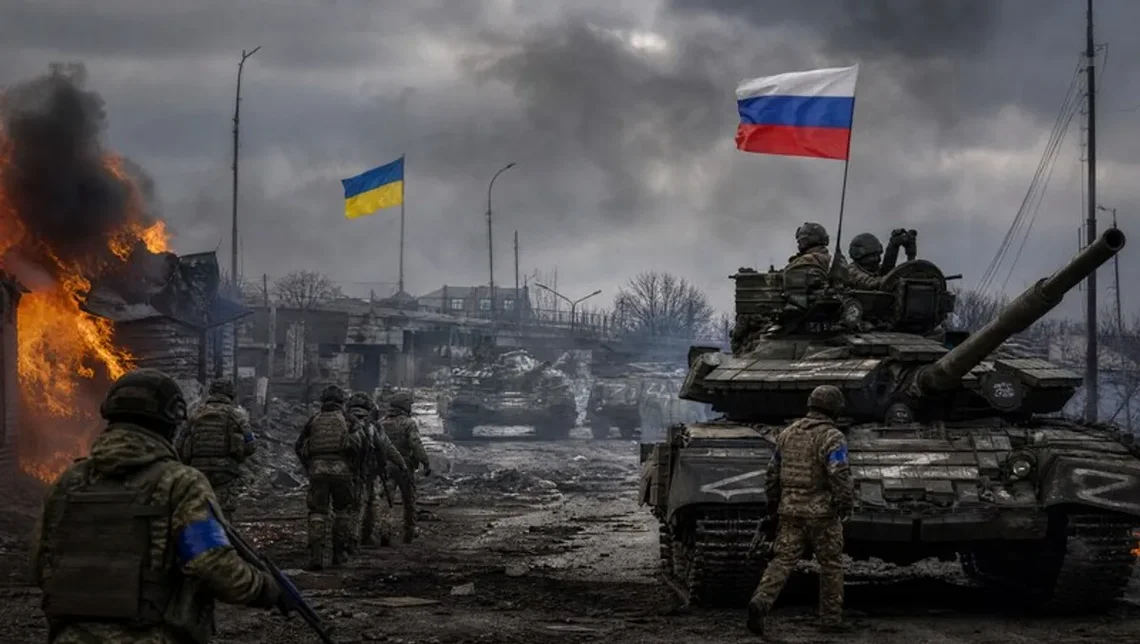
The sanctions announcement comes against a backdrop of intensified military activity in eastern Ukraine, where Russian forces have sustained a grinding but incrementally advancing campaign across a broad front stretching from Kharkiv Oblast to Zaporizhzhia. Ukrainian military officials have repeatedly warned that Russian artillery and drone deployment rates have increased substantially in recent months, placing severe pressure on defending units already contending with ammunition shortfalls. According to AP, Western intelligence assessments circulated among NATO allies indicate that Russia's domestic defence production has expanded considerably, partly as a result of technical assistance and component supply from North Korea and Iran.
Third-Country Enablers Under Scrutiny
A recurring theme in the EU's enforcement documentation is the role of third-country intermediaries — firms and individuals in jurisdictions not bound by EU sanctions — in helping Russia acquire restricted goods and funnel funds to defence enterprises. UN reports have identified a pattern of shell company structures established in the UAE, Turkey, Kazakhstan, and Armenia being used to obscure the end-use destination of dual-use exports. The latest EU designations specifically name several such intermediary entities, signalling a more aggressive posture toward extraterritorial enforcement, officials said. (Source: UN Panel of Experts on Ukraine)
For further context on the evolution of the EU's approach to economic coercion, readers can follow reporting on EU Tightens Russia Sanctions Over Ukraine Escalation, which traces the bloc's legal and diplomatic strategy across successive sanction rounds.
Reactions From Moscow, Kyiv, and Washington
Russia's Foreign Ministry dismissed the new measures as illegal under international law and counterproductive, with a ministry spokeswoman describing them as evidence of the EU's "colonial economic reflexes," according to state media transcripts. Moscow has consistently maintained that sanctions have failed to dent its economy and have instead triggered inflationary pressures inside the EU itself — an argument that carries partial but not complete empirical weight, analysts note.
Kyiv welcomed the announcement but urged member states to move faster on enforcement, arguing that delays between sanction adoption and practical implementation allow designated entities time to reorganise assets and reroute financial flows. Ukrainian President Volodymyr Zelensky's office issued a statement calling for a sixteenth round to be prepared immediately, with particular focus on Russian energy revenues that continue to partially reach Western markets via indirect channels.
Washington expressed strong support for the package through a State Department statement, with officials noting complementary US Treasury designations issued on the same day targeting overlapping networks. The synchronised nature of the US and EU announcements reflected what Foreign Policy describes as an increasingly coordinated allied posture on financial warfare, driven in part by frustration over the pace of battlefield attrition. (Source: Foreign Policy)
Implications for the UK and Europe
For the United Kingdom, the EU package carries both direct and indirect consequences. Britain operates its own autonomous sanctions regime — maintained and expanded by the Office of Financial Sanctions Implementation (OFSI) and the Foreign Commonwealth and Development Office — and London has historically moved in close coordination with Brussels on Russia designations. UK officials said the government is reviewing the new EU list with a view to mirroring the majority of designations under British law, consistent with the practice adopted across previous rounds.
Economic Exposure and Energy Dependency
Across the European continent, energy market dynamics remain the most politically contentious dimension of the sanctions relationship. Although the EU has dramatically reduced its dependence on Russian pipeline gas since the invasion, residual flows via certain routes and continued imports of Russian LNG mean that the economic decoupling is incomplete. The latest restrictions on LNG transshipment are expected to create short-term supply friction for several EU member states, particularly in central and southeastern Europe, where alternative supply infrastructure remains underdeveloped. Analysts at European think tanks have warned that energy price volatility could resurface if the restrictions are applied aggressively during peak demand periods. (Source: European Commission energy security assessments)
Sanctions Fatigue and Political Cohesion
Perhaps the most consequential long-term challenge for EU sanctions policy is maintaining political cohesion across 27 member states with divergent economic interests and threat perceptions. Hungary has been the most vocal internal critic of successive packages, using its veto leverage to negotiate carve-outs and implementation delays, though Budapest ultimately endorsed the latest round after amendments to specific energy-related provisions, according to Reuters. Analysts tracking EU policy cohesion have noted that while public unity has been maintained, the internal negotiating process has become progressively more contentious as the economic costs accumulate and the war shows no immediate sign of resolution.
For a broader perspective on how earlier sanction cycles shaped the current strategic environment, see prior ZenNewsUK coverage of EU Tightens Russia Sanctions Over Ukraine Offensive and EU Tightens Russia Sanctions Over Ukraine Stalemate, which document the bloc's shifting calculus at critical junctures in the conflict.
Enforcement: The Gap Between Designation and Implementation
Analysts and legal specialists have consistently highlighted the substantial gap between the formal adoption of sanctions and their effective enforcement. Asset freeze orders are only as powerful as the regulatory infrastructure available to identify and seize the relevant holdings, and across the EU, implementation capacity varies significantly between member states. Jurisdictions with sophisticated financial intelligence units — notably France, Germany, the Netherlands, and Belgium — have demonstrated stronger enforcement records, while others have struggled to translate designations into practical asset immobilisation.
Enforcement Mechanisms and Gaps
The European Commission has proposed the creation of a centralised EU sanctions enforcement body, an idea that has received qualified support from several member states but faces legal and sovereignty-related objections from others who argue that enforcement remains a national competence under existing EU treaty structures. In the interim, the Commission is expanding its Sanctions Helpdeskand coordination mechanisms to improve information sharing between national authorities. According to AP, the total value of Russian state and private assets frozen across EU jurisdictions currently runs to several hundred billion euros, though the mobilisation of those assets for Ukrainian reconstruction purposes remains legally contested and politically unresolved. (Source: AP)
| Round | Primary Focus | Entities/Individuals Listed | Key Sector Targeted |
|---|---|---|---|
| Round 1–3 | Oligarch asset freezes; travel bans | Approx. 350+ | Finance, media, political figures |
| Round 4–6 | Energy and banking restrictions | Approx. 1,000+ | Energy, SWIFT exclusions, state banks |
| Round 7–10 | Dual-use technology; transport | Approx. 1,500+ | Semiconductors, aviation, shipping |
| Round 11–14 | Third-country circumvention networks | Approx. 2,000+ | Intermediary firms, LNG, metals |
| Round 15 (Current) | Military financiers; LNG transshipment; dual-use electronics | 200+ (this round) | Defence finance, technology, energy |
What Comes Next
EU officials have signalled that a sixteenth package is already in preparation, with particular attention expected on diamond trade revenues, Russian agricultural export financing, and the expanding role of North Korean military personnel and materiel in the conflict — a development that multiple Western governments have described as a qualitative shift in the war's international dimensions. Diplomatic sources cited by Reuters indicated that discussions are also underway regarding whether the bloc should more formally designate Russia's military-industrial complex as a sanctioned sector in its entirety, rather than continuing to list individual enterprises on a case-by-case basis.
For the latest updates on the trajectory of EU economic pressure and its interaction with frontline military dynamics, ZenNewsUK will continue to track developments. Readers seeking the full analytical record can also consult earlier coverage including EU tightens Russia sanctions over Ukraine arms escalation, which provides detailed background on the arms supply dimension of the conflict's economic architecture.
The coming months will test whether the EU's escalating financial pressure can meaningfully constrain Russia's operational capacity before battlefield dynamics produce irreversible facts on the ground. That question — urgent, unresolved, and carrying enormous stakes for European security — sits at the centre of every sanctions negotiation taking place in Brussels, and every artillery exchange taking place in Ukraine.