UN Security Council deadlocked over Gaza aid corridor
Russia and China veto Western-backed resolution
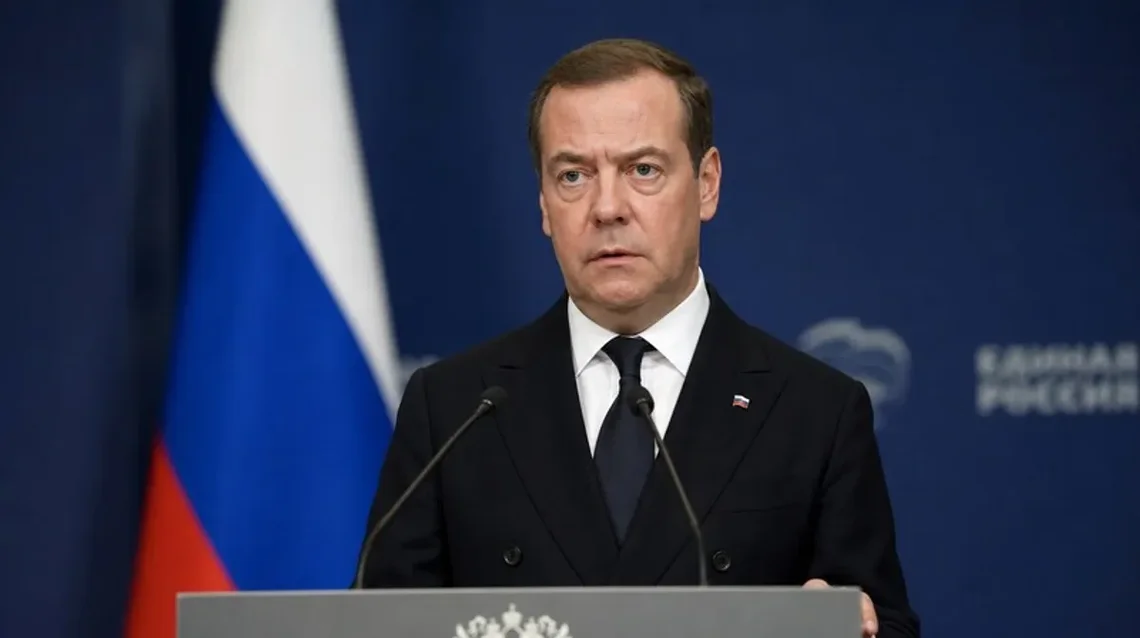
The United Nations Security Council has again failed to pass a resolution guaranteeing humanitarian aid access into Gaza, after Russia and China exercised their veto powers to block a Western-backed draft that would have mandated the opening of aid corridors into the besieged territory. The twin vetoes, cast during an emergency session at UN headquarters in New York, have drawn sharp condemnation from Western governments and humanitarian organisations, deepening fears over the fate of more than two million civilians facing acute food shortages and medical deprivation.
Key Context: The UN Security Council has fifteen members, of which five — the United States, United Kingdom, France, Russia, and China — hold permanent seats and veto power. A single veto is sufficient to block any substantive resolution. Russia and China have previously coordinated vetoes on resolutions related to Syria, Ukraine, and Gaza, reflecting a broader strategic alignment on matters they regard as Western-driven geopolitical interference. According to UN Office for the Coordination of Humanitarian Affairs (OCHA) reports, Gaza currently faces one of the most severe humanitarian crises in the organisation's recorded history, with humanitarian access severely restricted.
The Vote and Its Immediate Fallout
The draft resolution, co-sponsored by the United Kingdom, France, and the United States, called for immediate, unimpeded humanitarian access across all border crossings into Gaza, including the Rafah crossing with Egypt and the Kerem Shalom crossing from Israel. It further demanded that all parties to the conflict refrain from targeting civilian infrastructure, including hospitals, water treatment facilities, and food distribution centres, officials said.
How the Vote Broke Down
Thirteen of the fifteen council members voted in favour of the resolution. Russia and China cast the only opposing votes, with neither abstaining. No member voted against alongside them. Western diplomats described the outcome as a "diplomatic catastrophe," according to accounts reported by Reuters, while humanitarian agencies warned that the deadlock would have immediate, measurable consequences on the ground.
Related Articles
Russia's UN Ambassador argued that the resolution was "politically motivated" and represented an attempt by Western states to use humanitarian language as a pretext for broader geopolitical intervention in the region, according to statements reviewed by AP. China's representative echoed that framing, calling for a "comprehensive ceasefire" rather than what Beijing characterised as a piecemeal access arrangement that would not address root causes of the conflict.
Western Reactions
The UK's Permanent Representative to the United Nations called the vetoes "unconscionable," stating that no Security Council member should be able to prevent the delivery of food, medicine, and clean water to civilians. France's foreign ministry issued a statement condemning the outcome in similar terms. The United States, while co-sponsoring the resolution, faces its own complicated position given its strategic relationship with Israel, a tension noted extensively by analysts at Foreign Policy magazine in recent weeks.
Pattern of Council Paralysis
This vote represents the latest in a sustained pattern of Security Council deadlock on Gaza-related resolutions. Readers following the trajectory of this diplomatic crisis should note that similar outcomes have occurred repeatedly in recent months. Earlier attempts to codify humanitarian access frameworks have met identical fates, as documented in previous ZenNewsUK coverage of the UN Security Council deadlocked on Gaza aid access, as well as reporting on the UN Security Council deadlocked on Gaza aid renewal, and the persistent failures captured in the record of the UN Security Council deadlocked over Gaza aid extension.
The Russia-China Veto Bloc
The coordinated use of veto power by Moscow and Beijing has become a defining structural feature of Council dynamics on Gaza. Analysts at Foreign Policy and the UN itself have noted that this pattern mirrors the duo's approach to resolutions on Syria during the previous decade, where sequential vetoes over several years prevented meaningful international intervention as civilian casualties mounted. According to UN records, Russia has cast more vetoes than any other permanent member in recent decades, with China increasingly joining as a co-veto partner rather than abstaining.
The strategic calculus is not identical for both countries. Russia, deeply invested in undermining Western credibility and cohesion following its invasion of Ukraine — where its own record at the Security Council has been scrutinised, as covered in reporting on the UN Security Council deadlocked on Ukraine aid corridor — views each Gaza veto as an opportunity to cast Western powers as hypocritical actors. China, meanwhile, is navigating its relationships with Arab states and Iran, as well as its broader framing as an alternative global governance partner to the United States-led order.
On the Ground: What the Deadlock Means for Gaza
The immediate humanitarian consequences of continued Security Council inaction are severe, according to multiple UN agency assessments. OCHA has reported that food insecurity in Gaza has reached catastrophic levels, with significant portions of the population facing famine conditions. Medical supply chains have collapsed in many areas, with hospitals operating without basic anaesthetics, antibiotics, or surgical equipment, according to reports from the World Health Organisation reviewed by Reuters.
Aid Agency Responses
UNRWA, the UN agency responsible for Palestinian refugees, has described the situation as one of deliberate deprivation, with aid convoys turned back or delayed at crossings that remain under the operational control of parties to the conflict. The International Committee of the Red Cross and Médecins Sans Frontières have both issued urgent appeals following the vote, warning that without a binding international framework for access — precisely the kind the vetoed resolution sought to create — civilian mortality will continue to rise, officials said.
The UN Secretary-General, in remarks following the vote, expressed profound disappointment and reiterated that the use of starvation as a method of warfare is prohibited under international humanitarian law. He called on all parties to facilitate access regardless of the Security Council outcome, though the enforceability of such appeals without a Council resolution remains effectively nil, according to international law experts cited by AP.
Diplomatic Alternatives and Their Limits
With the Security Council unable to act, Western governments and humanitarian advocates are exploring alternative mechanisms. The UN General Assembly, which operates without a veto system, has the authority to pass non-binding resolutions. While such votes carry significant symbolic and political weight, they cannot compel compliance from parties to the conflict, and their practical impact on access remains limited, according to analysis from the UN's own legal affairs division.
The Role of Regional Actors
Egypt, Qatar, and Jordan have all positioned themselves as potential mediators and facilitators of humanitarian corridors, with Cairo in particular holding direct leverage over the Rafah crossing. However, regional diplomatic efforts have repeatedly stalled amid broader ceasefire negotiations, which themselves have failed to produce durable agreements despite multiple rounds of indirect talks facilitated by the three countries, according to reporting by Reuters and AP. The Gulf Cooperation Council has called for an emergency Arab League session, though such forums have historically produced statements rather than enforceable outcomes.
What This Means for the UK and Europe
For the United Kingdom and European Union member states, the Security Council deadlock creates a constellation of compounding pressures. Domestically, public opinion across Europe has shifted significantly in favour of more assertive humanitarian intervention, with large demonstrations in London, Paris, and Berlin demanding that governments do more to ensure aid access. The UK government, as a permanent Security Council member and co-sponsor of the failed resolution, faces particular scrutiny over its effectiveness as a multilateral actor.
Strategically, the repeated failure of Western-backed resolutions risks accelerating a narrative — advanced by Russia, China, and some Global South governments — that the rules-based international order is selectively applied and structurally biased. European foreign ministries are acutely aware that this framing weakens the legitimacy of the same international legal frameworks Europe relies upon to defend its own security interests, including in relation to Russia's ongoing war in Ukraine.
The UK's post-Brexit foreign policy positioning, which has emphasised Britain's role as a leading multilateral force and champion of international humanitarian law, faces a credibility test that Whitehall officials are struggling to answer convincingly. Senior diplomatic sources, speaking on background to Reuters, acknowledged that without a functioning Security Council mechanism, the UK's practical options are limited to bilateral pressure, additional humanitarian funding pledges, and continued co-sponsorship of General Assembly resolutions — tools that, however necessary, do not substitute for binding international law.
European aid budgets directed toward Gaza have increased substantially in recent months, with the European Commission announcing additional emergency funding packages. However, money alone cannot substitute for physical access, and European officials have been frank in acknowledging that financial contributions are being made against a backdrop of deteriorating conditions that funding alone cannot reverse, officials said.
| Country / Bloc | Vote on Resolution | Stated Position | Key Interest |
|---|---|---|---|
| United States | Yes (co-sponsor) | Supports humanitarian access mandate | Alliance management; regional stability |
| United Kingdom | Yes (co-sponsor) | Calls vetoes "unconscionable" | Multilateral credibility; domestic pressure |
| France | Yes (co-sponsor) | Condemns veto; seeks ceasefire | Humanitarian law; EU coherence |
| Russia | No (veto) | Calls resolution "politically motivated" | Western credibility erosion; strategic alignment |
| China | No (veto) | Demands comprehensive ceasefire first | Arab world relations; global governance positioning |
| Remaining 10 members | Yes (13 total in favour) | Broadly supportive of access mandate | Humanitarian norm compliance |
The Institutional Crisis at the Heart of the UN
Beyond the immediate crisis in Gaza, the repeated deadlock at the Security Council is prompting renewed and urgent debate about the fitness for purpose of the UN's primary peace and security body. The veto system, designed at the end of the Second World War to ensure that major powers remained engaged in the international order rather than defecting from it, is increasingly viewed by smaller states and humanitarian advocates as a structural guarantee of impunity for those same powers and their allies.
Reform Prospects
Proposals for Security Council reform have circulated for decades, encompassing ideas ranging from limiting veto use in cases of mass atrocity to expanding the permanent membership to include major regional powers such as India, Brazil, Germany, Japan, and representatives from the African continent. However, any reform of the Council's structure requires an amendment to the UN Charter, which itself must be ratified by all five permanent members — meaning that Russia and China retain an effective veto over any reform that would reduce their veto power, a structural paradox that UN Secretary-General reports have described as "deeply problematic," according to documents reviewed by AP.
The Accountability, Coherence and Transparency group of UN member states has previously proposed a voluntary code of conduct under which permanent members would commit to not using the veto in cases of genocide, war crimes, or crimes against humanity. France and the United Kingdom have endorsed this principle. Russia and China have not, officials said. (Source: UN Office for the Coordination of Humanitarian Affairs; Reuters; AP; Foreign Policy)
The deadlock over Gaza aid corridors is, in the final analysis, not merely a crisis of diplomacy or humanitarian logistics. It is a test of whether the international institutions constructed after the catastrophes of the twentieth century remain capable of responding to the catastrophes of this one. On the current evidence, the answer offered by the Security Council is deeply troubling — and the consequences, measured in lives, are neither abstract nor distant.