NATO allies bolster eastern defences amid Ukraine stalemate
Military spending surge as conflict enters fifth year
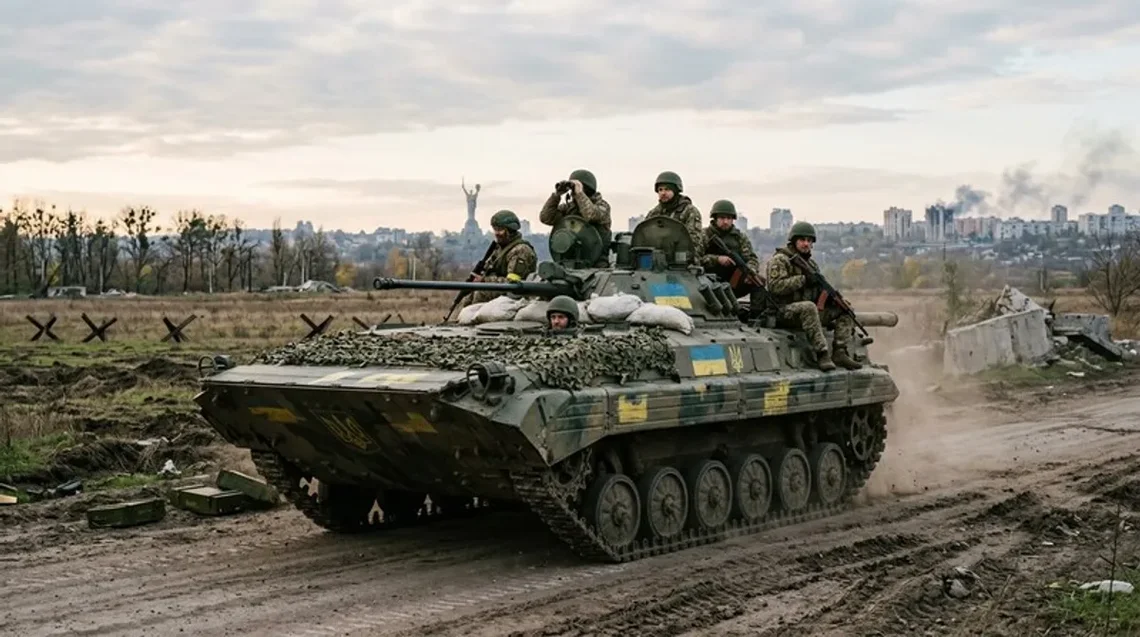
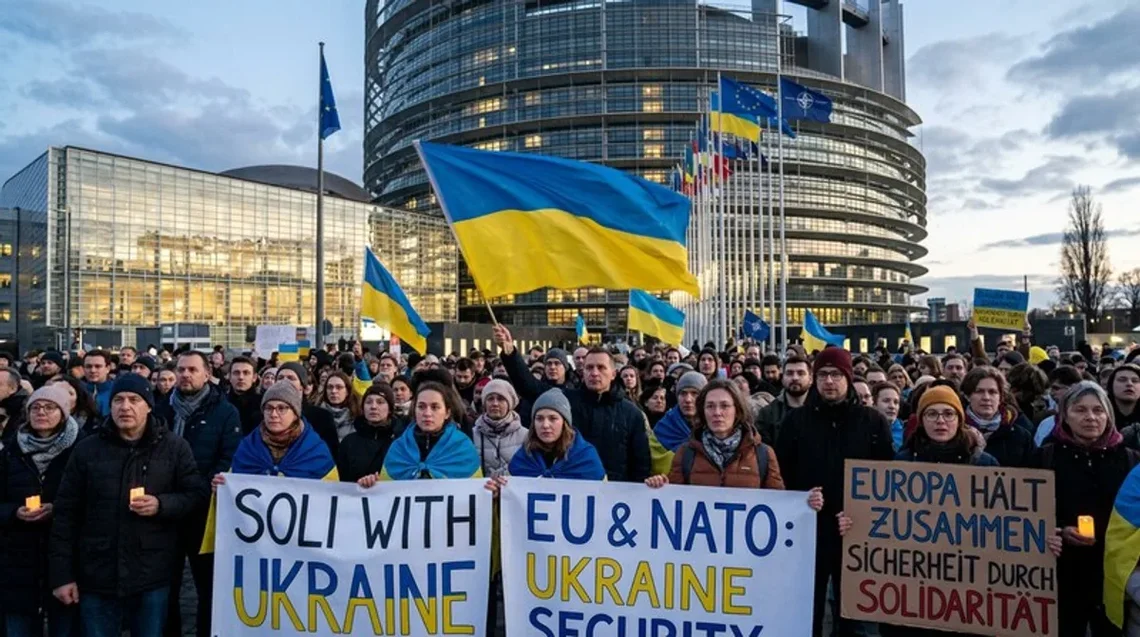
NATO member states are accelerating military deployments and dramatically increasing defence budgets along the alliance's eastern flank, as the war in Ukraine grinds through its fifth year with no negotiated settlement in sight. The shift represents the most significant reshaping of European security architecture since the Cold War, with billions of euros committed to permanent forward presence, new battle groups, and enhanced rapid-reaction capabilities stretching from the Baltic to the Black Sea.
Key Context: NATO's eastern flank encompasses the alliance's most exposed members — Poland, Estonia, Latvia, Lithuania, Romania, Bulgaria, Slovakia, and Hungary — many of which share borders with either Russia, Belarus, or Ukraine. Since Russia's full-scale invasion of Ukraine began, the alliance has activated its defence plans for the first time in its history and moved from a "tripwire" deterrence posture to one of "robust forward defence," according to alliance documents. The 2014 Wales Summit pledge of spending at least two percent of GDP on defence, once routinely ignored, has now become a political and strategic imperative for virtually every member state. (Source: NATO)
A Stalemate That Is Reshaping Alliance Strategy
The war in Ukraine has entered what military analysts increasingly describe as an attritional phase, with frontlines shifting only marginally despite enormous human and material costs on both sides. For NATO planners, the absence of a quick resolution has forced a strategic recalibration that goes far beyond emergency measures. The alliance is now treating a prolonged, high-intensity conventional conflict on the European continent as the permanent baseline against which all planning must be conducted, officials said.
From Emergency Response to Structural Change
In the early weeks following Russia's expanded offensive, NATO's response was rapid but ad hoc — rotating battalions, emergency logistics corridors, and political reassurance visits to frontline capitals. That phase is now over. What has replaced it is a deliberate, long-term structural investment in eastern defences that alliance officials say is designed to endure regardless of how or when the Ukraine conflict concludes. Permanent headquarters have been established, pre-positioned equipment depots are being expanded, and host-nation support agreements have been renegotiated to allow for larger allied footprints on allied soil. (Source: NATO)
Related Articles
As detailed in related coverage of how NATO bolsters eastern defences amid ongoing Ukraine conflict, the transition from rotational to persistent presence has been one of the defining institutional debates within the alliance over the past two years, with eastern members pushing hardest for permanence and some western allies favouring continued flexibility.
The Defence Spending Surge: Who Is Paying and How Much
Defence expenditure across NATO has risen sharply, with the alliance secretariat reporting that a record number of member states are now meeting or exceeding the two-percent-of-GDP benchmark. Poland leads all allies in proportional terms, committing well above four percent of its GDP to defence — a figure driven by acute threat perception, a long land border with both Russia's Kaliningrad exclave and Belarus, and a rapid domestic procurement programme encompassing fighter aircraft, main battle tanks, and artillery systems. (Source: NATO)
| Country | Est. Defence Spending (% of GDP) | Key Capability Investment | NATO Battle Group Present |
|---|---|---|---|
| Poland | ~4.1% | K2 tanks, FA-50 jets, HIMARS | Yes (US-led) |
| Estonia | ~3.4% | 155mm artillery, air defence | Yes (UK-led) |
| Latvia | ~3.2% | NASAMS, infantry systems | Yes (Canada-led) |
| Lithuania | ~3.0% | SHORAD systems, armoured vehicles | Yes (Germany-led) |
| Romania | ~2.5% | F-16s, Patriot batteries | Yes (France-led) |
| United Kingdom | ~2.3% | Challenger 3, Type 26 frigates | Framework Nation (Estonia) |
| Germany | ~2.1% | Leopard 2A8, Eurofighter upgrades | Framework Nation (Lithuania) |
| France | ~2.1% | SCALP missiles, armoured brigade | Framework Nation (Romania) |
| Hungary | ~2.0% | Gripen upgrades, Lynx IFVs | No (observer status internally) |
| Slovakia | ~2.0% | F-16s, air surveillance radars | Yes (Czech-led) |
Industrial Capacity: The Bottleneck Behind the Numbers
Spending pledges are one metric; actual delivery is another. Defence analysts and procurement officials across several capitals have acknowledged that European defence industries remain constrained in their ability to scale production rapidly enough to meet alliance demand. Shell production, in particular, has emerged as a critical chokepoint, with European manufacturers struggling to fill orders even as demand from both NATO stockpile replenishment and Ukrainian battlefield consumption remains elevated. The European Defence Agency has flagged industrial capacity as a systemic risk requiring coordinated investment rather than individual national procurement cycles alone. (Source: European Defence Agency)
Baltic States: The Sharpest Edge of Alliance Concern
Of all NATO's eastern members, the three Baltic states — Estonia, Latvia, and Lithuania — present the alliance with its most complex deterrence challenge. Each shares a border with either Russia or its close ally Belarus, none possesses strategic depth, and all three host significant Russian-speaking minority populations that Moscow has historically sought to instrumentalise for political destabilisation. Military planners have described the Suwalki Gap — the narrow land corridor between Poland and Lithuania separating the Russian exclave of Kaliningrad from Belarus — as one of the most strategically sensitive chokepoints on the European continent. (Source: Foreign Policy)
Enhanced Forward Presence: From Battalions to Brigades
Following NATO's Madrid Summit decisions, the alliance committed to upgrading its Enhanced Forward Presence battle groups in the Baltic states from battalion-sized units of roughly 1,000 troops to full brigade-level formations capable of fielding between 3,000 and 5,000 soldiers. Germany has taken the lead in Lithuania, committing to permanently station a full combat brigade on Lithuanian soil — a deployment that German officials described as a historic break from the country's post-Cold War restraint on forward military basing. The UK-led battle group in Estonia has similarly expanded in scope and capability. (Source: Reuters)
Analysis of the alliance's evolving strategic posture is explored further in coverage examining how NATO bolsters eastern flank amid Ukraine stalemate, including the debates around command structure, rules of engagement, and host-nation burdensharing that accompany these deployments.
What This Means for the United Kingdom and Europe
For the United Kingdom, the implications of NATO's eastern build-up are both strategic and fiscal. Britain currently serves as the framework nation for the Enhanced Forward Presence battle group in Estonia, a role that carries disproportionate leadership responsibility and consistent pressure to maintain troop numbers and capability thresholds. The UK has also committed Challenger 2 and subsequently Challenger 3 tanks to allied exercises in northern Europe, and British forces have been among the most active in training Ukrainian personnel, both on UK soil and through liaison arrangements in neighbouring countries. (Source: AP)
The UK's Defence Budget Under Pressure
London recently committed to raising defence spending toward 2.5 percent of GDP, a figure that required substantial Treasury negotiation and which defence analysts note remains below the levels considered adequate by some senior military voices. The UK's armed forces have faced well-documented structural challenges in recent years — including reduced regular army headcount, equipment programme delays, and recruitment shortfalls — meaning that increased budgetary commitments must be translated into genuine capability recovery rather than simply absorbed by legacy programme costs. The Strategic Defence Review, completed recently, set out a framework for this recovery, though critics have questioned whether timelines are realistic given industrial constraints. (Source: Reuters)
For continental Europe more broadly, the stalemate in Ukraine has extinguished whatever residual hope existed in some capitals that defence investment could be moderated once hostilities ceased. EU member states have embedded defence spending commitments into fiscal frameworks, accelerated work on the European Defence Fund, and begun serious conversations about a European pillar within NATO that would reduce structural dependence on United States leadership — a conversation made more urgent by political uncertainty in Washington regarding long-term transatlantic commitments. (Source: Foreign Policy)
Nuclear Posture and Escalation Management
Alongside conventional force expansion, NATO has been compelled to revisit its nuclear posture and escalation management frameworks in ways not seen since the Cold War's end. Russian officials have repeatedly invoked nuclear deterrence rhetoric in the context of the Ukraine conflict, including references to doctrine changes lowering thresholds for nuclear use in response to conventional military pressure. NATO's Nuclear Planning Group has convened more frequently, and alliance exercises incorporating nuclear contingency planning have increased in visibility and scale. (Source: UN reports)
Managing Escalation Without Paralysis
Alliance officials have been explicit that NATO's posture is defensive and that the build-up of conventional forces on the eastern flank is calibrated to deter rather than provoke. At the same time, officials have acknowledged the inherent tension in escalation management when one party to an adjacent conflict possesses and is willing to brandish nuclear capabilities. The alliance's approach has centred on maintaining credible conventional deterrence — the argument being that robust conventional strength reduces, rather than increases, the likelihood that nuclear thresholds would be reached. This doctrine has been contested by some analysts who argue it underestimates Russian escalation calculus. (Source: Foreign Policy)
The broader implications of the eastern build-up for European strategic autonomy and intra-alliance burden-sharing dynamics are examined in detail in reporting on how NATO bolsters Eastern Europe amid Ukraine stalemate, including assessments of how individual member-state decisions aggregate into collective alliance posture.
Diplomacy in the Shadow of Fortification
The intensification of military preparations along NATO's eastern flank has not foreclosed diplomatic channels, though it has substantially constrained them. UN-mediated ceasefire proposals have made no measurable progress, and direct high-level contacts between Moscow and western capitals remain minimal. Several NATO members — most notably Hungary and Slovakia — have maintained more ambiguous positions on the conflict and have at various points called for accelerated peace negotiations, creating internal alliance tensions that Moscow has sought to exploit. (Source: UN reports)
Meanwhile, Sweden's full integration into the alliance following its accession has strengthened NATO's position in the Baltic Sea region significantly, giving the alliance full maritime control over what was previously a contested strategic waterway. Finland's earlier accession similarly extended the alliance's land border with Russia by more than 1,300 kilometres, a development that transformed the strategic geography of northern Europe regardless of how the Ukraine conflict ultimately resolves. (Source: AP)
Further context on the geographic and strategic dimensions of the alliance's evolving footprint can be found in analysis of how NATO eyes expanded eastern presence amid Ukraine stalemate, which examines the operational and political calculations behind decisions on troop placement, command structures, and allied coordination mechanisms.
As the conflict in Ukraine continues without resolution and NATO's eastern flank undergoes its most consequential transformation in a generation, the central question confronting alliance leaders is no longer whether to build but how sustainably, how quickly, and to what ultimate strategic end. The answers will determine the shape of European security for decades — and the political, economic, and military choices made in London, Berlin, Warsaw, and Washington in the near term will prove foundational to that outcome.