NATO bolsters eastern defences amid ongoing Ukraine conflict
Alliance deploys additional troops to Poland and Baltic states
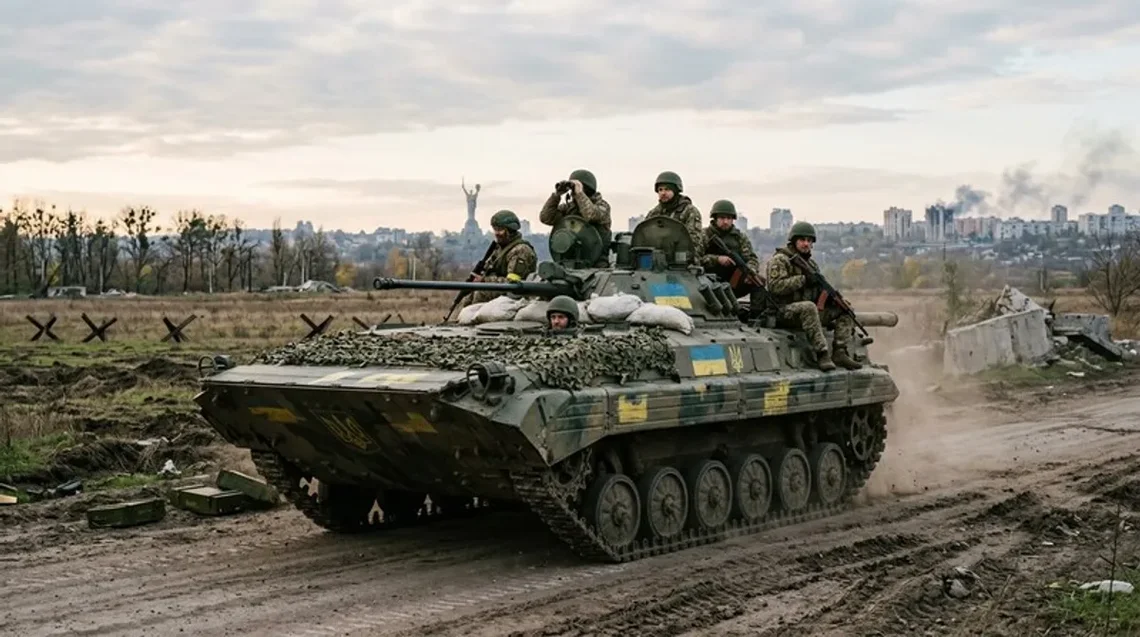
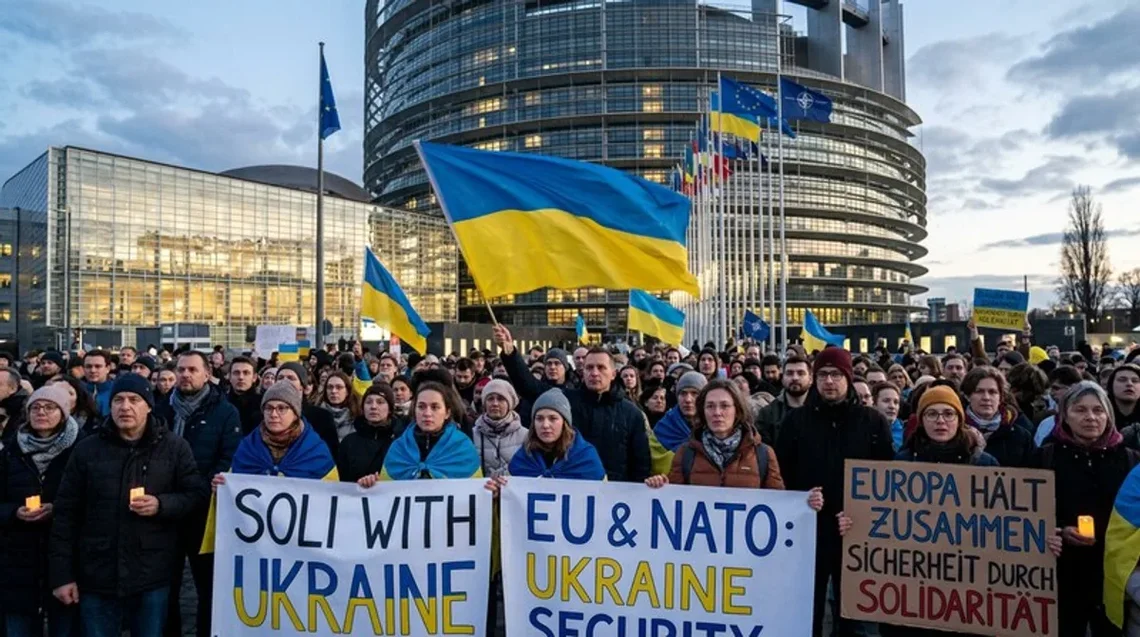
NATO has deployed thousands of additional troops to Poland and the Baltic states in one of its most significant eastern reinforcements since the alliance's post-Cold War expansion, as the war in Ukraine continues to reshape European security architecture and allied defence posture along Russia's western frontier. The move, confirmed by alliance officials in Brussels, signals a long-term strategic commitment to collective defence that extends well beyond the immediate battlefield in Ukraine.
Key Context: NATO's eastern flank stretches from Estonia in the north to Romania in the south — a region that shares roughly 1,200 kilometres of border with Russia and Belarus. Since Russia's full-scale invasion of Ukraine began, NATO has activated its Response Force for the first time in its history, transitioned battlegroups into brigade-level formations in the Baltic states, and increased the number of troops stationed in Eastern Europe from approximately 5,000 to over 40,000. The alliance currently operates under Article 5 of the Washington Treaty, which designates an attack on one member as an attack on all. (Source: NATO)
Reinforcements on the Ground
Alliance defence ministers confirmed in recent weeks that additional multinational battlegroups, now operating at enhanced forward presence strength, have been formally activated across Poland, Estonia, Latvia, and Lithuania. The deployments include armoured units, air defence batteries, and logistics support elements drawn from across the alliance's 32 member states, according to officials in Brussels.
Poland as the Pivotal Hub
Poland has emerged as the central logistics and operational hub for NATO's eastern posture. The country currently hosts tens of thousands of allied troops, including a substantial American contingent stationed near Rzeszów, a city that has become critical to the flow of military assistance into Ukraine. Polish officials have repeatedly called for a permanent NATO presence on their territory, a request that has gained increasing traction among allied governments. The United States has committed to maintaining a rotational force in Poland that is effectively permanent in practice, officials said. (Source: Reuters)
Related Articles
Warsaw has simultaneously undertaken one of Europe's most aggressive national defence investment programmes, with defence spending rising to approximately four percent of gross domestic product — a figure that surpasses NATO's two percent benchmark by a considerable margin and places Poland among the alliance's most committed contributors.
The Baltic States: Forward Defence in Practice
Estonia, Latvia, and Lithuania — three NATO members that share borders directly with Russia or its close ally Belarus — have urged the alliance to transition from a tripwire deterrence model to a full forward defence posture. Alliance officials confirmed that battlegroups in each of the three Baltic states have been expanded to brigade-equivalent formations, reflecting lessons learned from the opening phase of the Ukraine conflict regarding the speed and intensity of modern combined-arms warfare. (Source: AP)
Estonia's defence ministry has publicly argued that NATO's previous posture of small tripwire battlegroups offered insufficient deterrence against a potential rapid Russian incursion. Alliance planners appear to have taken that assessment seriously, according to officials briefed on ongoing force structure reviews.
Strategic Context: What Russia's War in Ukraine Has Revealed
The conflict in Ukraine has fundamentally altered NATO's threat calculus and accelerated defence planning timelines that might otherwise have taken years to implement. The war has demonstrated both the vulnerabilities and the resilience of conventional military forces operating under sustained missile and drone attack, and has prompted a significant reassessment of European stockpile levels, ammunition production capacity, and long-range strike requirements.
Lessons in Logistics and Firepower
Military analysts monitoring the Ukraine conflict closely have noted that artillery ammunition consumption rates have far exceeded pre-war planning assumptions, creating what the European Defence Agency has described as a structural supply gap across multiple member states. NATO's decision to bolster eastern deployments is therefore not merely about troop numbers — it is accompanied by a parallel effort to pre-position materiel, expand ammunition storage facilities, and harden critical infrastructure across the eastern flank. (Source: Foreign Policy)
For an authoritative overview of the evolving NATO eastern flank strategy, readers can explore related analysis on NATO bolsters eastern flank amid Russia tensions, which details the alliance's foundational shift in posture since the conflict began.
Diplomatic Dimensions and Alliance Cohesion
Despite the visible show of military solidarity, NATO's internal deliberations have not been without tension. Debates over the pace of weapons deliveries to Ukraine, the scope of allied support, and the risk of escalation have at times strained alliance unity, particularly between states with different threat perceptions and domestic political pressures.
Burden Sharing and Political Pressure
The question of equitable burden sharing has re-emerged as a live political issue within the alliance. Several Eastern European members, including Poland and the Baltic states, have been vocal in their frustration at what they characterise as insufficient urgency from some Western European counterparts. Meanwhile, NATO's secretary general has consistently emphasised alliance unity, noting that defence spending among members has risen substantially across the board in recent periods. (Source: Reuters)
The broader strategic picture is explored in detail in earlier reporting on NATO bolsters Eastern Europe presence amid Russia tensions, which examines how alliance cohesion has been tested and, so far, maintained under sustained pressure.
| Country | NATO Battlegroup | Defence Spending (% GDP, approx.) | Key Contributor Nations |
|---|---|---|---|
| Poland | Enhanced Forward Presence + US Brigade | ~4.0% | United States, United Kingdom, Germany |
| Estonia | Brigade-level formation | ~3.2% | United Kingdom, France, Denmark |
| Latvia | Brigade-level formation | ~3.1% | Canada, Germany, Spain |
| Lithuania | Brigade-level formation | ~3.4% | Germany, Netherlands, Belgium |
| Romania | Multinational Battlegroup | ~2.5% | France, United States, Italy |
| Slovakia | Enhanced Forward Presence | ~2.1% | Czech Republic, United States |
The UN's Position and International Legal Framework
The United Nations has maintained a carefully calibrated position on the conflict in Ukraine and the broader European security crisis. UN Secretary-General António Guterres has repeatedly called for a negotiated ceasefire and emphasised the primacy of the UN Charter's prohibition on the use of force against the territorial integrity of sovereign states. Multiple UN General Assembly resolutions have demanded the full withdrawal of Russian forces from Ukrainian territory, passing with large majority votes. (Source: UN reports)
The UN's position does not directly address NATO's defensive deployments, which the alliance characterises as consistent with its collective defence obligations under the Washington Treaty and international law. Russian officials have, however, used the reinforcements as a rhetorical device to frame NATO's posture as inherently provocative — an argument that most Western governments and international legal scholars have rejected. (Source: AP)
What This Means for the United Kingdom and Europe
For the United Kingdom, NATO's eastern reinforcement carries both strategic and fiscal implications. The UK currently leads the Enhanced Forward Presence battlegroup in Estonia — a commitment that has grown considerably in scope and now involves a substantial armoured contingent. British defence officials have signalled that this commitment is enduring, not temporary, and that the UK views its role on NATO's eastern flank as a central pillar of its post-Brexit foreign policy identity. (Source: Reuters)
British Defence Investment Under Scrutiny
The reinforcement also intensifies domestic pressure on the British government to increase defence spending toward a stated target of two and a half percent of GDP, and potentially beyond. Defence analysts in London have argued that the UK's current capabilities, while qualitatively strong, face real capacity constraints when it comes to sustaining extended deployments and regenerating combat power. The debate over procurement priorities — surface ships versus armoured vehicles, cyber capabilities versus traditional firepower — has been sharpened considerably by the evidence emerging from Ukraine's battlefields. (Source: Foreign Policy)
For wider Europe, the implications are equally profound. The war in Ukraine has effectively ended what many European strategic thinkers called the "peace dividend" — the assumption, dominant since the early 1990s, that large-scale interstate war on European soil was a relic of the past. European governments are now grappling with the need to rebuild defence industrial capacity, reconstitute hollowed-out armed forces, and make difficult fiscal trade-offs between social spending and rearmament. (Source: AP)
The trajectory of that broader strategic shift is documented in reporting on NATO bolsters eastern defences amid Russia concerns, which provides essential background on how European governments have recalibrated their security policies in response to the changed threat environment.
Looking Ahead: A Permanent Posture or Temporary Measure?
The central question facing NATO planners is whether the current reinforcements represent a temporary response to a specific crisis or the foundation of a permanently altered eastern posture. All available evidence from alliance statements, defence planning documents, and member-state investment decisions points toward the latter. The construction of new infrastructure, the expansion of pre-positioned stocks, and the long-term basing agreements being concluded across Poland and the Baltic region suggest a structural rather than contingent commitment. (Source: NATO)
For observers tracking how the alliance's posture has evolved over successive crisis points, the reporting on NATO bolsters eastern flank amid Russia concerns offers a detailed chronological account of the decisions that have led to the current deployment framework.
Whether Russia's war in Ukraine ends through negotiation, exhaustion, or some other outcome, the security architecture of Eastern Europe has been fundamentally and durably altered. NATO's eastern flank is no longer a quiet periphery — it is the alliance's active strategic frontier, and the deployments now underway reflect an institutional recognition that deterrence in the twenty-first century requires presence, not merely promise. The consequences of that recognition will shape European security, British defence policy, and transatlantic relations for a generation to come.