NATO Bolsters Eastern Defenses Amid Renewed Russia Tensions
Alliance expands military presence across Poland and Baltic states
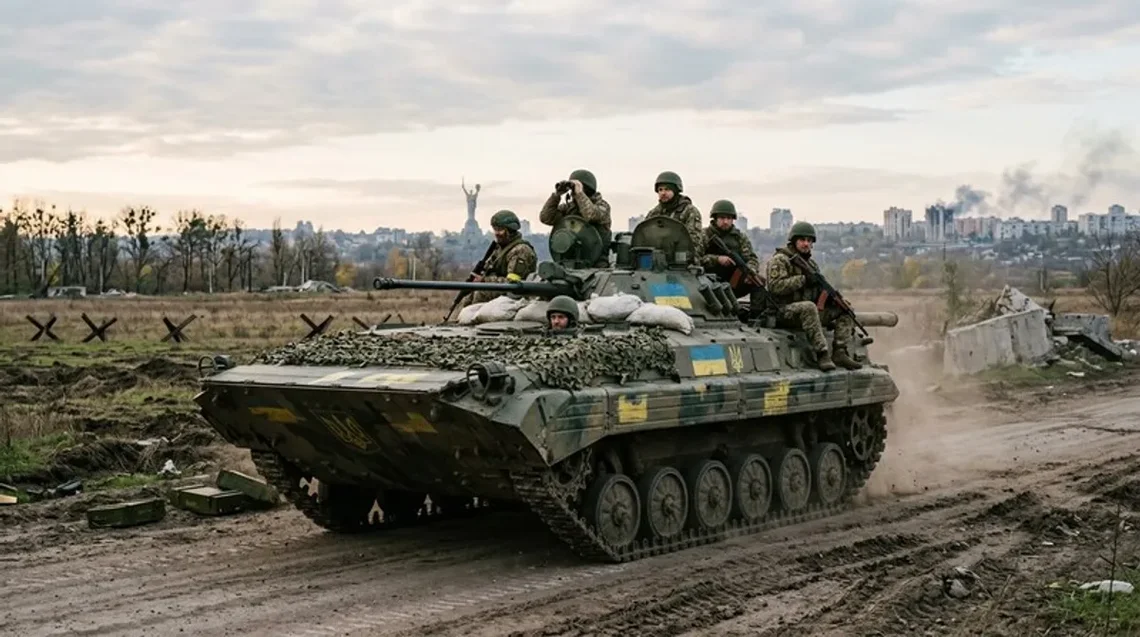
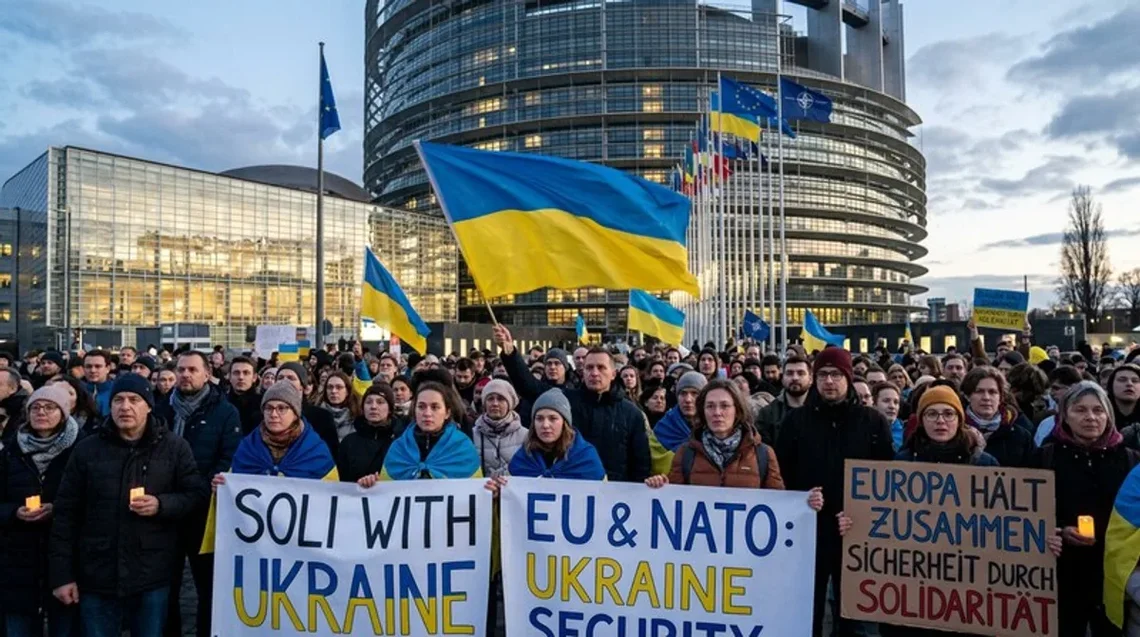
NATO has significantly expanded its military footprint across Poland and the Baltic states, deploying thousands of additional troops, advanced air defence systems, and armoured units to its eastern flank in what alliance officials describe as the most substantial reinforcement of European collective defence in a generation. The build-up, accelerated following Russia's continuing aggression in Ukraine and escalating hybrid warfare incidents across the continent, represents a structural shift in NATO's posture from a trip-wire deterrence model to a forward, combat-ready presence capable of repelling an attack without waiting for reinforcements.
Key Context: NATO's eastern flank stretches more than 2,000 kilometres from the Baltic Sea to the Black Sea. Following Russia's full-scale invasion of Ukraine, the alliance activated its Defence Plans for the first time in its history and established eight multinational battle groups — up from the original four created after the 2014 Crimea annexation. The alliance currently maintains over 500,000 troops at various readiness levels across member states, with forward-deployed forces in Estonia, Latvia, Lithuania, Poland, Slovakia, Hungary, Romania and Bulgaria. (Source: NATO)
The Strategic Architecture of the Eastern Build-Up
The reinforcement effort is not improvised. According to NATO documents and senior alliance officials, the eastern expansion follows a revised Regional Defence Plans framework adopted at the Vilnius Summit, under which each flank of the alliance is assigned specific force packages, command structures, and pre-positioned equipment. Officials said the plans mark the alliance's most operationally detailed defence architecture since the Cold War.
Poland as the Anchor State
Poland has emerged as the central logistical and military hub of NATO's eastern posture. Warsaw currently hosts a permanent US Army corps headquarters — V Corps — alongside a growing US armoured brigade combat team presence. Polish defence spending has risen to among the highest in the alliance as a share of GDP, and the country is in the process of acquiring American M1A2 Abrams tanks, HIMARS multiple-launch rocket systems, and F-35A fighter jets, according to the Polish Ministry of National Defence. The United Kingdom has also rotated forces through Poland as part of its commitments under the Joint Expeditionary Force framework. (Source: Polish Ministry of National Defence; Reuters)
Related Articles
Baltic Reinforcements and the Suwałki Gap
Estonia, Latvia, and Lithuania — the three Baltic states that share land borders with Russia or its close ally Belarus — have seen their NATO battle groups upgraded from battalion-level to brigade-level formations, a significant increase in combat power and sustainability. Military analysts and alliance officials said the Suwałki Gap, a narrow 104-kilometre land corridor connecting Poland to Lithuania and separating the Russian exclave of Kaliningrad from Belarus, remains one of the most strategically sensitive terrain features in Europe. Any Russian move to sever that corridor would effectively isolate the Baltic states from the rest of NATO territory, making its defence a top alliance priority. (Source: AP; Foreign Policy)
Air Defence and the High-End Threat Environment
Russia's repeated use of long-range cruise missiles, ballistic missiles, and Iranian-supplied Shahed drones against Ukrainian civilian and military infrastructure has sharply focused alliance attention on integrated air and missile defence across eastern Europe. NATO officials said the alliance is working to stitch together national air defence systems into a coherent layered architecture capable of intercepting threats across multiple altitudes and ranges.
Patriot and SHORAD Deployments
Germany has deployed Patriot surface-to-air missile batteries to Slovakia. The United States maintains Patriot units in Poland. Several alliance members are accelerating procurement of short-range air defence capabilities — known as SHORAD — to fill gaps exposed by the war in Ukraine, where ground-based air defence has proven decisive in limiting Russian air superiority. Officials said the demand signal from the conflict has prompted industrial production increases across allied defence manufacturers, though procurement timelines remain stretched. (Source: Reuters; NATO)
Hybrid Warfare and the Grey Zone Threat
Beyond conventional military reinforcement, NATO and European governments have expressed growing alarm at what officials describe as a coordinated Russian campaign of hybrid warfare targeting alliance cohesion. Incidents cited by European intelligence services include sabotage of undersea cables and rail infrastructure, interference with GPS navigation systems across the Baltic region, arson attacks on logistics facilities, and disinformation operations designed to erode public support for military spending and Ukraine assistance. (Source: AP; Foreign Policy)
Undersea Infrastructure Vulnerabilities
The disruption of the Nord Stream pipelines and, more recently, the severing of undersea data cables in the Baltic Sea have intensified scrutiny of critical maritime infrastructure. NATO has established a dedicated Maritime Centre for the Security of Critical Undersea Infrastructure, and member states have increased naval patrols across the Baltic. Finnish and Swedish accession to NATO has added strategic depth to this maritime dimension, with both countries bringing substantial naval capacity and geographic positioning that significantly complicates Russian Baltic fleet operations. (Source: Reuters; UN Security Council reports)
What This Means for the UK and Europe
For Britain, the reinforcement of NATO's eastern flank carries both strategic and fiscal implications. The United Kingdom is among the alliance's largest military contributors, maintaining a lead nation role in the Estonia battle group — now being upgraded to brigade level — and participating in Baltic air policing missions. British Army units from the 3rd (United Kingdom) Division have been earmarked for rapid reinforcement of the eastern flank under NATO's new force model, according to the Ministry of Defence.
Defence analysts cited in Foreign Policy have noted that the UK's commitment to meeting NATO's two percent of GDP defence spending target — and pressure from Washington to move beyond it — will require sustained political will and significant Treasury commitment at a time of domestic fiscal constraint. Prime Minister Keir Starmer's government has signalled a path to increased defence expenditure, framing it as essential to both alliance credibility and UK global standing, though the pace of the increase remains contested in Westminster.
For continental Europe, the broader implication is structural. Germany's Zeitenwende — the historic policy reversal on defence spending announced following Russia's invasion — has translated into meaningful increases in Bundeswehr capability, though officials acknowledge that procurement delays and industrial bottlenecks have slowed full realisation of the pledged €100 billion special fund. France has pushed for greater European strategic autonomy alongside NATO commitments, a tension that continues to shape alliance dynamics. (Source: Reuters; AP)
The cumulative effect is a European security landscape that has fundamentally shifted. As analysts writing in Foreign Policy have observed, the continent is undergoing a rearmament cycle not seen since the height of the Cold War, driven by a near-universal reassessment of the Russian threat following the invasion of Ukraine.
For deeper background on the evolving alliance posture, see our coverage of how NATO bolsters eastern flank amid Russia tensions and the earlier reporting on how NATO bolsters Eastern Europe presence amid Russia tensions, as well as the detailed strategic analysis of how NATO bolsters Eastern European defenses amid Russian threats.
Alliance Unity and the American Factor
The durability of the eastern reinforcement is not solely a military question. Alliance officials and European governments are acutely attentive to the political trajectory in Washington, where debate over the scope and cost of American global commitments — including to NATO — has intensified. US officials have reiterated American commitment to Article 5, the alliance's collective defence guarantee, but European member states have accelerated efforts to develop indigenous defence industrial capacity and reduce reliance on US political cycles for their security assurance.
The Two Percent Debate
At NATO's most recent summit, alliance leaders agreed that two percent of GDP should be treated as a floor rather than a ceiling for defence spending, with several eastern flank members — Poland, Estonia, Latvia, and Lithuania among them — already exceeding three percent. Western European members have been slower to reach the two percent threshold, a disparity that has generated friction within the alliance and featured prominently in transatlantic political exchanges. (Source: NATO; AP)
| Country | Defence Spending (% GDP, current) | NATO Battle Group | Lead Nation | Key Capability |
|---|---|---|---|---|
| Poland | ~4% | Yes (Enhanced Forward Presence) | United States | Armoured Brigade, V Corps HQ |
| Estonia | ~3.4% | Yes (upgraded to brigade level) | United Kingdom | Infantry, air defence |
| Latvia | ~3.2% | Yes (upgraded to brigade level) | Canada | Armoured, mechanised infantry |
| Lithuania | ~3.5% | Yes (upgraded to brigade level) | Germany | Mechanised brigade, SHORAD |
| Romania | ~2.5% | Yes | France | Multinational Division HQ |
| Finland | ~2.4% | New member integration ongoing | N/A | Large standing army, Baltic Sea |
The Road Ahead
NATO's eastern reinforcement is best understood not as a single event but as an ongoing institutional and political process, one that will be tested by elections across member states, economic pressures, and the ultimate trajectory of the war in Ukraine. If a ceasefire or negotiated pause in Ukraine emerges, alliance officials have been explicit that forward deployments will not be drawn down — the lesson drawn from 2014, when a less assertive Western response arguably emboldened further Russian aggression, is deeply embedded in current NATO planning assumptions.
The question confronting European governments — including London — is whether the political will and industrial capacity to sustain and deepen this posture will hold over years and decades, not merely months. For now, the direction of travel is clear: NATO's eastern flank is no longer a frontier to be reinforced after the fact, but a defended line intended to make the cost of Russian aggression prohibitive from the outset.
Related coverage: NATO bolsters eastern defenses amid Russia tensions | NATO expands eastern defenses amid Russia tensions