Senate Deadlocked on Budget as Fiscal Year Deadline Nears
Republicans, Democrats clash over spending priorities
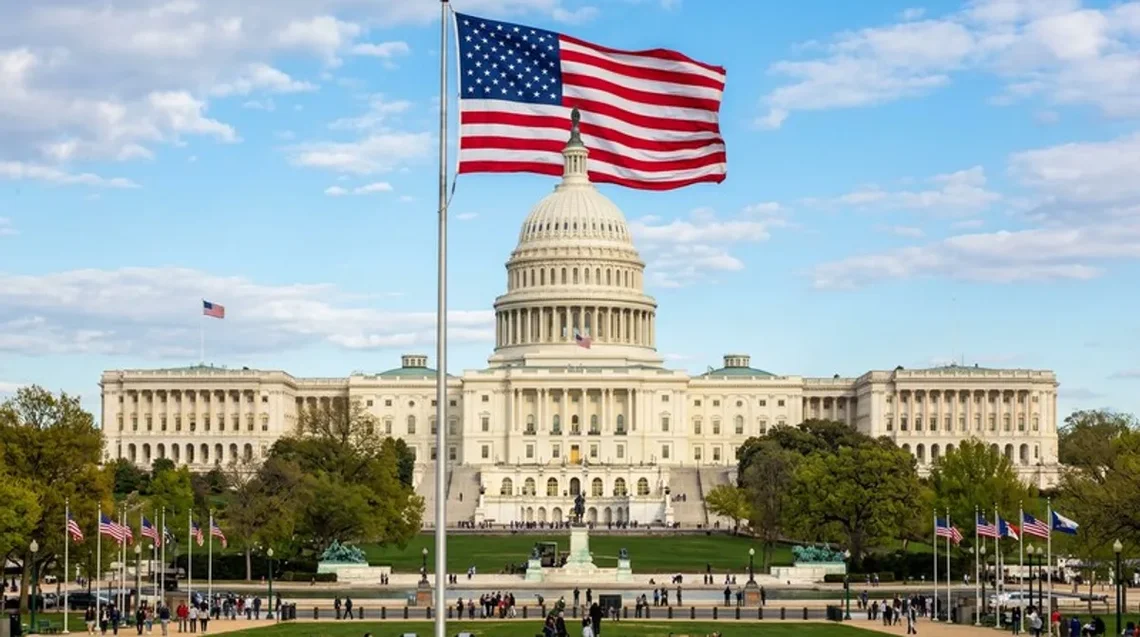
The United States Senate remains locked in a deepening standoff over federal spending levels, with lawmakers unable to reach agreement on a budget framework as the end of the fiscal year approaches and the prospect of a government shutdown grows more acute by the day. Party leaders on both sides have hardened their positions, with Republicans demanding steep cuts to discretionary programmes and Democrats refusing to accept reductions they argue would undermine social safety nets and public services relied upon by millions of Americans.
Key Positions: Republicans are pushing for significant reductions in non-defence discretionary spending, arguing that the federal deficit has reached unsustainable levels and that fiscal discipline must be restored; Democrats are insisting on protecting funding for healthcare, housing assistance, and education while calling for any deficit reduction to include new revenue measures targeting high-income earners and corporations; White House officials have signalled a willingness to negotiate but have drawn firm lines against cuts to Medicare, Medicaid, and Social Security, warning that the administration will veto any budget legislation it considers harmful to working families and vulnerable populations.
The Shape of the Standoff
Negotiations in the upper chamber have stalled repeatedly over the past several weeks, with procedural votes failing to clear the 60-vote threshold required to advance major spending legislation. Senate Majority and Minority leaders have exchanged competing proposals without finding common ground, according to congressional aides familiar with the talks. The impasse reflects not only a disagreement over numbers but a fundamental divergence in governing philosophy that has defined the relationship between the two parties for much of the current political era.
Discretionary Spending at the Centre
The sharpest disagreements concern non-defence discretionary spending, the category that funds federal agencies, scientific research, environmental enforcement, and a range of social programmes. Republican negotiators have proposed returning that category to levels below recent baselines, framing the cuts as necessary correctives to what they describe as reckless expansion of the federal government under Democratic leadership. Democratic appropriators counter that those programmes are already stretched and that further reductions would produce visible harm in communities across the country, officials said.
Related Articles
The Congressional Budget Office has projected that failure to pass a full-year budget resolution before the fiscal deadline could trigger automatic spending disruptions that would affect hundreds of federal agencies and their employees. Continuing resolutions — stopgap measures that maintain government funding at existing levels — have historically been used to avert shutdowns, but senior appropriators in both parties have expressed frustration with that approach, warning that it defers rather than resolves the underlying fiscal disputes (Source: Congressional Budget Office).
Republican Strategy and Internal Pressures
Senate Republicans have faced their own internal tensions throughout the budget process. A faction of fiscal conservatives has pushed leadership to hold firm on spending cuts and to resist any compromise that maintains what they characterise as inflated post-pandemic expenditure levels. Moderate Republicans from competitive states have been more cautious, wary of the political consequences of a government shutdown heading into an election cycle.
The Defence Spending Calculation
One area where Republican unity has been stronger is defence appropriations. Party leaders have consistently called for increases in military spending, framing national security investment as non-negotiable in the current global environment. That position has created an additional complication for budget talks, as Democrats have argued that any increase in defence spending must be matched by equivalent increases in domestic programmes — a demand Republicans have rejected outright.
For more on the legislative mechanics of this dispute, see our earlier coverage of how Senate negotiations over the fiscal year budget plan have evolved through successive rounds of failed votes.
The internal Republican debate over tactics has been closely watched by observers. Some conservatives have suggested using the budget deadline as leverage to extract broader policy concessions, including on immigration enforcement and border security funding. That approach has drawn criticism from centrists who argue it risks transforming routine appropriations into a vehicle for partisan brinkmanship, according to congressional aides.
Democratic Priorities and the White House Role
Senate Democrats have sought to keep the focus on what they describe as the human cost of proposed Republican cuts. Party leaders have highlighted in floor speeches and public statements the potential impact on Head Start programmes, affordable housing vouchers, community health centres, and federal nutrition assistance. They have also pointed to polling data suggesting that a majority of Americans oppose cuts to social programmes even when told they contribute to deficit reduction (Source: Gallup).
White House Engagement
The White House has played an active role in budget talks, dispatching senior budget officials to Capitol Hill for negotiations with both parties. Administration officials have described the Republican spending proposals as extreme and have emphasised the president's commitment to vetoing any legislation that imposes what they characterise as disproportionate burdens on lower- and middle-income Americans. At the same time, the White House has signalled openness to targeted savings in areas it considers lower priority, a position that has not yet been enough to bridge the gap with Republican negotiators, officials said.
Our reporting on the related Senate deadlock over the spending bill as the fiscal year looms provides additional context on the White House's evolving negotiating posture and the pressures facing both parties as the clock runs down.
Public Opinion and the Politics of Shutdown Risk
Public attitudes toward government shutdowns have remained consistently negative across partisan lines, though voters tend to assign blame unevenly depending on the political context and media framing of any given dispute. Research by Pew has found that Americans broadly prefer a negotiated compromise over a shutdown even when they sympathise with the goals of the party holding out, a dynamic that creates political risk for whichever side is seen as the primary obstacle to a deal (Source: Pew Research Center).
| Indicator | Figure | Source |
|---|---|---|
| Senate votes required to advance major spending bill | 60 (cloture threshold) | Senate rules |
| Americans who oppose cuts to social programmes (polling) | 58% | Gallup |
| Americans who favour compromise over shutdown | 63% | Pew Research Center |
| Federal workers potentially affected by shutdown | Approx. 2 million | Congressional Budget Office |
| Number of full-year appropriations bills pending | 12 | Senate Appropriations Committee |
| Days remaining before fiscal year deadline (at time of reporting) | Fewer than 30 | AP |
Historical Precedent and Shutdown Consequences
Past government shutdowns have inflicted measurable damage on the federal workforce, government contractors, and the broader economy. The Congressional Budget Office has documented the economic costs of previous shutdowns, including lost productivity, deferred government services, and reputational harm to US institutions at home and abroad. Financial markets have historically treated extended shutdown uncertainty as a source of near-term volatility, though the longer-term economic impact tends to dissipate once normal operations resume (Source: Congressional Budget Office).
Reuters and the Associated Press have both reported that credit rating analysts and fiscal policy organisations are closely monitoring the congressional situation, with some warning that repeated failures to pass timely budgets contribute to broader concerns about US fiscal governance (Source: Reuters; Source: AP).
Border Security Provisions and the Wider Complication
Adding a further layer of complexity to the negotiations, a group of Republican senators has sought to attach border security provisions to any budget agreement, arguing that immigration enforcement funding must be addressed as part of a comprehensive fiscal package. Democrats have largely resisted that approach, arguing that border policy should be addressed through separate legislation and not used as a condition for keeping the government funded.
The push to link border funding to the broader spending bill has fractured negotiations at key moments, with some Republicans viewing the linkage as essential leverage and others worried it makes a deal harder to achieve. For deeper analysis of how that specific dispute has played out, see our coverage of the Senate deadlock on border security provisions in the budget deal.
Bipartisan Talks and Their Limits
A small group of senators from both parties has attempted to negotiate a bipartisan framework that could attract the 60 votes needed for Senate passage. Those talks have made incremental progress on some issues but have not produced a comprehensive agreement, and sources familiar with the discussions caution that significant gaps remain on both spending levels and policy riders. Senate leadership on both sides has remained publicly non-committal about whether any such bipartisan framework could serve as the basis for a broader deal, according to officials.
What Comes Next
With time running short, Senate leaders face a narrowing set of options. They can continue pursuing a full-year appropriations agreement, though the prospects for that path appear limited given current positions. They can pass another continuing resolution, though that would likely face objections from conservatives who have vowed to oppose stopgap measures that they say entrench current spending levels. Or they can allow the fiscal year to lapse without a funding mechanism in place, triggering a shutdown that neither party's leadership appears eager to own publicly.
Our earlier reporting on how the Senate has repeatedly failed to reach a budget deal as the deadline looms traced the sequence of failed procedural votes and missed negotiating windows that have brought Congress to its current position.
The coming days will test whether lawmakers can summon the political will to resolve a dispute that has defied resolution across weeks of talks. Leadership aides on both sides acknowledged that the window for a negotiated solution is closing rapidly, and that the decisions made in the near term will have consequences for federal operations, government workers, and the communities that depend on services funded through the federal budget. The nation's fiscal credibility, analysts note, is ultimately shaped not only by the numbers on a balance sheet but by the capacity of its elected representatives to govern — a capacity that this standoff has, once again, placed in question.