Senate Deadlocked on Spending Bill as Recess Looms
Democrats, Republicans split on immigration riders
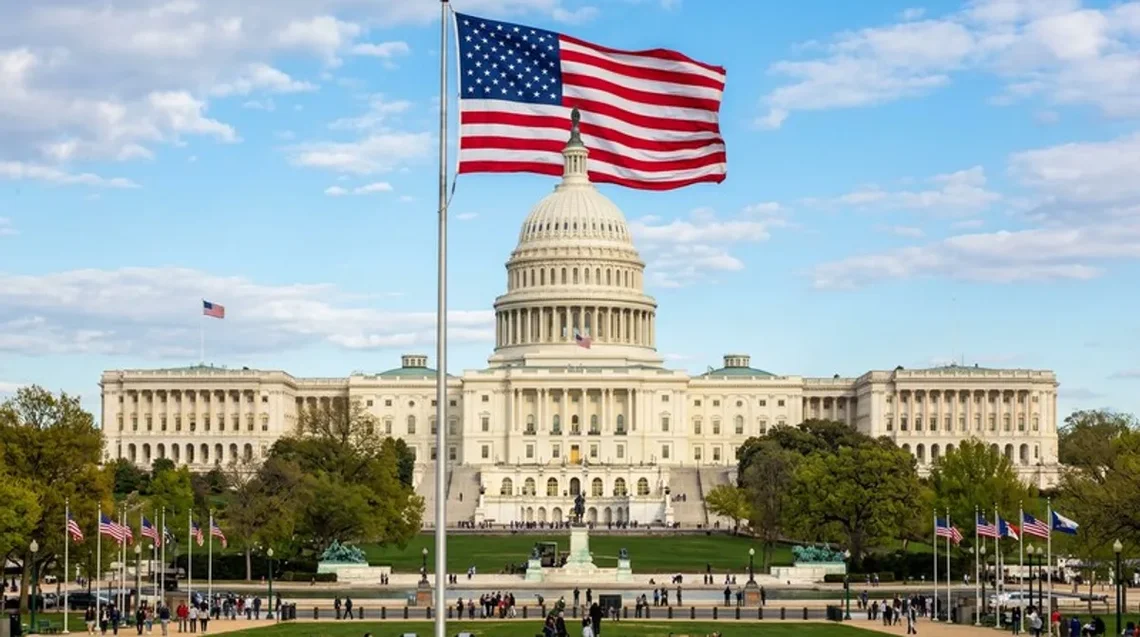
The United States Senate remains locked in a bitter impasse over a stopgap government spending bill, with lawmakers unable to bridge deep divisions over immigration enforcement provisions attached to the legislation as a scheduled congressional recess draws near. With federal funding set to lapse and no compromise in sight, the standoff raises the prospect of a government shutdown that the Congressional Budget Office has warned would disrupt services across dozens of federal agencies.
Key Positions: Republicans are demanding the inclusion of stricter border security and immigration enforcement measures as a condition for supporting any continuing resolution, including expanded detention authority and restrictions on asylum processing. Democrats are rejecting those riders as poison pills that would weaponise the appropriations process to advance hardline immigration policy outside of regular legislative order, insisting on a clean spending bill. The White House has signalled it supports the Republican framework and has urged Senate Democrats to accept the immigration provisions, warning that the administration will not sign a continuing resolution that fails to address what it describes as an ongoing crisis at the southern border.
The State of Play on the Senate Floor
Senate leaders on both sides of the aisle have so far failed to produce the 60 votes required to advance a spending package through the chamber's procedural thresholds, leaving appropriators scrambling for a path forward. The impasse follows weeks of back-channel negotiations that have repeatedly collapsed over the scope and language of immigration-related provisions that Republicans are insisting must accompany any short-term funding agreement, officials said.
Cloture Votes and the Procedural Hurdle
Multiple attempts to invoke cloture on procedural motions have fallen short of the 60-vote supermajority required under Senate rules, according to congressional records. The repeated failures underscore the depth of the partisan divide and have effectively frozen action on the broader appropriations calendar. Senior Senate aides said privately that leadership on both sides has yet to identify a negotiating framework that could peel off the handful of votes needed to break the deadlock. For context on the chamber's recent history with similar impasses, see our earlier reporting on Senate faces deadline on spending bill as shutdown looms.
Related Articles
Recess Pressure and the Legislative Clock
The pressure of an approaching recess has historically served as a forcing mechanism in congressional negotiations, though analysts cautioned it does not guarantee resolution. Lawmakers on both sides face constituent pressure to return to their home states for scheduled district work periods, creating a political incentive to either reach a deal or accept the political consequences of a shutdown, officials said. Senate Majority Whip offices on both sides have been conducting vote counts in recent days, according to people familiar with the process.
Immigration Riders at the Centre of the Dispute
The central flashpoint in the negotiations is a package of immigration enforcement measures that Republican appropriators have insisted must be folded into the continuing resolution. Those provisions include expanded authority for Immigration and Customs Enforcement to conduct detention operations, changes to asylum processing timelines, and funding mechanisms tied to border infrastructure, according to legislative text reviewed by reporters. Democrats have characterised those measures as substantive policy changes that have no place in a must-pass funding bill.
Republican Arguments for Inclusion
Republican senators have argued that the spending bill represents one of the few available legislative vehicles to force action on immigration policy before the recess, given the broader legislative calendar's constraints. Supporters of the riders point to what they describe as record encounters at the southern border as justification for attaching enforcement measures to funding legislation. The debate echoes a previous standoff documented in our coverage of how Senate deadlocked on border funding as summer recess looms, which similarly ended without resolution ahead of a scheduled break.
Democratic Opposition and the Clean Bill Demand
Senate Democrats have countered that accepting immigration riders in a continuing resolution would set a damaging precedent, allowing whichever party controls the chamber to use routine funding bills as leverage to advance contested policy goals. Several moderate Democratic senators, whose votes would be needed to reach 60, have also indicated privately that the specific language of the Republican-backed provisions goes further than anything they could support, according to congressional aides familiar with the discussions. The broader battle over immigration legislation in the Senate is documented in our earlier coverage of how the Senate stalls on immigration bill as election looms.
Public Opinion and the Politics of a Potential Shutdown
Polling data suggest the public holds nuanced views on both immigration enforcement and government shutdowns that complicate the political calculus for senators on both sides. A recent Gallup survey found that a majority of Americans consistently rate immigration as one of the country's most important problems, a figure that has remained elevated in recent months (Source: Gallup). However, separate Pew Research data indicate that public support for government shutdowns as a negotiating tactic remains low across partisan lines, with significant majorities in both parties expressing disapproval of using funding deadlines to extract policy concessions (Source: Pew Research Center).
| Metric | Figure | Source |
|---|---|---|
| Senate votes needed to invoke cloture | 60 of 100 | Senate Rules |
| Americans rating immigration a top problem | ~55% | Gallup |
| Public disapproval of shutdown as negotiating tactic | ~62% | Pew Research Center |
| Federal agencies affected by a lapse in funding | Dozens | Congressional Budget Office |
| Previous shutdown-related economic cost (annualised estimate) | Billions in disrupted federal activity | Congressional Budget Office |
| Senate Republican caucus size | 53 seats | Senate records |
| Senate Democratic caucus size (incl. independents) | 47 seats | Senate records |
White House Involvement and Executive Pressure
The administration has weighed in forcefully on the side of the Republican position, with senior White House officials making clear that the president would not sign a continuing resolution that excludes immigration enforcement provisions. That posture has hardened the Republican negotiating stance and reduced the room for a compromise continuing resolution of the kind that has historically been used to buy additional time for appropriators, officials said.
Negotiations Between the White House and Senate Leaders
White House legislative affairs staff have been in active contact with Senate Republican leadership offices to coordinate the administration's demands, according to people familiar with the discussions. Those conversations have focused on identifying a minimum package of immigration provisions that could satisfy the administration while potentially attracting enough Democratic or moderate Republican support to clear the procedural threshold, the people said. Whether that effort will succeed before the recess window closes remains uncertain, according to aides on both sides of the aisle. The administration's previous posture on immigration legislation is examined in our earlier reporting on how Senate Democrats block Trump immigration bill.
Economic and Operational Consequences of a Shutdown
A lapse in federal appropriations would trigger automatic funding cuts across a broad range of government operations, with consequences that the Congressional Budget Office has assessed would be felt almost immediately across federal agencies (Source: Congressional Budget Office). Essential services would continue under provisions governing national security and public safety, but hundreds of thousands of federal workers could face furloughs or delayed pay, according to assessments of prior shutdowns reviewed by this outlet. The ripple effects would also extend to contractors and businesses dependent on federal spending, economists noted.
Agency-Level Impact Assessments
Agencies with the largest workforces and the most complex operational dependencies, including the Department of Homeland Security, the Department of Health and Human Services, and the Internal Revenue Service, would face the most immediate disruptions in the event of a funding lapse, according to budget analysts. The IRS timing is particularly sensitive given ongoing filing and processing cycles. Reuters reported separately that agency contingency plans have been reviewed and updated in recent weeks in anticipation of a possible shutdown scenario (Source: Reuters).
Path Forward and What Comes Next
Senate leaders from both parties have said publicly that they prefer a negotiated solution over a shutdown, but the conditions each side has attached to any agreement have so far proven incompatible. Several scenarios remain in play, according to congressional aides: a last-minute compromise that includes a scaled-back version of some immigration provisions, a clean continuing resolution passed with a narrow bipartisan coalition, or a full lapse in funding that forces both sides back to the table under pressure from constituents and markets. The AP reported that informal conversations between senior appropriators have continued even as floor votes have stalled, suggesting some residual appetite for a deal (Source: AP). For additional background on the Republican side's legislative strategy, see our coverage of how Senate Republicans block immigration reform bill in a prior congressional session.
With the recess window narrowing and no agreement announced, the coming days will likely determine whether Congress can avoid another government shutdown or whether the standoff hardens into a full funding lapse — a prospect that neither party publicly endorses but that neither has yet taken sufficient steps to prevent.