Senate Faces Deadline on Spending Bill as Shutdown Looms
Democrats and Republicans clash over budget priorities
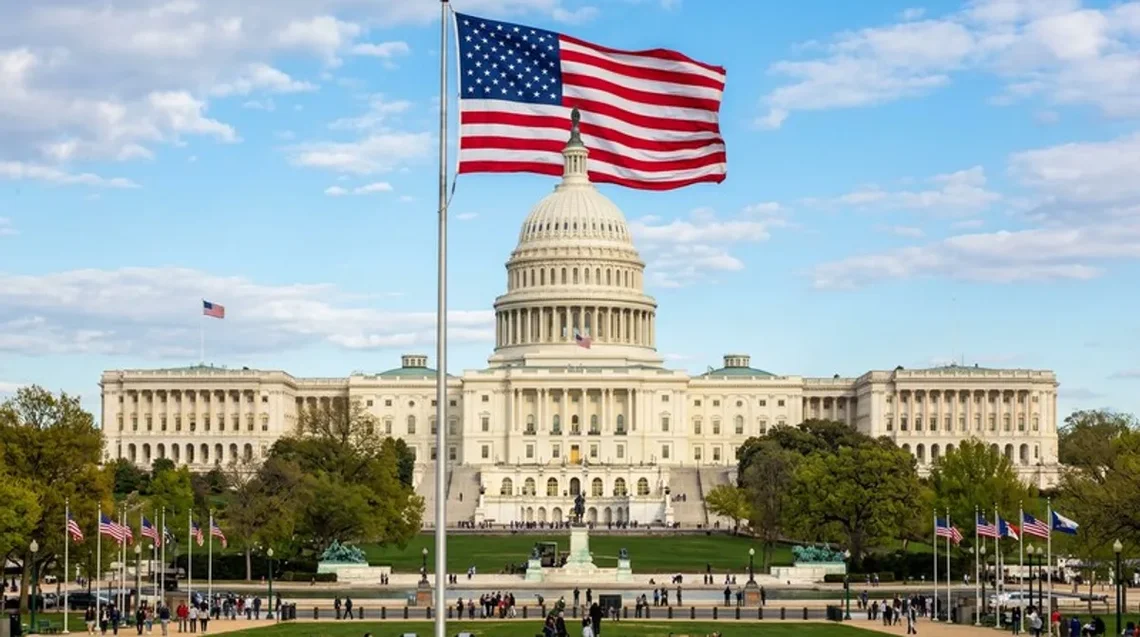
The United States Senate is racing against a hard deadline to pass a government funding bill, with lawmakers on both sides of the aisle locked in an increasingly bitter dispute over spending priorities that threatens to trigger a federal shutdown affecting hundreds of thousands of workers and a broad range of public services. Congressional leaders have so far failed to bridge fundamental disagreements on discretionary spending caps, defence allocations, and domestic programme funding, leaving the outcome deeply uncertain as the deadline approaches.
Key Positions: Republicans are pushing for significant cuts to non-defence discretionary spending, increased allocations for border security, and strict caps on overall federal outlays, arguing that the current trajectory of government borrowing is unsustainable. Democrats are insisting on maintaining funding levels for social programmes, healthcare, and education, and have rejected proposals they characterise as extreme cuts that would harm working families. White House officials have signalled a preference for a short-term continuing resolution to buy time for negotiations, while simultaneously pressing Congress to reach a full-year agreement that avoids the economic disruption associated with a prolonged shutdown.
The State of Play on Capitol Hill
With the funding deadline bearing down, Senate Majority and Minority leaders have been engaged in closed-door negotiations, according to multiple officials familiar with the discussions. Neither side has publicly declared a breakthrough, and floor votes on any compromise measure remain unscheduled, fuelling concern among federal agencies that have begun preliminary contingency planning, officials said.
The Congressional Budget Office has projected that a government shutdown lasting more than two weeks would measurably reduce near-term economic output, delay federal payments to contractors and benefit recipients, and temporarily furlough a substantial portion of the civilian federal workforce. Those projections are adding urgency to talks even as partisan rhetoric has intensified. (Source: Congressional Budget Office)
Related Articles
Continuing Resolution as a Stopgap
A continuing resolution — a measure that funds the government at existing levels for a defined period — has emerged as the most likely vehicle for avoiding an immediate shutdown, according to congressional aides. However, several conservative Republican senators have indicated they will not support a clean continuing resolution without concessions on spending cuts or border security provisions, complicating the arithmetic needed to pass such a measure through the chamber.
On the Democratic side, leadership has expressed openness to a short-term extension provided it does not include policy riders that they argue fall outside the scope of a straightforward funding measure. The two positions leave a narrow path for any deal, and aides on both sides acknowledge that the margin for error is effectively zero given the current composition of the Senate.
Defence Versus Domestic Spending
At the heart of the dispute is a longstanding tension between Republican calls for elevated defence spending and Democratic resistance to cuts in what appropriators term the non-defence discretionary category, which funds everything from scientific research and environmental programmes to housing assistance and federal education support. Republicans have argued that domestic spending has grown at an unsustainable pace in recent years, while Democrats counter that defence budgets have also expanded significantly and that the burden of fiscal restraint should not fall exclusively on programmes that serve lower- and middle-income Americans, officials said.
Public Opinion and the Political Stakes
Polling data consistently show that government shutdowns are broadly unpopular with the American public, though voters assign blame unevenly depending on the specifics of each episode and the prevailing political environment. According to Gallup, public approval of Congress tends to dip measurably in the aftermath of high-profile legislative failures, with both parties absorbing reputational damage even when one side is more directly associated with the impasse. (Source: Gallup)
Pew Research data indicate that a majority of Americans believe the federal government should reach bipartisan budget agreements rather than allow shutdowns to occur as a negotiating tactic, a finding that has been relatively consistent across multiple survey cycles. However, the same data also show significant divergence in how Republican and Democratic voters prioritise specific spending categories, which helps explain why elected officials face intense pressure from their respective bases even when the broader public favours compromise. (Source: Pew Research)
Electoral Calculus
The shutdown standoff is unfolding against a charged political backdrop, with both parties acutely aware of how a prolonged closure could affect public perceptions heading into the next electoral cycle. Republican strategists have argued that their base rewards firmness on spending and border security, while Democratic operatives contend that a shutdown will be blamed on dysfunction in the Republican-controlled House, which must also pass any funding measure before it reaches the Senate.
The dynamic bears some resemblance to previous congressional impasses, including the extended debates over immigration legislation that have repeatedly stalled on procedural votes in recent sessions. As ZenNewsUK has reported, partisan divisions over policy riders attached to must-pass legislation have become a recurring feature of budget negotiations, with immigration provisions in particular proving to be a flash point. Readers can review related coverage of how Senate gridlock on immigration intersects with electoral pressures, as well as the specific legislative dynamics explored in reporting on how Republican procedural moves have blocked immigration reform and how Democratic opposition has similarly stalled Republican-backed immigration measures.
| Metric | Figure | Source |
|---|---|---|
| Federal civilian employees potentially furloughed in a shutdown | Approx. 800,000 – 1 million | Congressional Budget Office |
| Americans who disapprove of government shutdowns as a negotiating tactic | ~72% | Gallup |
| Share of voters who believe Congress should prioritise bipartisan budget deals | ~65% | Pew Research |
| Senate votes needed to advance most spending legislation (cloture threshold) | 60 | U.S. Senate rules |
| Estimated GDP impact of a two-week-plus shutdown (short-term reduction) | ~0.1–0.2 percentage points | Congressional Budget Office |
| Congressional approval rating during recent legislative impasses | 15–20% | Gallup |
What a Shutdown Would Mean in Practice
A lapse in federal appropriations would immediately halt all non-essential government functions, according to the Office of Management and Budget's standard shutdown protocols. Agencies with pre-approved emergency funding or multi-year appropriations — including portions of the Department of Defense and certain mandatory spending programmes such as Social Security and Medicare — would continue operating. However, a wide range of federal services would be suspended or significantly curtailed.
Impact on Federal Workers and Contractors
Federal employees deemed non-essential would be placed on unpaid furlough for the duration of any shutdown, though Congress has historically passed retroactive pay legislation once funding is restored, officials said. Federal contractors — who number in the hundreds of thousands and whose companies depend on government work — have no such guarantee of retroactive compensation, and their situation has been cited by both parties as a reason to avoid a prolonged impasse, according to Reuters reporting on prior shutdowns. (Source: Reuters)
The ripple effects extend beyond Washington. Offices of federal agencies are distributed across all fifty states, meaning a shutdown produces localised economic disruptions far from Capitol Hill — particularly in regions where federal employment represents a significant share of the workforce, data show.
National Parks, Passport Services, and Federal Courts
Among the most visible effects of a shutdown for ordinary Americans are the closure of national parks and monuments, delays in passport and visa processing, and the suspension of certain regulatory functions including food safety inspections conducted by agencies operating without appropriated funds. The Associated Press has documented in previous shutdown coverage how these disruptions generate sustained negative news coverage that tends to focus public attention on congressional dysfunction rather than the substantive policy arguments driving the impasse. (Source: AP)
The Path Forward: Compromise or Confrontation
Senate negotiators are exploring several potential off-ramps, according to officials familiar with the discussions. Among the options under consideration are a clean short-term continuing resolution extending current funding levels for four to six weeks, a partial omnibus deal covering the most politically sensitive agencies, and a framework agreement that would commit both parties to specific topline spending numbers while leaving detailed appropriations work to be completed at a later date.
None of those options has yet secured the sixty votes typically required to overcome a procedural hurdle in the Senate, and the House presents its own set of complications, with conservative members of the Republican caucus having demonstrated a willingness in recent sessions to oppose leadership-backed spending proposals, officials said.
Leadership Pressure and the Role of Party Moderates
A small group of centrist senators from both parties has been identified by congressional watchers as potentially pivotal in any final agreement. These members have historically been willing to break with leadership on procedural votes when they believe inaction poses greater political risk than compromise. Whether that group can coalesce around a shared position before the deadline expires remains the central unanswered question, according to officials and analysts tracking the negotiations.
The broader pattern of legislative brinkmanship over must-pass bills — including measures beyond the budget — has deepened public scepticism about Congress's capacity to function, a trend that both parties acknowledge in private even as they publicly lay blame on the opposing side. Those familiar dynamics have played out repeatedly in fights over immigration and border policy, as ZenNewsUK has tracked in reporting on Democratic opposition to Trump-aligned immigration legislation and the recurring pattern documented in coverage of party-line votes that have repeatedly killed immigration reform proposals.
Historical Context and Precedent
The United States has experienced more than twenty government shutdowns since modern appropriations rules took effect, ranging in duration from a single day to the record 35-day closure that ended in early 2019. The Congressional Budget Office estimated that the 2018–2019 shutdown ultimately cost the federal government more than it would have spent under a continuing resolution, due to back pay obligations, lost productivity, and administrative costs associated with shutdown and restart procedures. (Source: Congressional Budget Office)
Each shutdown has generated its own set of political lessons, but the consistent finding across independent analyses is that prolonged closures impose measurable economic costs and damage institutional trust without producing durable policy victories for either side, data show. Whether that historical record will prove persuasive to the current Congress remains to be seen as the deadline closes in.
As negotiations continue behind closed doors and the clock runs down, the most immediate question facing Senate leaders is whether the institutional and political costs of a shutdown have finally reached the threshold needed to force a deal — or whether another episode of brinkmanship will extend into the days and weeks ahead, leaving federal workers, contractors, and service recipients to absorb the consequences of an agreement that has yet to materialise.