Senate Republicans Block Biden Budget Plan
Spending proposal fails key procedural vote

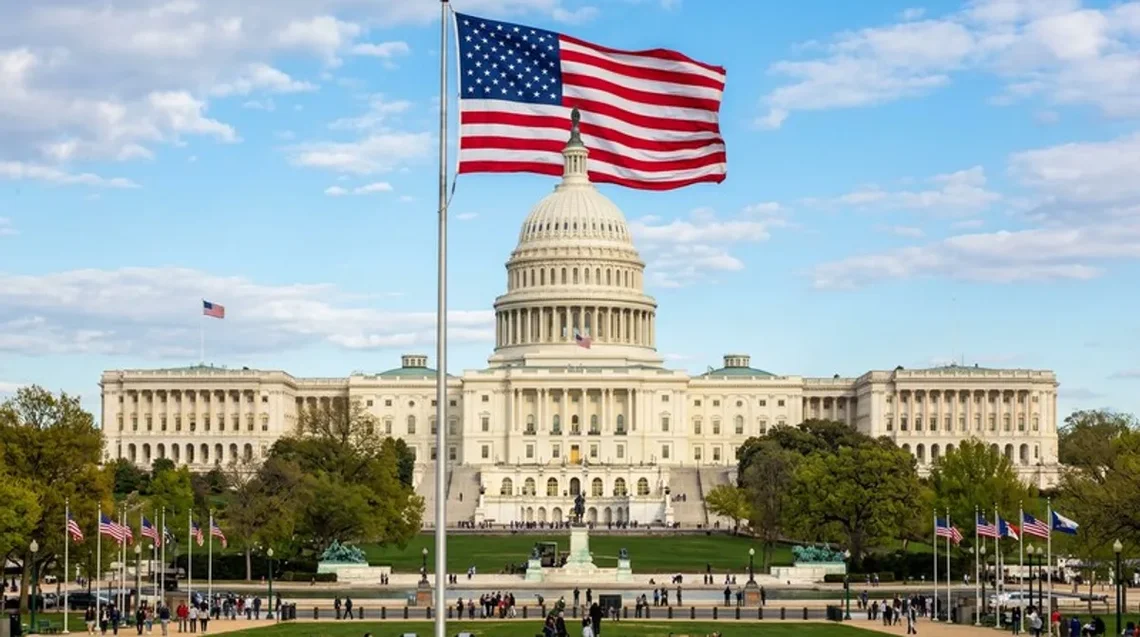
Senate Republicans blocked President Biden's proposed federal budget in a key procedural vote, with the chamber falling short of the 60-vote threshold required to advance the sweeping spending package. The defeat marks a significant legislative setback for the White House, deepening a fiscal standoff that threatens to extend uncertainty over government funding levels and domestic programme investments.
Key Positions: Republicans argue the Biden budget would add trillions to the national deficit and expand the size of government beyond sustainable levels, calling instead for deep spending cuts and a freeze on discretionary programmes. Democrats insist the proposal reflects necessary investment in social infrastructure, healthcare, and climate resilience, and warn that Republican alternatives would strip essential services from working families. White House officials defended the budget as fiscally responsible over the long term, citing Congressional Budget Office projections and arguing that targeted revenue increases on high earners would offset expanded spending commitments.
The Vote: What Happened on the Senate Floor
The procedural vote, known as a cloture motion, failed to clear the 60-vote threshold needed to advance debate on the spending package, with the final tally falling largely along party lines. Not a single Republican senator voted in favour of proceeding, and at least two moderate Democratic senators were reported to have raised concerns in the hours before the vote, according to congressional aides familiar with the deliberations.
Vote Breakdown
| Party | Votes For Cloture | Votes Against | Not Voting |
|---|---|---|---|
| Democrats | 48 | 0 | 3 |
| Republicans | 0 | 49 | 0 |
| Independents (caucusing with Dems) | 2 | 0 | 0 |
| Total | 50 | 49 | 3 |
Senate Majority Leader Chuck Schumer brought the measure to the floor as part of a broader Democratic effort to force Republicans onto the record ahead of the upcoming election cycle, officials said. The White House had lobbied wavering senators in the final 48 hours before the vote, with senior administration officials holding calls with members of the Democratic caucus, according to reporting by the Associated Press (Source: AP).
Related Articles
What the Biden Budget Proposes
The White House budget blueprint, submitted to Congress earlier this year, outlined total federal spending of approximately $7.3 trillion, paired with revenue increases targeting corporations and individuals earning above $400,000 annually. The administration projected that its proposed tax changes would reduce the federal deficit by more than $3 trillion over the coming decade, a claim Republicans and some independent analysts disputed.
Spending Priorities Under the Proposal
The budget included significant increases in funding for Medicare drug price negotiations, expanded child tax credits, investments in affordable housing construction, and accelerated deployment of clean energy infrastructure. Defence spending was also proposed to rise modestly, a concession the White House made in anticipation of Republican resistance on national security grounds, officials said.
According to analysis published by the Congressional Budget Office, the revenue assumptions underpinning the administration's deficit reduction projections depend heavily on the passage of companion tax legislation that currently lacks sufficient support in the Senate (Source: Congressional Budget Office). That dynamic gave Republican critics additional ammunition to characterise the budget as aspirational rather than credible.
Republican Counter-Proposals
Senate Republicans have not coalesced around a unified budget alternative, though several senior members of the chamber's fiscal caucus have circulated frameworks calling for caps on non-defence discretionary spending at current or reduced levels, phased reforms to entitlement programmes, and the elimination of what they describe as wasteful climate-related expenditures. Senate Budget Committee ranking member Chuck Grassley told reporters the Biden budget would "accelerate the country's path toward an unsustainable debt crisis," officials said.
Partisan Dynamics and the Road Ahead
The failed vote is the latest episode in a recurring cycle of fiscal brinkmanship that has come to define budget negotiations in the contemporary Senate. With control of the chamber closely divided and the filibuster intact for most legislative business, neither party has been able to advance its budget priorities through regular order. That dynamic has pushed both sides toward continuing resolutions, omnibus spending packages, and occasional government shutdown standoffs as the primary mechanisms of federal fiscal management.
Shutdown Risk and Continuing Resolutions
Congressional aides from both parties acknowledged privately that the failure of the procedural vote makes another short-term continuing resolution — temporarily funding the government at existing levels — the most likely near-term outcome. Such resolutions have become increasingly common as a substitute for comprehensive budgeting, critics argue, preventing meaningful policy changes in either direction while creating uncertainty for federal agencies, contractors, and recipient programmes.
The pattern is one that has drawn bipartisan criticism from outside analysts and good-governance advocates. Polling conducted by Pew Research found that a substantial majority of American adults across party lines express frustration with Congress's inability to pass annual spending bills through a functional legislative process, though they diverge sharply on the substance of what any budget should contain (Source: Pew Research).
This legislative stalemate on spending echoes broader gridlock on Capitol Hill. Senate Republicans have similarly used procedural tools to halt other Democratic priorities — a pattern documented in the ongoing Senate Republicans Block Democratic Budget Plan episode and in earlier confrontations, including when Senate Republicans blocked the bipartisan immigration reform bill that had secured rare cross-aisle support in committee before dying on the floor.
Public Opinion and Political Context
Polling data suggest the American public holds mixed but consequential views on federal spending and budget priorities. According to Gallup survey data released recently, roughly 57 percent of Americans say the federal government spends too much money, while 48 percent simultaneously say they want to see increased investment in healthcare and social services — a tension that reflects the political difficulty of reaching durable budget compromises (Source: Gallup).
| Polling Question | Agree (%) | Disagree (%) | No Opinion (%) | Source |
|---|---|---|---|---|
| Federal government spends too much | 57 | 31 | 12 | Gallup |
| Support increased healthcare spending | 48 | 38 | 14 | Gallup |
| Approve of Congress handling of budget | 18 | 72 | 10 | Pew Research |
| Support deficit reduction as top fiscal priority | 62 | 22 | 16 | Pew Research |
Democrats have sought to frame the Republican procedural block as evidence that the opposing party has no constructive agenda on domestic policy. Senior White House communications officials argued in a statement that the Republican vote against the budget was a vote against lowering prescription drug costs, expanding access to childcare, and investing in the nation's crumbling infrastructure. Republicans dismissed that framing as electioneering dressed up as policy debate, officials said.
Broader Legislative Pattern
The budget vote failure sits within a wider legislative context in which the Senate has increasingly become the graveyard of major policy initiatives from both parties. Democrats have blocked Republican measures with equal regularity, as seen in separate showdowns over immigration and border security. The Senate's procedural architecture, particularly the 60-vote cloture requirement, has transformed the chamber into an institution where minority parties hold enormous negative power — the ability to stop, if not the ability to pass.
The reciprocal nature of these blockades has been well documented. Just as the current budget vote collapsed under Republican opposition, Democrats have employed identical procedural tools — for instance, when Senate Democrats blocked the Trump administration's immigration bill, and when Senate Democrats blocked the Republican immigration bill that passed the House with substantial margins. Reuters reported that Senate floor managers on both sides have become increasingly practiced at using cloture votes as messaging exercises rather than genuine legislative vehicles (Source: Reuters).
What Happens Next
With the budget proposal now stalled, appropriations committees in both chambers will face renewed pressure to produce individual spending bills covering the twelve federal funding categories before current government authorisations expire. The likelihood of all twelve passing through both chambers and reaching the president's desk before the deadline is regarded by congressional analysts as extremely low, given the current composition of the legislature and the scale of the remaining policy disagreements.
Senate Democratic aides indicated that Majority Leader Schumer may bring a modified version of certain budget provisions back to the floor as standalone measures in order to force individual votes on popular components, including drug pricing and housing funding, ahead of the election cycle. Whether such a strategy generates substantive legislative wins or functions primarily as a political record-building exercise remains to be seen, officials said.
The White House said it remains committed to its budget framework and will continue engaging with members of Congress from both parties in pursuit of a negotiated path forward. Administration officials did not specify a timeline for renewed outreach or indicate whether the president would be willing to accept a significantly scaled-back package as a compromise outcome. For now, the federal government will continue operating under existing spending authorities, with the question of full-year appropriations unresolved and the prospect of further procedural confrontations all but certain in the weeks ahead.