Senate Republicans Block Biden Budget Proposal
Spending dispute threatens government funding deadline
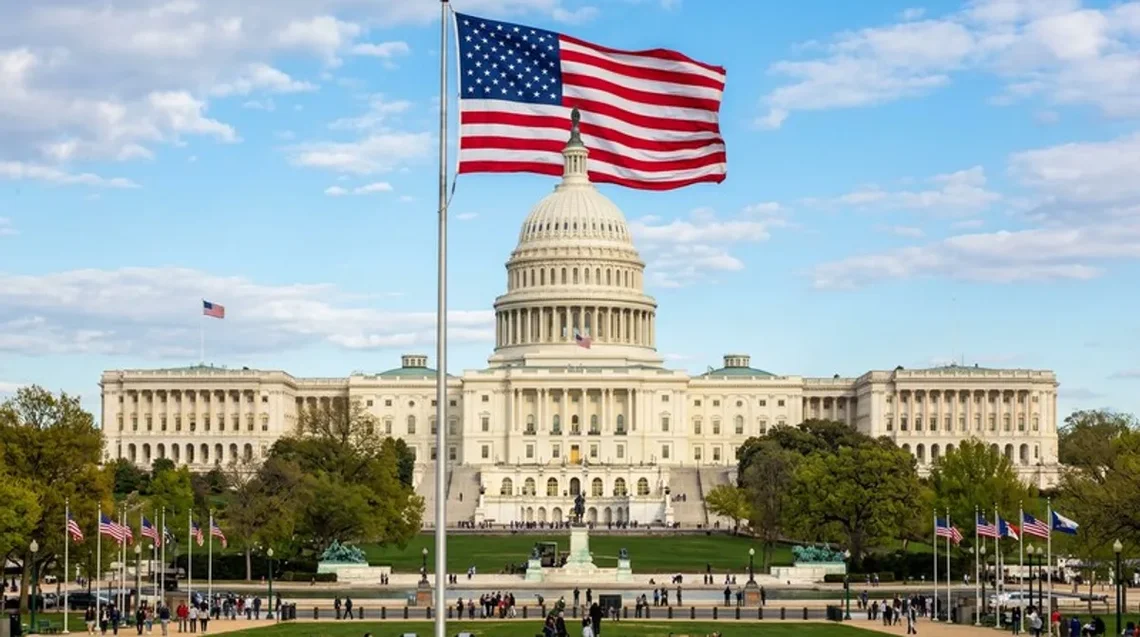
Senate Republicans blocked a sweeping federal budget proposal put forward by the Biden administration on a near party-line vote, deepening a spending standoff that threatens to push the federal government toward a funding lapse and renewed shutdown uncertainty. The move intensifies a confrontation over discretionary spending levels, social programme funding, and defence allocations that has defined the legislative calendar in recent months.
Key Positions: Republicans insist on deep cuts to non-defence discretionary spending and reject what they describe as unchecked growth in social programme expenditure; Democrats argue the administration's proposal protects essential services for working families, healthcare, and infrastructure investment; White House officials maintain the budget reflects necessary investment in American competitiveness and warn that Republican cuts would strip benefits from millions of low- and middle-income households.
The Vote and Its Immediate Consequences
The procedural vote fell largely along partisan lines, with Republican senators invoking procedural tools to prevent the budget proposal from advancing to full debate on the Senate floor. The outcome was expected following weeks of failed negotiations between Senate Majority leadership and Republican counterparts over top-line spending figures. According to officials familiar with the proceedings, no Republican senator crossed the aisle to support advancing the measure, and at least one Democratic senator from a competitive state abstained, according to reporting by the Associated Press.
What Was Being Voted On
The proposal under consideration outlined discretionary spending levels for the upcoming fiscal year, encompassing funding streams for education, housing, environmental protection, and defence. The White House's submission to Congress called for a modest increase in overall spending relative to current appropriated levels, with significant proposed investments in clean energy infrastructure and expanded healthcare access. According to the Congressional Budget Office, the administration's framework would have added to the projected federal deficit over a ten-year window, a central line of attack deployed by Republican opponents during floor debate.
Related Articles
Procedural Mechanics
Republican senators used a cloture motion to block the measure from proceeding, requiring sixty votes to overcome the filibuster threshold — a bar the Democratic caucus, even with the support of allied independents, could not clear in a divided chamber. Senate Minority leadership issued a statement characterising the proposal as fiscally irresponsible, officials said. Democratic floor managers argued the manoeuvre represented a deliberate escalation designed to manufacture a fiscal crisis ahead of a government funding deadline.
| Metric | Detail | Source |
|---|---|---|
| Cloture Vote (Yeas) | 47 | U.S. Senate Records |
| Cloture Vote (Nays) | 51 | U.S. Senate Records |
| Votes Required to Advance | 60 | Senate procedural rules |
| Proposed Discretionary Spending Increase | Approx. 5% above current levels | White House Office of Management and Budget |
| 10-Year Deficit Impact (Admin. Proposal) | Estimated net increase | Congressional Budget Office |
| Public Approval of Congress (Handling Budget) | 21% approve | Gallup |
| Share of Americans Opposing Government Shutdown | 72% | Pew Research Center |
Republican Arguments: Fiscal Discipline and Spending Caps
Senate Republicans framed their opposition around concerns about long-term fiscal sustainability, pointing to analysis from the Congressional Budget Office projecting sustained deficit growth if current spending trajectories continue unchecked. Senior Republican senators on the Appropriations Committee argued that the administration's proposal violated the spirit of previously negotiated spending caps and represented a return to what they described as pandemic-era spending habits that contributed to elevated inflation.
The Role of the Debt Ceiling Agreement
Central to the Republican position was a prior agreement reached with the administration establishing enforceable caps on discretionary spending as a condition for raising the federal debt ceiling. Republican leadership argued the Biden budget significantly exceeded those agreed limits in its accounting of supplemental and emergency spending designations, effectively using budgetary classifications to circumvent the caps. Democrats and White House budget officials disputed that characterisation, insisting all figures complied with the terms of the deal, according to officials on both sides of the aisle.
Democratic Response and White House Reaction
Democratic senators, speaking on the chamber floor following the vote, accused Republicans of manufacturing a crisis to extract concessions on social spending ahead of what they said would be a politically damaging government shutdown. Senate Democratic leadership issued a statement warning that a funding lapse would disrupt federal services relied upon by tens of millions of Americans, citing potential impacts on nutrition assistance programmes, federal housing subsidies, and scientific research grants.
The White House press office released a statement attributing any prospective shutdown directly to Republican obstruction, officials said. Administration budget officials indicated they remained open to negotiations but insisted that any final agreement preserve core social investments and reject what they characterised as indiscriminate cuts to domestic programmes. This latest confrontation follows a pattern of fiscal standoffs that have periodically brought Washington to the brink of a funding lapse — for further context on related legislative battles, see our earlier coverage of how Senate Republicans blocked a spending bill in a previous budget standoff.
Democrats' Counter-Proposal
Senate Democratic appropriators circulated a counter-framework in the days preceding the vote that proposed holding non-defence discretionary spending roughly flat in real terms while directing targeted increases toward veterans' healthcare, border management infrastructure, and semiconductor supply chain investments — areas with at least nominal bipartisan appeal. Republican leadership declined to bring the counter-proposal to a formal vote, characterising it as insufficient, according to reporting by Reuters.
The Government Funding Deadline
The immediate legislative pressure bearing down on both parties is the approaching expiration of current government funding authority. Without a new continuing resolution or full-year appropriations legislation in place before the deadline, federal agencies would begin implementing shutdown protocols — furloughing hundreds of thousands of non-essential federal workers and suspending a wide range of government services.
History of Recent Funding Gaps
The United States has experienced multiple short-term funding lapses in recent years, each generating economic disruption and reputational damage for Congress. Polling data from Gallup consistently shows congressional approval ratings decline sharply during and immediately after shutdown episodes, and Pew Research Center surveys indicate that large majorities of Americans — across partisan lines — oppose government shutdowns as a mechanism for resolving budget disputes. Nevertheless, both parties have periodically been willing to allow funding to lapse when the political stakes of capitulation appeared to outweigh the costs of disruption.
The Congressional Budget Office has previously estimated that each significant government shutdown imposes measurable costs on economic output, delays federal contracting, and disrupts financial planning for businesses and households dependent on federal programmes. Those findings have done little to deter either party from using the threat of shutdown as a negotiating instrument, critics in both parties have acknowledged.
Broader Political Context
The budget confrontation does not exist in isolation. It is the latest episode in a sustained pattern of partisan legislative conflict that has characterised the current Congress, encompassing disputes over immigration enforcement funding, healthcare spending, and national defence authorisations. Senate Republicans also recently blocked a separate immigration and border security measure, a controversy analysed in detail in our reporting on how Senate Republicans blocked the Biden immigration bill. That vote, like this one, underscored the difficulty the administration faces in advancing any major legislative priority through a divided Congress.
Analysts tracking congressional dynamics note that the repeated use of the sixty-vote cloture threshold has effectively made bipartisan agreement a prerequisite for virtually all major federal legislation, concentrating negotiating leverage in the hands of a small number of persuadable members in both chambers. With the electoral calendar exerting increasing pressure on lawmakers in competitive states and districts, the incentives for compromise are, by many assessments, diminishing rather than growing.
Public Opinion and Electoral Pressure
Survey data from Pew Research Center and Gallup indicate that voters broadly disapprove of how Congress handles budgetary matters, though the partisan attribution of blame for fiscal dysfunction varies significantly depending on respondent affiliation. Independent voters — widely considered the decisive bloc in competitive federal races — express particular frustration with what polling characterises as performative brinkmanship, according to Gallup analysis. Whether that sentiment translates into electoral consequences for incumbents on either side remains a matter of active political debate among strategists and analysts.
For a wider view of how this dispute connects to earlier confrontations over Democratic fiscal priorities, readers can explore our prior reporting on how Senate Republicans blocked a Democratic budget plan, as well as our coverage documenting the recurring nature of these clashes in our piece on how Senate Republicans blocked the Biden budget plan in a previous session.
What Happens Next
Appropriations committee chairs in both chambers have indicated they will pursue negotiations on a short-term continuing resolution as an immediate fallback to avert a shutdown, even as longer-term budget negotiations remain stalled. White House legislative affairs officials have signalled the administration's willingness to accept a stopgap measure provided it does not lock in what they described as harmful spending reductions. Republican leadership has not publicly committed to the parameters of any continuing resolution, leaving the outcome uncertain, officials said.
Congressional leaders in the House face their own internal divisions, with a bloc of fiscal conservatives pressing for spending reductions that exceed what the Senate Republican conference has publicly endorsed, complicating prospects for a bicameral agreement on either a continuing resolution or a full appropriations package. According to reporting from the Associated Press and Reuters, informal staff-level negotiations between the chambers were continuing as of the latest available information, with no breakthrough publicly announced.
The coming days will test whether institutional pressure — the spectre of a visible, disruptive government shutdown — is sufficient to force a compromise that has so far eluded both chambers. Based on the trajectory of recent fiscal negotiations, and the broader history of partisan brinkmanship documented across multiple Congresses, few veteran Washington observers are prepared to forecast an early resolution. What is clear, analysts and lawmakers on both sides acknowledge, is that the cost of continued gridlock — measured in economic terms, institutional credibility, and public trust — continues to accumulate with each successive standoff. (Source: Congressional Budget Office; Gallup; Pew Research Center; Associated Press; Reuters)