Senate Republicans Block Biden Judicial Nominees
Confirmation battles intensify ahead of midterm elections
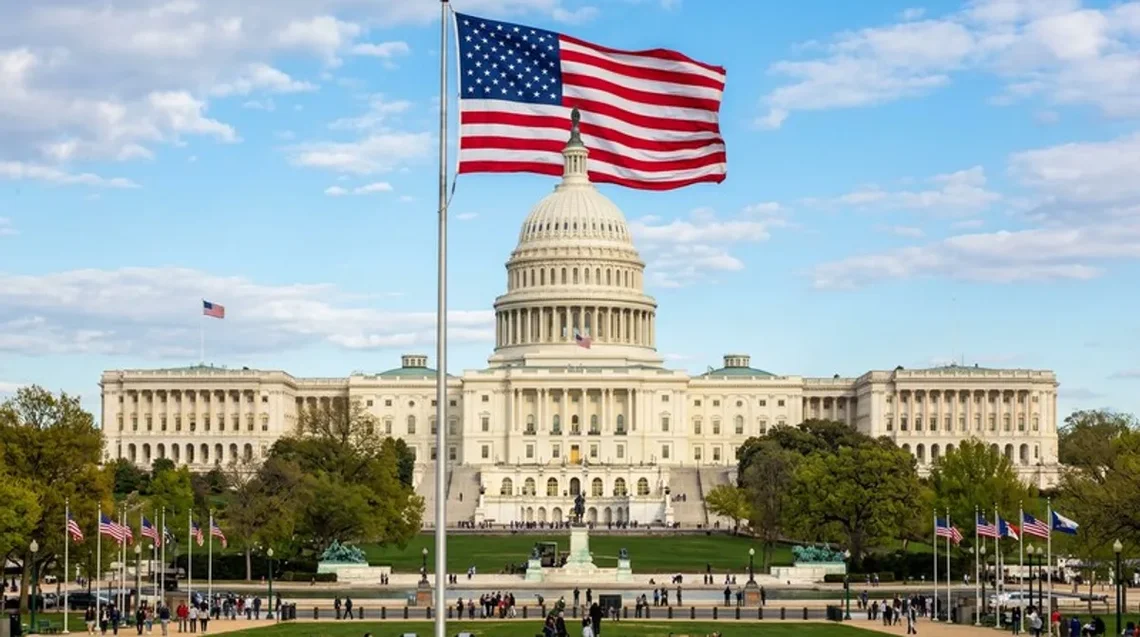
Senate Republicans have moved to block a series of President Biden's judicial nominees, deploying procedural manoeuvres that have stalled confirmations across multiple federal court vacancies and reignited fierce debate over the future composition of the American judiciary. The standoff, which has intensified in recent months, threatens to leave dozens of federal benches empty as both parties dig in ahead of a politically charged electoral season.
Key Positions: Republicans argue that nominee confirmations are being rushed without adequate scrutiny and that several candidates hold views outside the judicial mainstream; Democrats contend that obstruction is purely political and designed to preserve a conservative judiciary for generations; White House officials say the blocking of qualified nominees represents an unprecedented assault on the rule of law and have vowed to continue sending nominations to the Senate floor.
The Scale of the Blockade
The numbers tell a stark story. Senate Republicans have used procedural tools — including holds, filibuster threats, and coordinated objections during floor votes — to delay or outright defeat confirmation votes on nominees who, in previous administrations, might have sailed through the chamber with bipartisan support. According to data compiled by the Congressional Research Service, the pace of judicial confirmations under the current administration has lagged behind comparable periods under recent predecessors, with the gap widening markedly as electoral pressures mount.
The Senate Judiciary Committee has found itself at the centre of the fight, with Republican members using hearing time to probe nominees on issues ranging from criminal sentencing philosophy to their positions on administrative law and executive power. Democrats on the committee have accused their Republican counterparts of engaging in bad-faith questioning designed not to elicit information but to generate footage for campaign advertisements.
Related Articles
Procedural Weapons in Play
Among the procedural tools being deployed, the senatorial hold remains one of the most effective. Under Senate tradition, a single senator can place an informal hold on a nominee, signalling opposition and forcing leadership to spend floor time on cloture motions that consume the legislative calendar. Republican senators have placed holds on nominees at a rate that officials said is unprecedented in the modern era, effectively creating a bottleneck that Senate Majority Leader Chuck Schumer has struggled to clear.
In several high-profile cases, Republicans forced cloture votes that failed along near-party-line margins, meaning nominees never received a final confirmation vote at all. The pattern has been documented extensively by advocacy groups on both sides of the aisle, with data showing that circuit court nominees — those appointed to the powerful federal appeals courts that sit just below the Supreme Court — have faced the most sustained resistance. (Source: Congressional Research Service)
Why the Federal Judiciary Matters
Federal judges hold lifetime appointments and wield enormous influence over the interpretation of statutes, regulations, and constitutional provisions. Unlike elected officials, they are not subject to removal by voters, meaning that the ideological composition of the federal bench at any given moment can shape American law for decades. Legal scholars have long understood this, but the intense politicisation of the confirmation process in recent years has brought the issue to the forefront of public debate.
According to polling conducted by Pew Research, a substantial majority of Americans across partisan lines believe that the federal judiciary has become politicised, with respondents expressing declining confidence in the courts as independent arbiters of the law. The same data show that views on judicial confirmation battles have become increasingly sorted along partisan lines, mirroring broader polarisation trends in American public life. (Source: Pew Research)
Circuit Courts as the Real Battleground
While Supreme Court vacancies attract the most public attention, legal experts consistently note that the thirteen federal circuit courts of appeals are where the vast majority of consequential legal battles are actually decided. The Supreme Court accepts fewer than one hundred cases per year, meaning that circuit court rulings on issues from environmental regulation to voting rights to immigration policy are effectively final for most litigants. Control of these courts is therefore a central strategic objective for both political parties, and the confirmation fight currently underway reflects that reality with unusual clarity.
Republican senators have been particularly attentive to nominees for circuits that cover large jurisdictions or that are currently divided between judges appointed by presidents of different parties. In at least three circuits, the blocking of Biden nominees has preserved a conservative majority that might otherwise have shifted, officials said.
Democratic Responses and Counter-Strategies
Senate Democrats have not been passive in the face of Republican obstruction. Majority Leader Schumer has repeatedly restructured the Senate floor schedule to maximise confirmation votes, sometimes keeping the chamber in session through weekends and holiday recesses to push nominees through. The White House has also accelerated the pace at which it submits nominations to the Senate, seeking to keep the pipeline full even as Republicans work to drain it.
In earlier episodes of this broader confirmation battle, Democrats succeeded in confirming a significant number of district court judges — those who sit at the trial court level — by moving nominees in batches and using unanimous consent agreements to bypass the most time-consuming procedural hurdles. That strategy has proven harder to sustain as Republican opposition has become more uniform and better coordinated, according to Senate aides familiar with the process.
Progressive Pressure on the White House
Within the Democratic coalition, progressive advocacy groups have pressed the administration to nominate candidates with more explicitly left-of-centre judicial philosophies, arguing that the party's previous tendency to seek nominees with broad bipartisan appeal has produced little practical benefit given Republican intransigence. The White House has responded by nominating a historically diverse slate of candidates in terms of professional background, race, gender, and prior experience — including a notable number of former public defenders, a departure from the lawyers and former prosecutors who have traditionally dominated the federal bench.
That approach has itself become a Republican talking point, with several senators arguing that nominees without prosecutorial backgrounds are insufficiently tough on crime — a charge that Democrats have dismissed as a politically motivated mischaracterisation of the nominees' qualifications and records.
Historical Context and Precedent
The current confirmation battles did not emerge in a vacuum. They are the latest chapter in a decades-long escalation of judicial warfare that has seen both parties use procedural tools to shape the judiciary when in the Senate majority and complain about obstruction when in the minority. The elimination of the filibuster for executive branch and judicial nominees below the Supreme Court level — a step taken by Senate Democrats during a previous Congress — removed one of the most powerful obstruction tools but far from all of them.
According to analysis by the Brookings Institution and cited reporting from the Associated Press, the current period represents a continuation of trends that have been building since at least the early part of this century, when confirmation fights over circuit court nominees began to routinely consume months or years of Senate floor time. (Source: AP)
For further reading on related legislative confrontations, the pattern of Republican procedural opposition extends well beyond the judiciary. Readers can explore how Senate Republicans block Biden budget plan proposals have similarly stalled, and how Senate Republicans block judicial reform bill efforts have compounded frustrations among Democrats seeking broader changes to the courts. The confirmation battles also intersect with immigration policy disputes, where Senate Republicans block Biden immigration bill legislation has created parallel standoffs.
Electoral Implications
With midterm elections approaching, both parties are calculating how the judicial confirmation fight plays with their respective bases and with persuadable voters. For Republicans, the issue allows them to present themselves as a bulwark against what they characterise as activist judges who will expand federal power, restrict law enforcement, and reinterpret constitutional provisions in ways that alarm conservative voters.
For Democrats, the blocking of nominees — many of whom have sterling academic and professional credentials — provides a concrete example of Republican obstruction that party leaders can use to motivate voters who might otherwise stay home. According to Gallup polling on institutional approval, confidence in the legislative branch remains historically low, a dynamic that cuts both ways but that Democrats have sought to turn to their advantage by drawing a direct line between Republican Senate tactics and governmental dysfunction. (Source: Gallup)
Swing-State Senators Under Pressure
Several Republican senators from states that the Biden administration carried in the most recent presidential election have found themselves in a particularly uncomfortable position. Voting to block nominees risks generating negative coverage and energising Democratic turnout operations, while breaking with Senate Republican leadership invites primary challenges from the right. Most have chosen party discipline over independent positioning, according to sources familiar with the internal Republican Senate caucus discussions.
The calculus is complicated further by the fact that judicial confirmation votes, unlike votes on spending bills or major legislation, rarely generate significant press coverage outside Washington, making it harder for either side to break through to general audiences who are not already politically engaged.
| Metric | Figure | Source |
|---|---|---|
| Federal judicial vacancies currently pending nomination or confirmation | Approximately 80+ | United States Courts |
| Americans who believe the federal judiciary has become politicised | 67% | Pew Research |
| Public confidence in the US Congress (approve) | Below 25% | Gallup |
| Typical cloture vote margin on blocked nominees | 49–51 (party-line) | Senate Roll Call Records |
| Circuit court nominees facing extended delays this Congress | Multiple, per CRS data | Congressional Research Service |
| Share of voters citing courts as important midterm issue | Approx. 40% | Reuters/Ipsos |
What Comes Next
With the legislative calendar tightening and floor time at a premium, Senate Democrats face hard choices about how aggressively to prioritise judicial confirmations against other pressing items of business, including government funding legislation and any remaining elements of the administration's domestic agenda. Officials said the White House is pushing for the Senate to hold confirmation votes on at least the longest-standing nominees before the session draws to a close, though whether the votes will materialise remains uncertain.
Republicans, for their part, show little sign of relenting. Senate Minority Leader Mitch McConnell has made no secret of his view that judicial appointments represent one of the most durable legacies a Senate majority can leave, and his conference has demonstrated a discipline on confirmation votes that has given Democrats few openings for defections. Previous episodes in this broader pattern of legislative confrontation — including the fight documented in coverage of how Senate Republicans block Biden budget deal efforts — suggest that the minority is unlikely to blink.
The long-term consequence of the current standoff is a federal judiciary in which vacancies accumulate, caseloads grow, and justice is delayed for litigants who may wait years for their cases to be heard by a fully constituted court. For individual nominees, many of whom have left private legal practice or stepped away from other positions to seek confirmation, the uncertainty carries significant personal costs that receive little attention in the broader political coverage of the fight. As the confirmation battles continue, the practical administration of federal justice hangs in the balance — a reality that both parties acknowledge in private, even as they prosecute the political warfare in public. Readers following the judicial nomination fight may also find relevant background in our earlier coverage of how Senate Republicans block Biden judicial nominee cases have set the precedent for the current, broader wave of obstruction.
(Reporting informed by data from the Congressional Research Service, Pew Research, Gallup, the Associated Press, and Reuters.)